Counting practice Adding up to 1000 with Regrouping Worksheets for 7-Year-Olds
7 filtered results
-
From - To
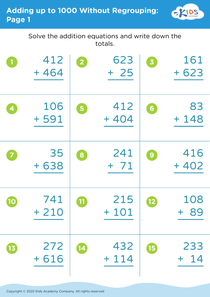
Enhance your child's math skills with our engaging Counting Practice Adding up to 1000 with Regrouping Worksheets, specifically designed for 7-year-olds. These printable worksheets help young learners master addition by breaking complex problems into manageable steps, thereby promoting understanding of regrouping and carrying numbers. Each colorful and interactive sheet encourages students to practice counting and improve their cognitive abilities in a fun and effective way. Tailored for classroom reinforcement or extra practice at home, these resources ensure that math learning is both enjoyable and educational. Start your child's journey to math mastery today!
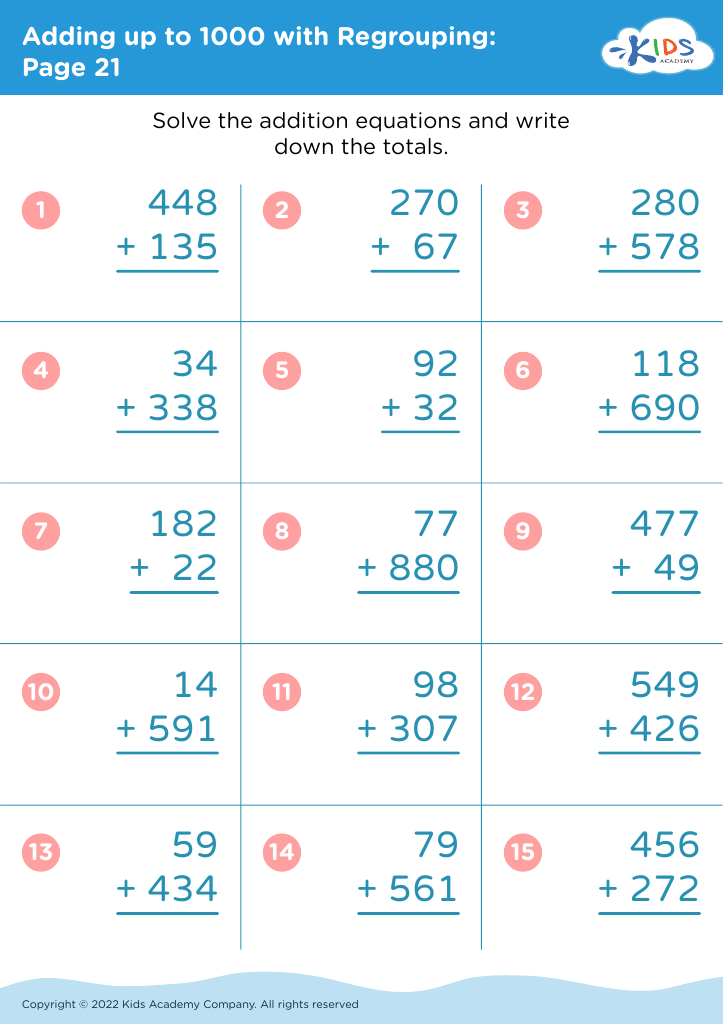
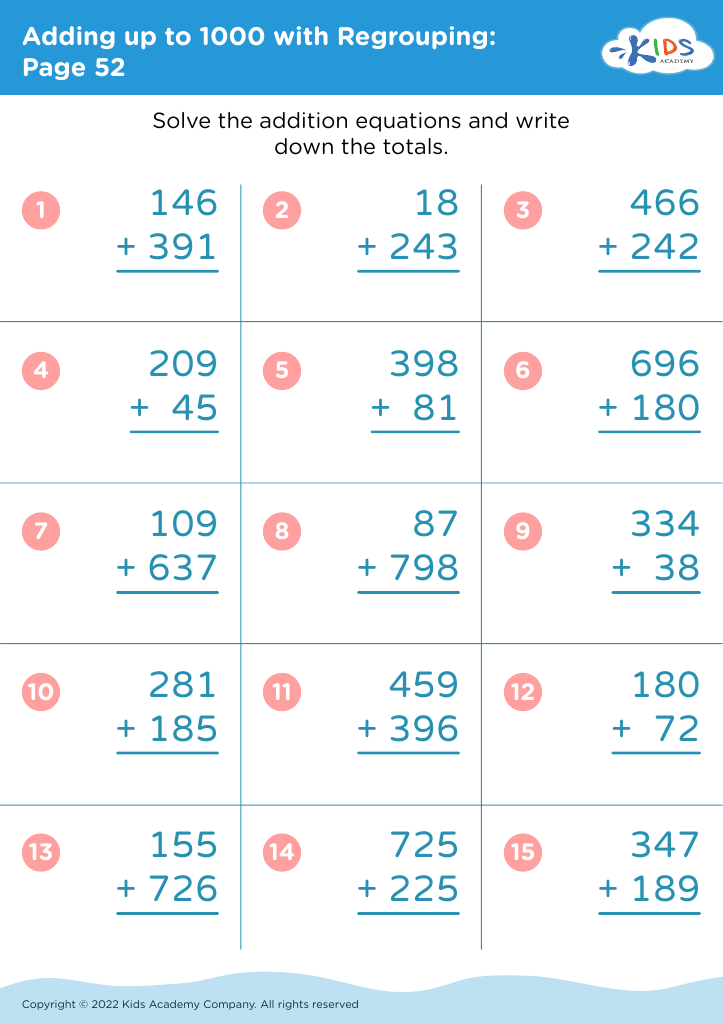
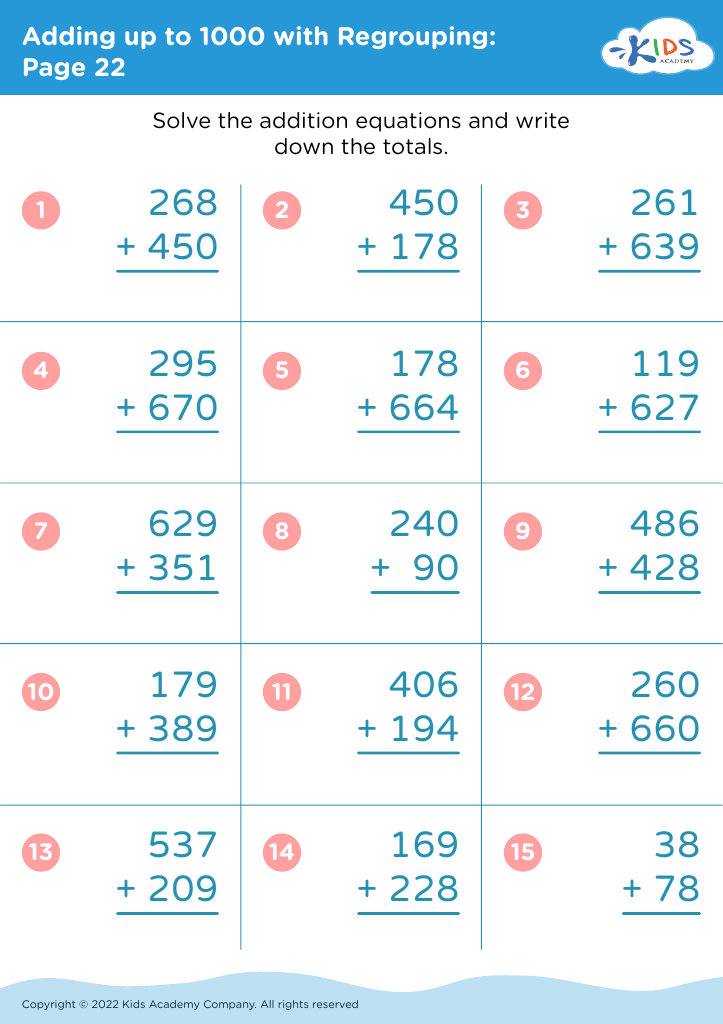
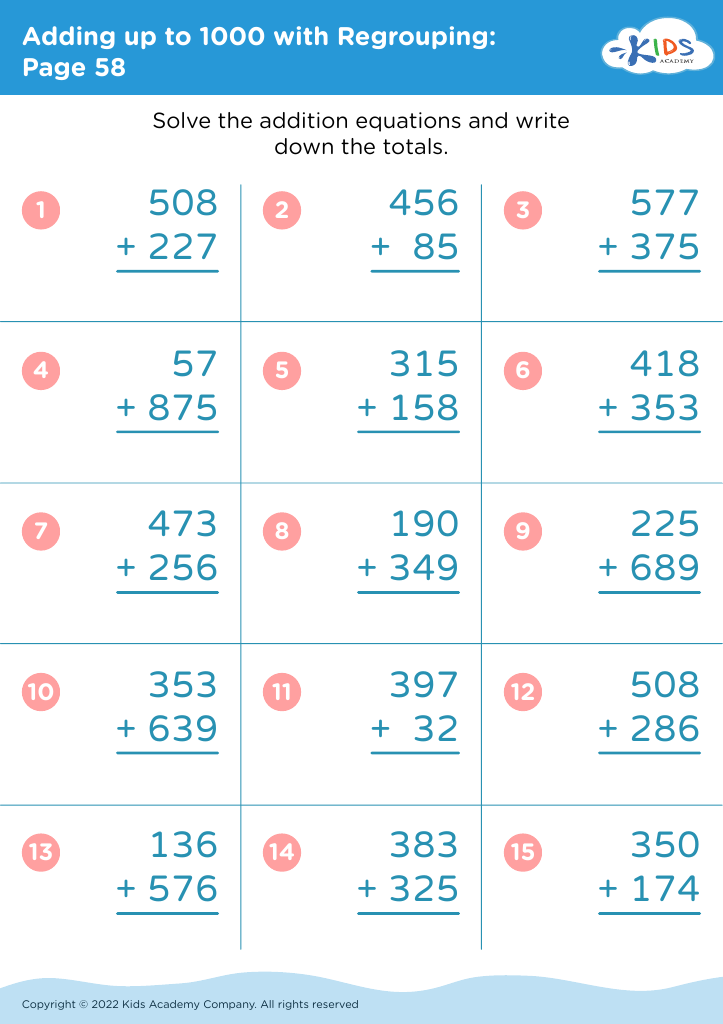
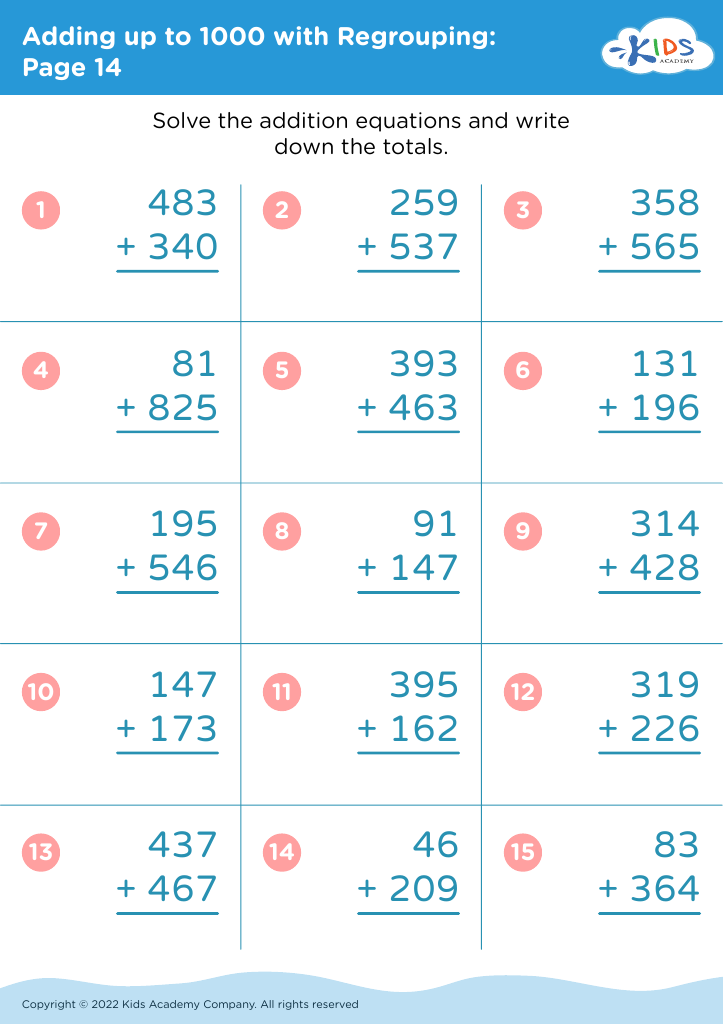
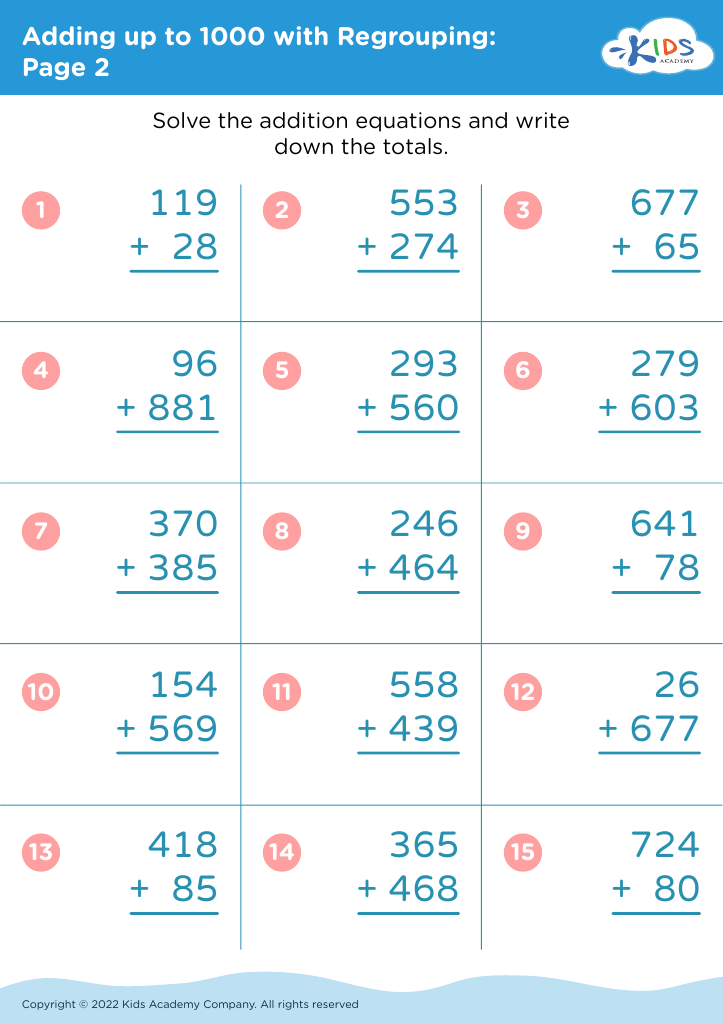
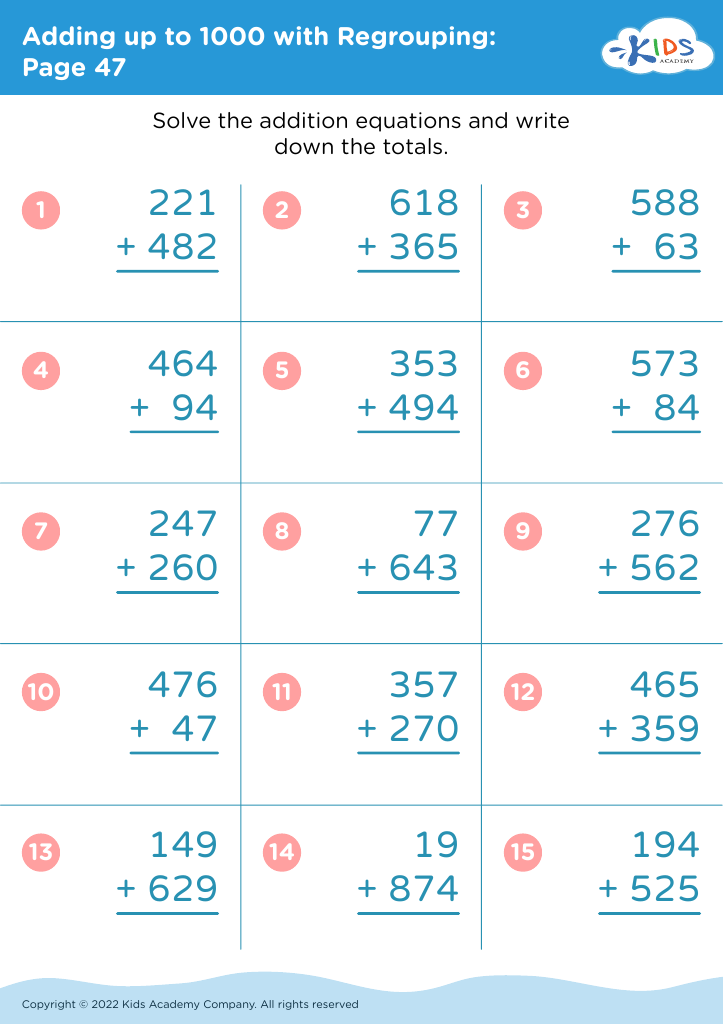


Counting practice and adding up to 1000 with regrouping is crucial for 7-year-olds’ mathematical and cognitive development. This stage, usually involving second graders, builds a strong numerical foundation essential for future complex mathematical concepts. Firstly, working with numbers up to 1000 enhances place value comprehension, which is fundamental for understanding larger numbers and operations like addition and subtraction, multiplication, and division.
Regrouping, in particular, is vital as it introduces the concept of carrying over numbers in addition, helping children grasp how numbers interact beyond basic units. This technique solidifies their understanding of borrowing and carrying, essential skills for more sophisticated problem-solving.
Additionally, such exercises develop critical thinking and problem-solving abilities. Counting up to 1000 demands focus, consistency, and the ability to detect patterns, fostering careful analytical skills. As children work through these operations, they build confidence and a positive attitude towards math, reducing math anxiety.
Parents and teachers play a crucial role in this learning phase by providing guided practice and motivation. Supporting children through this foundational stage ensures they have the necessary tools to tackle advanced math with confidence and competence, laying the groundwork for academic success in numerous subjects that rely on quantitative literacy.