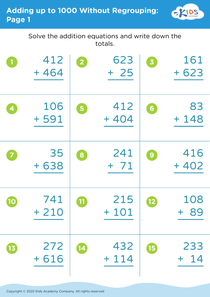
Understanding Sequences Adding up to 1000 with Regrouping Worksheets for 7-Year-Olds
4 filtered results
-
From - To
Welcome to our engaging worksheets designed to help 7-year-olds master the concept of understanding sequences that add up to 1000 with regrouping! These interactive exercises are perfect for cultivating foundational math skills. Children will explore numeric patterns, practice addition strategies, and develop their regrouping techniques—all while having fun! Each worksheet provides a variety of challenging tasks that encourage critical thinking and problem-solving. This resource not only reinforces addition but also fosters confidence in mathematics. Perfect for classroom use or at-home practice, our worksheets are an excellent tool for young learners to build their numeracy skills in a supportive environment.
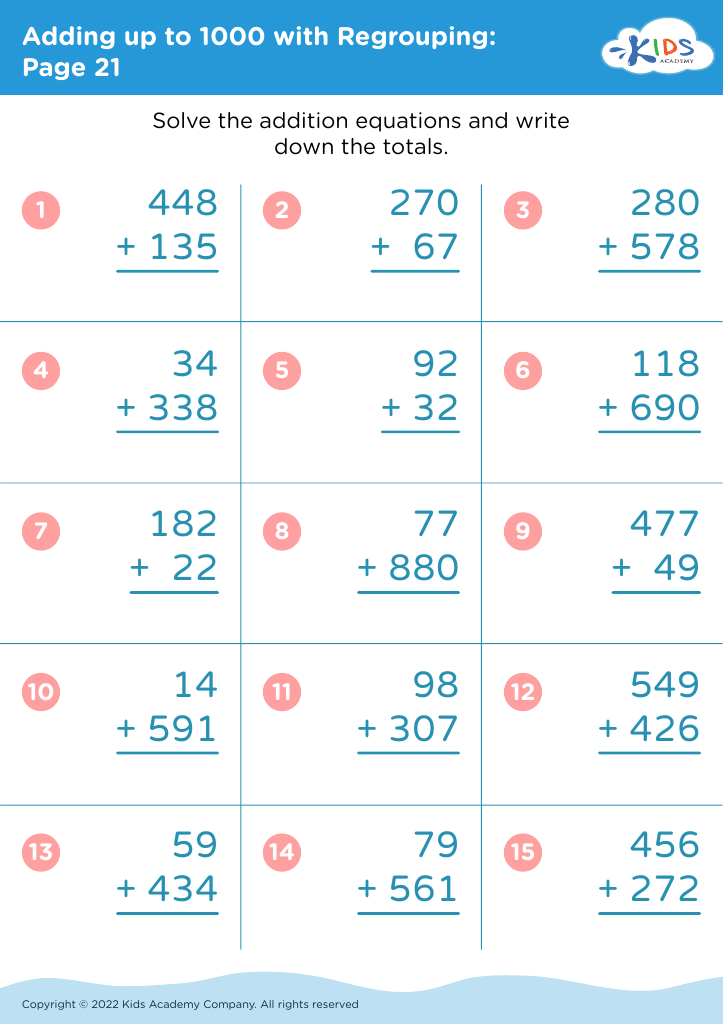
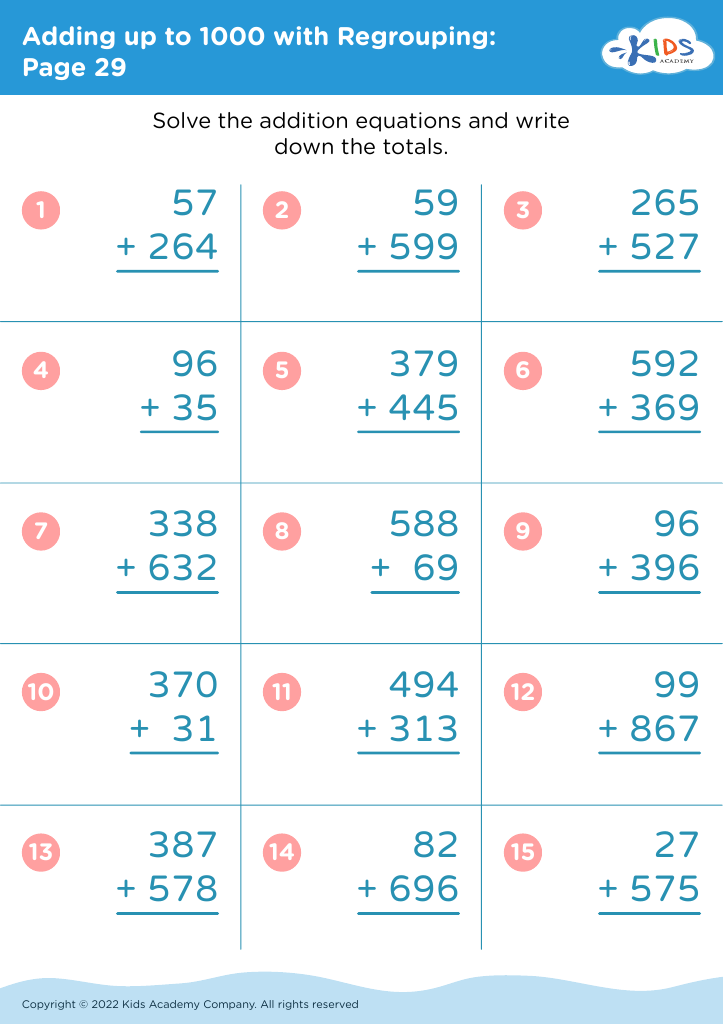
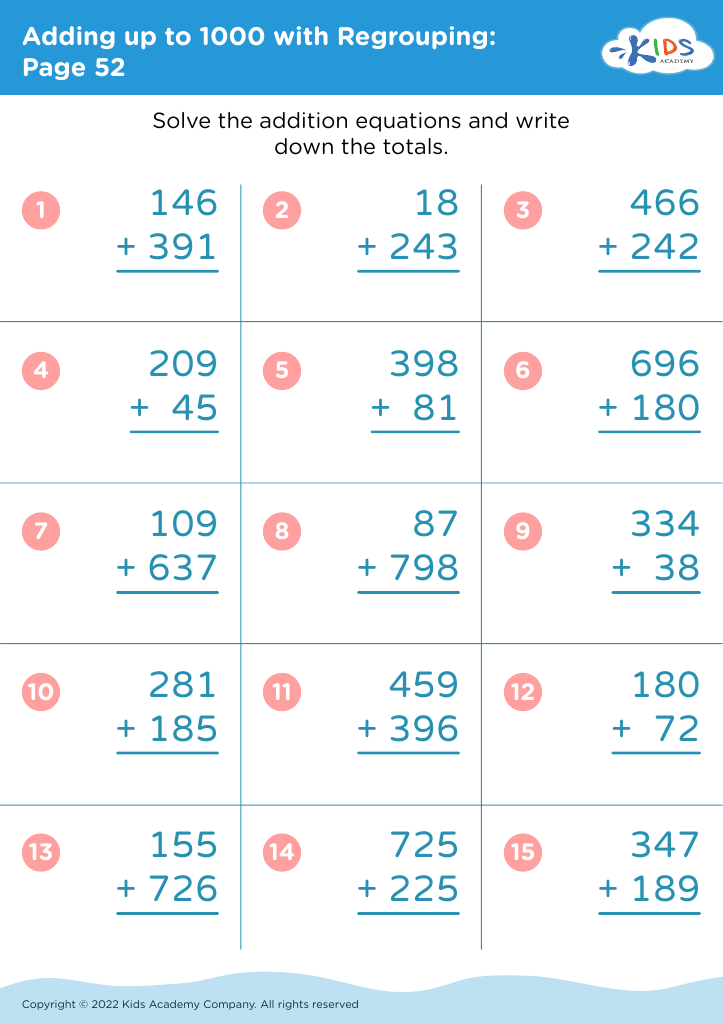
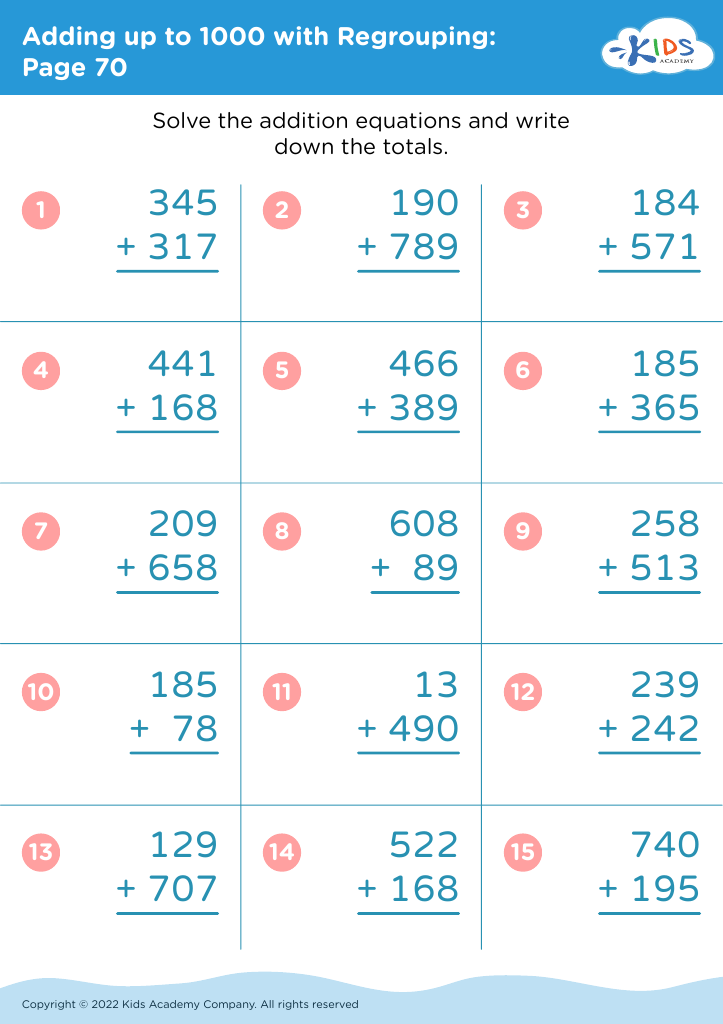


Understanding sequences and the concept of regrouping in addition are fundamental skills for 7-year-old learners. Mastering these concepts not only enhances a child’s mathematical abilities but also builds a strong foundation for more complex mathematical operations in the future. Parents and teachers should care about this because it improves a child's problem-solving skills and critical thinking abilities.
When children learn to add sequences that sum up to 1000, they engage in tasks that promote numerical fluency and deepen their understanding of place value. Regrouping teaches them to manipulate numbers, helping to prevent errors and bolstering accuracy in calculations. This skill becomes crucial as they face larger numbers in later grades.
Moreover, fostering these skills offers a sense of achievement, which boosts confidence and encourages a positive attitude toward math—an area in which many children struggle. Understanding sequences and regrouping also promotes connections to real-life situations, as children can apply these skills in practical scenarios, such as budgeting, shopping, or resource management in group activities. Overall, emphasizing these concepts nurtures both academic growth and life skills, laying the groundwork for future successes in math and beyond.