Fraction comparison Adding up to 1000 Without Regrouping Worksheets for 7-Year-Olds
4 filtered results
-
From - To
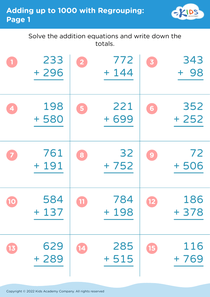
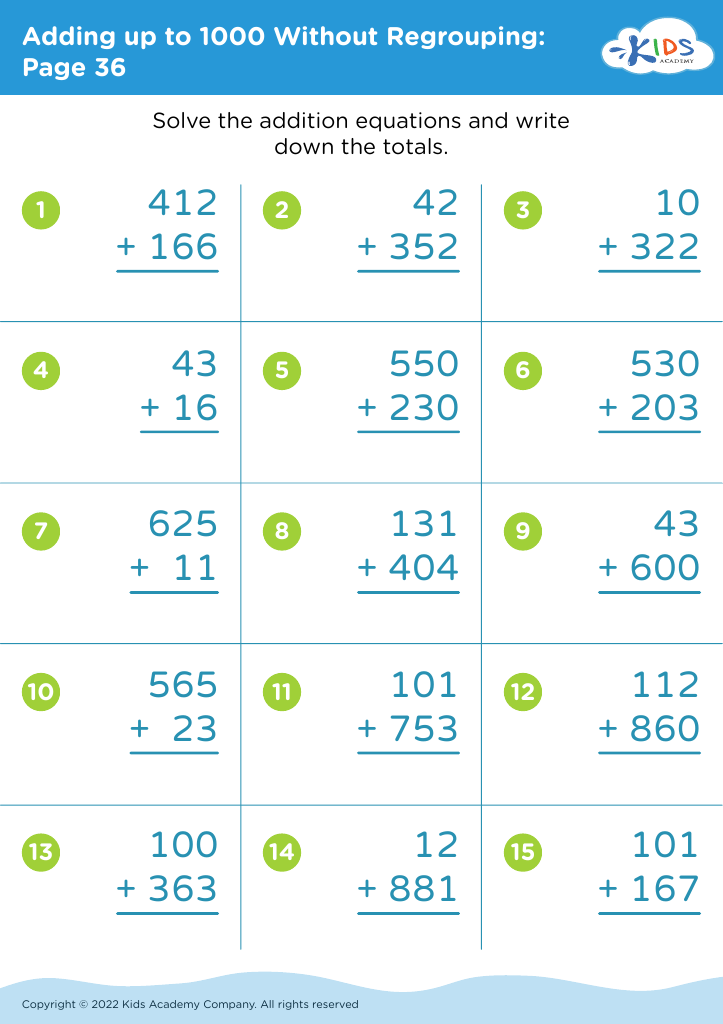
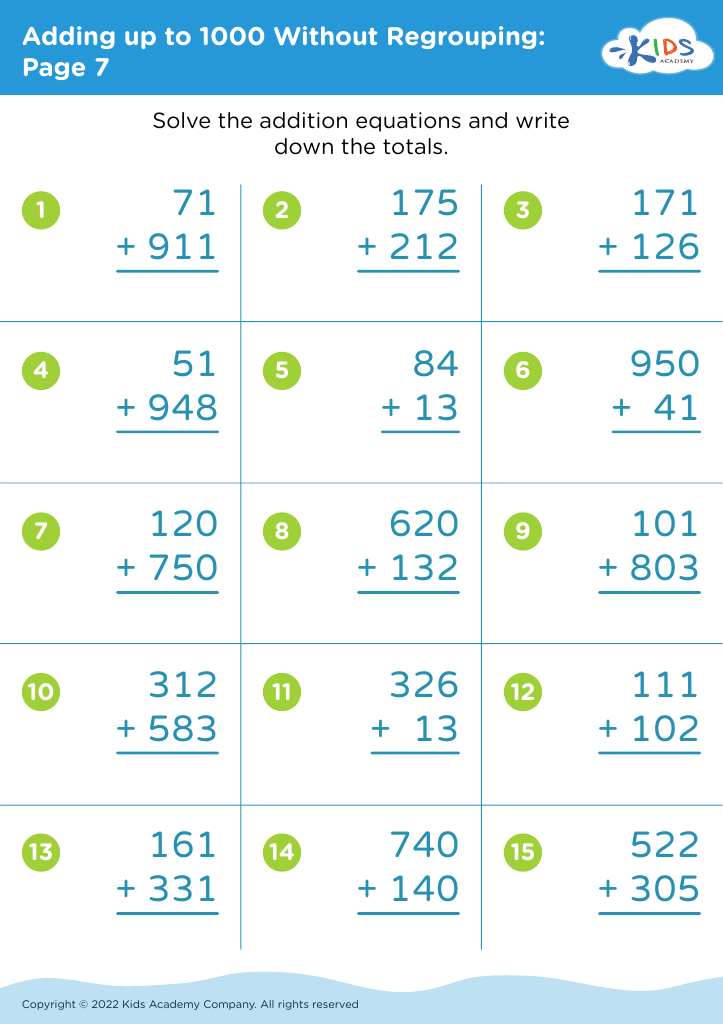
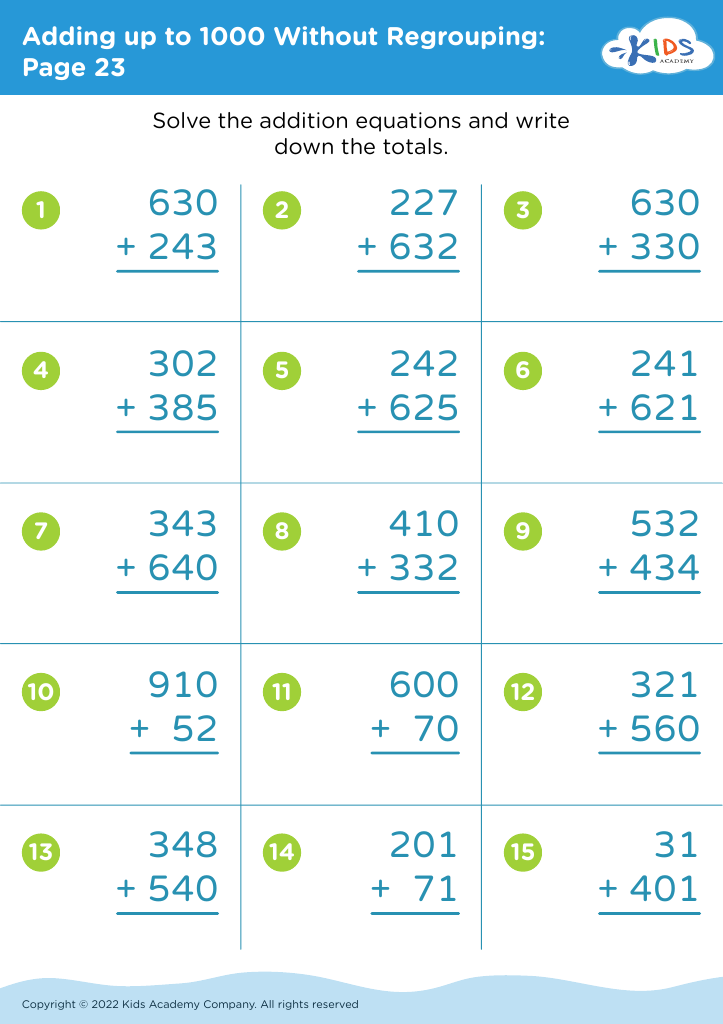
Explore our engaging "Fraction Comparison Adding Up to 1000 Without Regrouping Worksheets" designed specifically for 7-year-olds! These interactive worksheets help young learners grasp the essentials of fraction comparison while developing their addition skills up to 1000, without the complexities of regrouping. Through fun exercises tailored to their age, children will gain confidence in comparing fractions, enhancing their mathematical reasoning. Our resources provide step-by-step guidance, ensuring that your child builds a strong foundation in math concepts. Perfect for classroom or home use, these worksheets make learning fractions enjoyable and effective. Download now to boost your child's math skills!
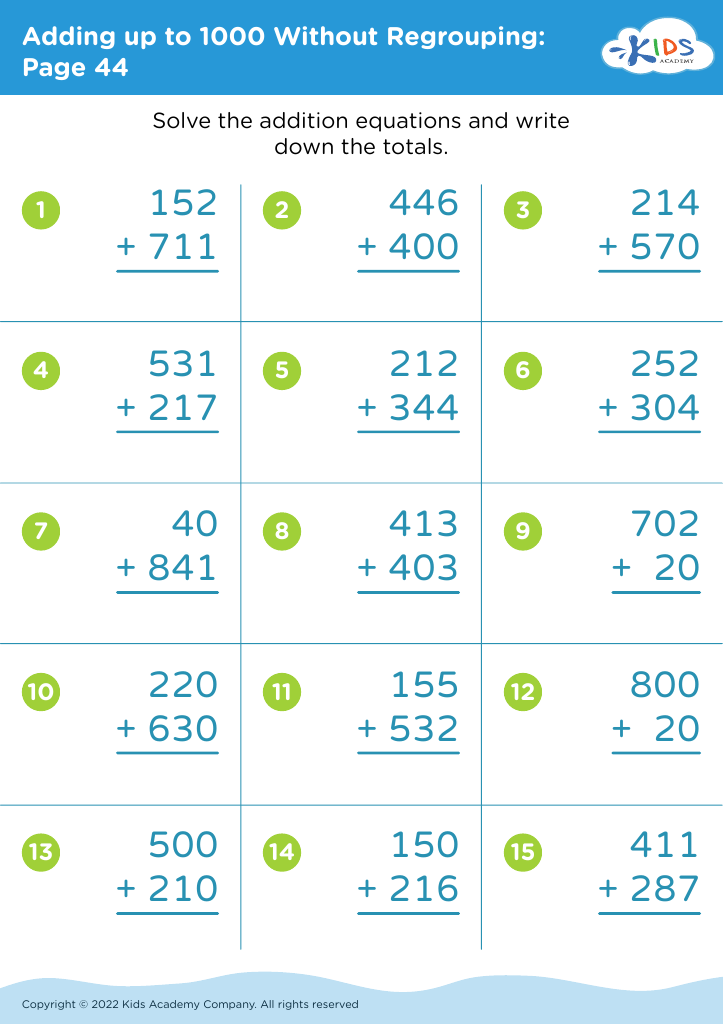


Parents and teachers should care about teaching fraction comparison and addition without regrouping to 7-year-olds because these skills are foundational to understanding more complex mathematical concepts. At this early age, children are developing critical thinking and logical reasoning skills, which are enhanced through engaging with fractions. Mastering fraction comparison helps children grasp the concept of part-to-whole relationships, an essential building block for understanding percentages and ratios later in life.
Furthermore, adding up to 1,000 without regrouping fosters equality in their mathematical fluency. It encourages them to process numbers accurately and confidently, reducing anxiety around math as they progress through their education. A solid understanding of these concepts contributes to their ability to solve real-world problems, such as adjusting recipes or sharing snacks among friends.
Additionally, practicing these skills supports the development of perseverance and problem-solving techniques. It instills a sense of accomplishment when they successfully compare fractions or accurately add numbers. By showing enthusiasm and providing support, parents and teachers can nurture a positive attitude towards mathematics, encouraging lifelong learning and an appreciation for the subject. Overall, these foundational skills pave the way for future academic success and empower children to navigate their daily lives with mathematical confidence.