Shape Recognition Adding up to 1000 Without Regrouping Worksheets for 7-Year-Olds
3 filtered results
-
From - To
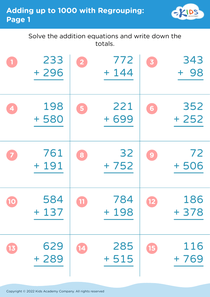
Discover engaging worksheets designed to enhance shape recognition while mastering addition up to 1000 without regrouping, tailored specifically for 7-year-olds! Our thoughtfully crafted resources combine fun visuals with mathematical concepts, helping young learners reinforce their understanding of shapes as they practice addition. These interactive worksheets encourage critical thinking and develop problem-solving skills through captivating activities, all while staying age-appropriate. Ideal for enhancing classroom learning or homeschooling, these exercises make math enjoyable and accessible for children. Foster your child's confidence in both math and geometry with our Shape Recognition worksheets, ensuring a solid foundation for future learning. Start exploring today!
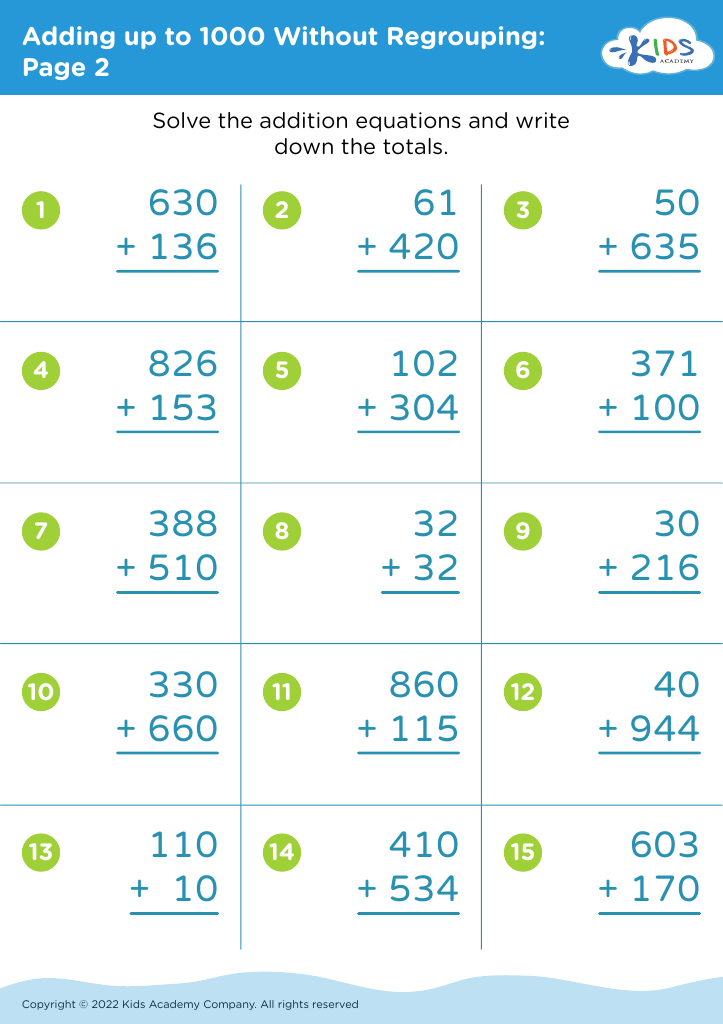
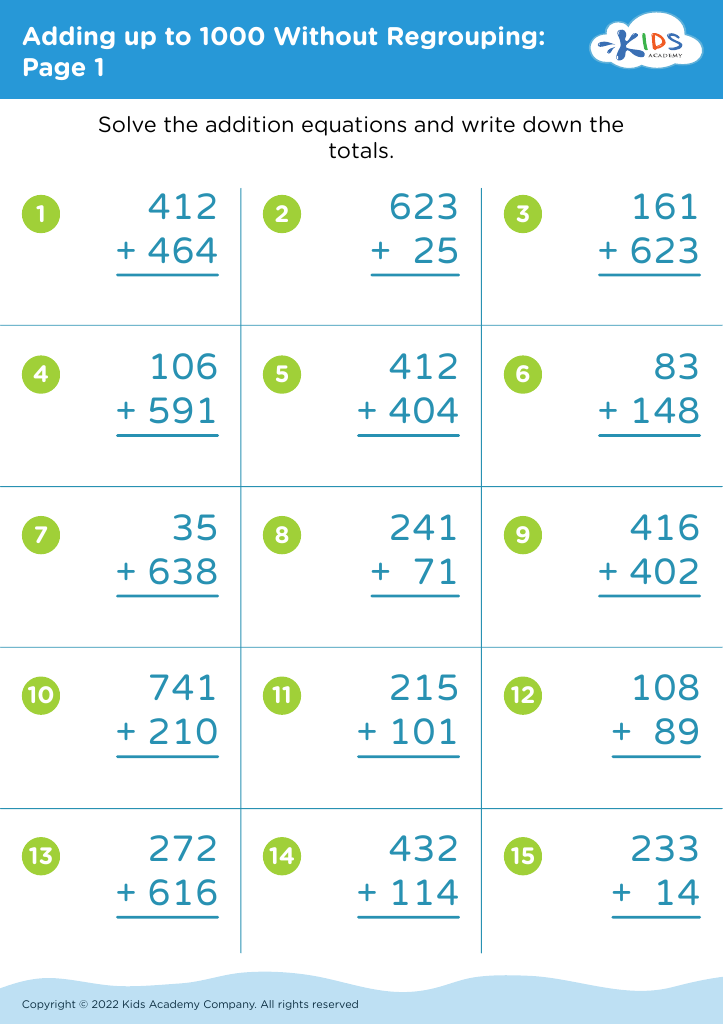
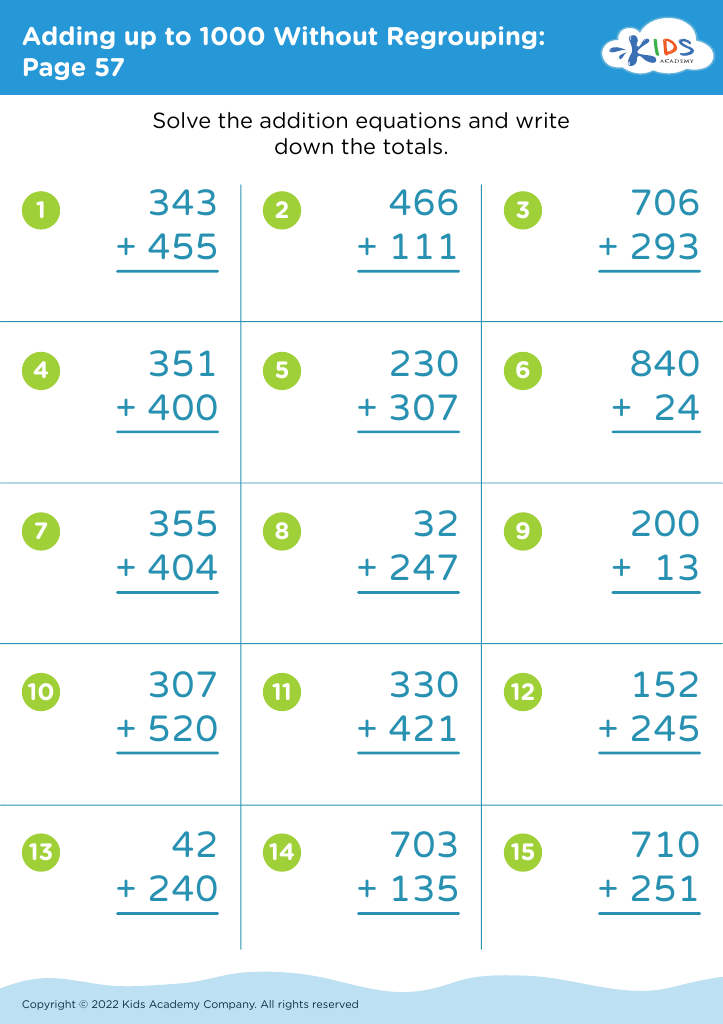


Shape recognition and basic addition without regrouping are fundamental skills for 7-year-olds that significantly impact their overall development and learning. Parents and teachers should care about these skills for several reasons.
Firstly, shape recognition helps children understand the world around them. It fosters cognitive skills such as spatial awareness, which is crucial for tasks like reading a map, organizing spaces, and even participating in art projects. Recognizing shapes lays the groundwork for more complex math concepts and geometry later on.
Secondly, mastering addition up to 1000 without regrouping enhances numerical fluency, a vital component of students' mathematical foundation. This skill reinforces number sense, helping children accurately combine quantities and solve everyday problems. It builds confidence in their ability to approach math with ease, which is essential for fostering a positive attitude towards learning.
Additionally, both skills reinforce critical thinking and problem-solving abilities. They encourage children to explore relationships between objects and numbers, promoting logical reasoning. By developing these foundational skills, parents and teachers set children on a path towards academic success and lifelong learning, helping them navigate more complex concepts with confidence as they progress in their education.