Understanding division Adding up to 1000 Without Regrouping Worksheets for 7-Year-Olds
3 filtered results
-
From - To
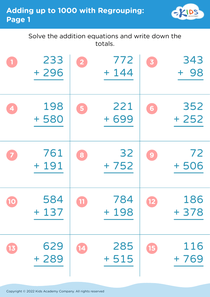
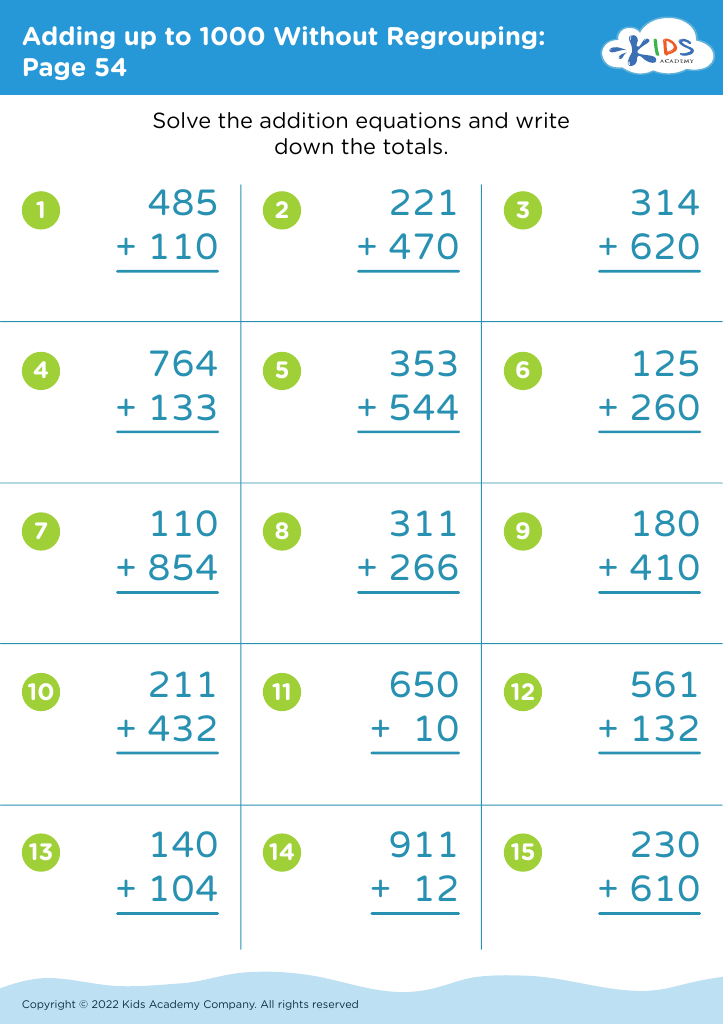
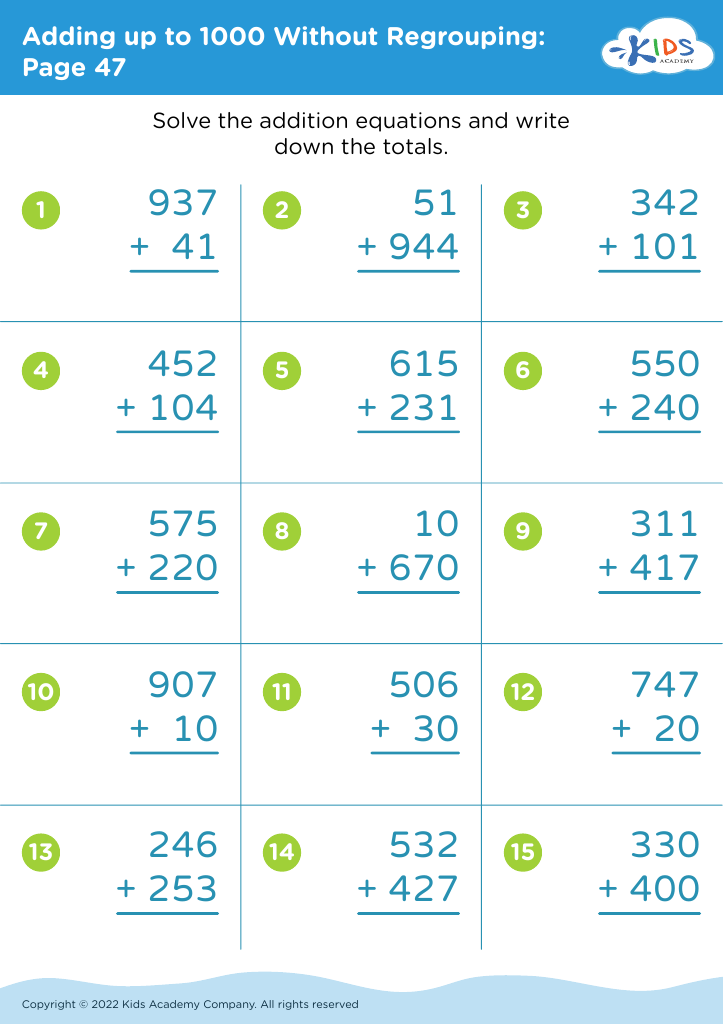
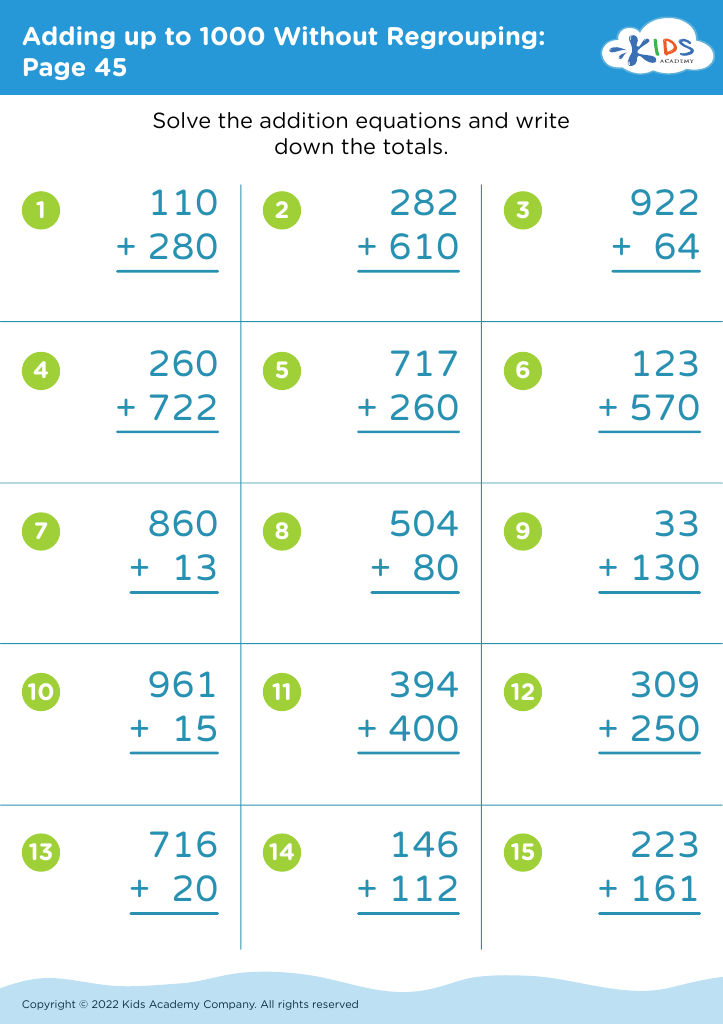
Empower your 7-year-old's math journey with our "Understanding Division Adding up to 1000 Without Regrouping Worksheets.” We offer fun, engaging activities designed to solidify foundational division and addition skills. These worksheets are crafted to enhance problem-solving skills while providing clear, step-by-step instructions that kids can follow independently. Perfect for both classroom and at-home practice, these tailored exercises aim to boost your child’s confidence in tackling larger numbers without regrouping. Help your child master early math concepts and build a strong numerical foundation with our expertly designed worksheets. Ready for some math magic? Explore today!


Understanding division and addition up to 1000 without regrouping is crucial for 7-year-olds as it establishes foundational numeracy skills vital for later academic achievement and daily life tasks. Division teaches children critical thinking and problem-solving abilities as they learn to discern how numbers can be grouped and distributed evenly. This sets a groundwork for more complex math concepts they'll encounter in higher grades, such as fractions, ratios, and algebra.
Addition up to 1000 hones their mental arithmetic skills, enhances memory retention, and builds confidence in handling larger numbers. Without regrouping, it offers them a clear, straightforward method, encouraging accuracy and speed while ensuring basic number sense is solidified.
From a developmental perspective, mastering these mathematical concepts at an early age boosts cognitive skills such as pattern recognition, logical reasoning, and spatial awareness. Parents and teachers should prioritize these skills not only to help children excel academically but also to empower them with practical life skills, like managing money or understanding measurements.
By fostering a secure grasp on fundamental mathematical principles, we're preparing children for future learning and everyday decision-making. Their confidence and competence in math can stimulate a lifelong love for learning and intellectual growth.