Filters

16 filtered results

Clear all filters
Favorites
With answer key
Interactive

16 filtered results

Difficulty Level

Grade


Enhance your child's math skills with our "Comparing Fractions Adding up to 1000 Worksheets" designed specifically for 7-year-olds! These engaging worksheets provide a fun and interactive way for young learners to practice comparing fractions, crucial for building a strong math foundation. Each worksheet features clear, colorful illustrations and easy-to-follow instructions to keep kids motivated and focused. By working through these exercises, children will not only improve their fraction skills but also learn to recognize and solve problems involving larger numbers up to 1000. Download our worksheets today and help your child tackle fractions with confidence and ease!
Check out this FREE Trial Lesson on Adding up to 1000 for age 7!

Sorting Objects into 3 Categories

Favorites
With answer key
Interactive
  • 7
  • Comparing Fractions
  • Adding up to 1000
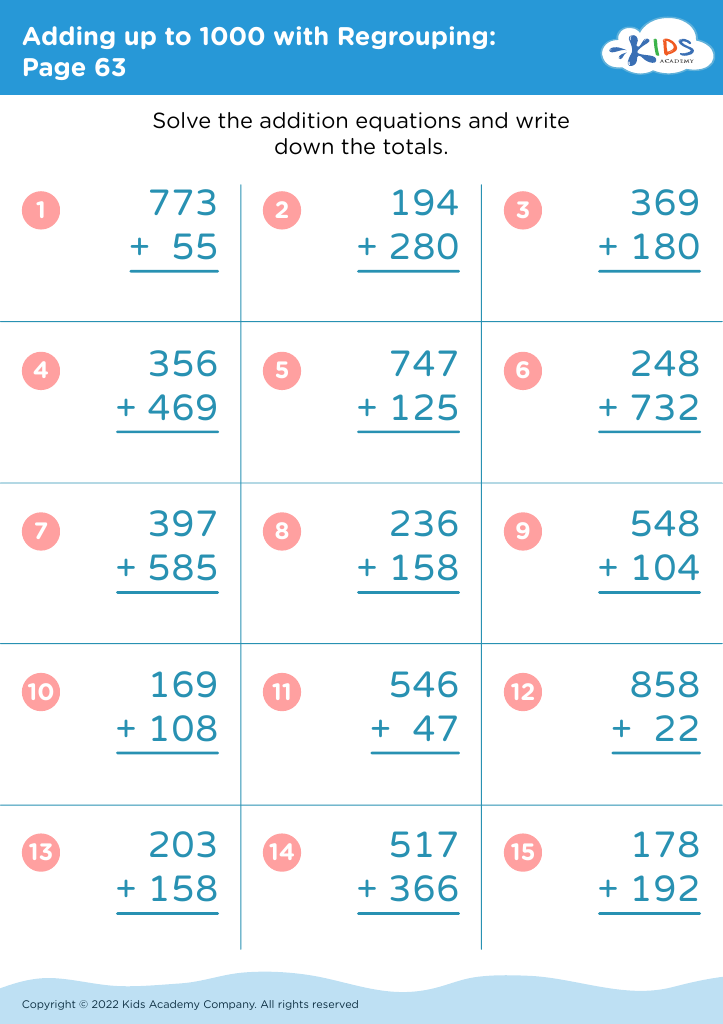
Adding up to 1000 with Regrouping: Page 63
Worksheet
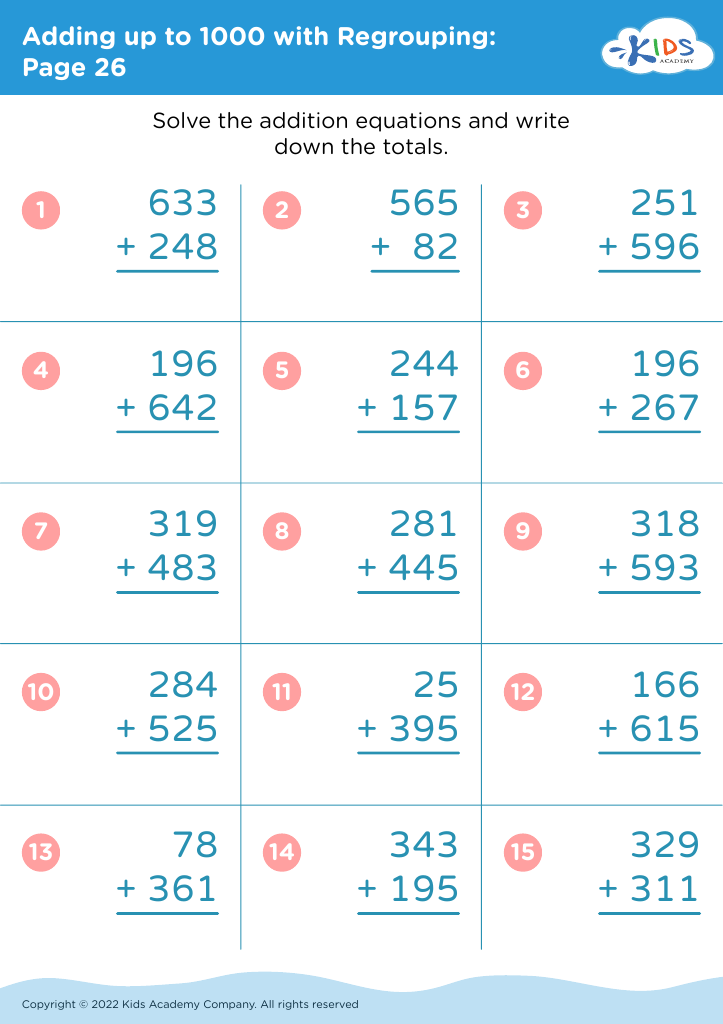
Adding up to 1000 with Regrouping: Page 26
Worksheet
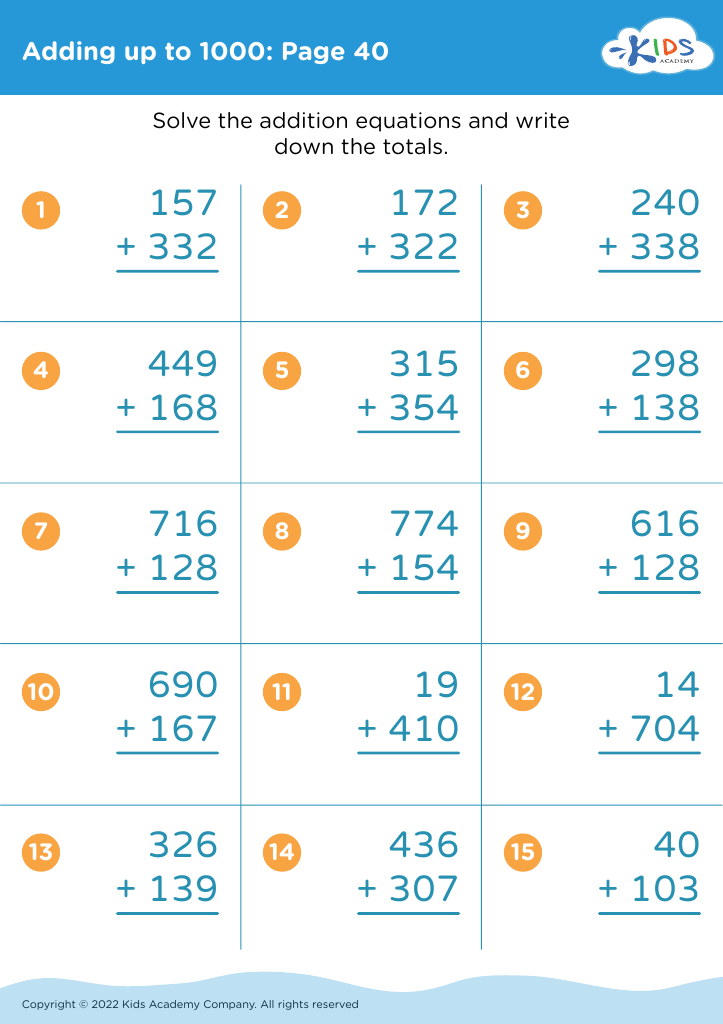
Adding up to 1000: Page 40

Adding up to 1000: Page 40

Adding up to 1000: Page 40
Worksheet
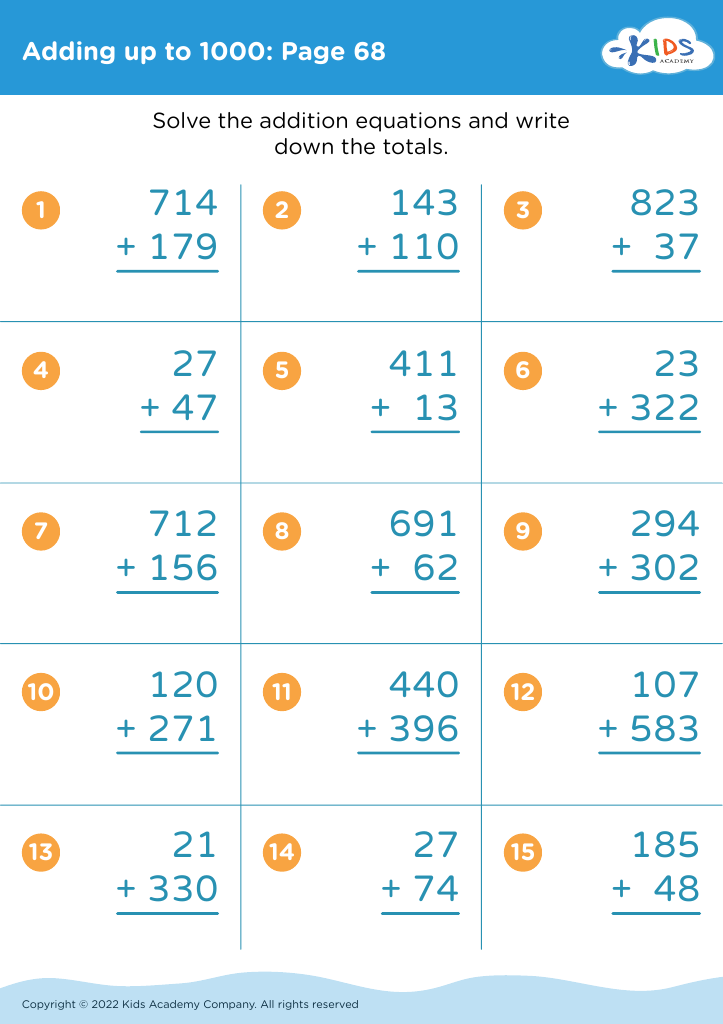
Adding up to 1000: Page 68

Adding up to 1000: Page 68

Adding up to 1000: Page 68
Worksheet
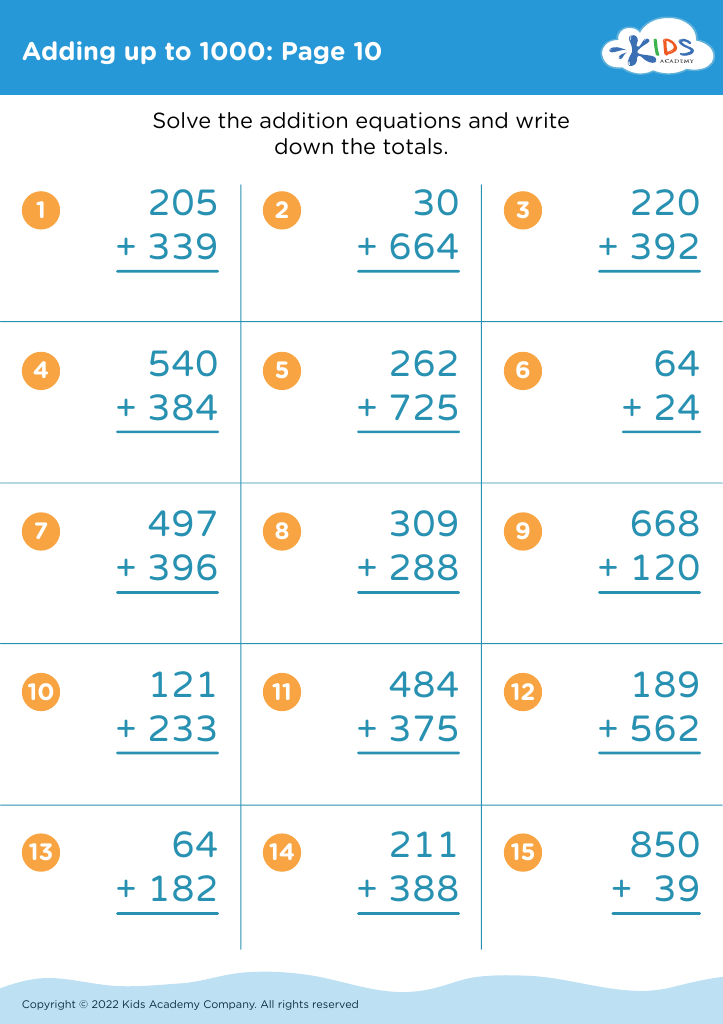
Adding up to 1000: Page 10

Adding up to 1000: Page 10

Adding up to 1000: Page 10
Worksheet
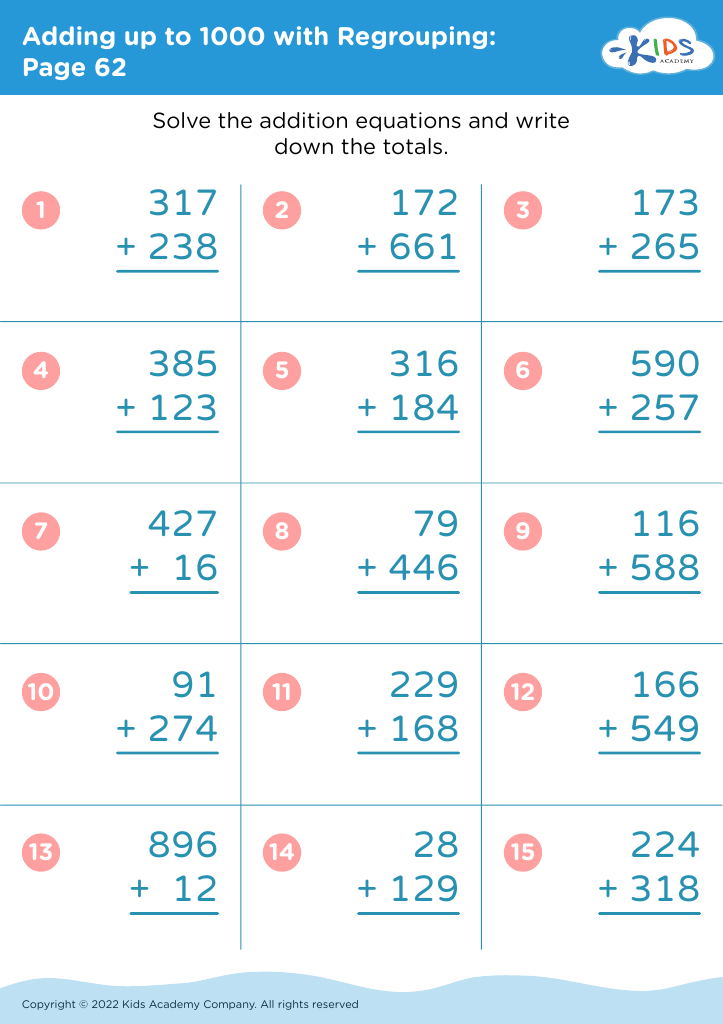
Adding up to 1000 with Regrouping: Page 62
Worksheet
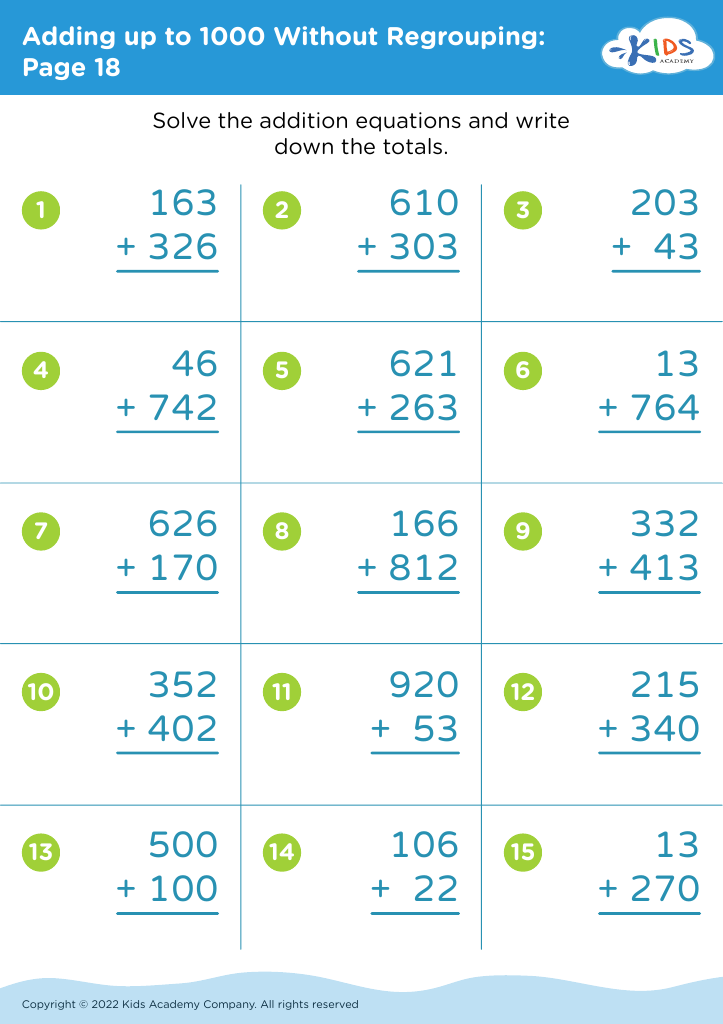
Adding up to 1000 Without Regrouping: Page 18
Worksheet
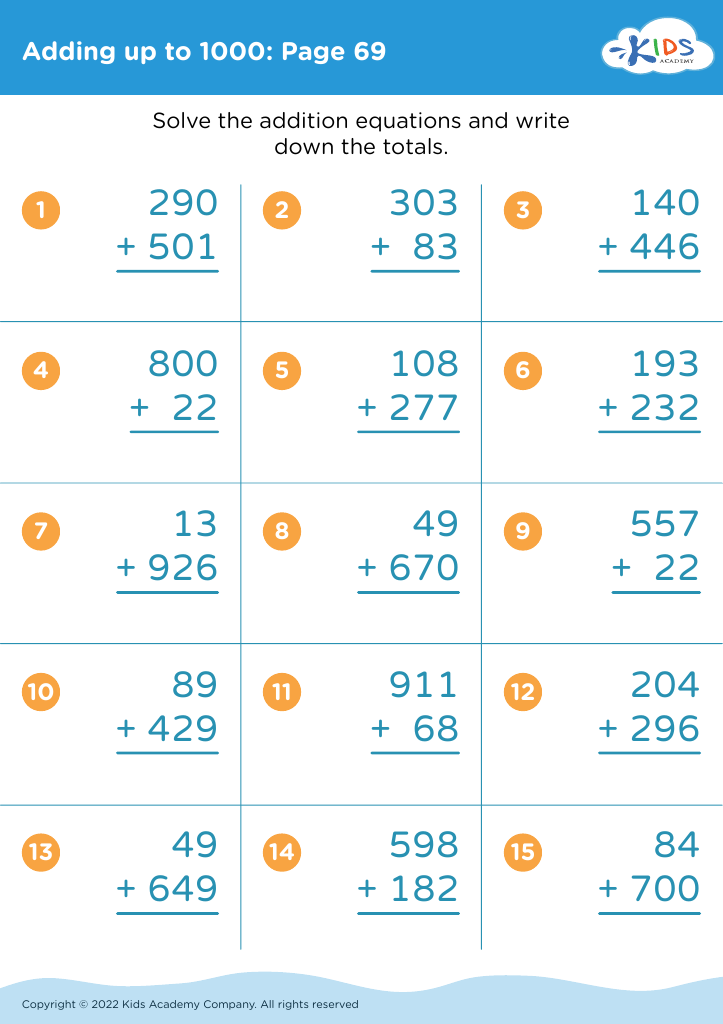
Adding up to 1000: Page 69

Adding up to 1000: Page 69

Adding up to 1000: Page 69
Worksheet
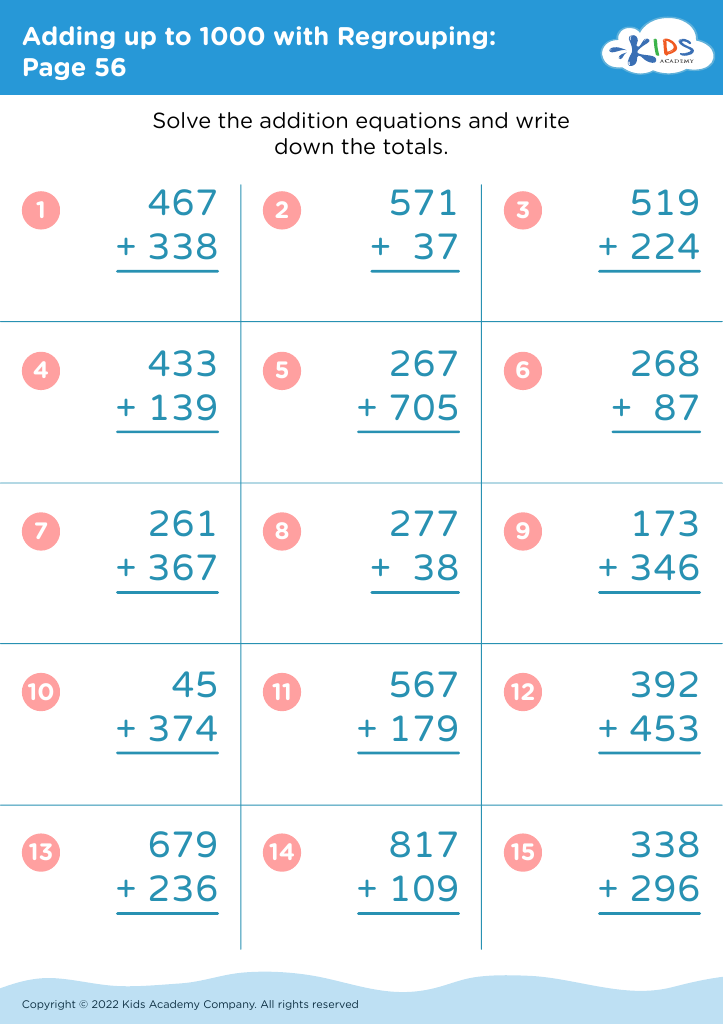
Adding up to 1000 with Regrouping: Page 56
Worksheet
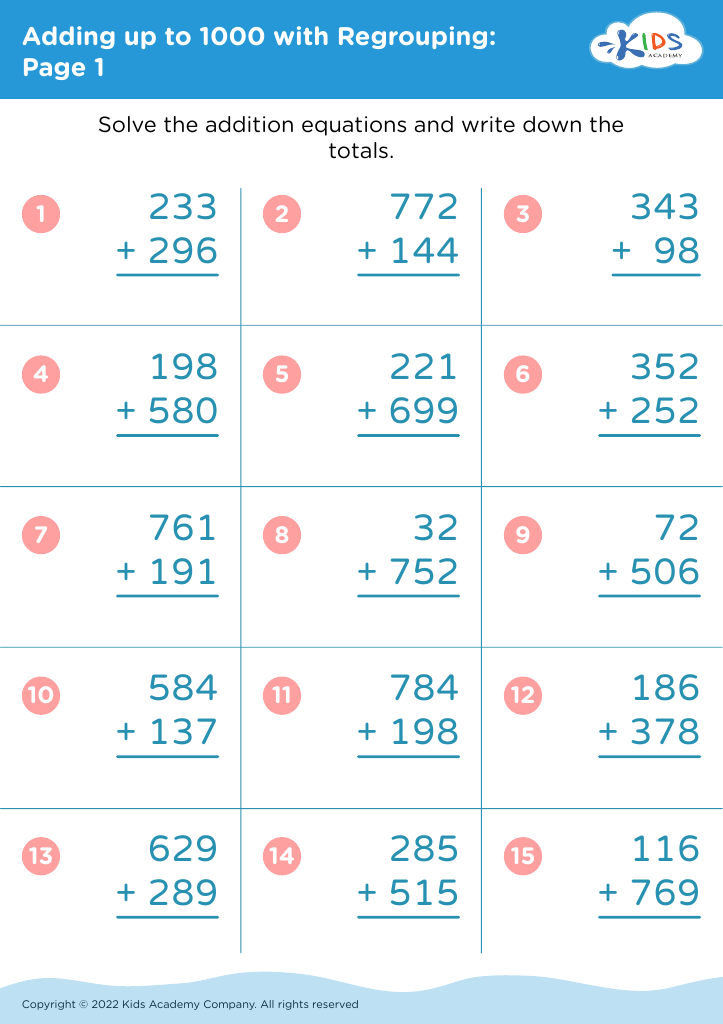
Adding up to 1000 with Regrouping: Page 1
Worksheet
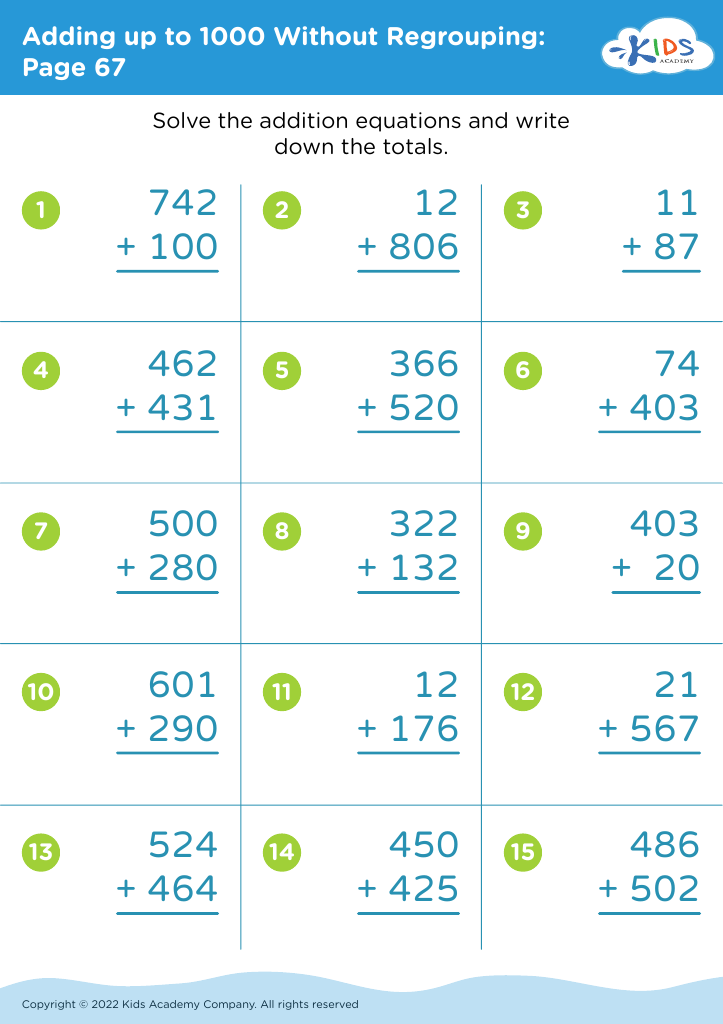
Adding up to 1000 Without Regrouping: Page 67
Worksheet
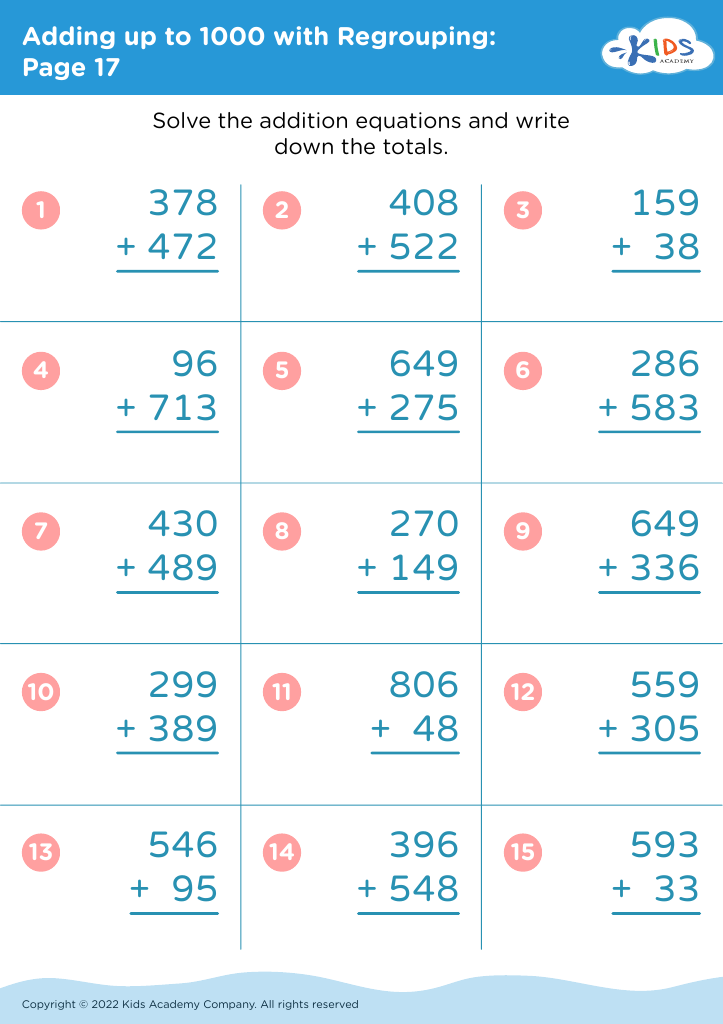
Adding up to 1000 with Regrouping: Page 17
Worksheet
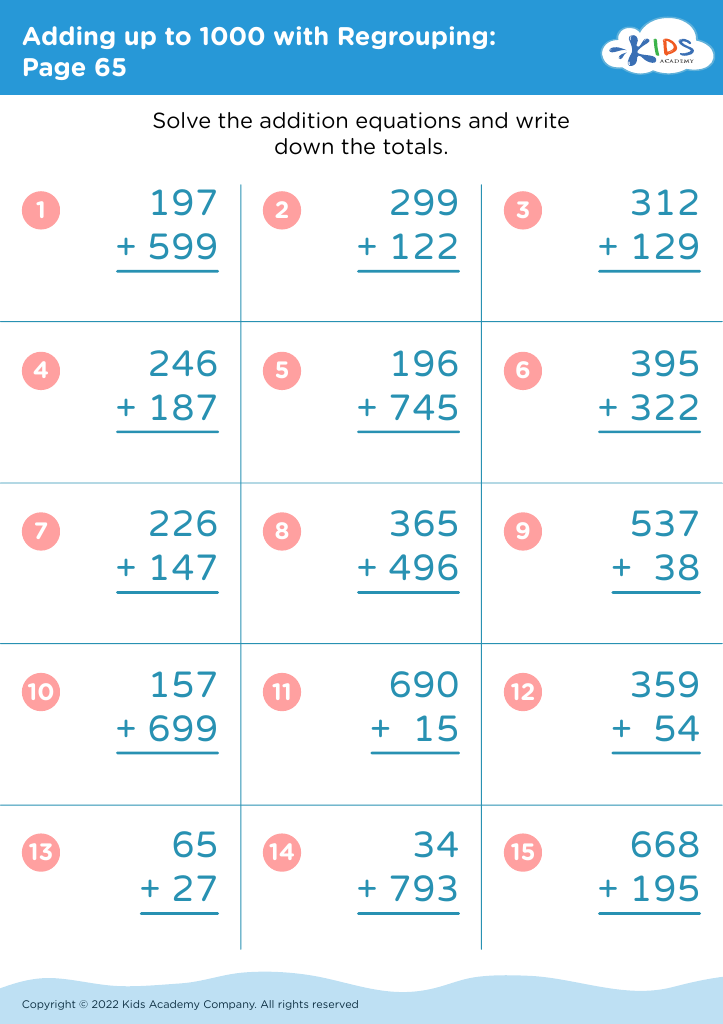
Adding up to 1000 with Regrouping: Page 65
Worksheet
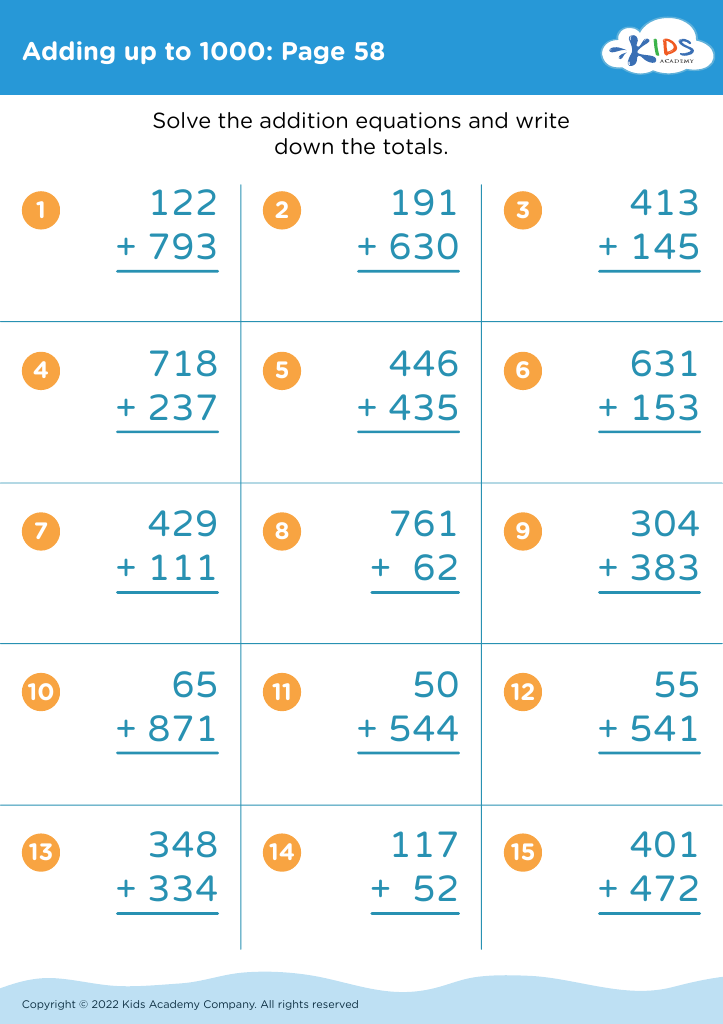
Adding up to 1000: Page 58

Adding up to 1000: Page 58

Adding up to 1000: Page 58
Worksheet
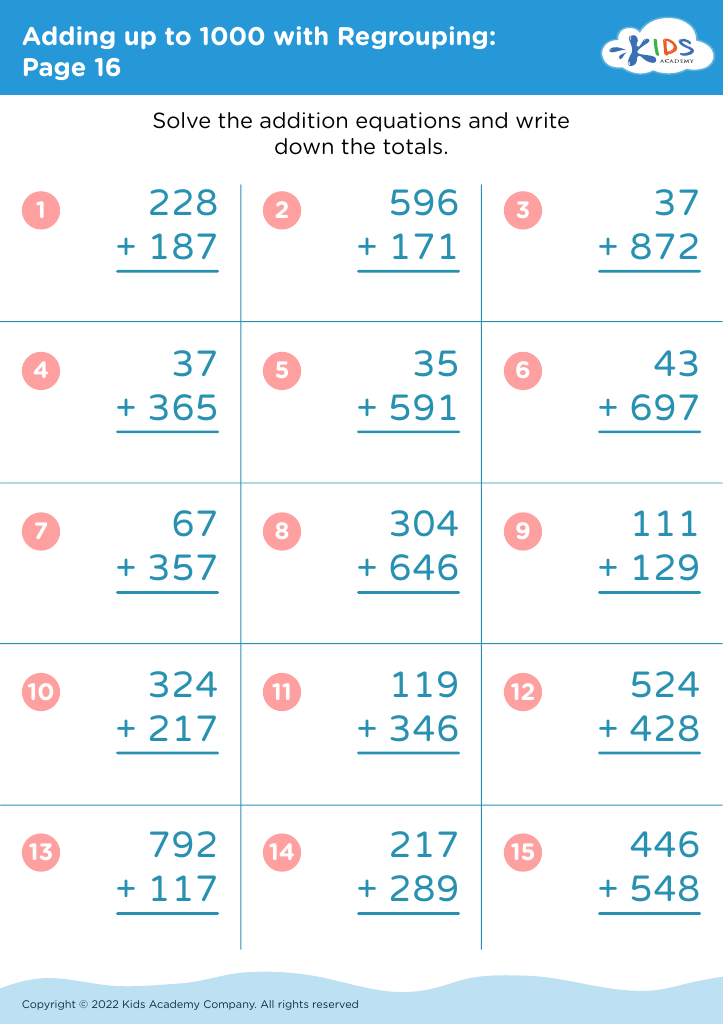
Adding up to 1000 with Regrouping: Page 16
Worksheet
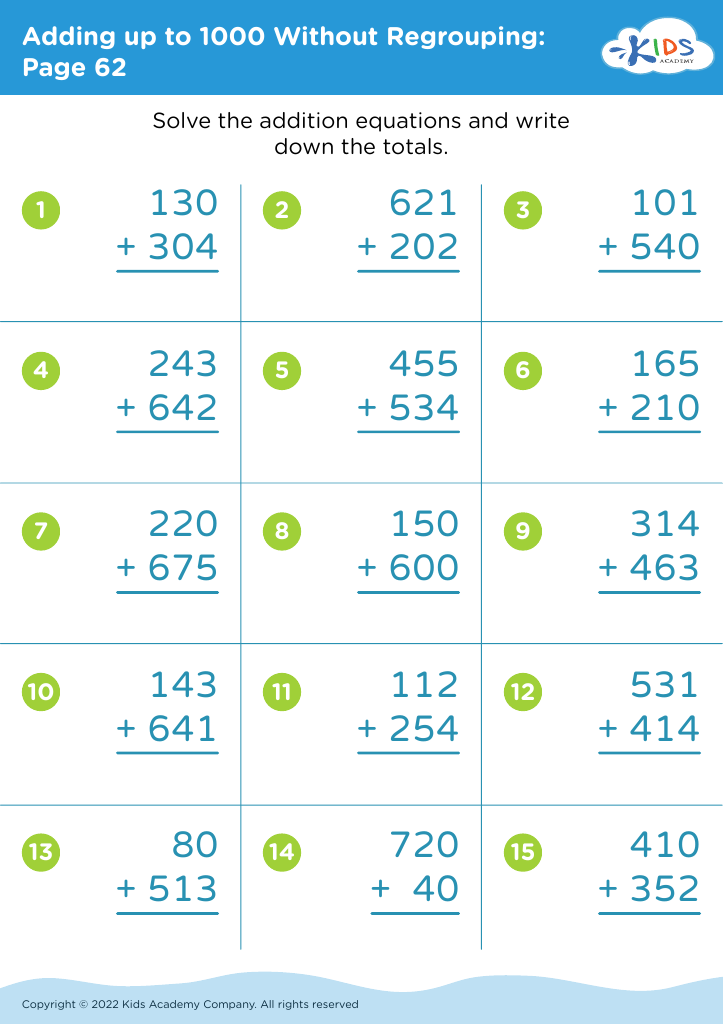
Adding up to 1000 Without Regrouping: Page 62
Worksheet


Teaching 7-year-olds to compare fractions that add up to 1000 is essential for several reasons. First, it enhances their foundational math skills. Understanding fractions is crucial as it forms the basis for more complex mathematical concepts in higher grades. By learning to compare fractions, children develop critical thinking and reasoning skills, enabling them to make informed decisions and solve problems effectively.

Second, this exercise fosters a sense of numerical relationships. When children grasp how different fractions relate to a whole and can see how they can combine to make larger numbers, they gain a stronger conceptual understanding of math in real-world contexts, such as cooking or budgeting.

Moreover, engaging with fractions builds confidence in their numerical abilities. When children feel competent in handling fractions, they are more likely to embrace challenges in mathematics and approach the subject with a positive mindset.

Finally, with an emphasis on adding fractions to total 1000, children learn about the importance of well-roundedness and balance, analogous to life skills they will need in various situations. Thus, parents and teachers should prioritize this learning to ensure children are well-equipped for future academic success and practical life applications.