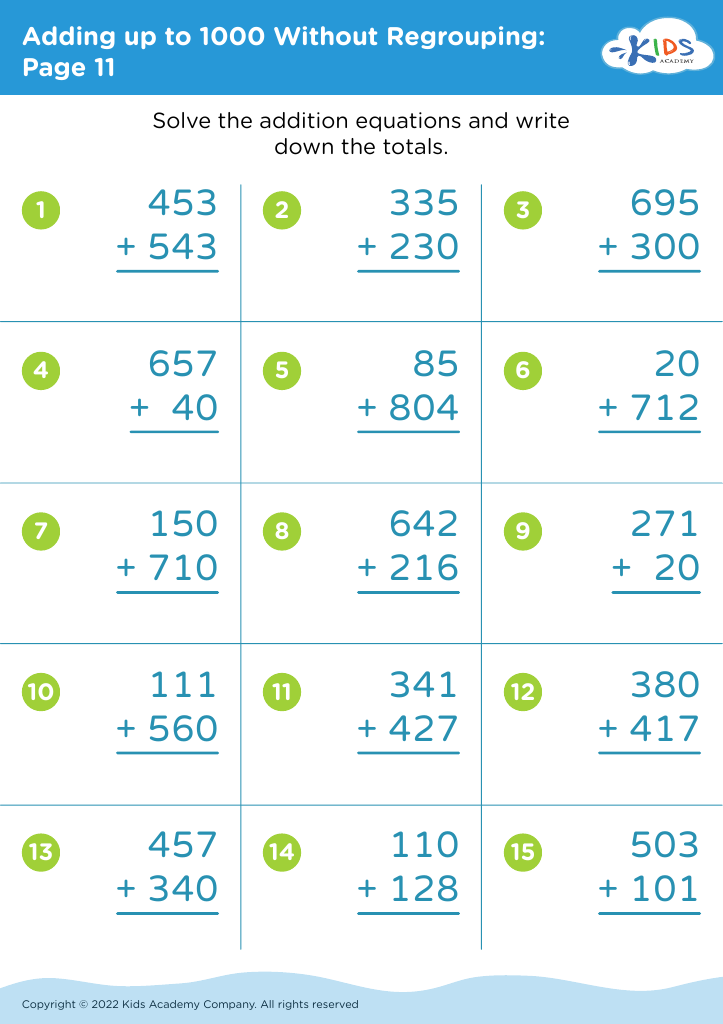
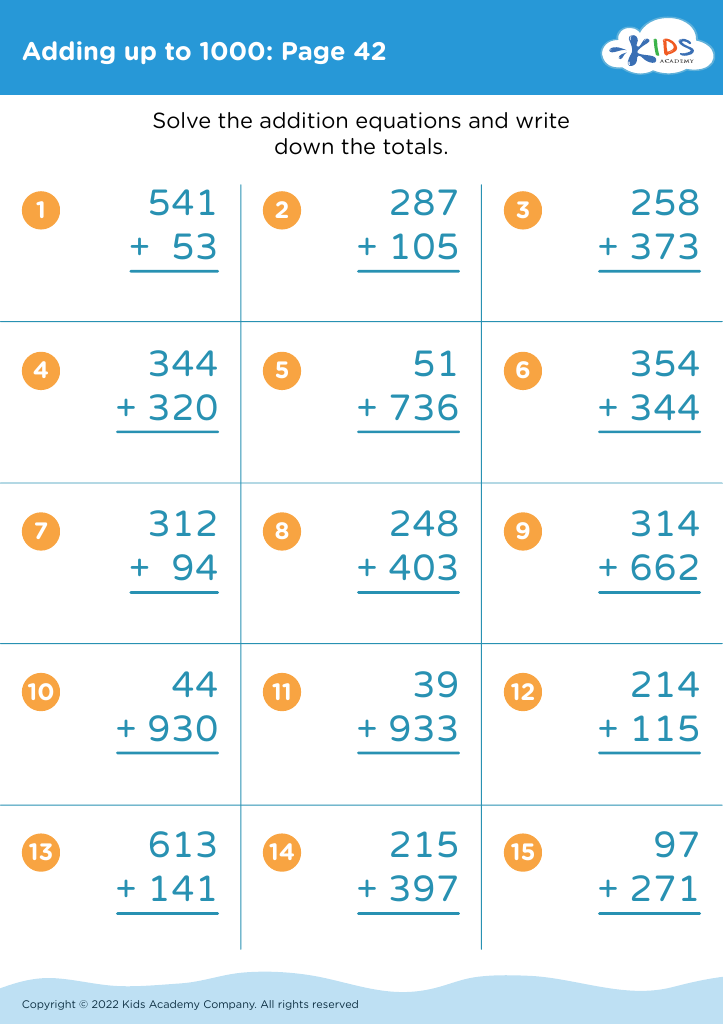




Counting skills and the ability to add numbers up to 1,000 are foundational components of early mathematics education, crucial for 7-year-olds. These skills are essential for several reasons:
Firstly, they foster mathematical fluency and confidence. When children adeptly navigate numbers up to 1,000, they build a strong numerical foundation that supports more advanced mathematical concepts introduced in later grades such as multiplication, division, and problem-solving.
Secondly, counting and adding to 1,000 enhance cognitive development. Children learn patterns, develop logical thinking, and strengthen memory and focus. These cognitive benefits extend beyond math, aiding overall academic performance.
Thirdly, early mastery in counting and addition promotes real-life skills. Whether managing money, telling time, measuring ingredients for a recipe, or reading dates and calendars, these numerical abilities are integral to everyday tasks.
Fourthly, practicing these skills encourages perseverance and a growth mindset. Working through numerical challenges teaches children that effort leads to improvement and success, an attitude beneficial throughout life.
Therefore, parents and teachers should prioritize these counting skills. They're not just about achieving good grades but about cultivating an inquisitive, competent, and confident individual capable of tackling academic challenges and everyday activities. Investing time and resources into developing these abilities pays dividends both academically and in everyday life experiences.








