Develop critical thinking Adding up to 1000 Worksheets for 7-Year-Olds
3 filtered results
-
From - To
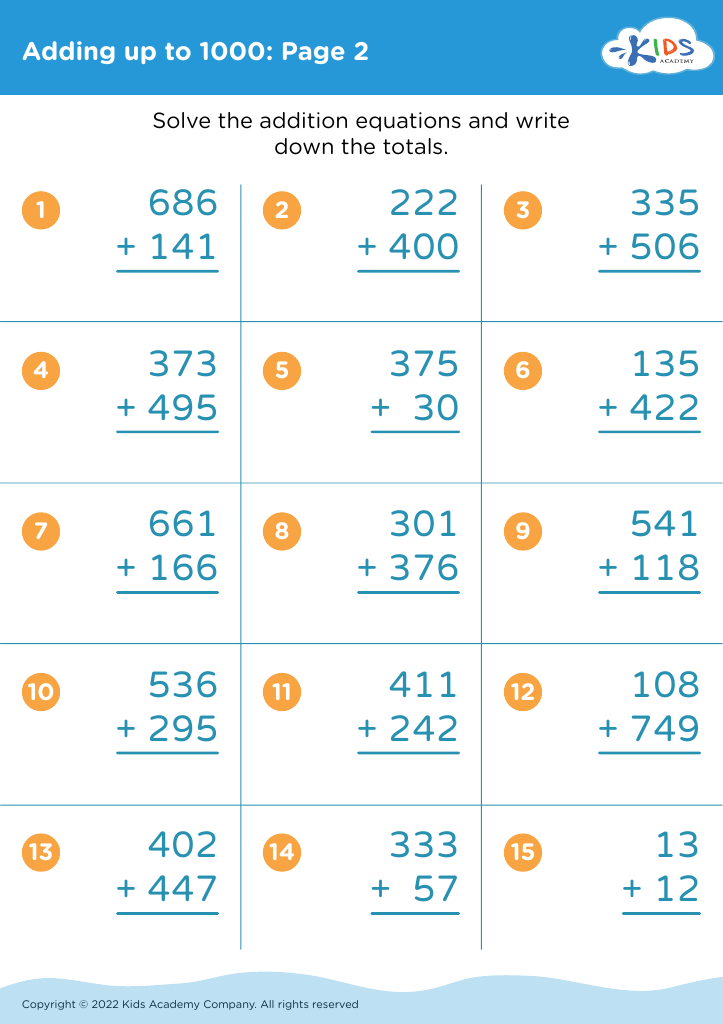
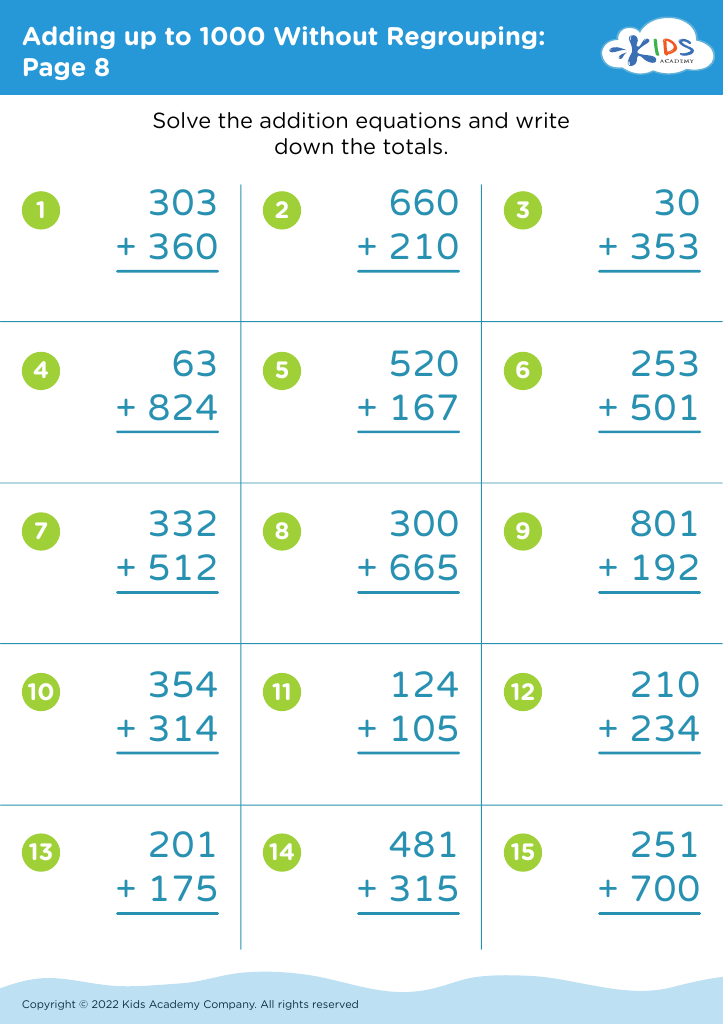
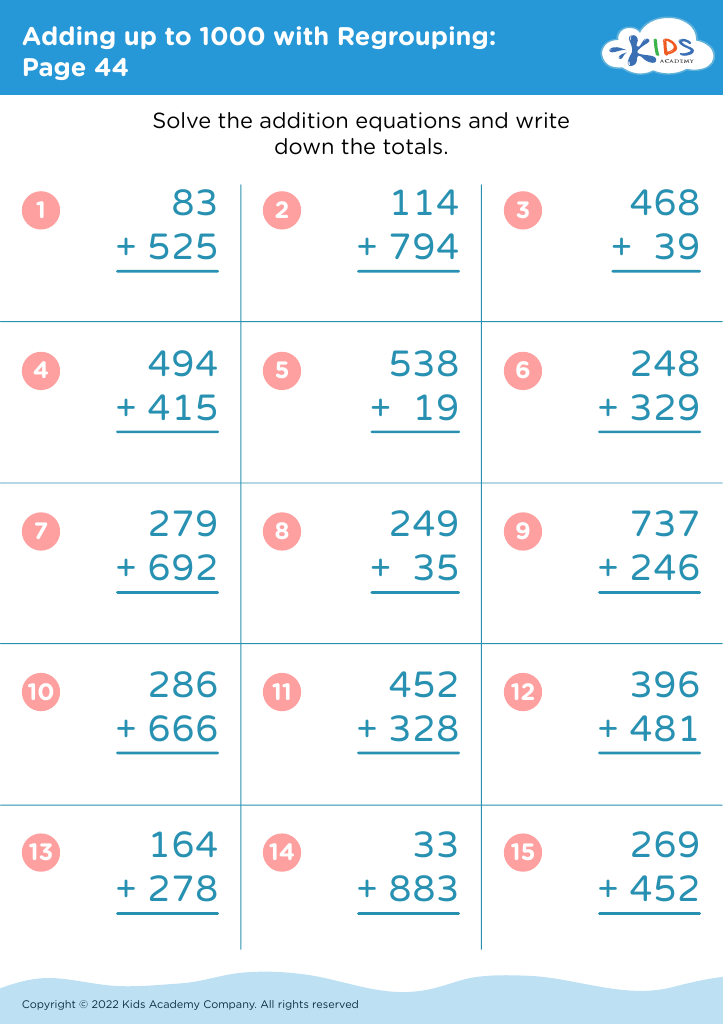
Unlock the potential of your 7-year-olds with our "Develop Critical Thinking: Adding Up to 1000 Worksheets." These thoughtfully designed worksheets not only enhance math skills but also encourage critical thinking, problem-solving, and logical reasoning. Engage young learners with fun and interactive exercises tailored to their developmental stage. Our activities challenge students to explore different strategies for addition, enhancing their understanding of numbers and relationships. Ideal for classroom or home use, these worksheets promote a deeper comprehension of mathematics while building essential analytical skills that lay the foundation for future learning. Download now and inspire your child’s critical thinking journey!



Developing critical thinking skills in 7-year-olds is crucial for their overall growth and future success. At this age, children are naturally curious and eager to explore the world around them. By fostering critical thinking, parents and teachers can encourage this curiosity and teach children how to analyze information, solve problems, and think independently.
Critical thinking helps young learners to differentiate between facts and opinions, enhancing their decision-making capabilities. As they learn to question information and seek evidence, they develop a deeper understanding of subjects, which improves creativity and academic performance. This skill empowers children to tackle complex problems, both in school and in daily life.
Furthermore, nurturing critical thinking fosters resilience. When children encounter challenges, they will be better equipped to think through solutions and learn from mistakes rather than giving up. Encouraging discussions, promoting questions, and engaging in games that require reasoning can significantly enhance these abilities.
Ultimately, prioritizing critical thinking in early education lays a strong foundation for lifelong learning, self-sufficiency, and responsible citizenship. By investing in these skills now, parents and teachers are ensuring that children become thoughtful, informed, and equipped to navigate an ever-changing world with confidence.








