Fraction Addition Adding up to 1000 Worksheets for 7-Year-Olds
5 filtered results
-
From - To
Unlock the world of fraction addition for your 7-year-old with our engaging "Fraction Addition Adding up to 1000" worksheets. Specially designed for young learners, these worksheets make mastering math concepts fun and interactive. Perfect for enhancing arithmetic skills, our worksheets guide children through adding fractions step-by-step, ensuring foundational understanding. Combining educational excellence with playful elements, each page offers bright visuals and clear instructions to keep kids motivated and confident. Ideal for classroom or at-home learning, our fraction addition worksheets are your go-to resource for building essential math skills while making learning an enjoyable experience.
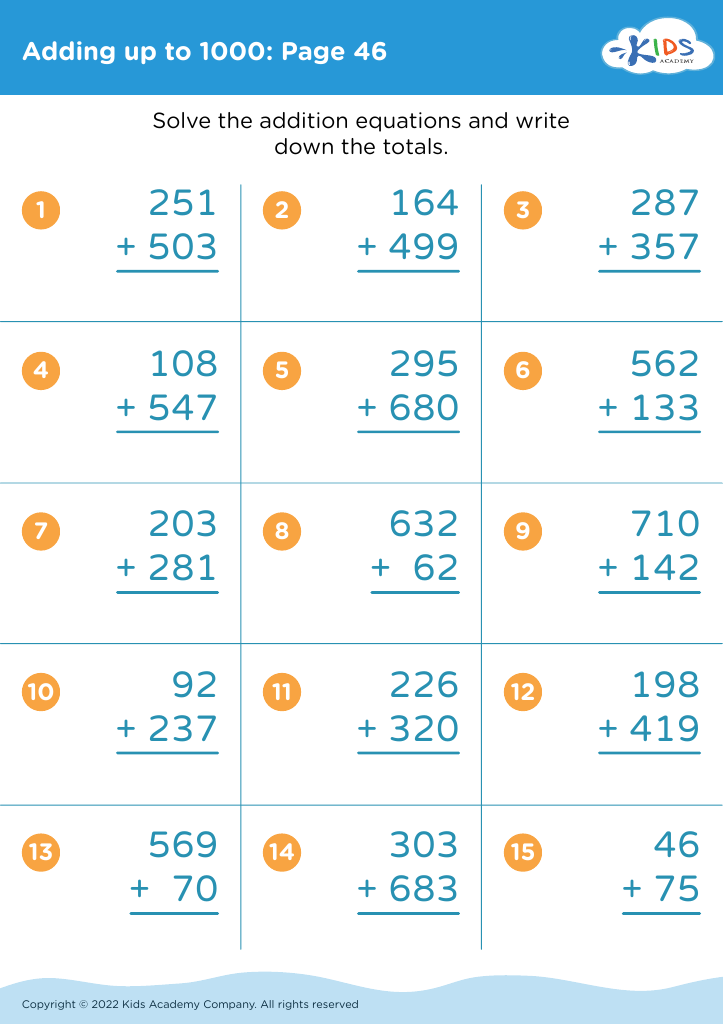
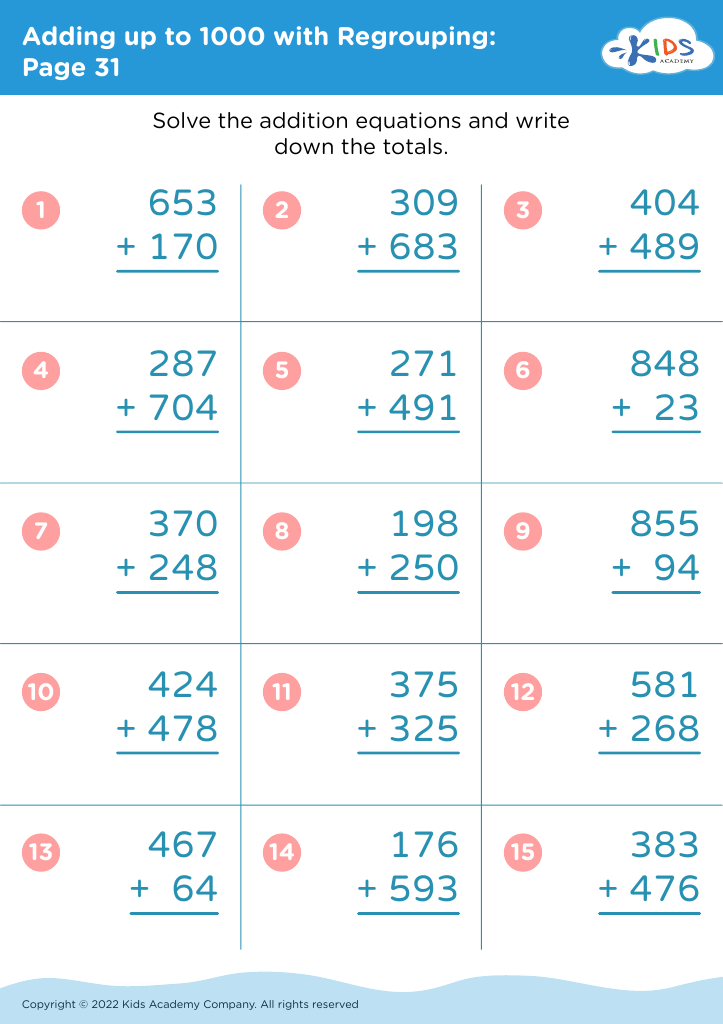
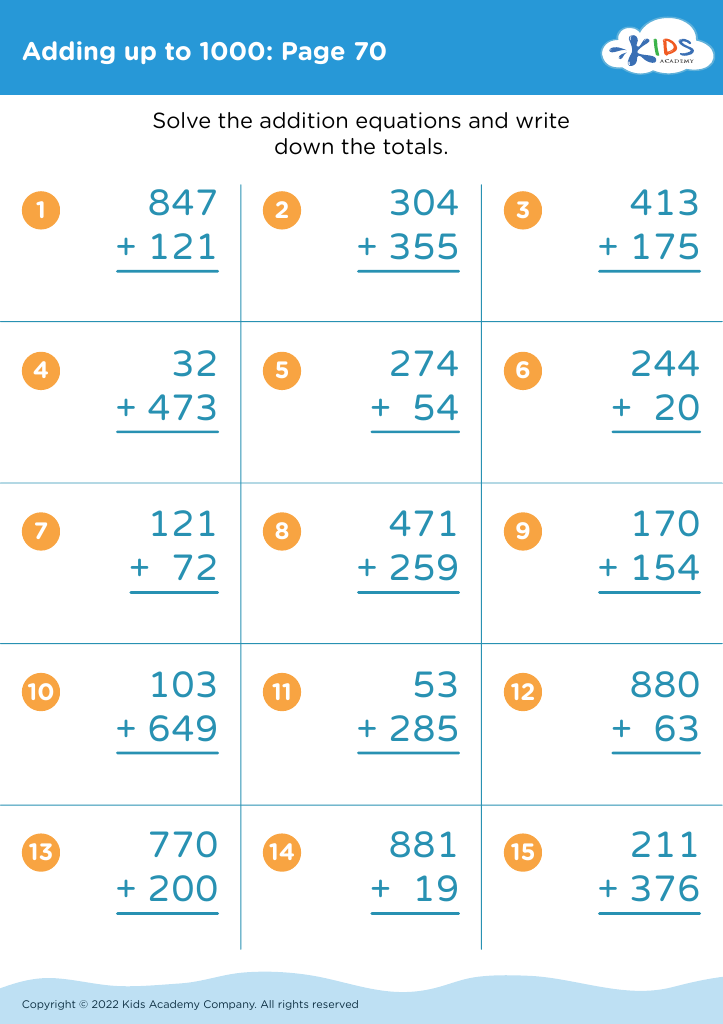
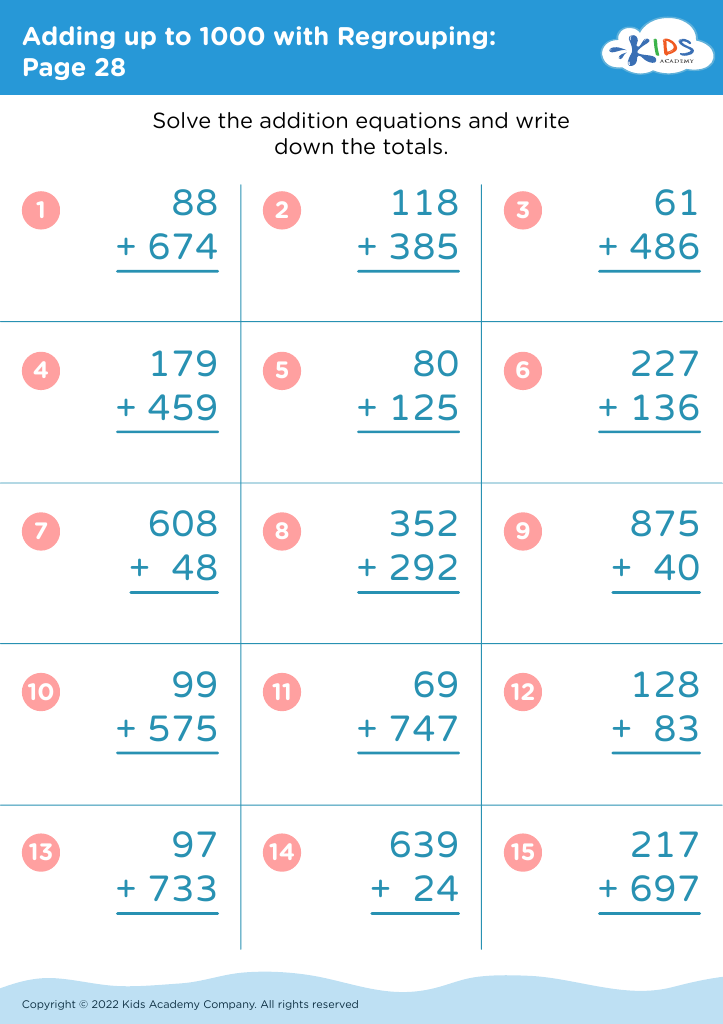
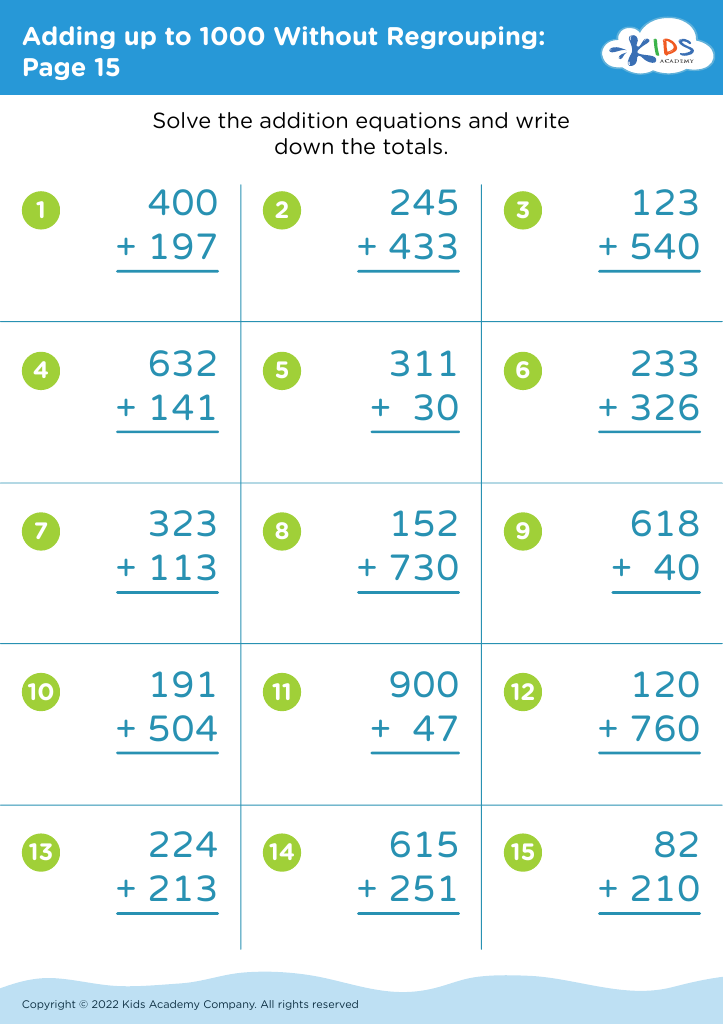



Understanding fraction addition up to 1000 is critical for 7-year-olds because it lays the foundation for future mathematical concepts. First, proficiency in fractions equips children with skills necessary for dealing with numbers in everyday life, such as in cooking, shopping, and even time management. It clarifies how different parts can combine to form a whole, enhancing logical thinking.
Second, exploring large sums up to 1000 introduces kids to the idea that fractions, like whole numbers, can represent large quantities and not just smaller subdivision interests typical at earlier stages. It enhances their grasp on scale, further preparing them for complex mathematics.
Third, mastering fractions and large numerical additions polishes essential analytical skills. Kids begin to comprehend the relevance between smaller parts and greater totals deeply, an understanding borrowed across subjects — from science where ratios matter, to social studies where population statistics may apply.
Additionally, engaging them with higher-range fractions promotes practice in place value comprehension, a fundamental principle emphasized consistently in early social arithmetic's standards.
Hence, investing time in teaching fraction addition up to reasonable large limits like 1000 to 7-year-olds offers a wealth of practical life applications, stimulating cognitive skills, and providing a sturdy mathematical foundation for advanced learning. This, in turn, cultivates a well-balanced educational growth that benefits broader consulting skills.








