Identify shapes Adding up to 1000 Worksheets for 7-Year-Olds
4 filtered results
-
From - To
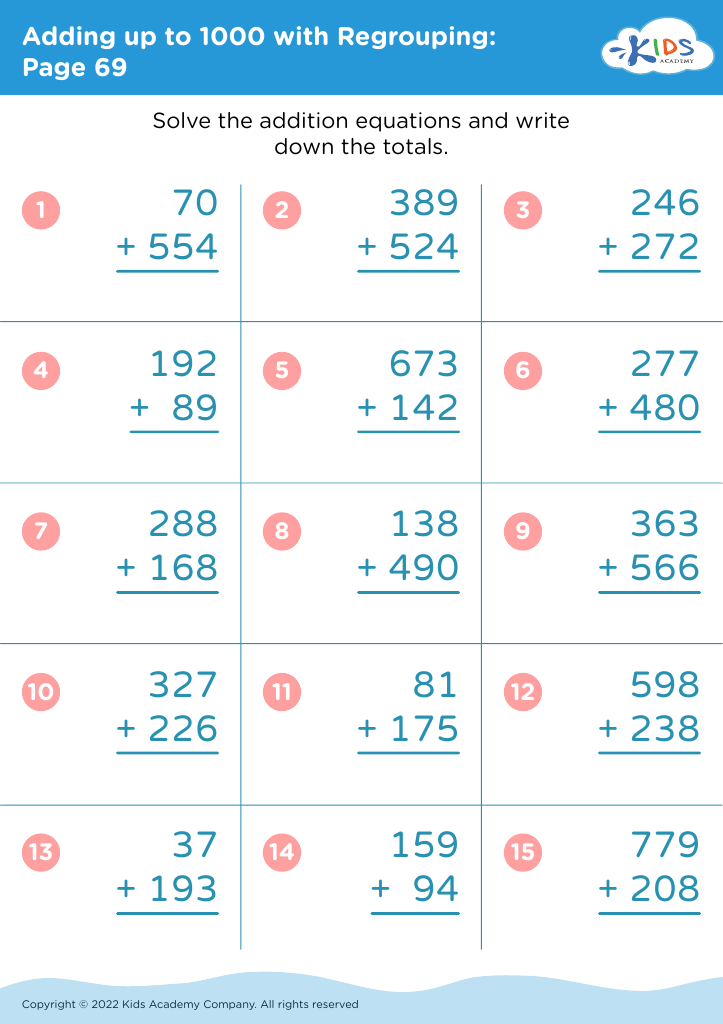
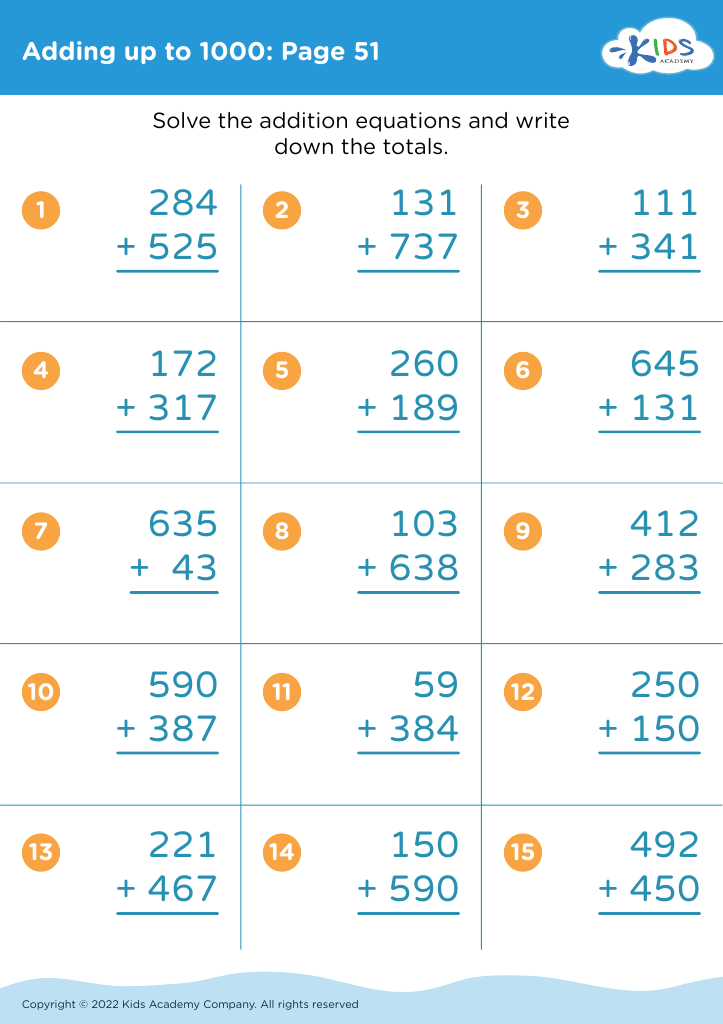
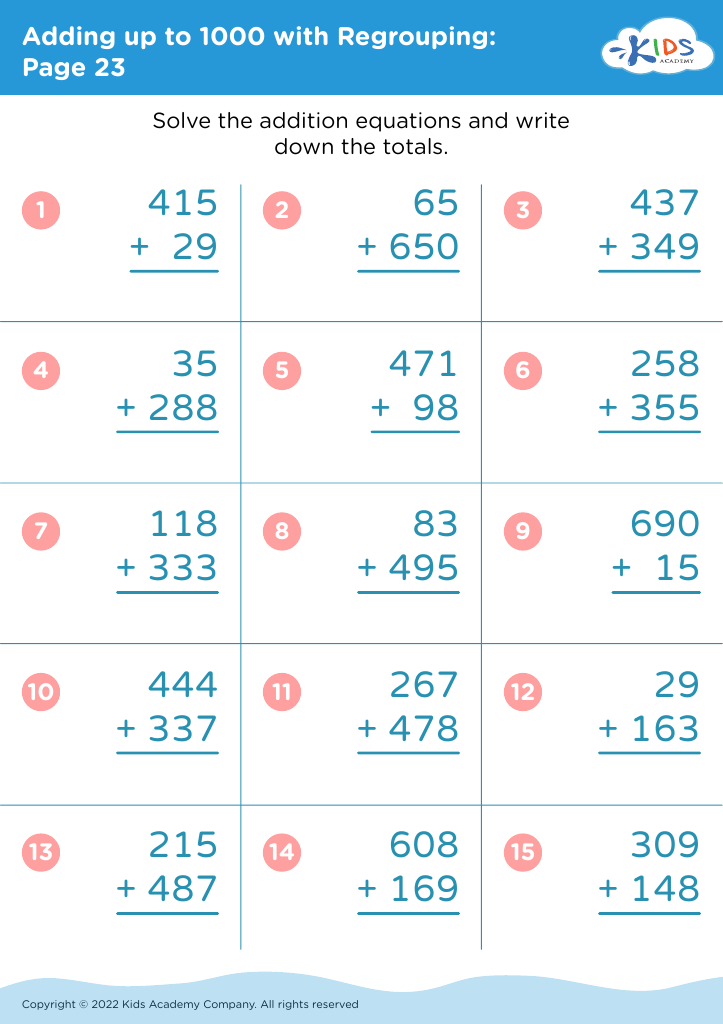
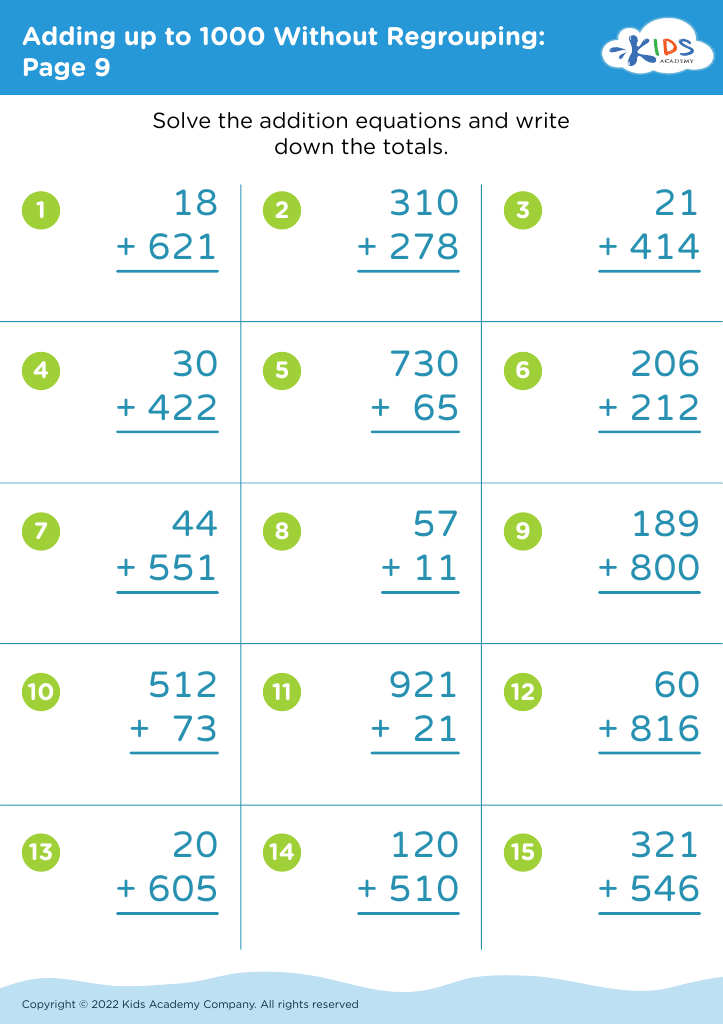
Boost your 7-year-old's math skills with our fun and engaging "Identify Shapes Adding up to 1000 Worksheets"! Designed to help children understand geometric shapes while mastering addition, these worksheets provide a unique blend of learning and creativity. Your child will solve problems that involve identifying various shapes and adding numbers to reach a total of 1000, enhancing both their mathematical and spatial reasoning abilities. With colorful illustrations and age-appropriate activities, these worksheets make learning enjoyable. Perfect for classroom use or home education, they're a great resource for reinforcing essential math skills. Download now and watch your child thrive!



Teaching 7-year-olds to identify shapes and their properties is vital for their cognitive development and mathematical foundation. At this age, children are naturally curious, and engaging with shapes helps enhance their spatial awareness and critical thinking skills. Shapes are fundamental in teaching geometry, which is a key area in mathematics.
Understanding shapes equips children with the tools to describe and communicate about the world around them. It also serves as a gateway to more complex concepts like area, perimeter, and volume that they will encounter in later grades. Furthermore, recognizing shapes can support literacy skills, enabling young learners to visualize and better comprehend stories and real-life scenarios.
Adding shapes up to 1000, or using them in various mathematical operations, encourages proficiency in basic arithmetic and number sense. This practice builds confidence in handling numbers and enhances problem-solving skills.
Incorporating shapes and numerical concepts into daily activities makes learning interactive and enjoyable. Parents and teachers who foster these skills can create a more enriching educational experience, laying the groundwork for future academic success. As children gain mastery over these essential skills, they develop a stronger foundation for lifelong learning.








