Number Recognition Adding up to 1000 Worksheets for 7-Year-Olds - Page 2
31 filtered results
-
From - To
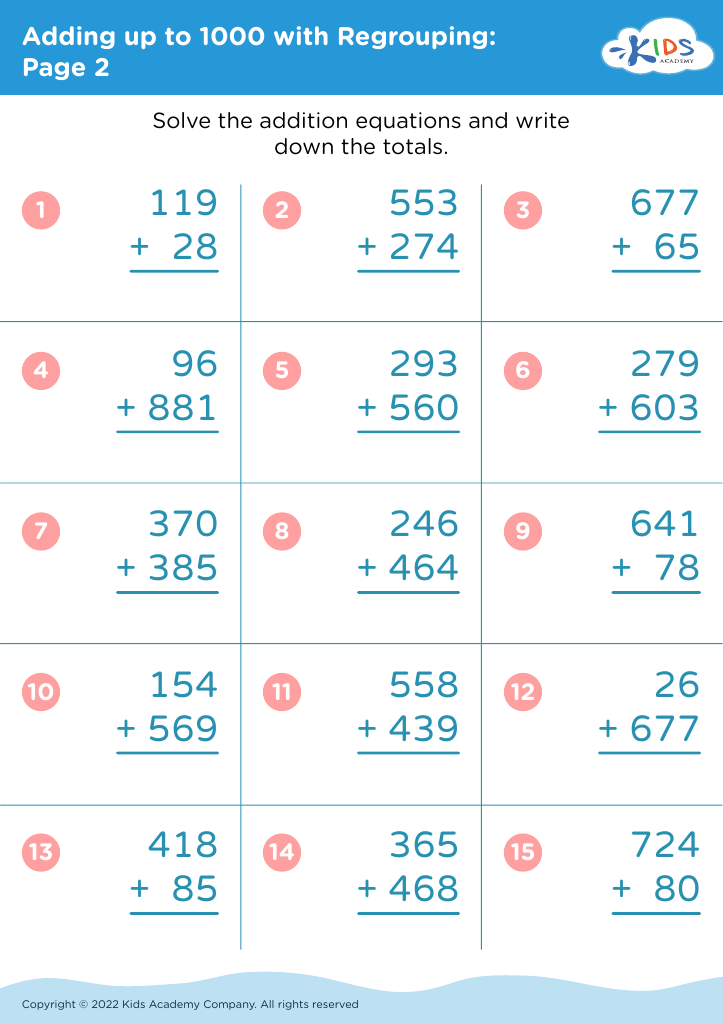
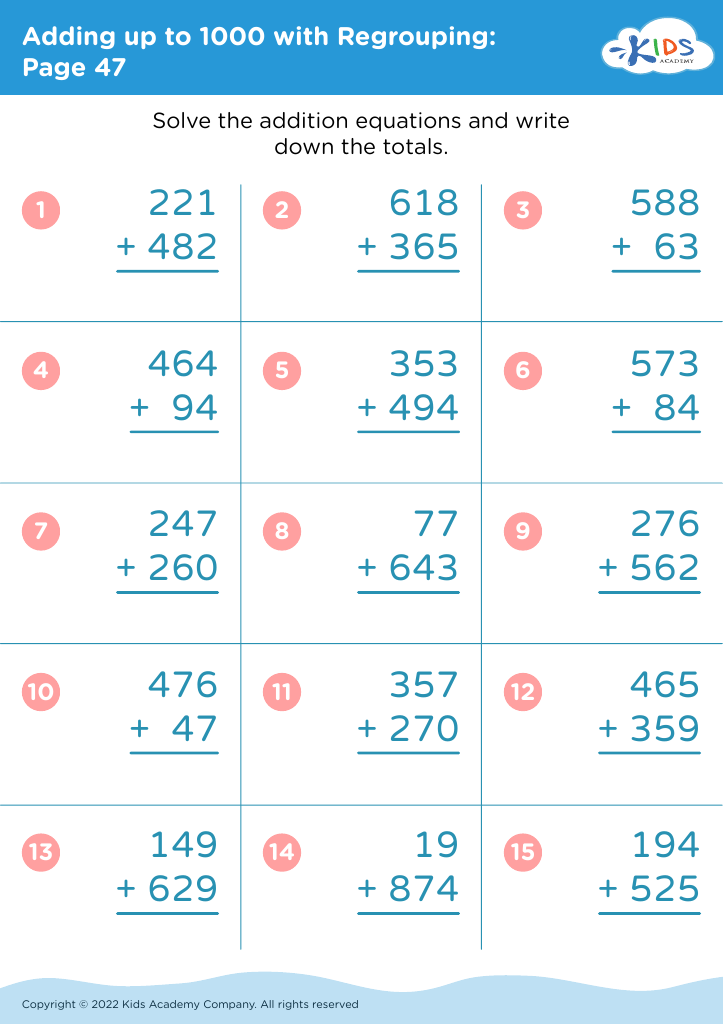
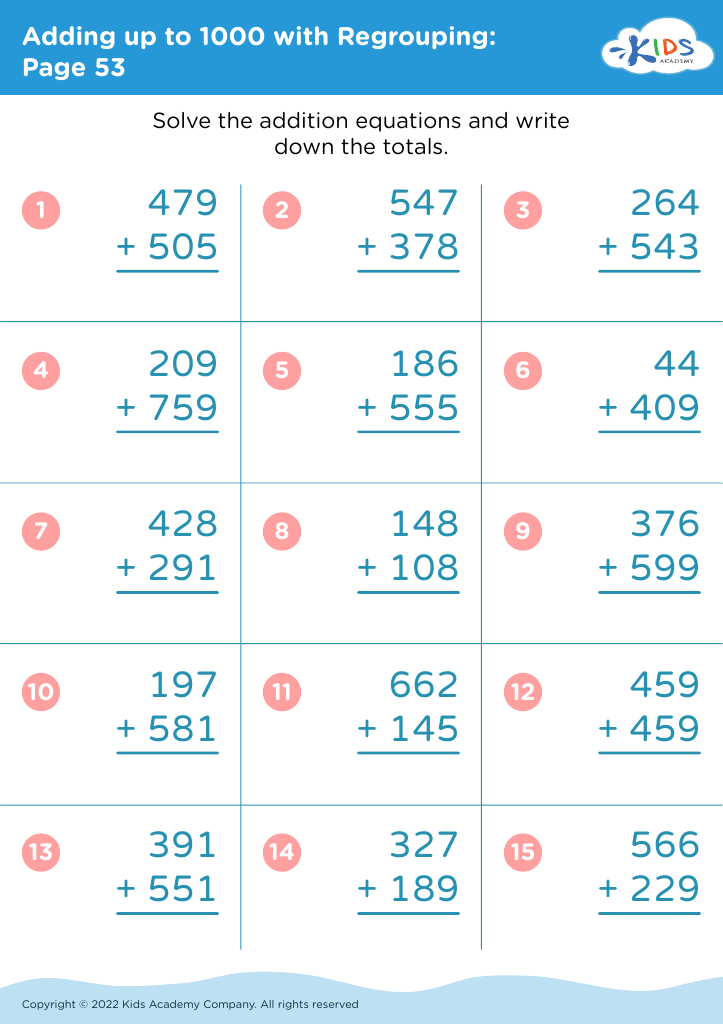
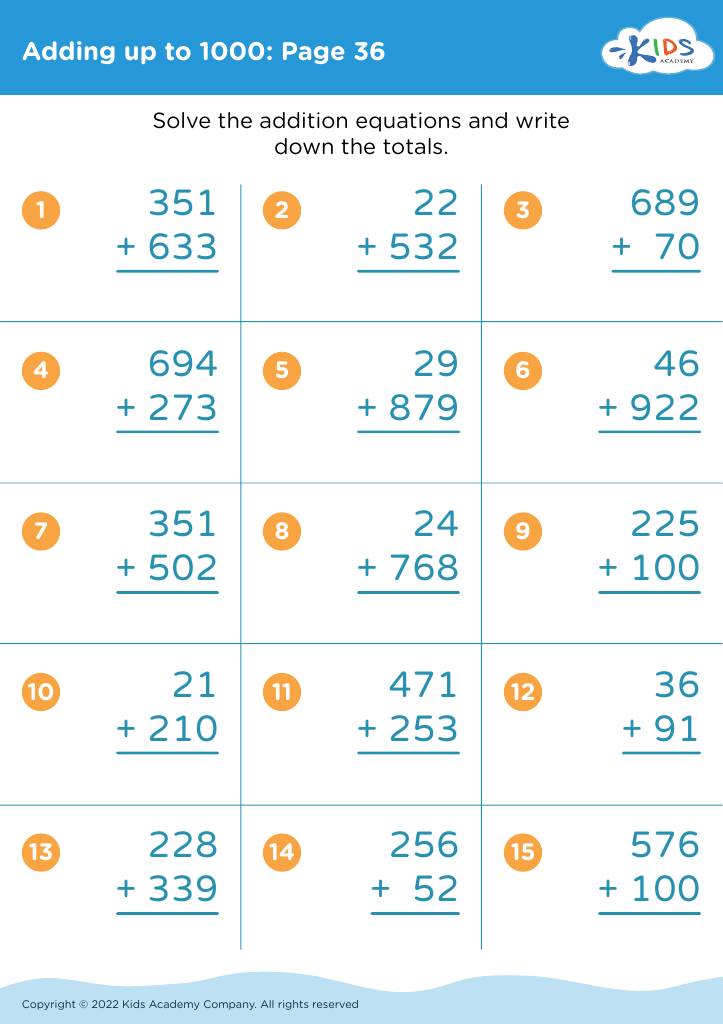
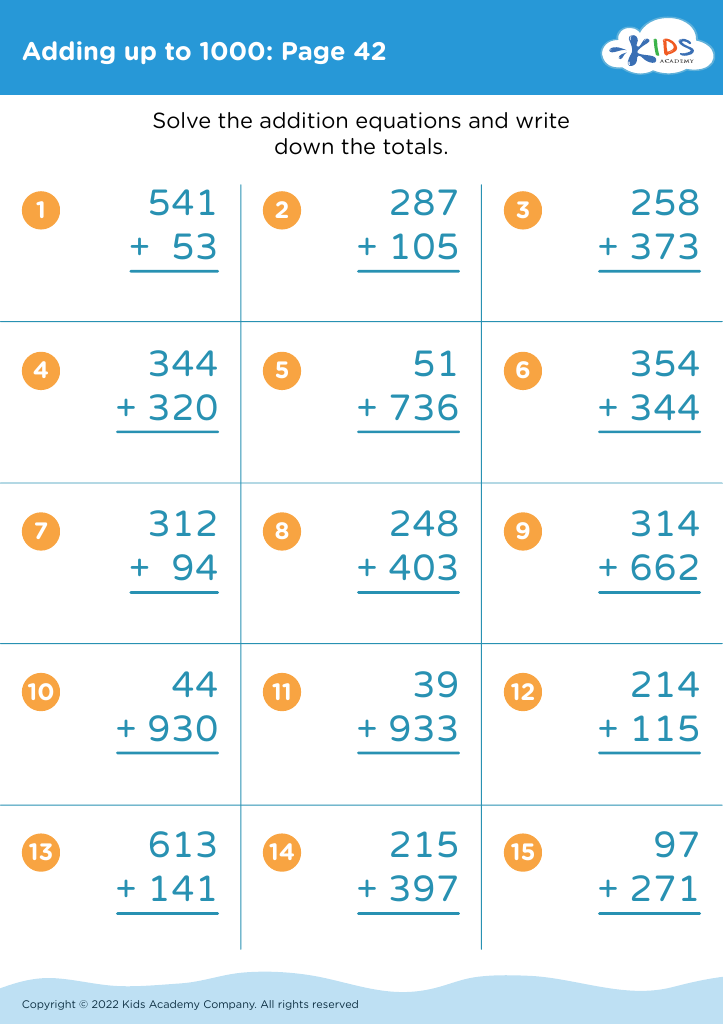
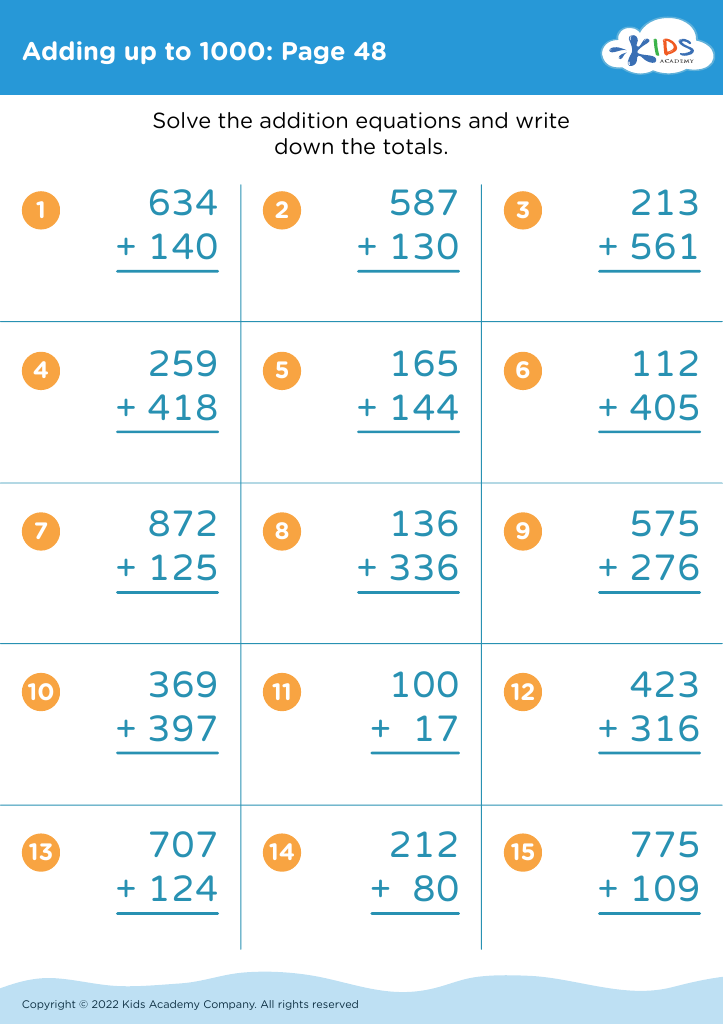
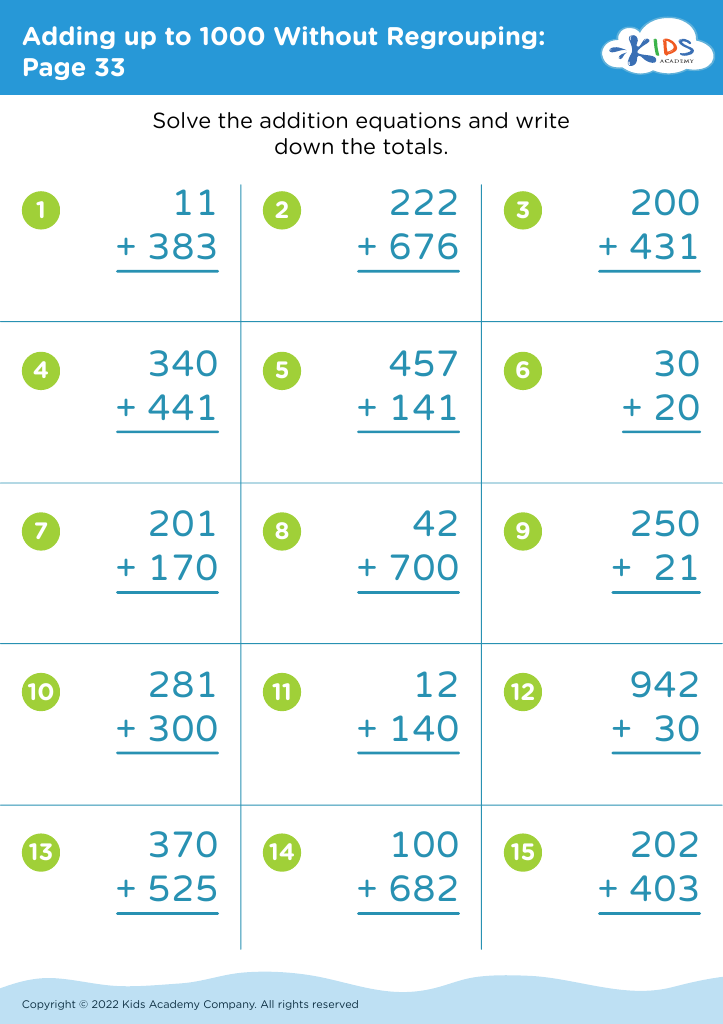




Number recognition and the ability to add up to 1000 in 7-year-olds provide foundational math skills crucial for their academic journey and everyday life. At this formative age, children’s brains are highly adaptive, enabling them to grasp essential numerical concepts more effectively. When parents and teachers prioritize number recognition and basic addition, they lay the groundwork for more advanced mathematical concepts such as multiplication, division, and fractions.
Understanding numbers up to 1000 helps enhance cognitive abilities like logical thinking, problem-solving, and pattern recognition. These skills transcend beyond mathematics, promoting overall intellectual development. Adequate math competence can also boost a child’s confidence and willingness to tackle challenging tasks, fostering a positive attitude towards learning.
Moreover, early math skills are often predictors of future academic success in various subjects. Engaging kids in number games, visual aids, and practical problems makes learning enjoyable, sustaining their curiosity and motivation.
In daily life, numerical fluency helps children manage money, time, and even concepts like measuring. Therefore, investing in number recognition and basic arithmetic at an early age equips children with essential tools to navigate both school and real-world situations confidently and competently.








