Number Sequencing Adding up to 1000 Worksheets for 7-Year-Olds
5 filtered results
-
From - To
Discover our engaging "Number Sequencing Adding Up to 1000 Worksheets" designed for 7-year-olds! These worksheets provide a fun and interactive way for young learners to enhance their number sequencing skills while mastering addition up to 1000. Each worksheet is tailored to promote critical thinking and problem-solving abilities, encouraging children to solve sequences and complete patterns. With vibrant illustrations and age-appropriate exercises, students will enjoy practicing essential math concepts in a playful format. Perfect for classroom use or at-home learning, our resources will support your child's confidence in tackling math challenges. Unlock their potential with our stimulating number sequences today!
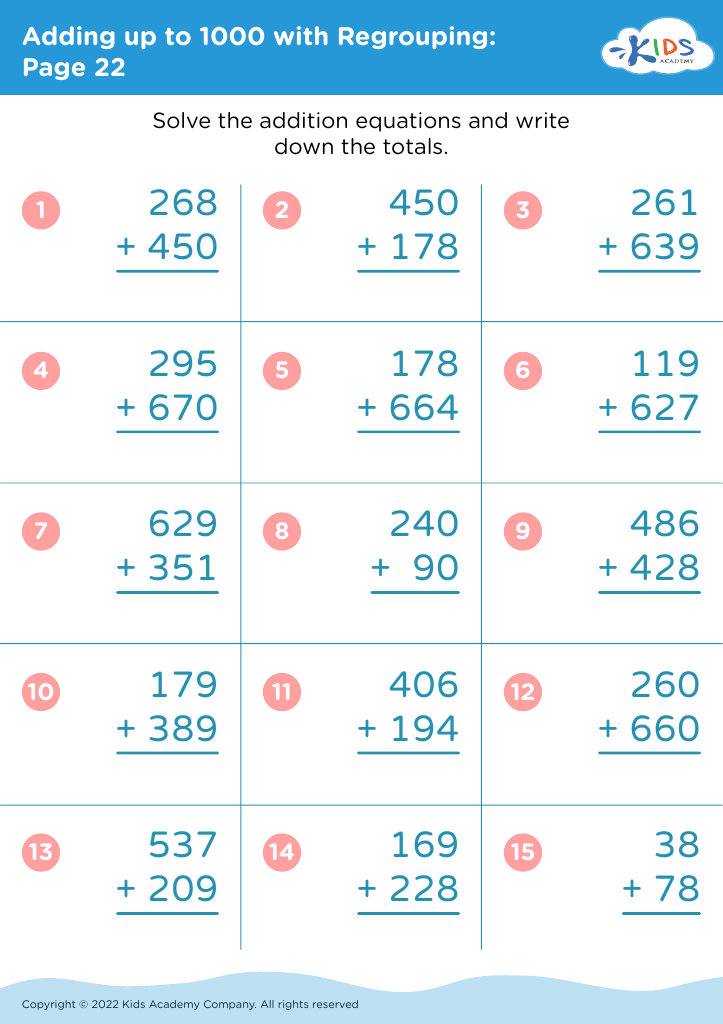
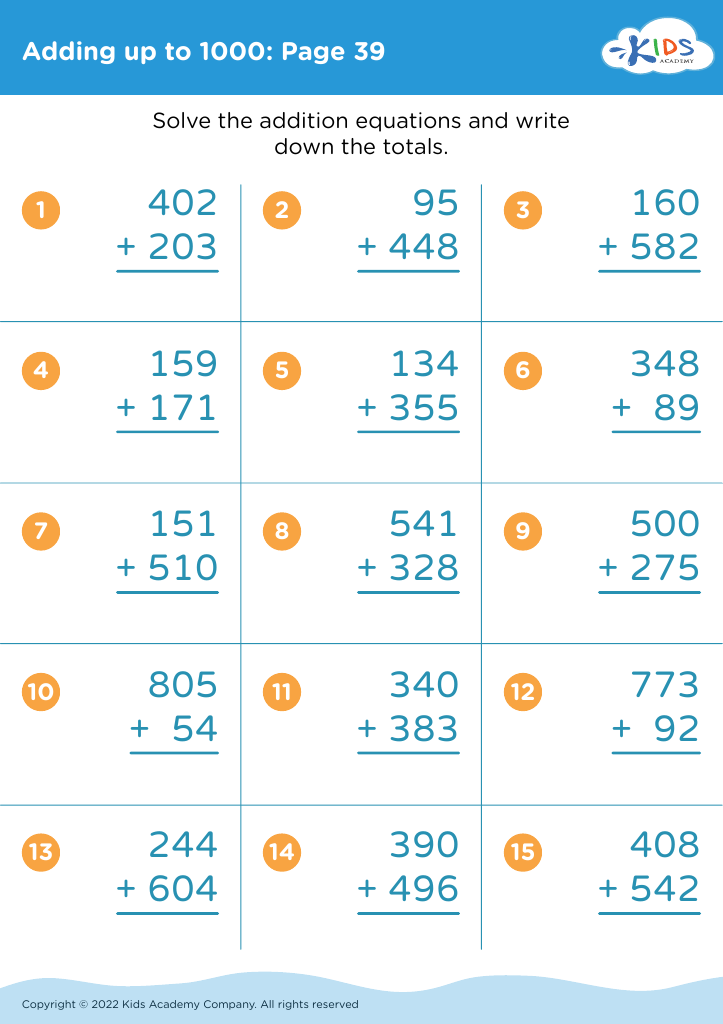
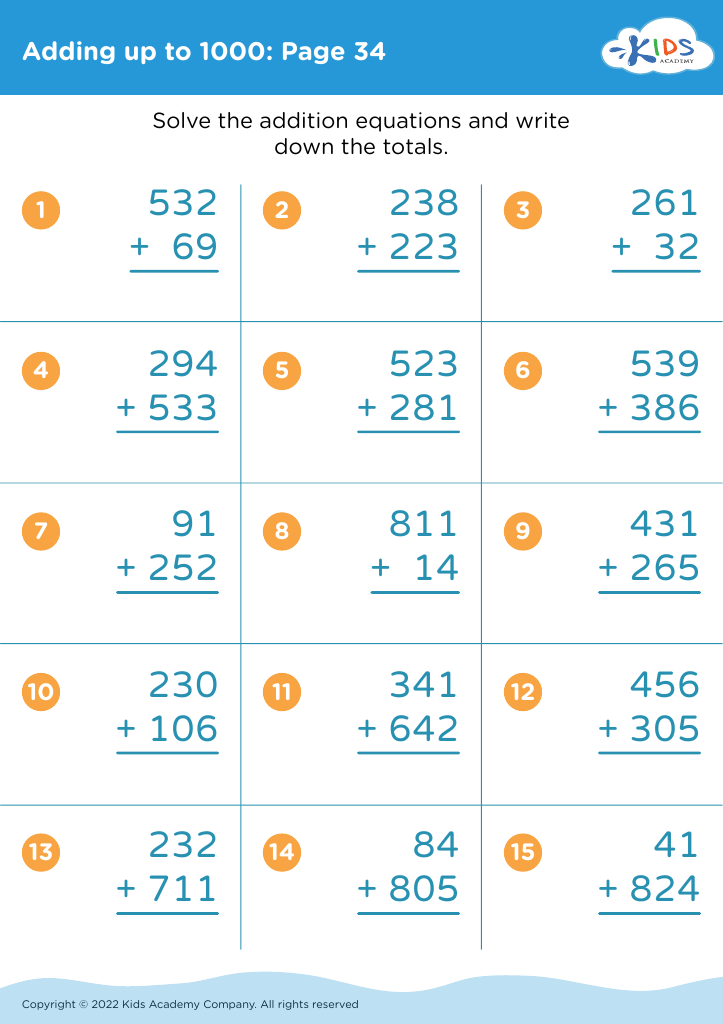
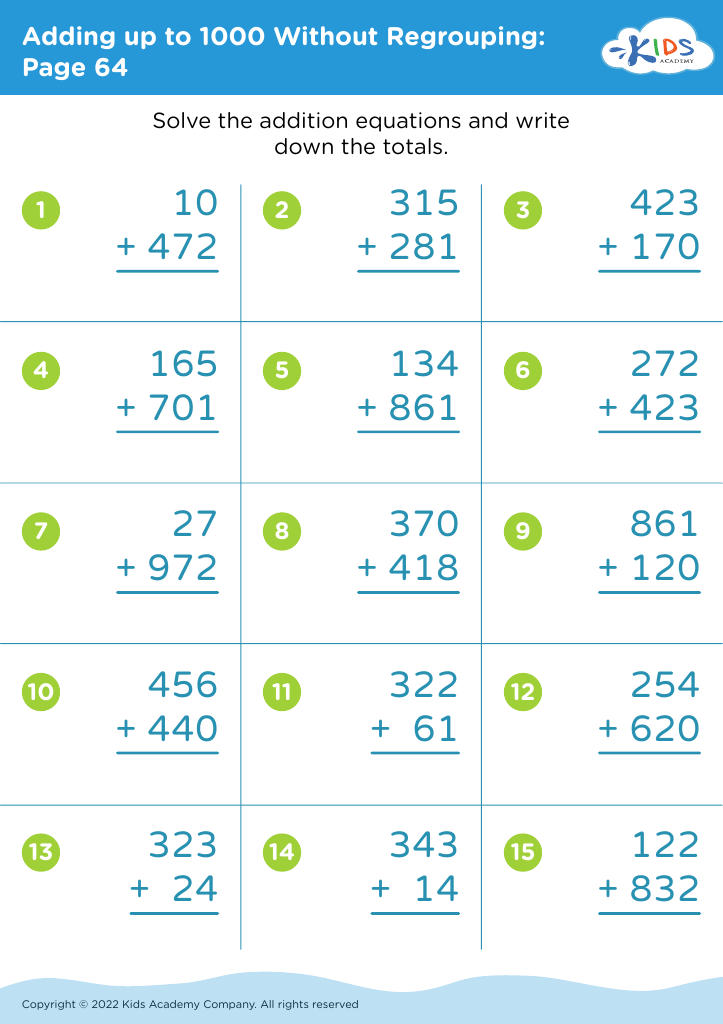
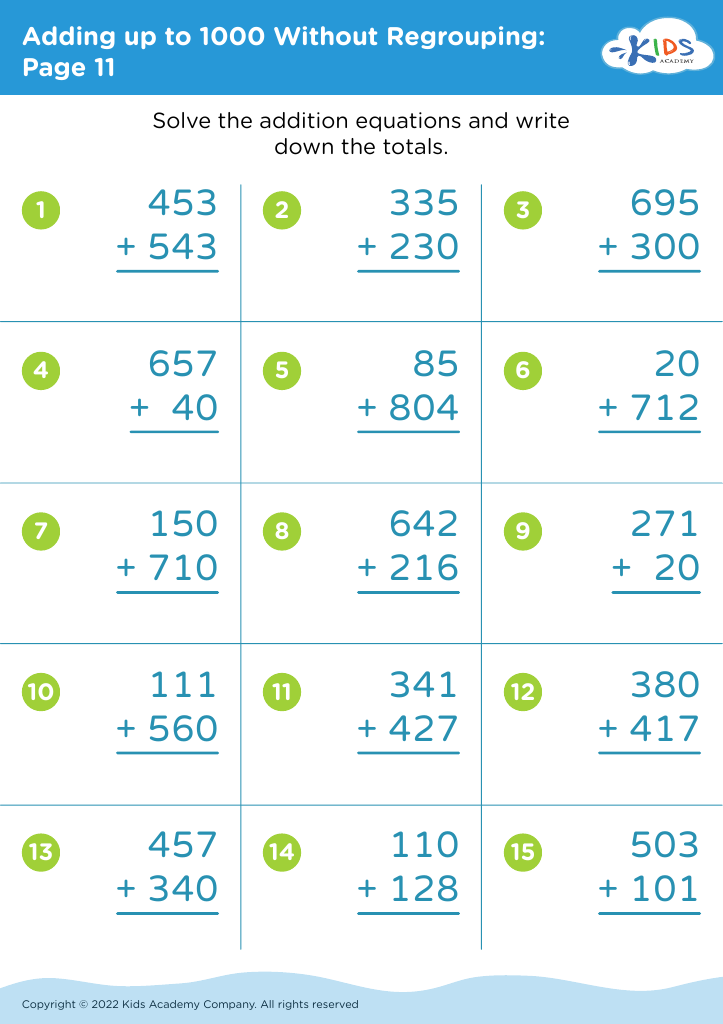



Number sequencing and the ability to add up to 1000 are fundamental skills that lay the groundwork for advanced mathematical understanding in children, particularly 7-year-olds. By engaging with number sequencing, children learn to recognize patterns, develop critical thinking skills, and understand the relationships between numbers. This foundational knowledge is not just about math; it's also crucial for fostering a child's overall cognitive development.
Achieving proficiency in adding up to 1000 empowers children with confidence in their mathematical abilities. It builds their perseverance and problem-solving skills, allowing them to tackle more complex mathematical concepts in the future. Furthermore, mastering these skills helps in real-life situations, like budgeting or measuring, fostering a practical understanding of mathematics outside of the classroom.
Additionally, early development of these skills supports broader educational goals. It paves the way for success in subjects like science and finance that often rely on mathematical principles. When parents and teachers prioritize number sequencing and addition, they reinforce a child's academic journey and help nurture a lifelong appreciation for math. By integrating these practices into daily activities and lessons, they prepare children for future challenges and instill a sense of accomplishment that encourages continuous learning.








