Problem-solving abilities Adding up to 1000 Worksheets for 7-Year-Olds
5 filtered results
-
From - To
Enhance your 7-year-old child's problem-solving abilities with our comprehensive "Adding up to 1000 Worksheets." Designed to engage young learners, these worksheets promote critical thinking and mathematical skills through fun and interactive challenges. Children will explore addition concepts while tackling varied problems that build their confidence and teamwork skills. Each worksheet encourages practice in a creative way, ensuring that your child develops a strong foundational understanding of numbers. Ideal for classroom use or at-home study, our resources support teachers and parents in nurturing analytical thinkers. Dive into enriching math experiences today and watch your child's problem-solving potential flourish!
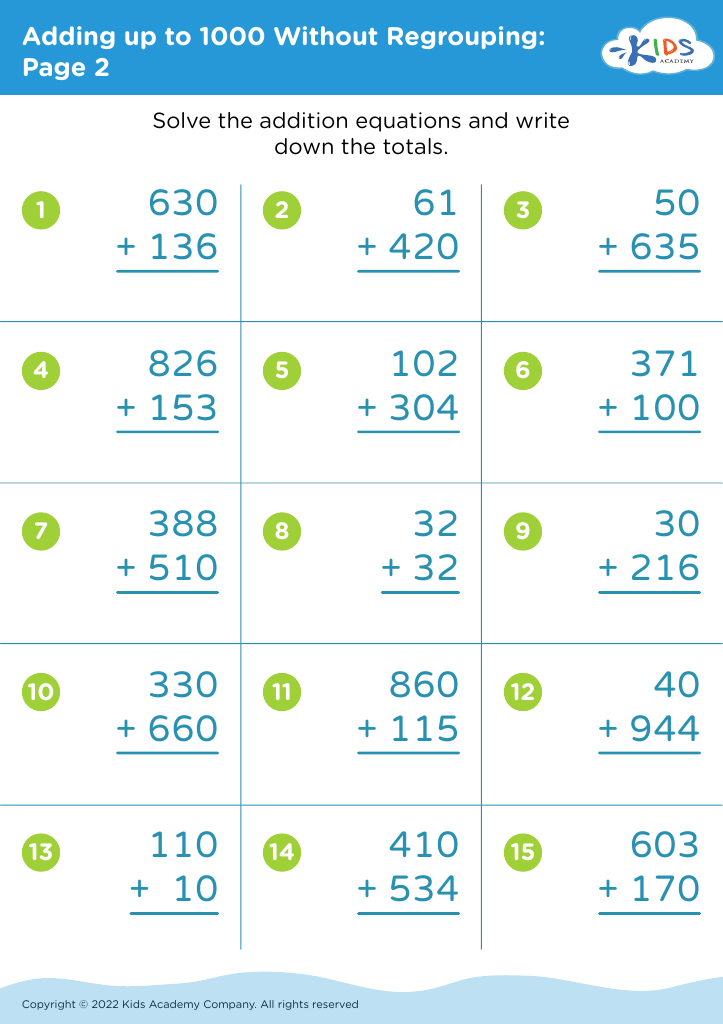
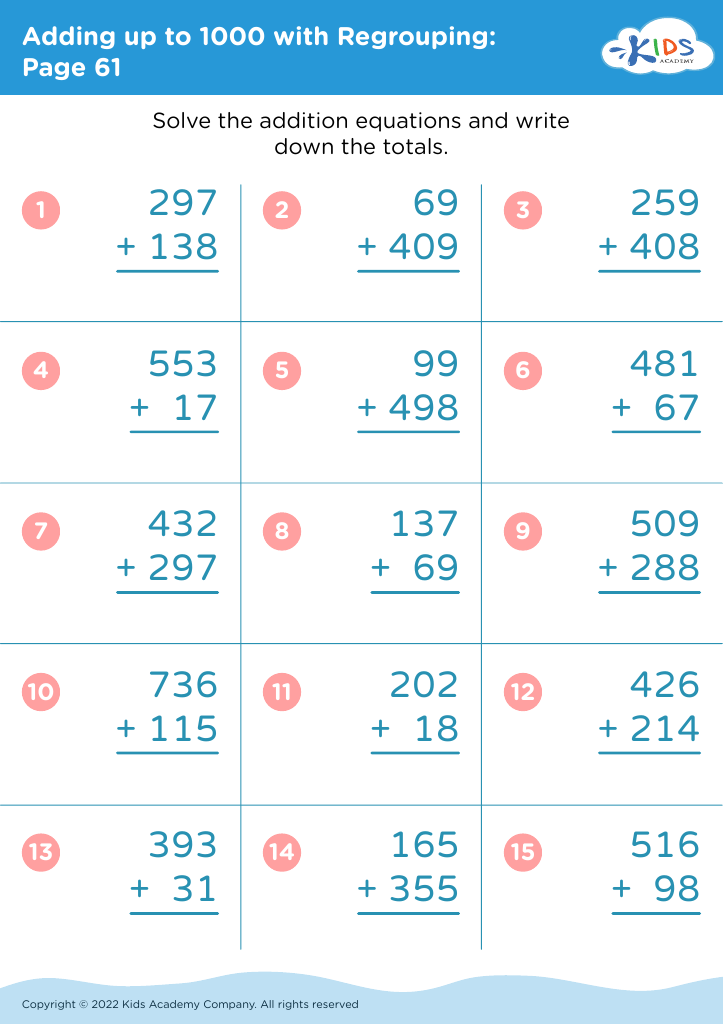
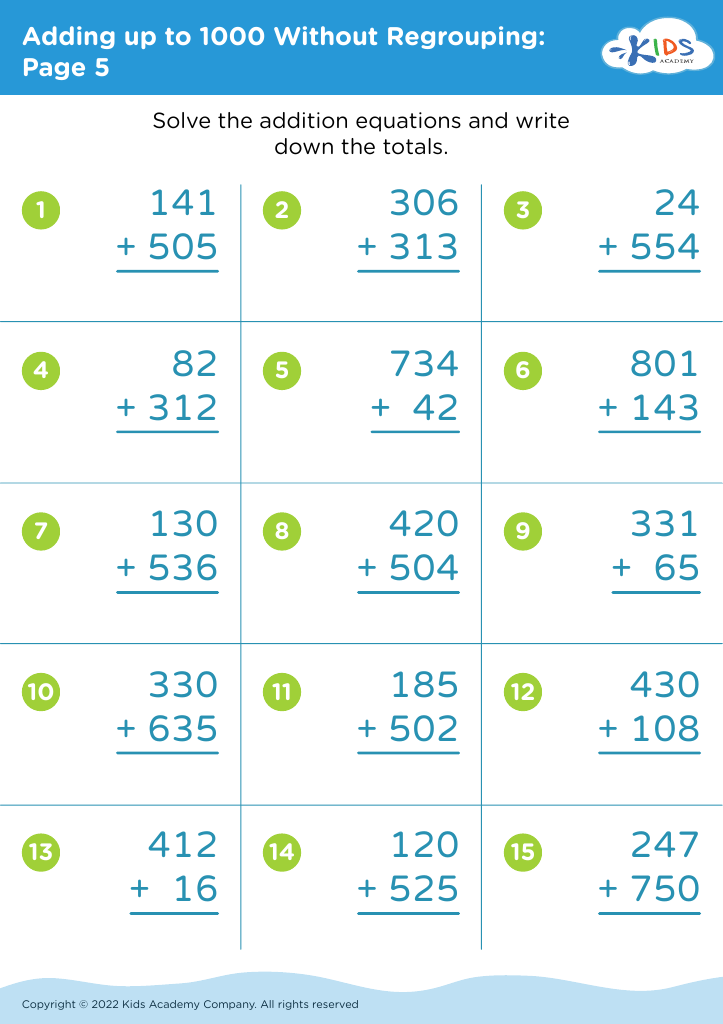
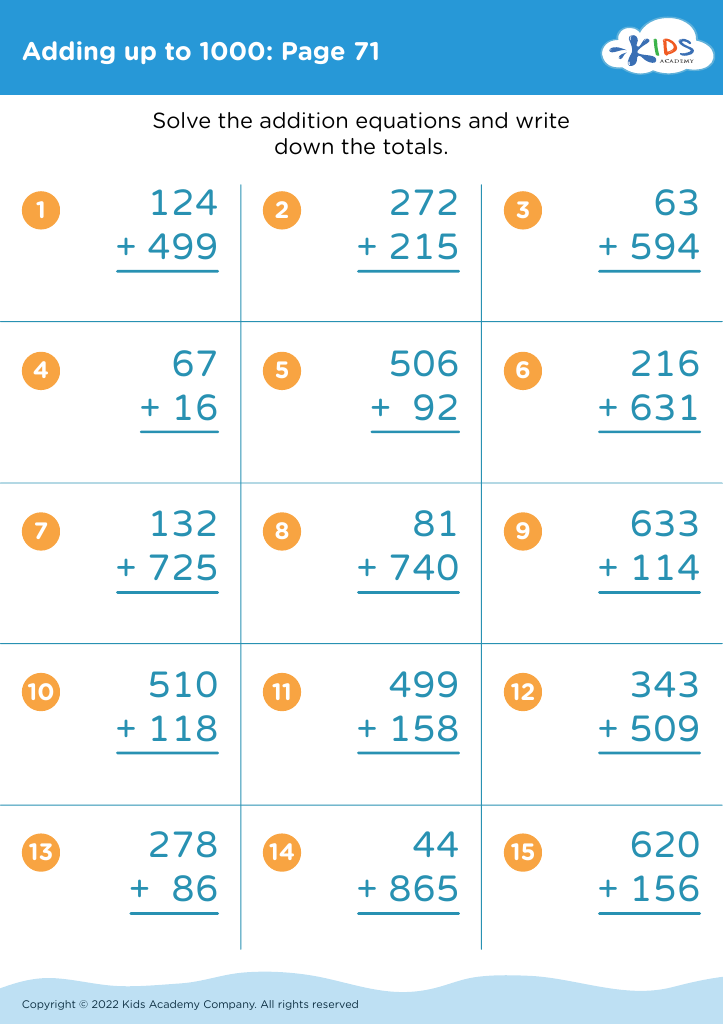
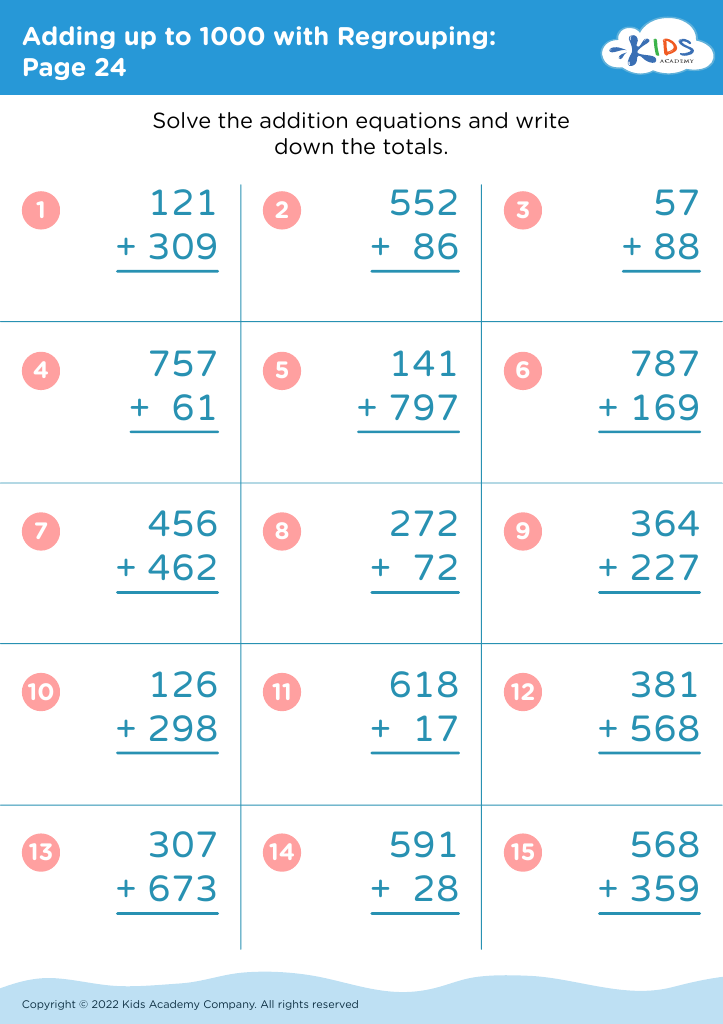



Parents and teachers should prioritize developing problem-solving abilities in 7-year-olds because these skills lay the foundation for future academic success and life challenges. At this age, children are naturally curious and eager to learn. Enhancing their problem-solving skills enables them to think critically, approach challenges methodically, and develop resilience.
Helping young learners tackle problems related to numbers, such as adding up to 1000, enhances their mathematical fluency. This encourages a strong numeracy foundation, allowing children to manipulate numbers confidently and effectively. Problem-solving also fosters logical reasoning skills, empowering children to make connections and recognize patterns in diverse subjects.
Additionally, when children engage in problem-solving activities, they learn to collaborate with peers, improving social skills and communication. This teamwork aspect mimics real-life scenarios where collective input often leads to the best outcomes.
Furthermore, nurturing these skills helps children develop a growth mindset. They learn that failure is a part of the learning process and develop tenacity in facing obstacles. By prioritizing problem-solving abilities, parents and teachers not only support academic growth but also prepare children for a future where adaptability and critical thinking are essential. This holistic approach enriches their personal and professional lives.








