Reading analog clocks Adding up to 1000 Worksheets for 7-Year-Olds
3 filtered results
-
From - To
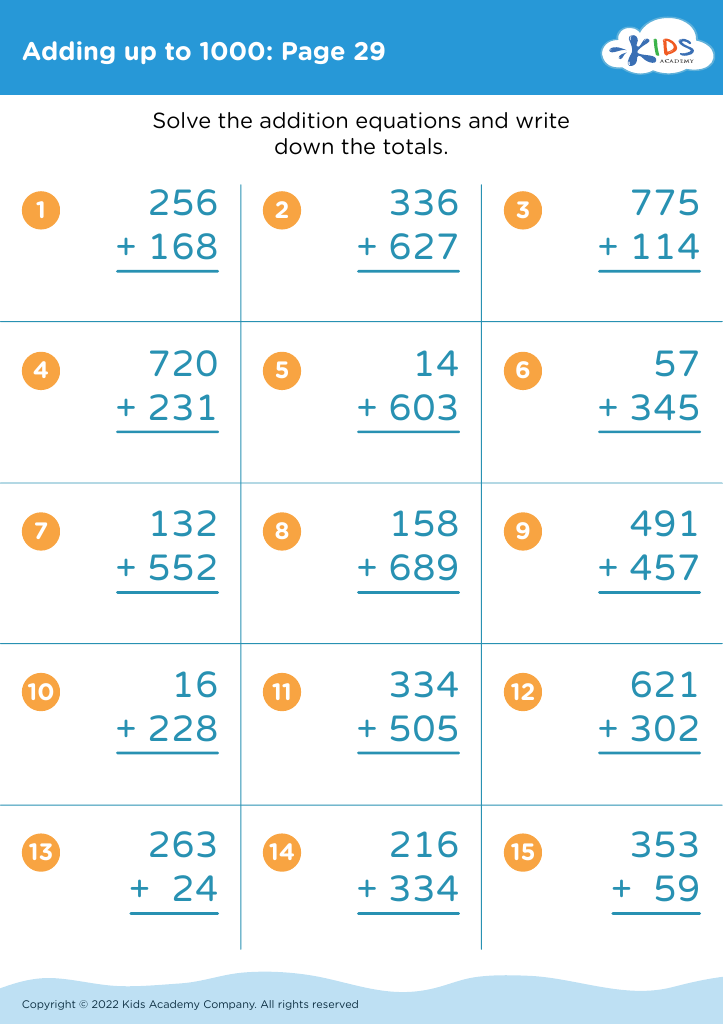
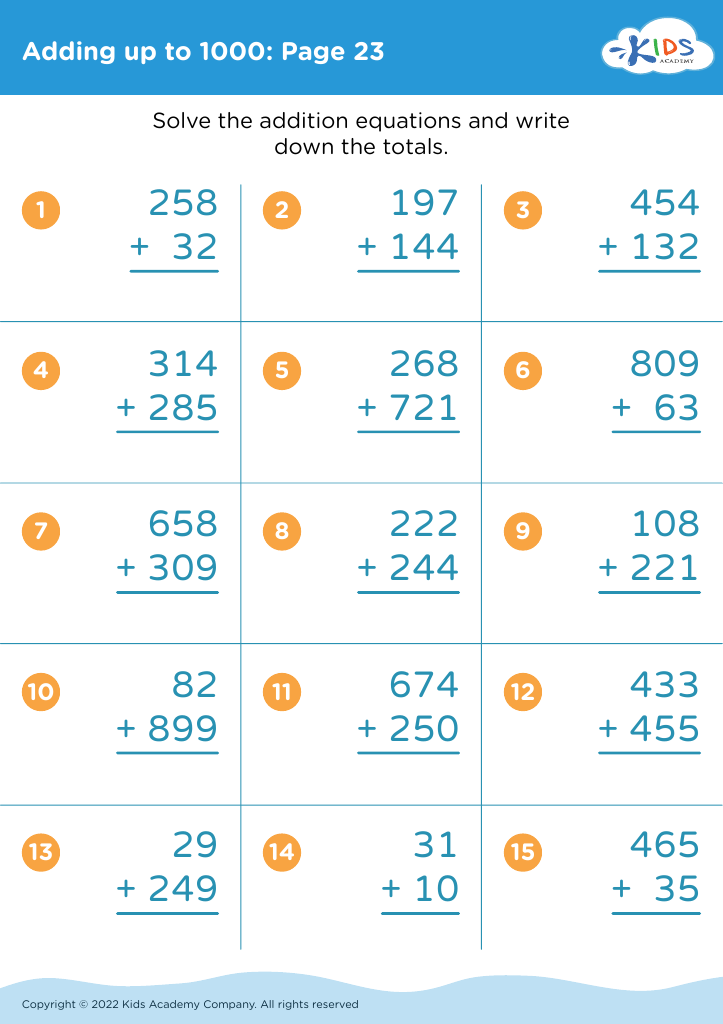
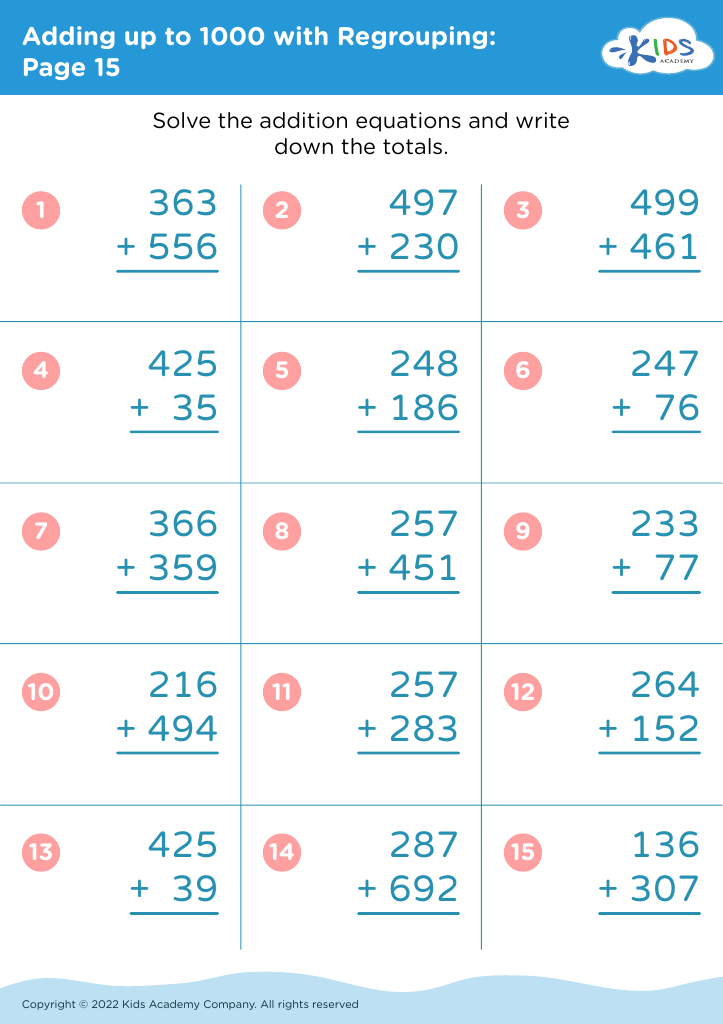
Explore our engaging "Reading Analog Clocks Adding up to 1000 Worksheets" designed specifically for 7-year-olds! These fun and interactive worksheets help children enhance their time-telling skills while practicing addition up to 1000. Each worksheet features a variety of colorful analog clock illustrations alongside addition problems that challenge young learners to connect time with math. Perfect for home or classroom use, these resources streamline learning by combining essential skills in a captivating format. Ensure your child gains confidence in both reading clocks and mastering addition with our well-crafted worksheets that make learning enjoyable and effective! Check them out today!



Understanding how to read analog clocks is an important skill for 7-year-olds, and it significantly aids in their overall development. Firstly, reading clocks enhances children’s sense of time, promoting better time management skills essential for academic success and personal responsibility. By understanding time through an analog format, children can develop a deeper appreciation for schedules, routines, and the passage of time itself.
Moreover, reading analog clocks engages critical thinking and cognitive skills. Children need to recognize numbers, differentiate between minute and hour hands, and correlate the specific positions with time, thereby enhancing their problem-solving abilities. This form of learning promotes not only mathematical skills but also concentration and attention to detail, key factors in learning across all subjects.
For parents and teachers, teaching children to read analog clocks is also an opportunity to instill traditional values and practices in a digital age. It sets a foundation for mathematical principles like fractions, as children discern how minutes relate to hours.
In conclusion, promoting the skill of reading analog clocks shapes well-rounded learners who develop time management skills, cognitive abilities, and an appreciation for traditional learning, preparing them for complex future challenges.








