Understand multiplication Adding up to 1000 Worksheets for 7-Year-Olds
3 filtered results
-
From - To
Boost your child’s math skills with our "Understand Multiplication Adding Up to 1000 Worksheets" designed specifically for 7-year-olds. These engaging resources help young learners grasp the concept of multiplication through fun exercises that emphasize the relationship between addition and multiplication. Ideal for reinforcing classroom lessons or enhancing at-home learning, our worksheets cater to various skill levels, ensuring every child progresses at their own pace. Discover delightful challenges that promote critical thinking and problem-solving—all while making math enjoyable! Visit our website to access these valuable tools and watch your child's confidence in math soar as they master multiplication.
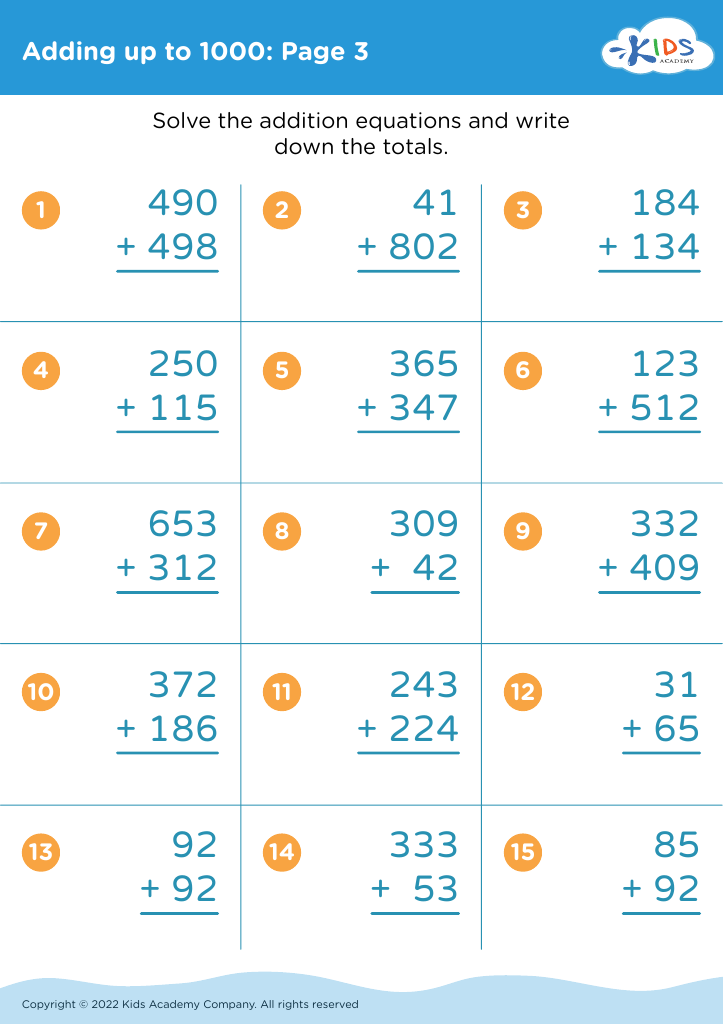
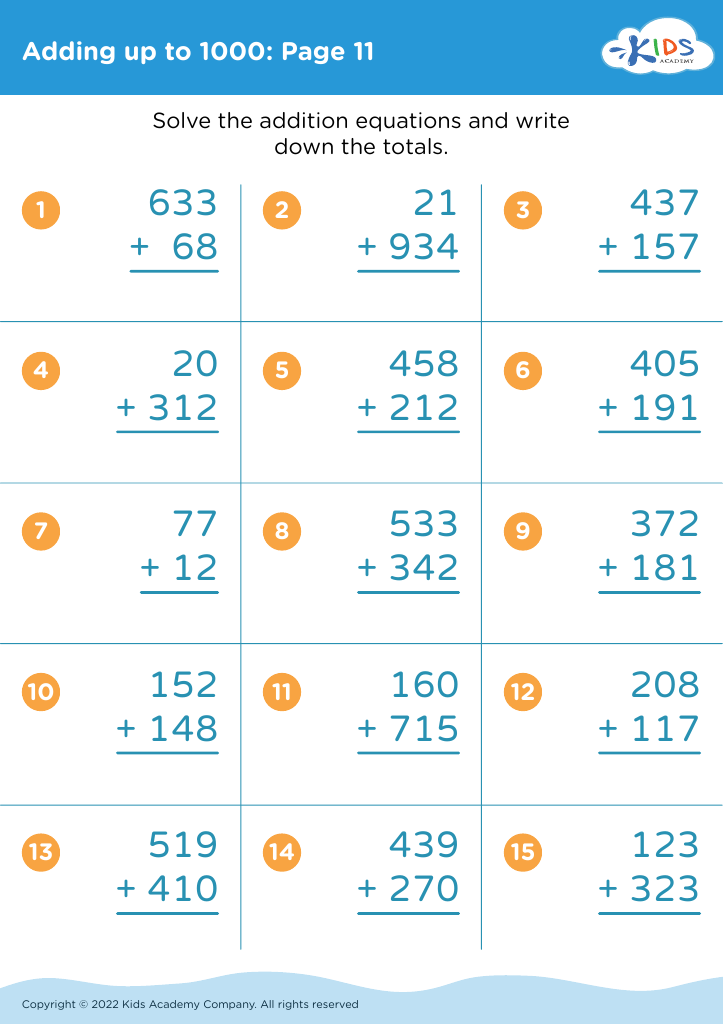
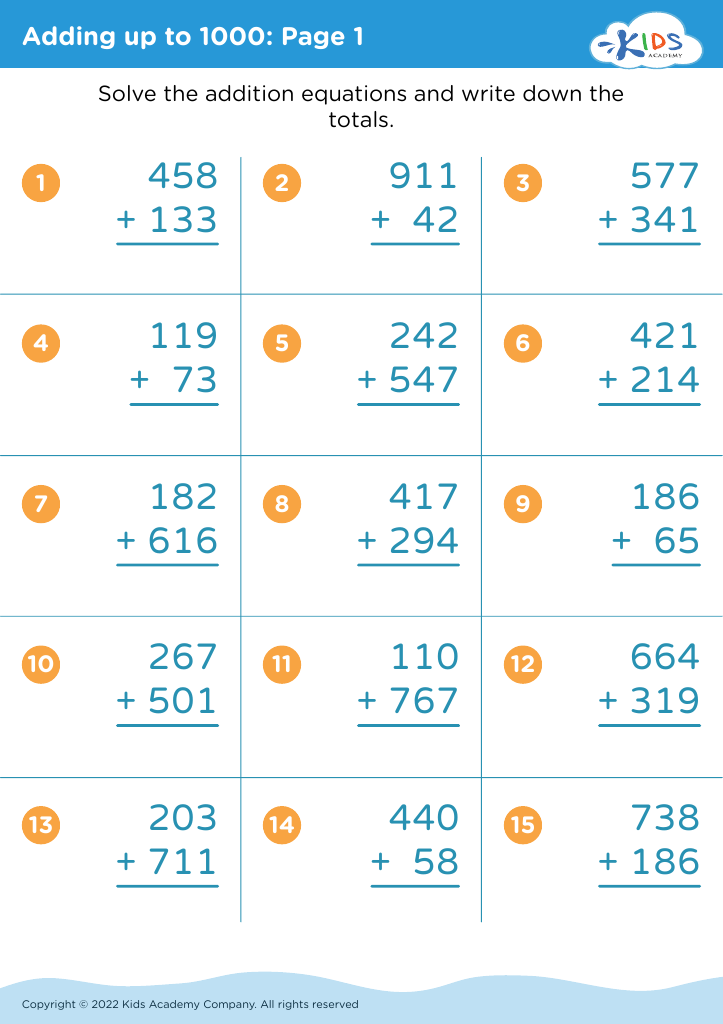



Understanding multiplication is essential for 7-year-olds as it forms the foundation for more advanced mathematical concepts. At this age, children transition from basic addition and subtraction to more complex operations, such as multiplication and division, which are critical for developing problem-solving skills.
When children learn multiplication, they not only improve their arithmetic abilities but also enhance their capacity to reason and think critically. Multiplying numbers can be seen as advanced addition — which helps students understand underlying mathematical relationships. This understanding is crucial as they will encounter multiplication in everyday scenarios, such as calculating totals when shopping or managing time.
Adding up to 1000 introduces children to larger numbers in a manageable way, fostering familiarity with the concept of place value and enhancing their computational skills. It prepares them for operations with bigger numbers and improves their grasp of arithmetic patterns, essential for future topics like addition and subtraction with regrouping.
Moreover, a solid grasp of multiplication and its relationship to addition and numbers up to 1000 builds confidence in students, laying a positive groundwork for their mathematical journey. Parents and teachers play a pivotal role in nurturing these fundamental skills, equipping children with essential tools for academic success and everyday life.








