Understand subtraction Adding up to 1000 Worksheets for 7-Year-Olds
3 filtered results
-
From - To
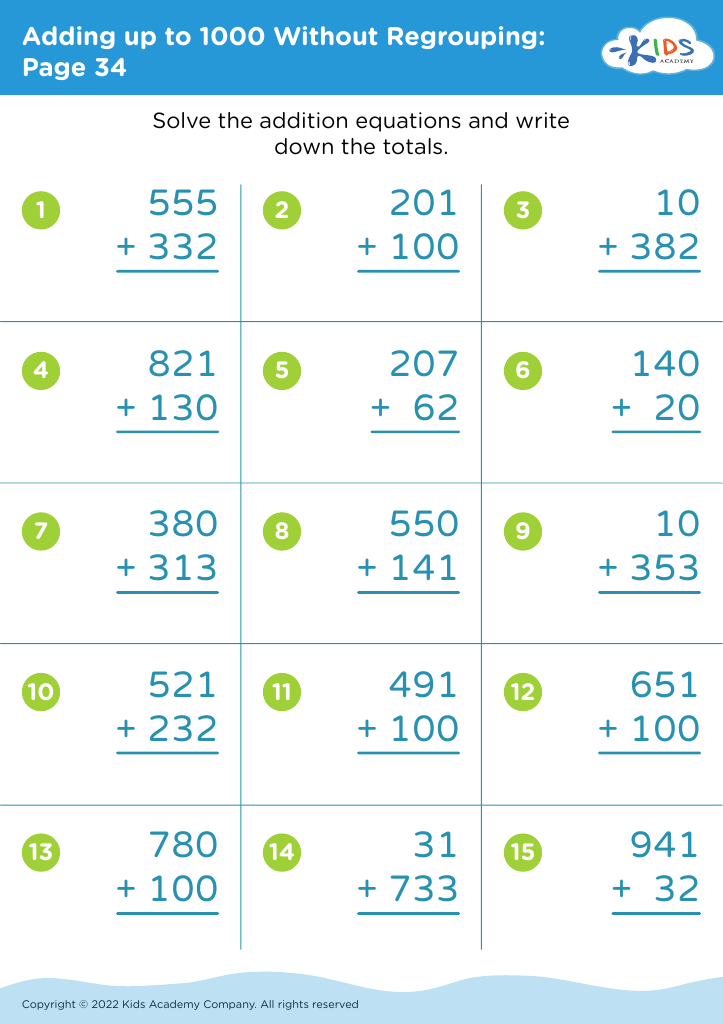
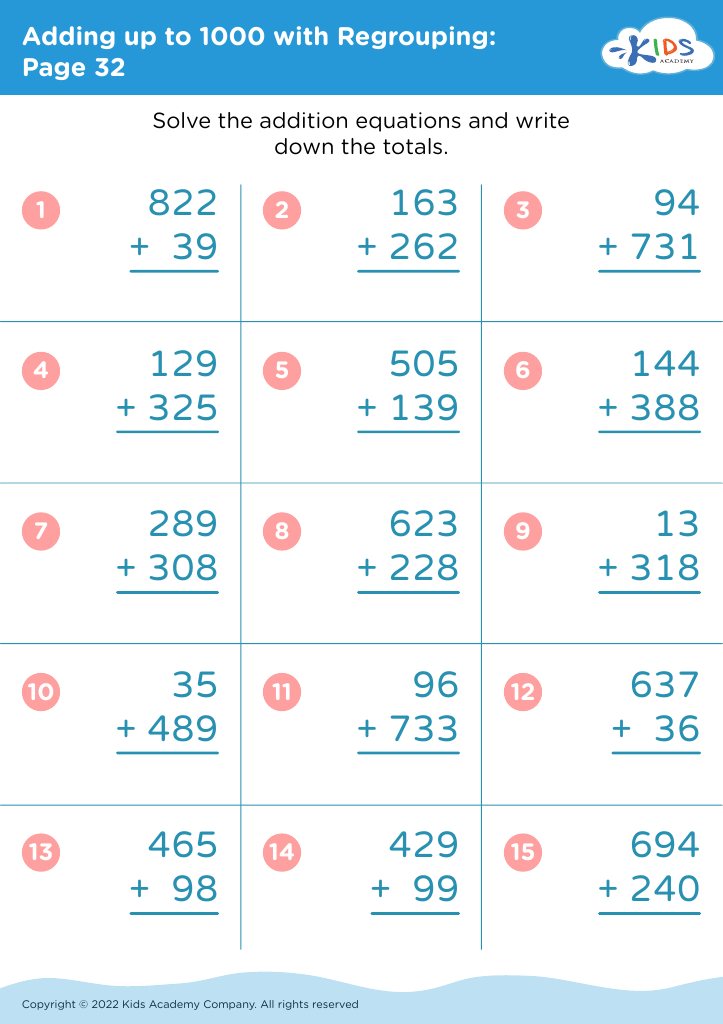
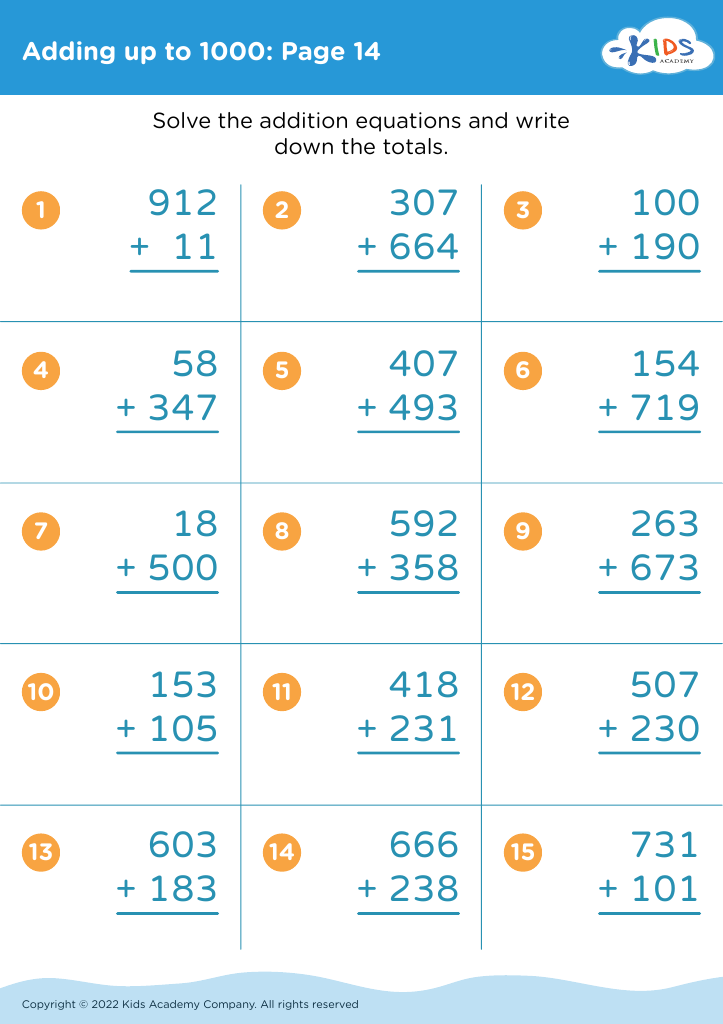
Our "Understand Subtraction Adding Up to 1000 Worksheets for 7-Year-Olds" are specially designed to make subtraction learning engaging and effective. Our educational worksheets cover subtraction problems and help students grasp the concept while dealing with numbers up to 1000. These printable resources enhance computation skills through real-life scenarios and visual aids, making mathematics enjoyable for young learners. The worksheets challenge kids to think critically and build foundational math skills necessary for future success. Perfect for classroom use or at-home practice, provide your child with the confidence to tackle math challenges and improve their numeracy abilities today.



Parents and teachers should care about a 7-year-old’s understanding of subtraction and addition up to 1000 because these fundamental skills are crucial for their overall mathematical development. At this age, children are building the foundational concepts that will support more complex math topics in the future. Successfully mastering subtraction and addition within this range helps them hone their number sense, improve their problem-solving abilities, and foster logical thinking.
Developing a solid grasp of these operations also boosts a child’s confidence in mathematics. Children who feel competent in their arithmetic skills are more likely to participate actively in class, tackle challenging problems, and develop a positive attitude toward learning. This confidence extends to other subjects and everyday situations, enhancing their academic success and life skills.
Moreover, understanding subtraction and addition promotes mental math abilities, enabling children to calculate quickly and accurately without needing tools like calculators. These competencies are beneficial not just for academics, but for practical daily tasks such as managing time and money.
Therefore, parents and teachers have an essential role in ensuring that children become proficient in these basic math skills, setting a strong precedent for lifelong learning and application of mathematics. Supporting young learners in mastering these concepts lays the groundwork for a future where they can approach more advanced mathematical challenges with ease and enthusiasm.








