Understanding symmetry Adding up to 1000 Worksheets for 7-Year-Olds
4 filtered results
-
From - To
Explore our "Understanding Symmetry Adding up to 1000 Worksheets" designed specifically for 7-year-olds! These interactive and engaging worksheets introduce young learners to the concept of symmetry while strengthening their addition skills up to 1000. Perfect for enhancing critical thinking, these activities encourage children to discover symmetrical patterns and understand their balance in mathematics and nature. By incorporating fun exercises and colorful visuals, our resources make learning about symmetry enjoyable and effective. Ideal for at-home practice or classroom use, these worksheets help foster a love for math while developing essential problem-solving abilities. Download today and watch your child thrive!
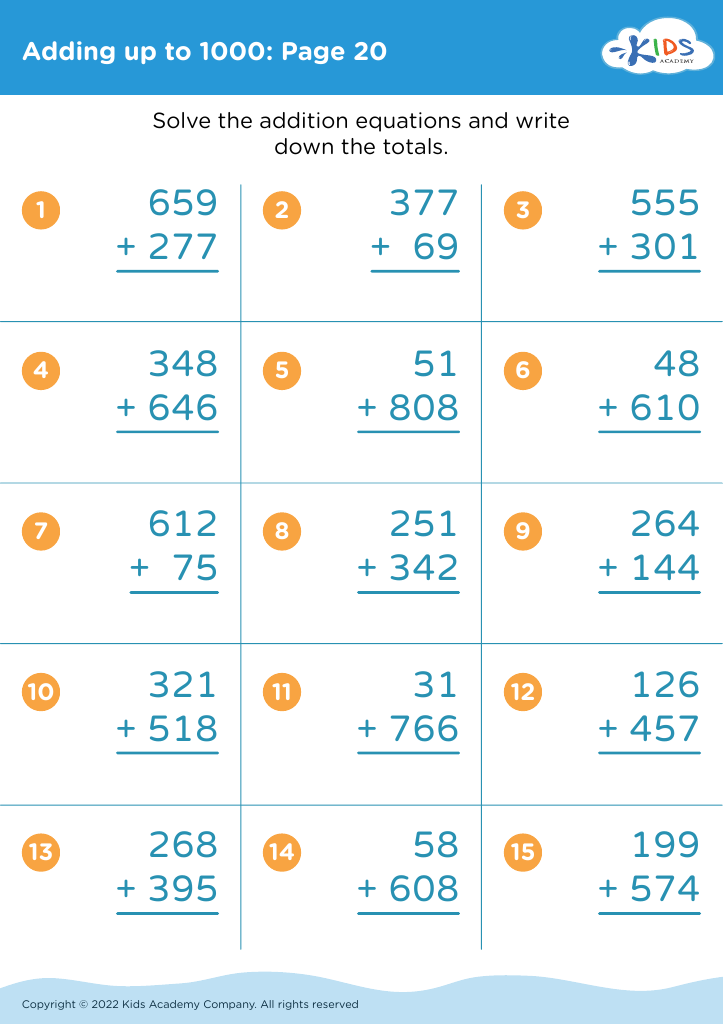
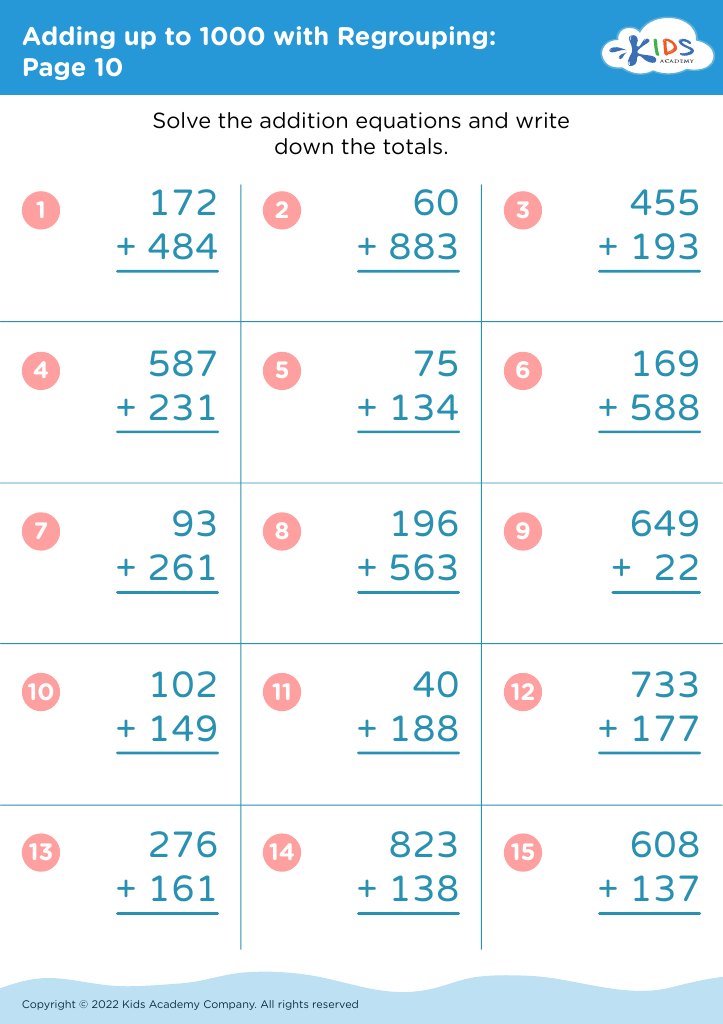
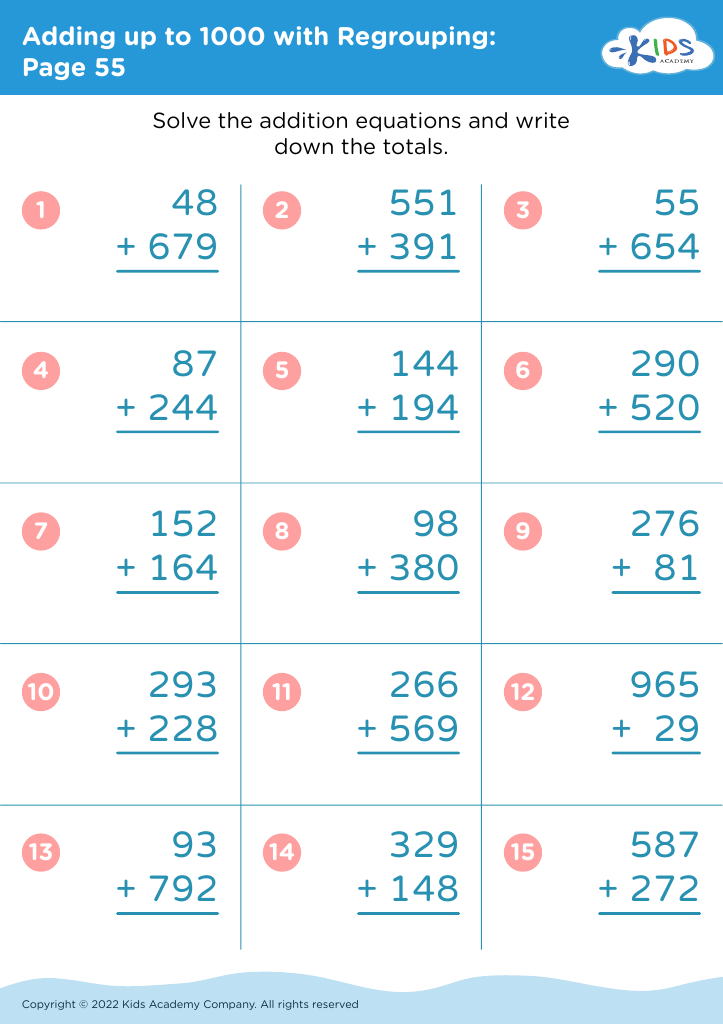
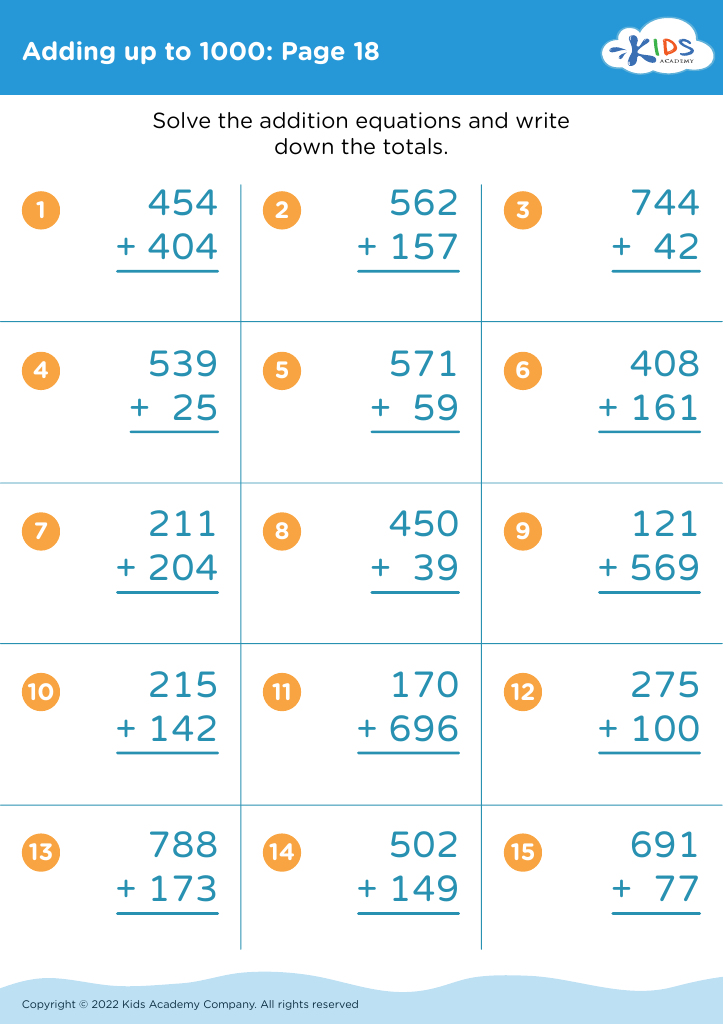



Understanding symmetry and the concept of adding up to 1000 is crucial for 7-year-olds, as it fosters foundational math skills and cognitive development. Symmetry helps children visually grasp patterns, shapes, and relationships, enhancing their spatial awareness. This understanding can lead to improved problem-solving skills, enabling them to approach both math and real-life situations with a more analytical mindset.
When students learn to add up to 1000, they develop their arithmetic capabilities. This concept builds not only numeracy skills but also confidence in tackling larger numbers in future math endeavors. It lays a groundwork for understanding concepts like place value and addition strategies—essential components of mathematics.
Moreover, both symmetry and addition contribute to critical thinking skills. Recognizing symmetrical properties in objects encourages observation and analytical skills, while mastering addition promotes persistence and determination.
For parents and teachers, supporting these lessons is an investment in children's overall academic success. Engaging in activities that enhance their knowledge of symmetry and practice with numbers up to 1000 leads to a robust mathematical understanding, setting a positive trajectory for future learning endeavors. These skills are vital for STEM education, which is increasingly relevant in today's technology-driven world.








