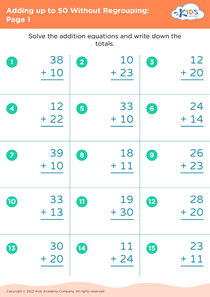
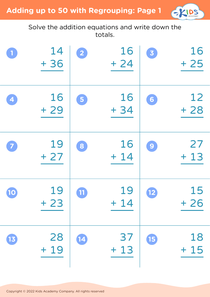
Fraction comparison Adding up to 50 Misc Worksheets for 7-Year-Olds
4 filtered results
-
From - To
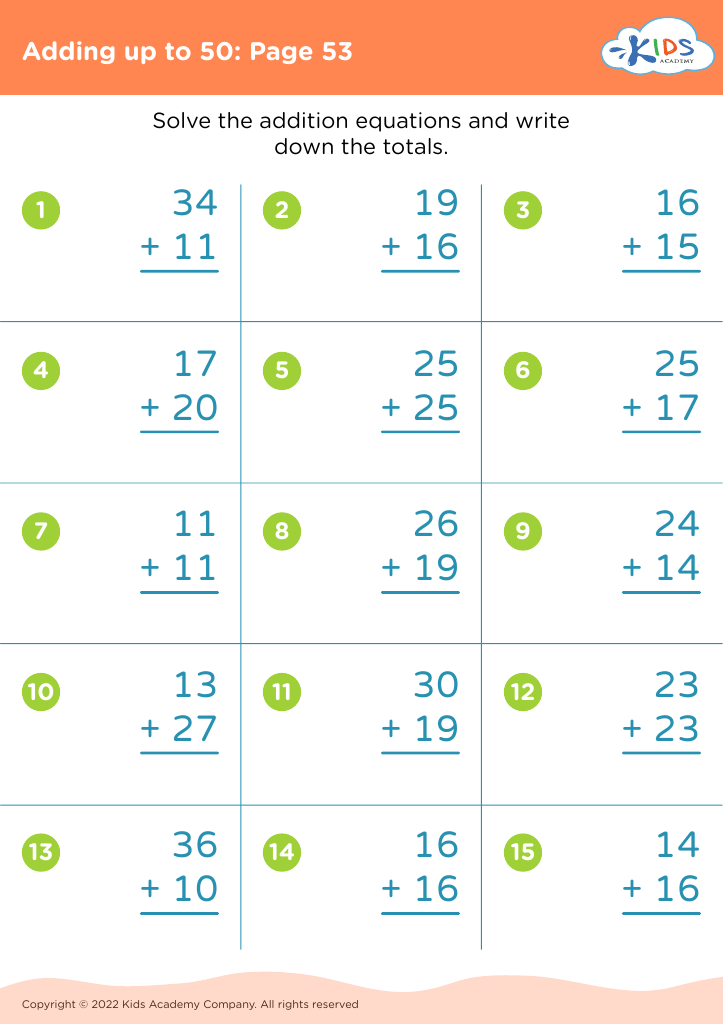
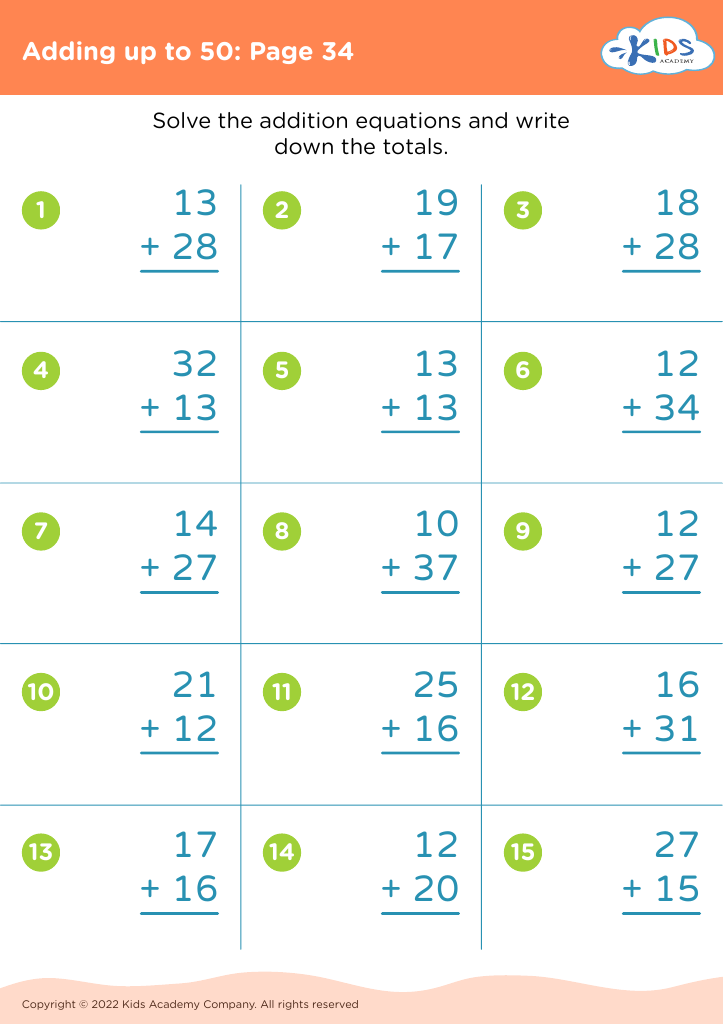
Welcome to our "Fraction Comparison: Adding Up to 50 Misc Worksheets" for 7-year-olds! These engaging and educational worksheets are designed to help young learners master the concept of fraction comparison while working with numbers that sum up to 50. Your child will enhance their mathematical skills through fun exercises that encourage critical thinking and problem-solving. Ideal for classroom use or at-home learning, these worksheets provide a hands-on approach to understanding fractions in a clear and playful manner. Download now to support your child’s learning journey and make math an enjoyable experience! Perfect for teachers and parents alike!
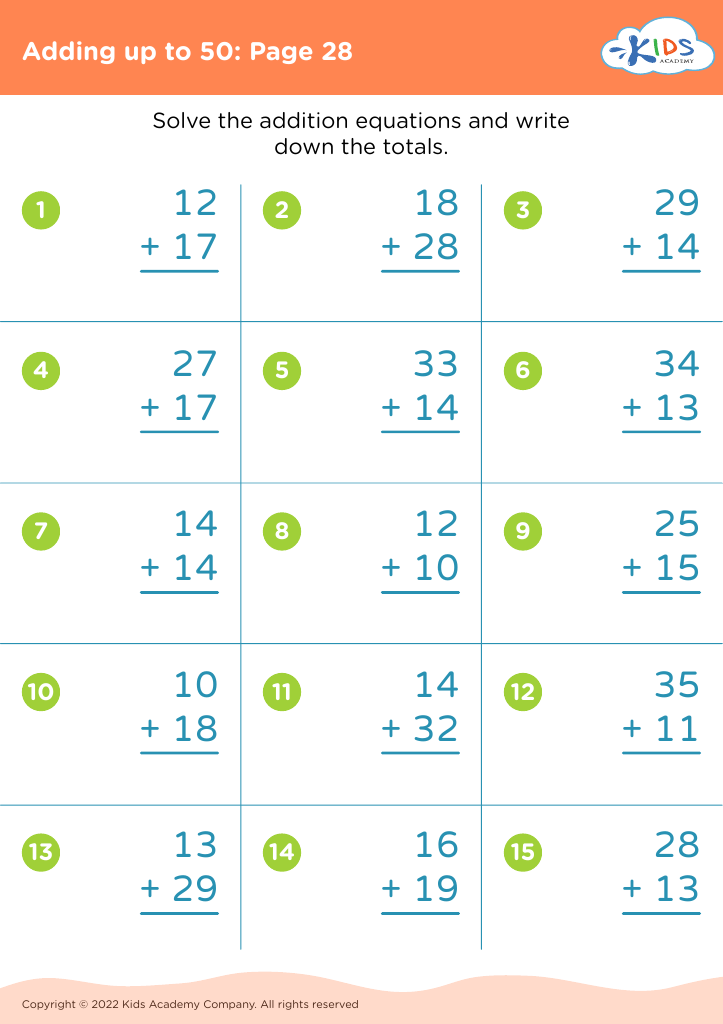
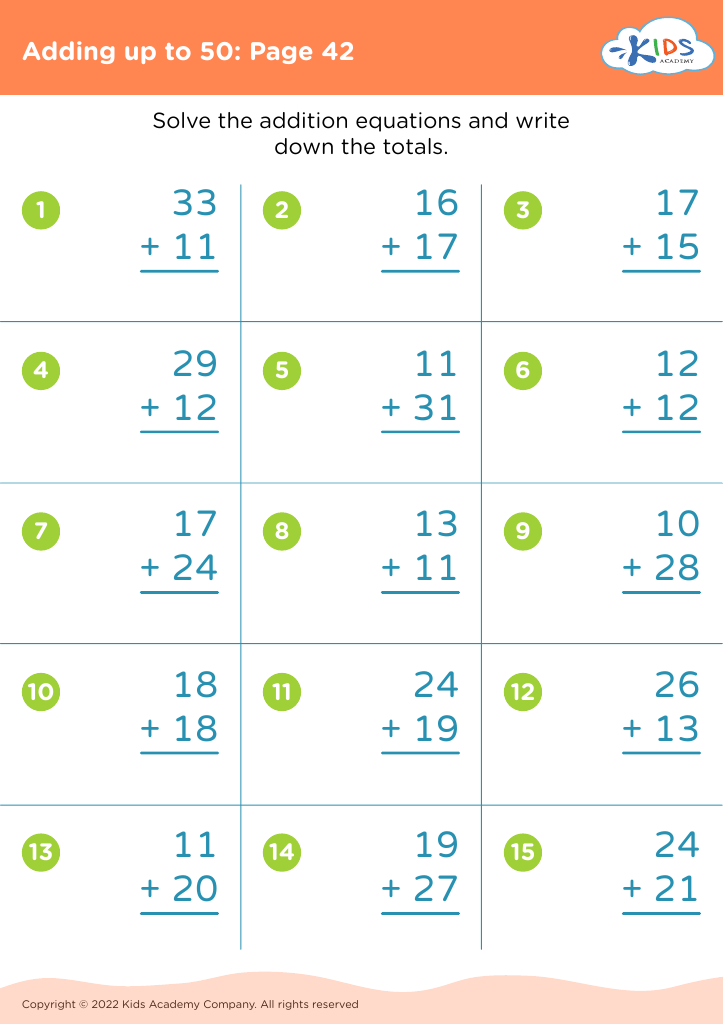


Understanding fraction comparison is essential for 7-year-olds as it lays the foundation for more advanced mathematical concepts. As children begin to explore equal parts of a whole, engaging them in fraction comparison fosters their ability to think critically about numbers and relationships. This skill enables learners to make sense of everyday situations, such as dividing food or sharing resources, reinforcing the practical applications of math in real life.
When parents or teachers engage students in activities that involve comparing fractions, they help instill a deeper understanding of quantities and proportions. This not only promotes mathematical fluency but also enhances problem-solving abilities, crucial for academics and daily scenarios. Moreover, by including this concept in lessons that add up to 50 or more complex problems, students learn to recognize patterns and relationships among numbers, boosting their confidence as they navigate through varying challenges.
Furthermore, cultivating fraction comparison skills aligns with key educational benchmarks, ensuring students are progressively prepared for future math topics, including ratios and percentages. By prioritizing this foundational learning, adults ensure children develop a strong numerical literacy, critical for their overall success in mathematics and beyond. This is why nurturing an interest and understanding of fractions is vital in early education.