Simplifying Fractions Adding up to 50 Misc Worksheets for 7-Year-Olds
4 filtered results
-
From - To
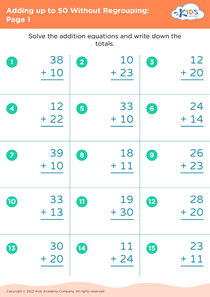
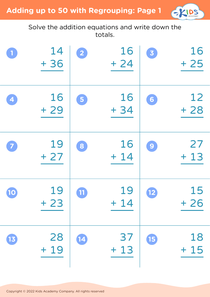
Discover the perfect resource for young math learners with our Simplifying Fractions Adding up to 50 Misc Worksheets for 7-Year-Olds! These engaging printables are specifically designed to introduce and reinforce the concept of simplifying fractions in a fun and interactive way. Children will practice simplifying fractions with additive sums up to 50, promoting critical thinking and boosting their confidence in math. Ideal for classrooms or at-home learning, these worksheets cater to various learning paces and styles. Help your child master fractions and enjoy math with expertly crafted activities from Kids Academy!
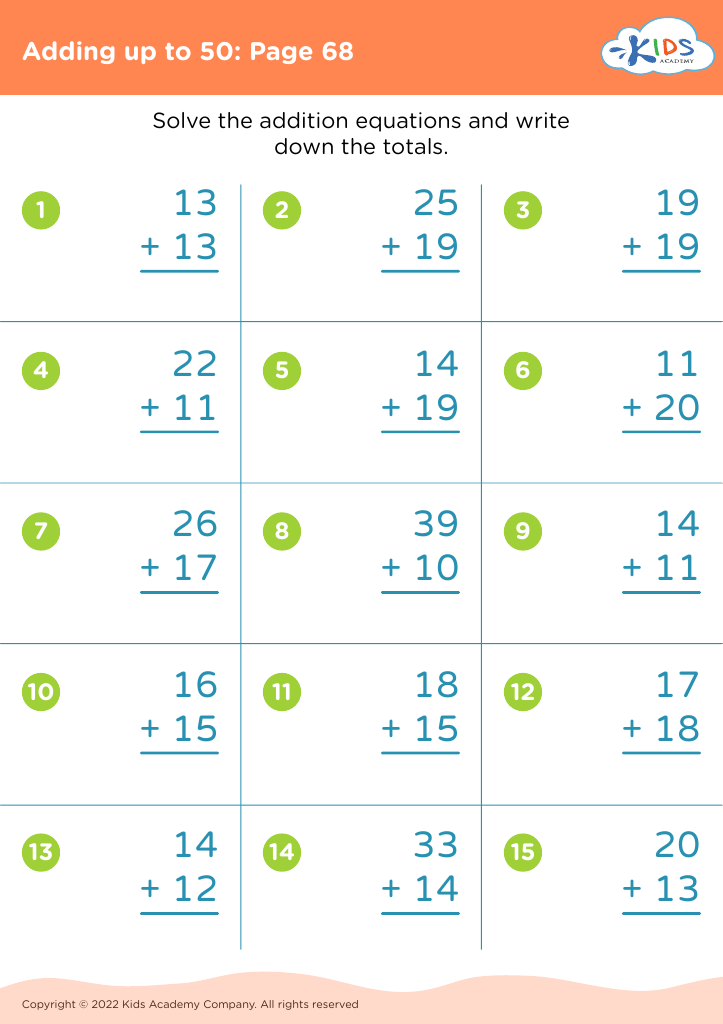
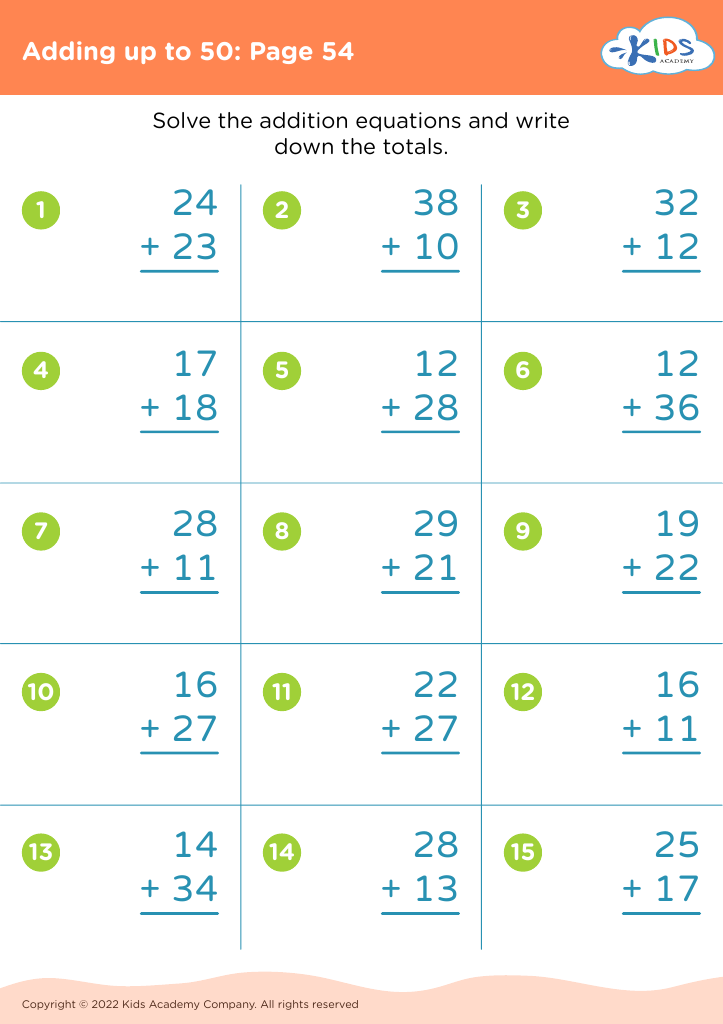


Parents and teachers should take an active interest in helping 7-year-olds understand concepts like simplifying fractions and adding numbers because these are foundational math skills critical for future learning. Simplifying fractions helps children to see relationships between different quantities, making mathematics more intuitive and manageable. For instance, understanding that 4/8 is the same as 1/2 not only simplifies calculations but also helps children understand the concept of equivalence.
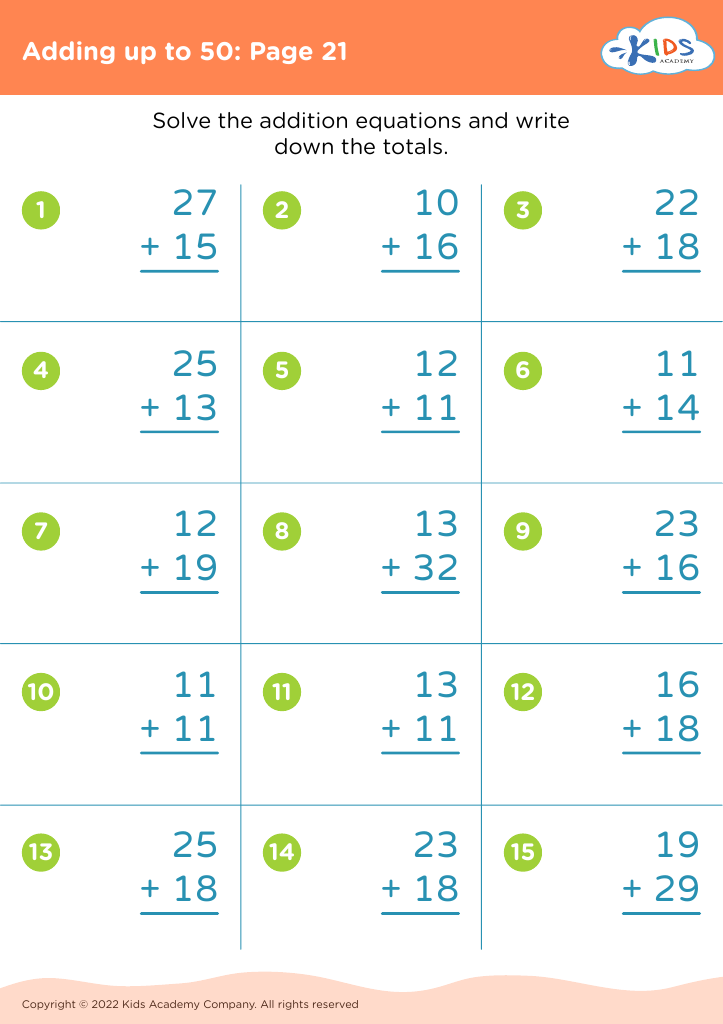
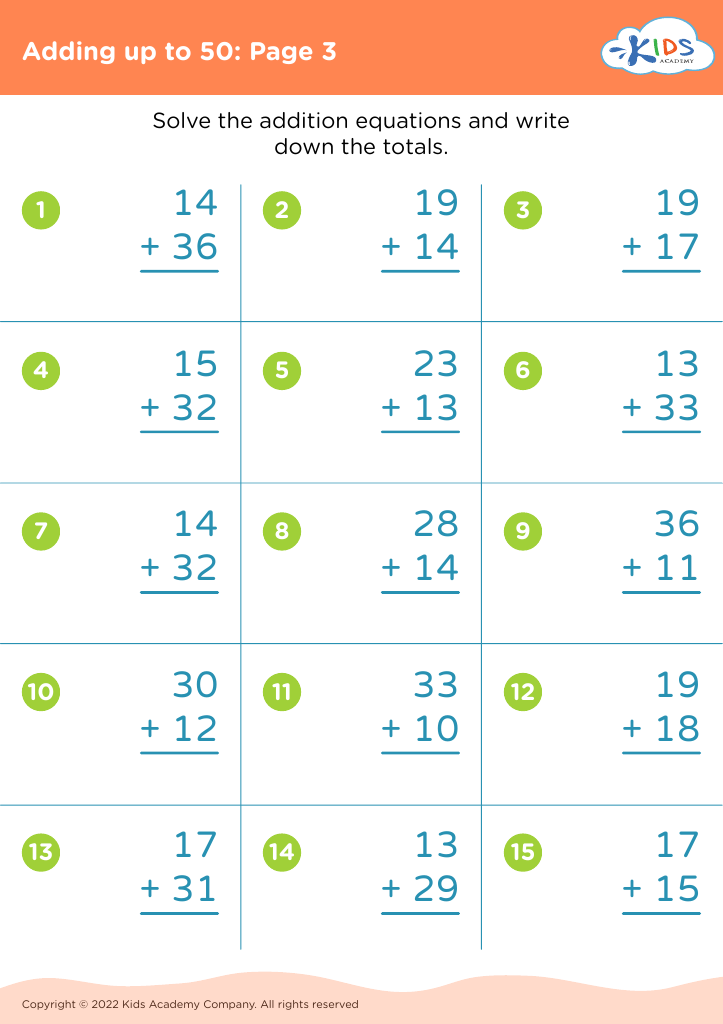
Adding up numbers to 50 teaches essential addition skills and builds numerical fluency, crucial for tackling more complex math problems later on. It's in these early stages that children develop their mathematical thinking and problem-solving skills. A solid grasp of core math principles nurtures confidence and positive attitudes toward math.
Moreover, engaging children with math activities at a young age fosters critical thinking, attention to detail, and persistence. Parents and teachers can make these activities fun and relatable by using real-life examples or games. Ensuring that a 7-year-old comfortably masters these concepts sets them up for long-term academic success and everyday decision-making skills. Simplifying fractions and quick addition are where lifelong numeracy begins, impacting not just school performance but also practical life skills.