Understanding fractions Adding up to 50 Misc Worksheets for 7-Year-Olds
17 filtered results
-
From - To
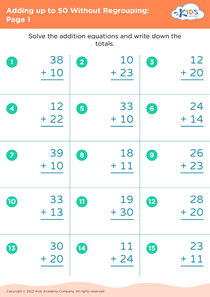
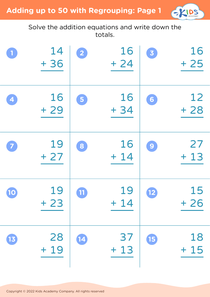
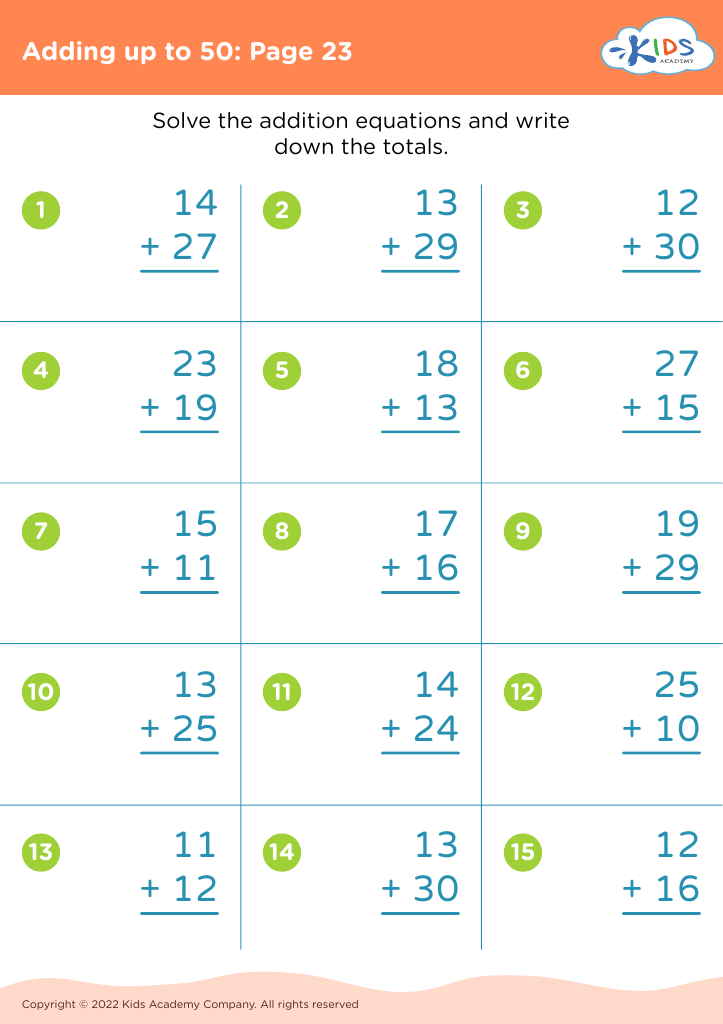
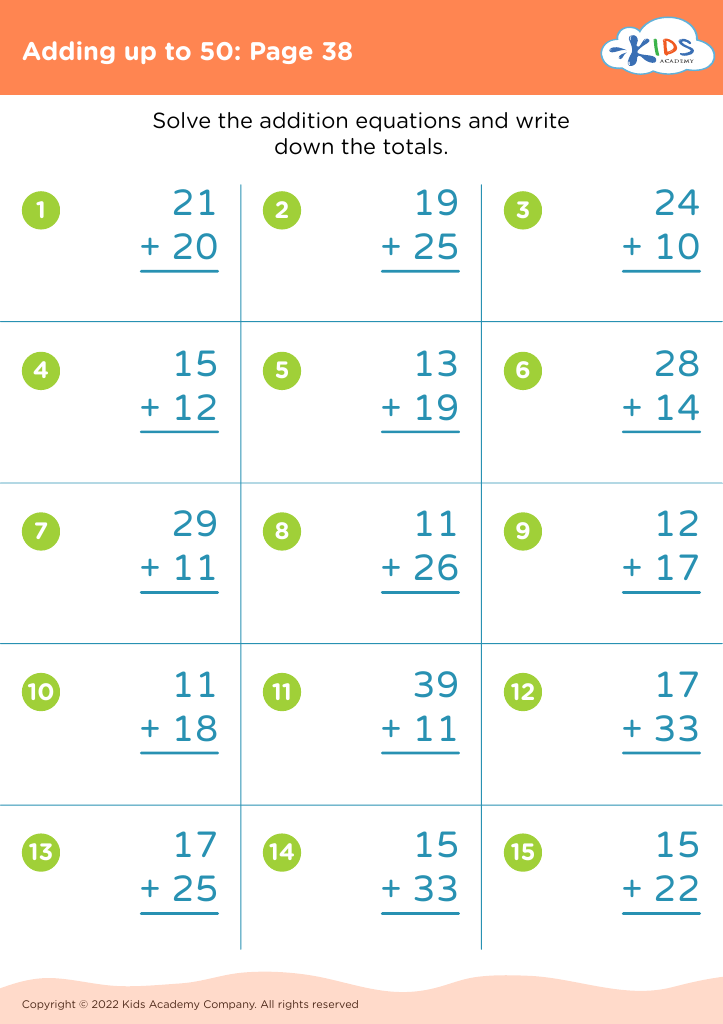
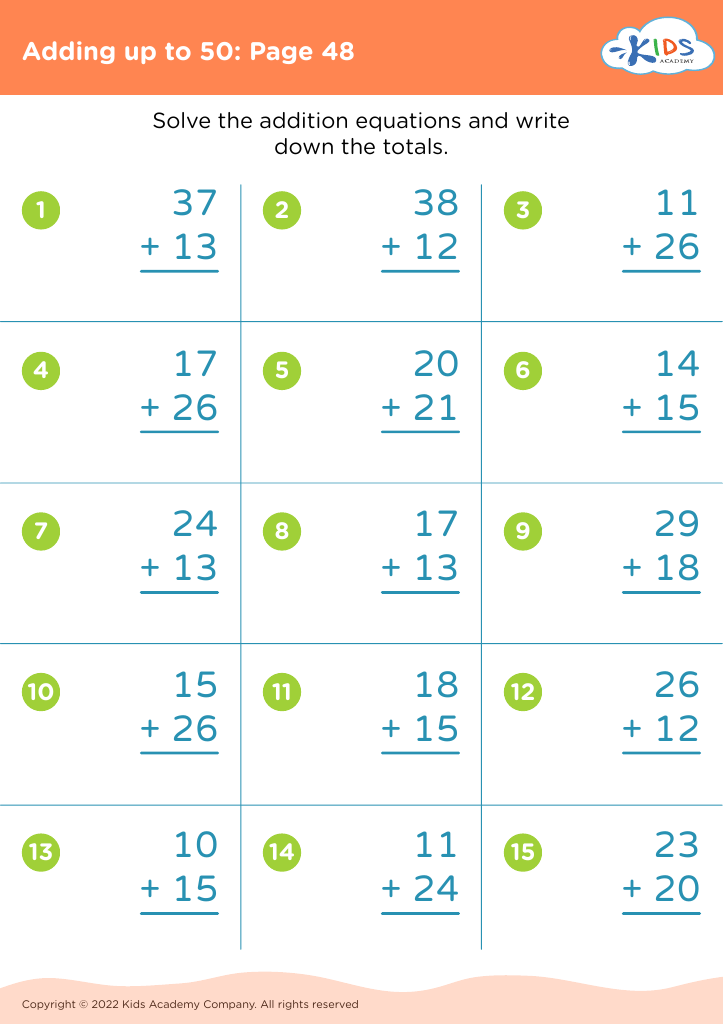
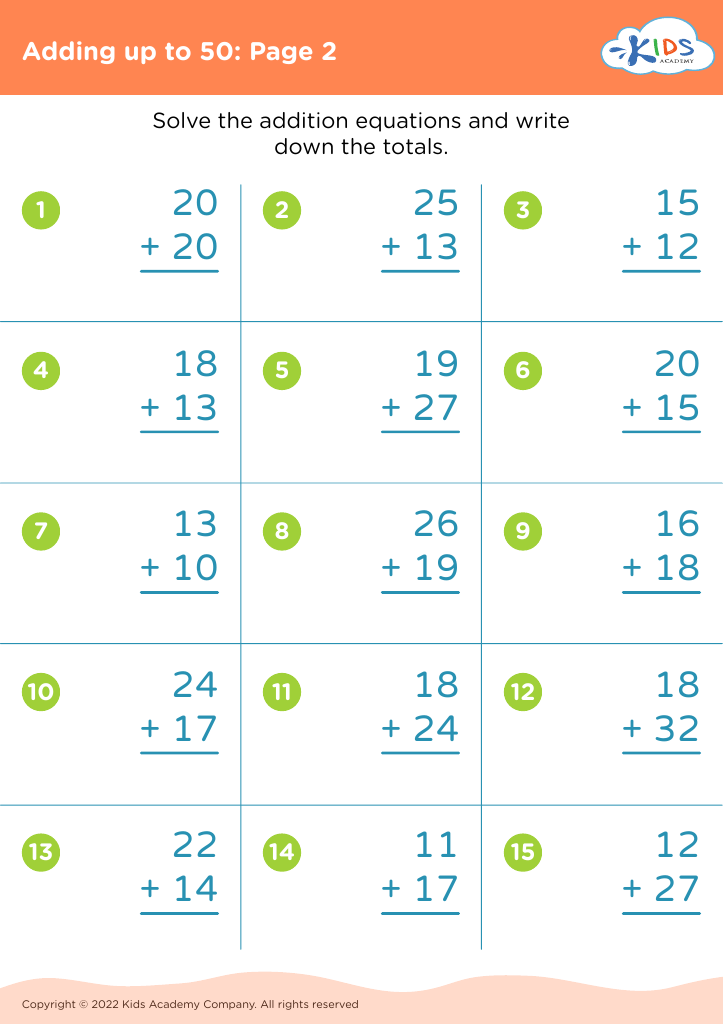
Explore our "Understanding Fractions Adding Up to 50" worksheets, specially designed for 7-year-olds to strengthen their fraction skills. These engaging and interactive exercises provide students with a fun way to learn how to add fractions while ensuring they grasp the concept of fractions as parts of a whole. Each worksheet includes various problems that focus on adding fractions and whole numbers that total 50, promoting both analytical thinking and arithmetic skills. Perfect for classroom activities or home practice, our worksheets make learning fractions exciting and motivating for young learners. Download now to support your child's math journey!
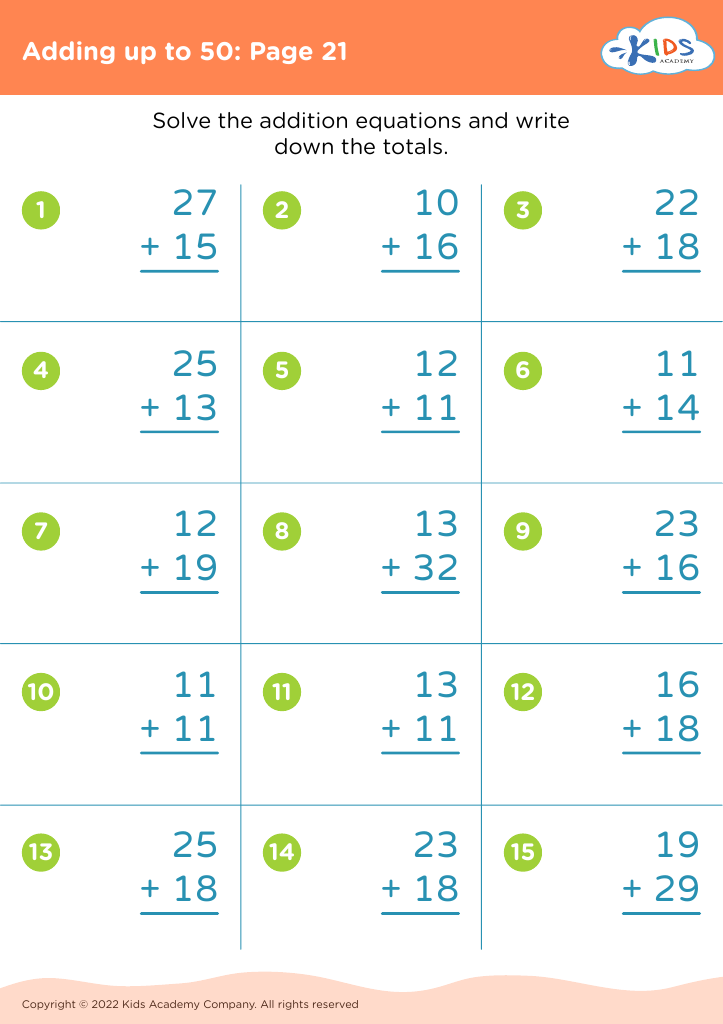
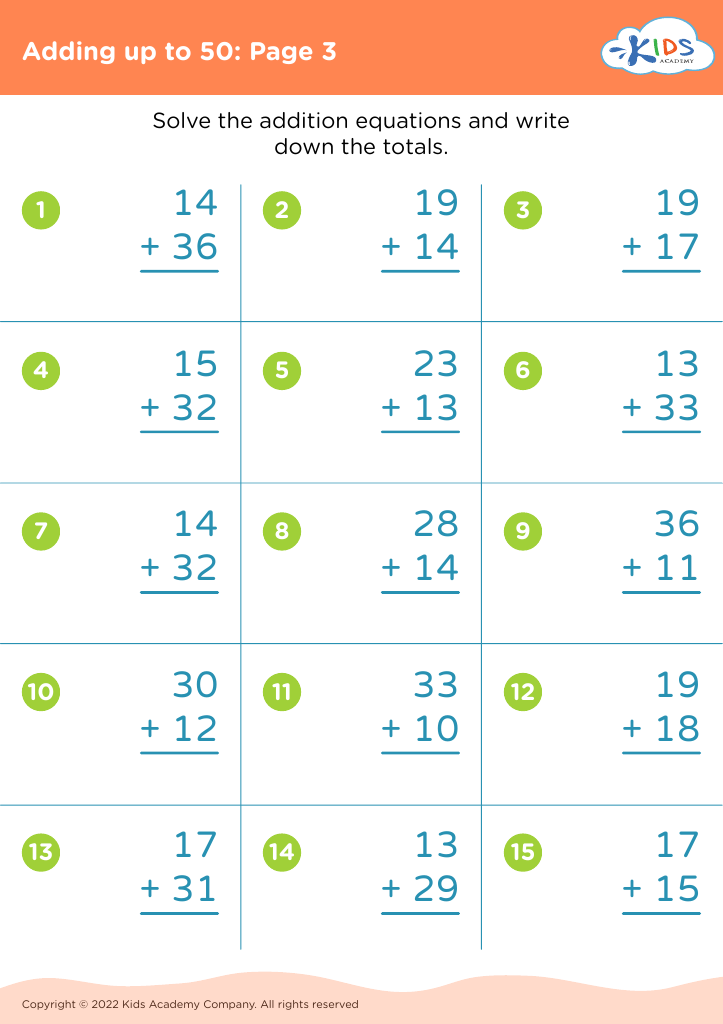
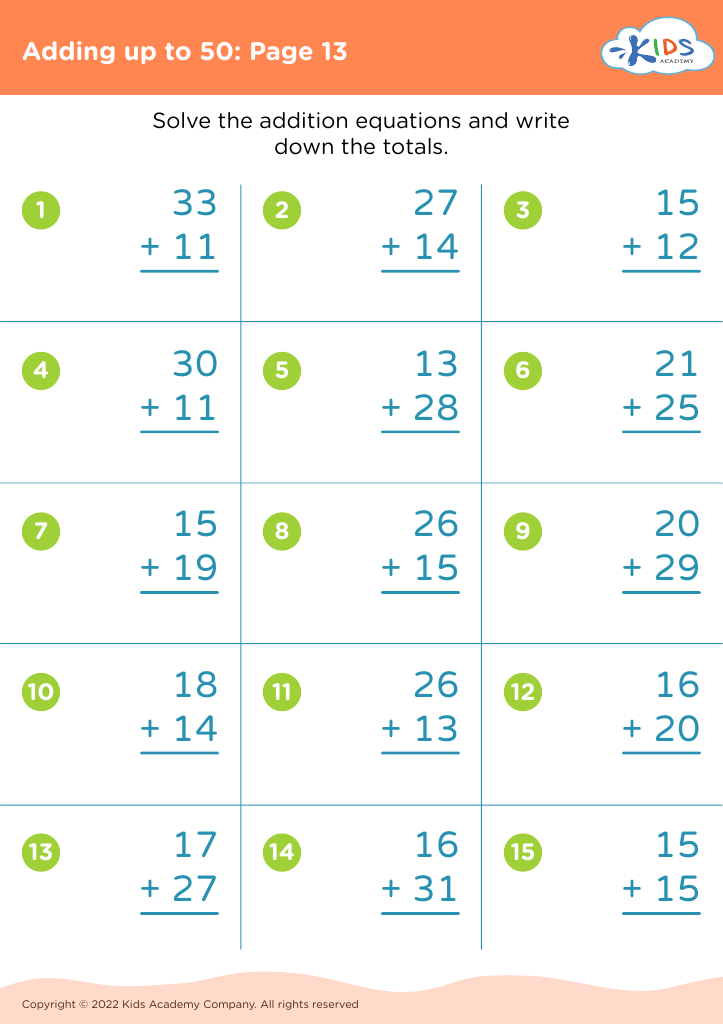
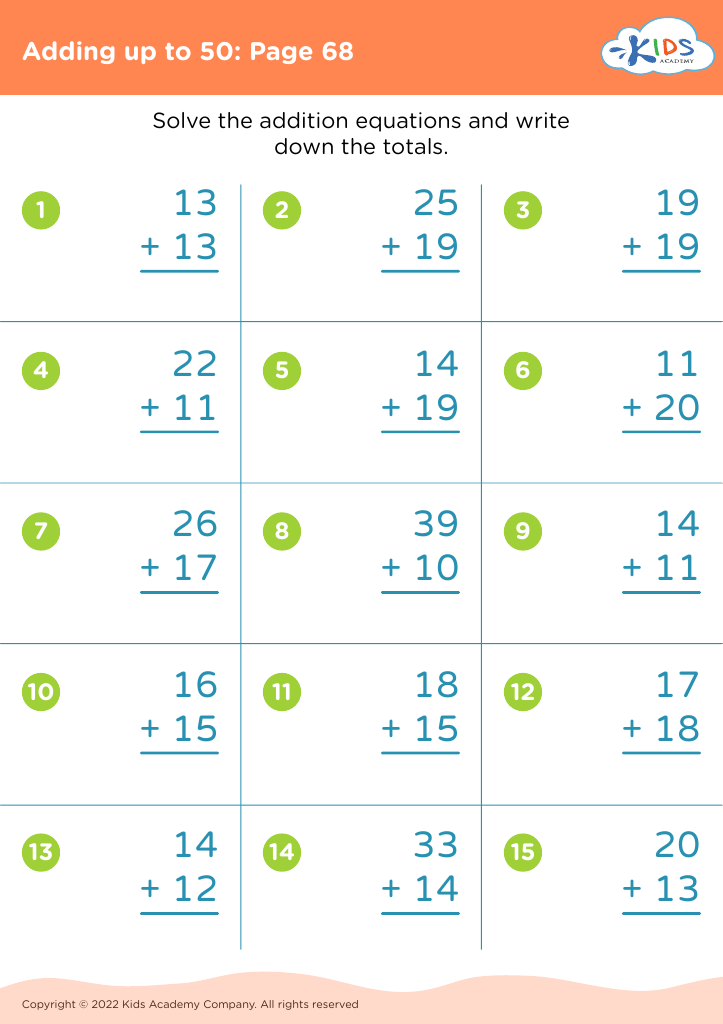
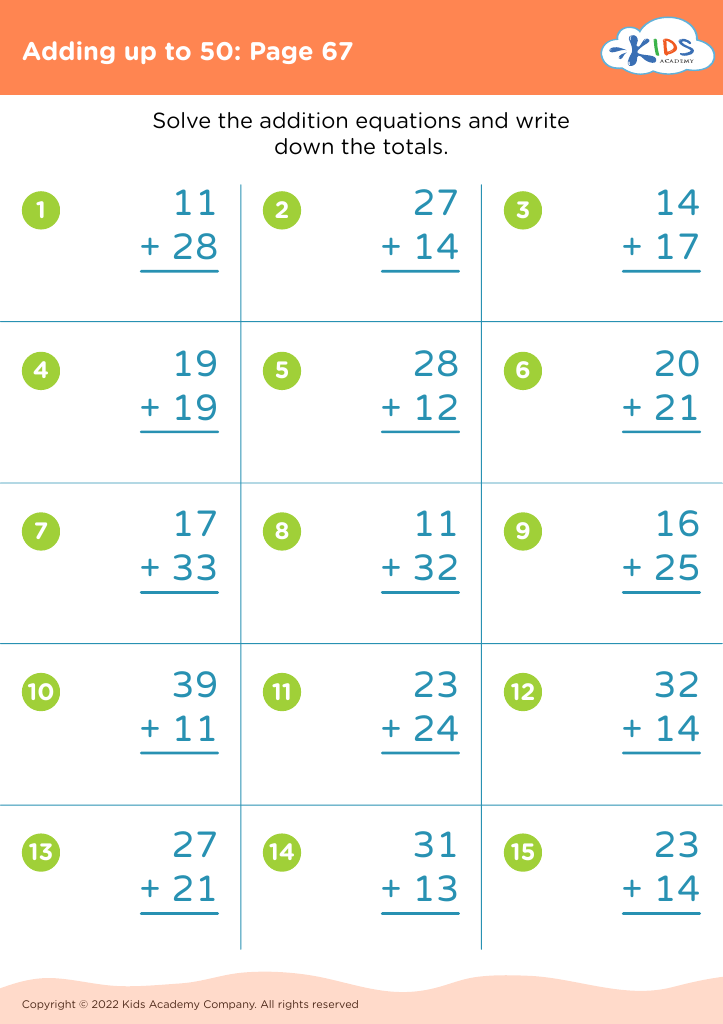
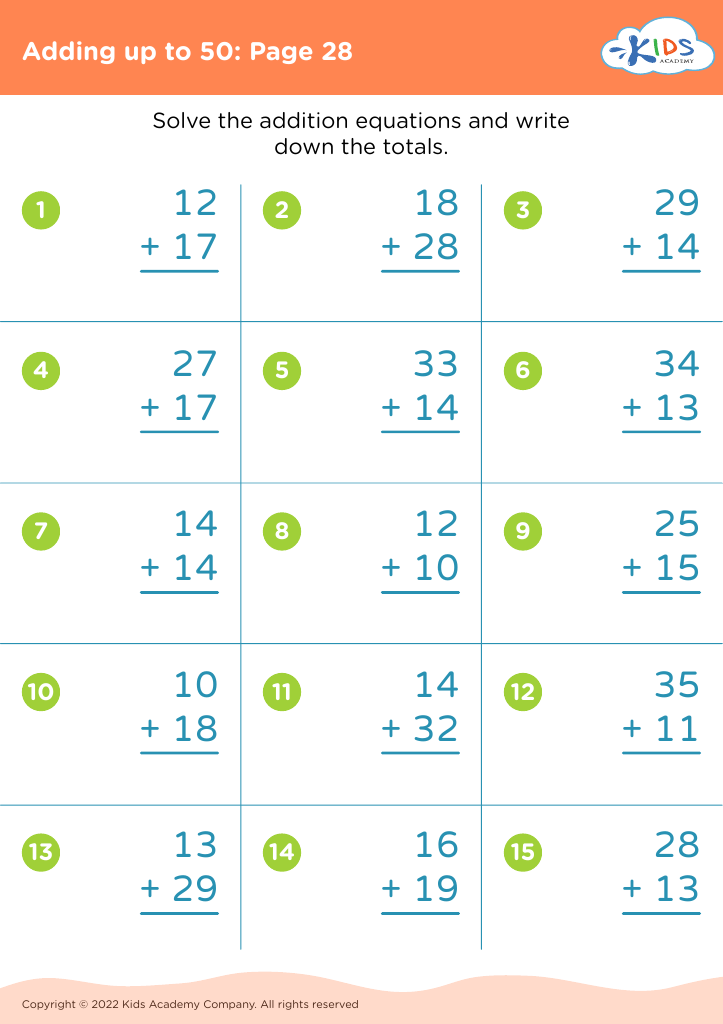
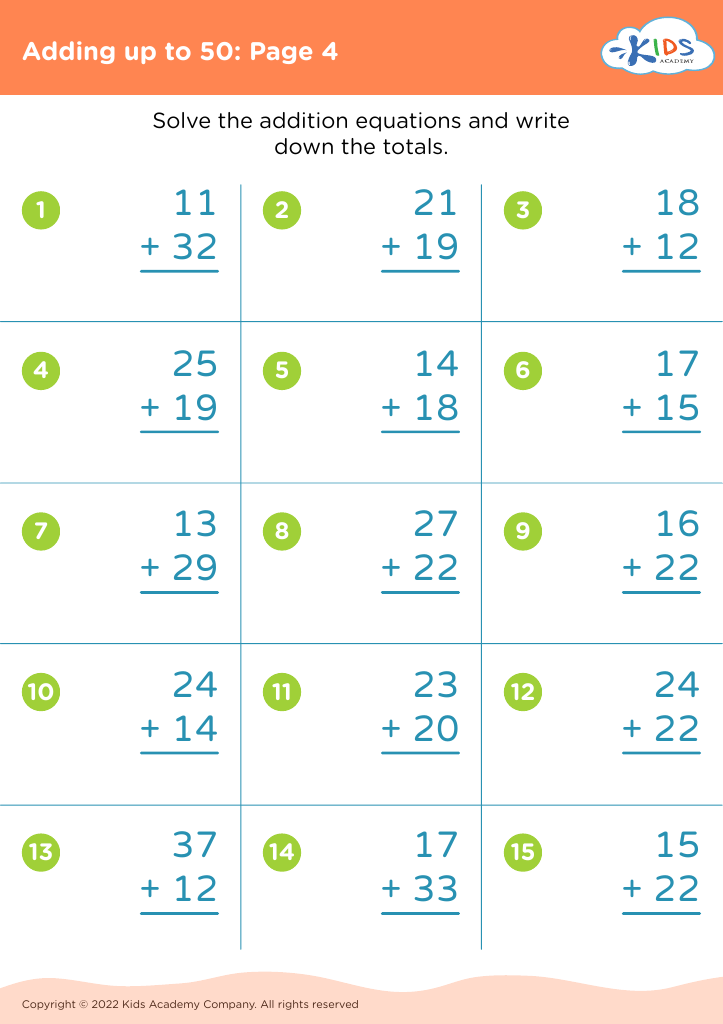
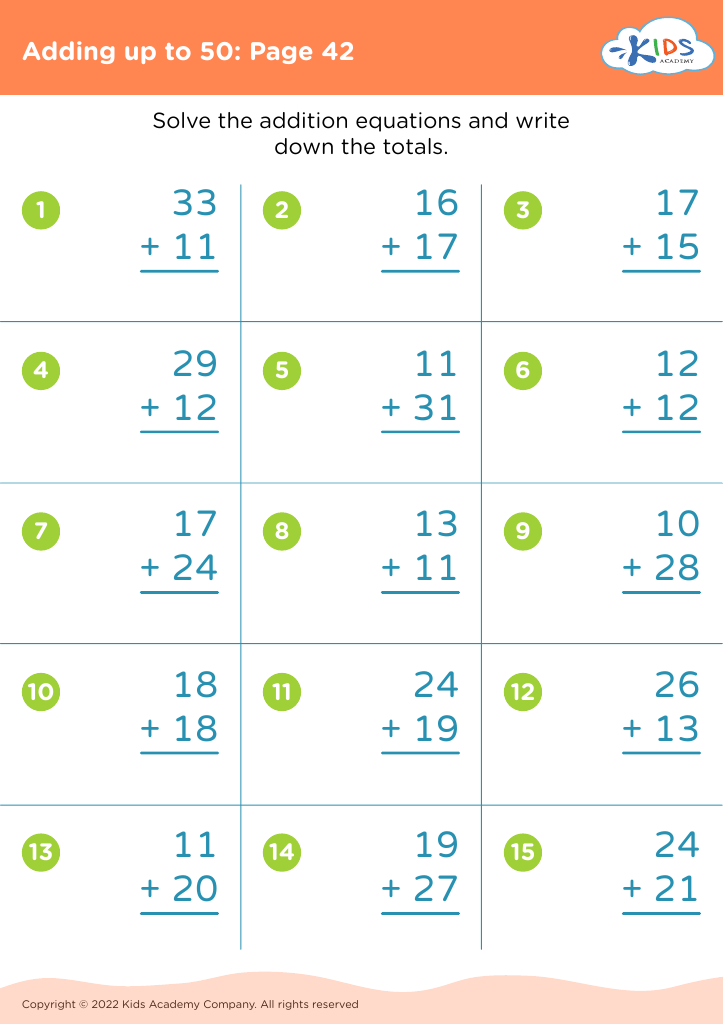
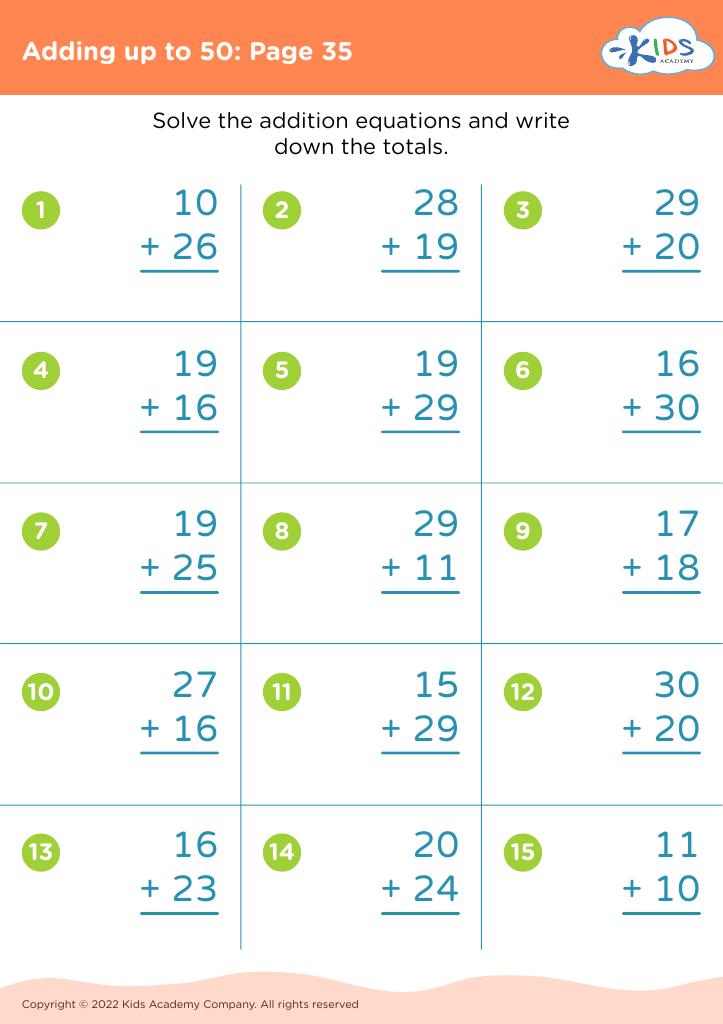
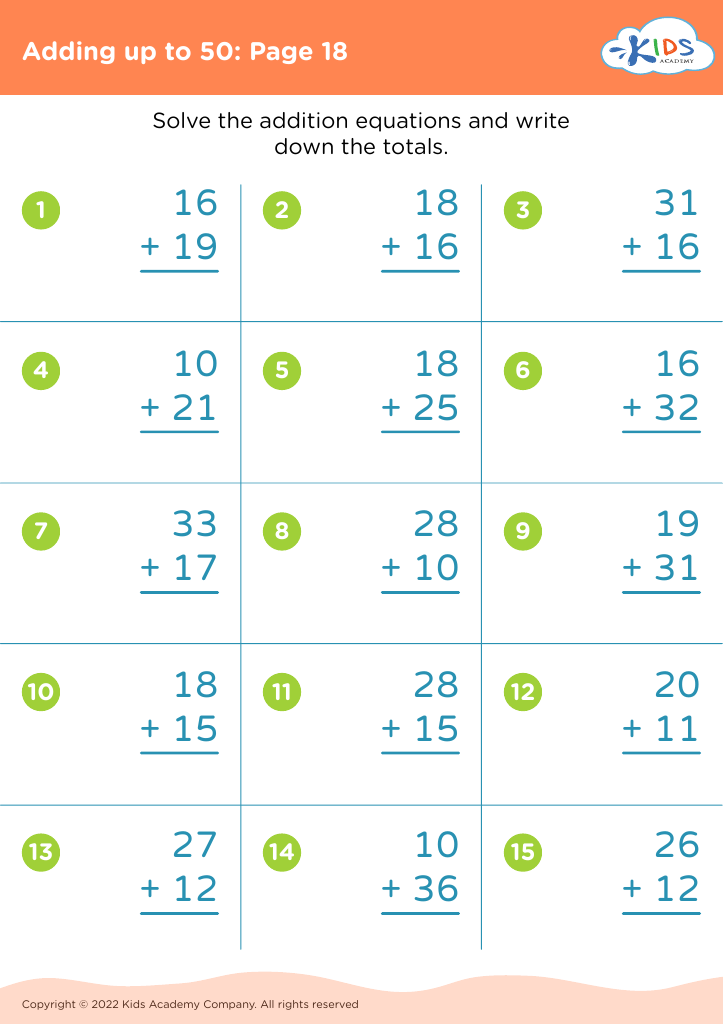
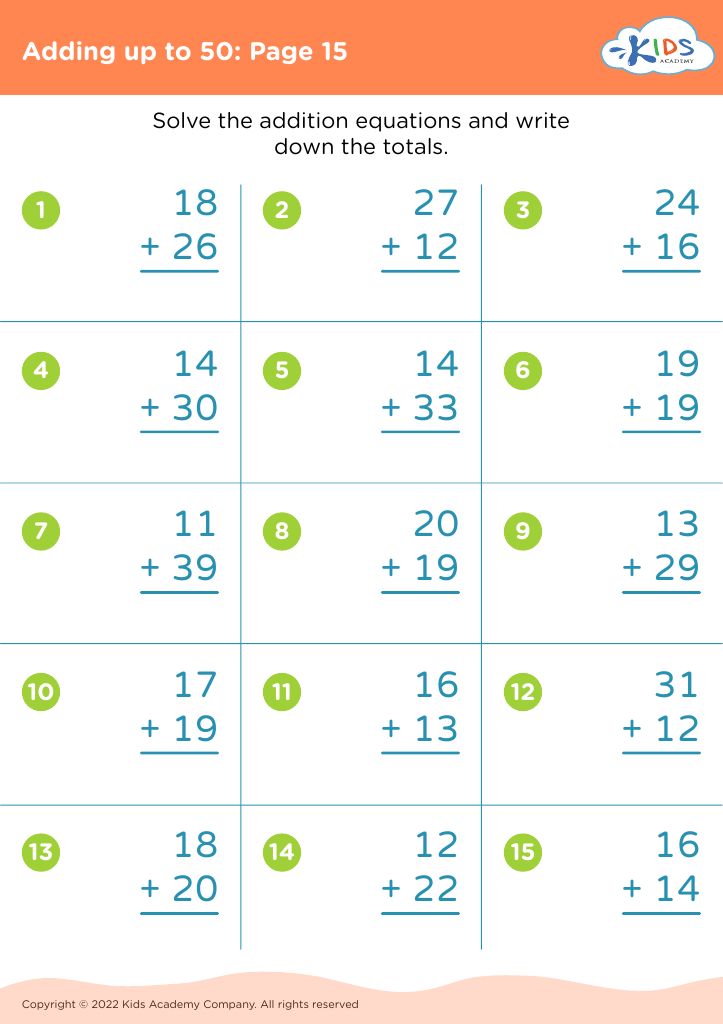
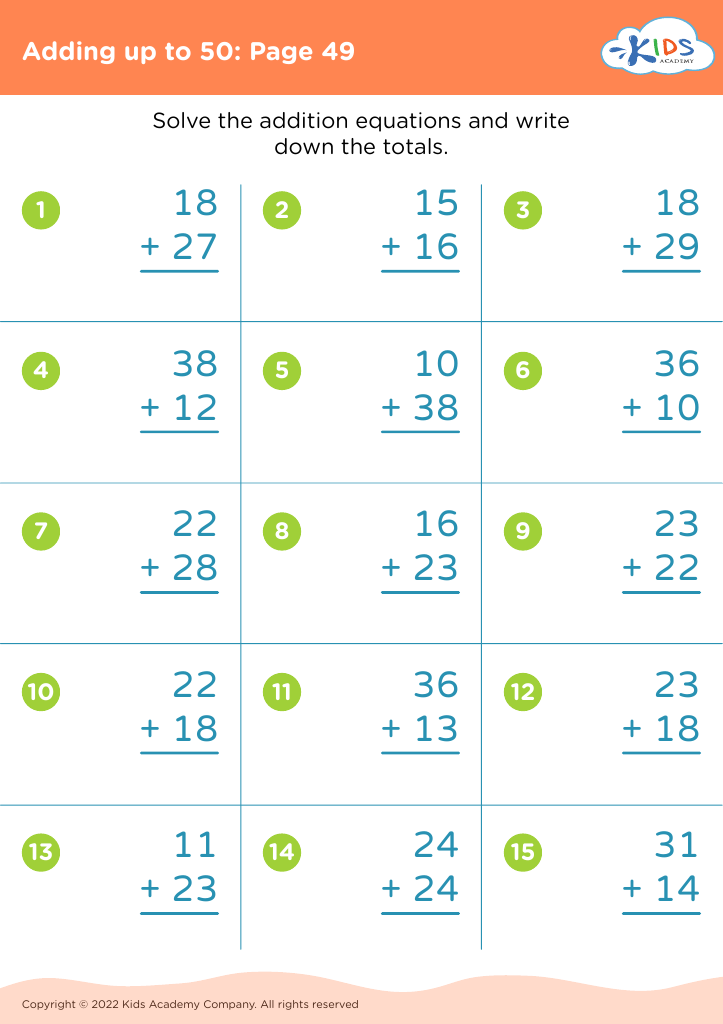
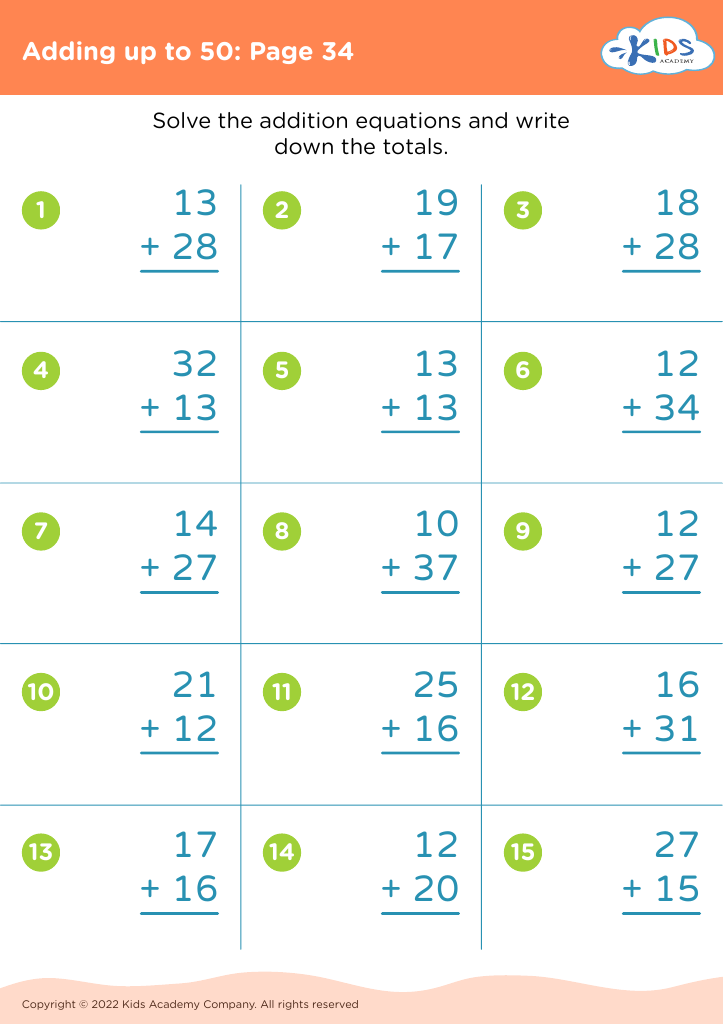


Understanding fractions and their application, particularly in contexts like adding numbers up to 50, is crucial for 7-year-olds for several reasons. First, it lays a solid foundation for mathematical concepts that children will encounter in higher grades. Fractions teach children essential skills in division, reasoning, and problem-solving, all of which are pivotal as they progress academically.
For parents, nurturing a child’s understanding of fractions promotes a sense of curiosity and exploration in mathematics, assisting them in developing critical thinking skills. Engaged parents can use real-life examples—like cooking or sharing pizza—to illustrate fractions, turning abstract concepts into tangible experiences.
Teachers, on the other hand, play a significant role in creating a supportive learning environment. By incorporating engaging and hands-on activities with fractions, alongside adding numbers, educators can enhance student participation and comprehension.
Furthermore, grasping fractions helps children understand proportions and ratios in different contexts, guiding their decision-making in math-related tasks. Both parents and teachers should recognize that strong foundational skills in math contribute to confidence and self-esteem, encouraging a positive attitude towards learning. This holistic understanding not only supports academic success but also equips children with life skills for future endeavors.