Shape Recognition Adding up to 50 with Regrouping Worksheets for 7-Year-Olds
6 filtered results
-
From - To
Enhance your 7-year-old's math and cognitive skills with our "Shape Recognition Adding up to 50 with Regrouping Worksheets." These engaging printable worksheets are designed to make learning fun and effective. Through vibrant shape recognition exercises, children practice adding numbers up to 50, with regrouping. This innovative approach blends visual learning with essential arithmetic skills, reinforcing understanding and boosting confidence. Ideal for young learners, these worksheets transform challenging concepts into enjoyable activities. Perfect for both classroom and at-home learning, our resources offer a solid foundation for mathematical success. Download today to support your child's growth in a fun and educational manner!
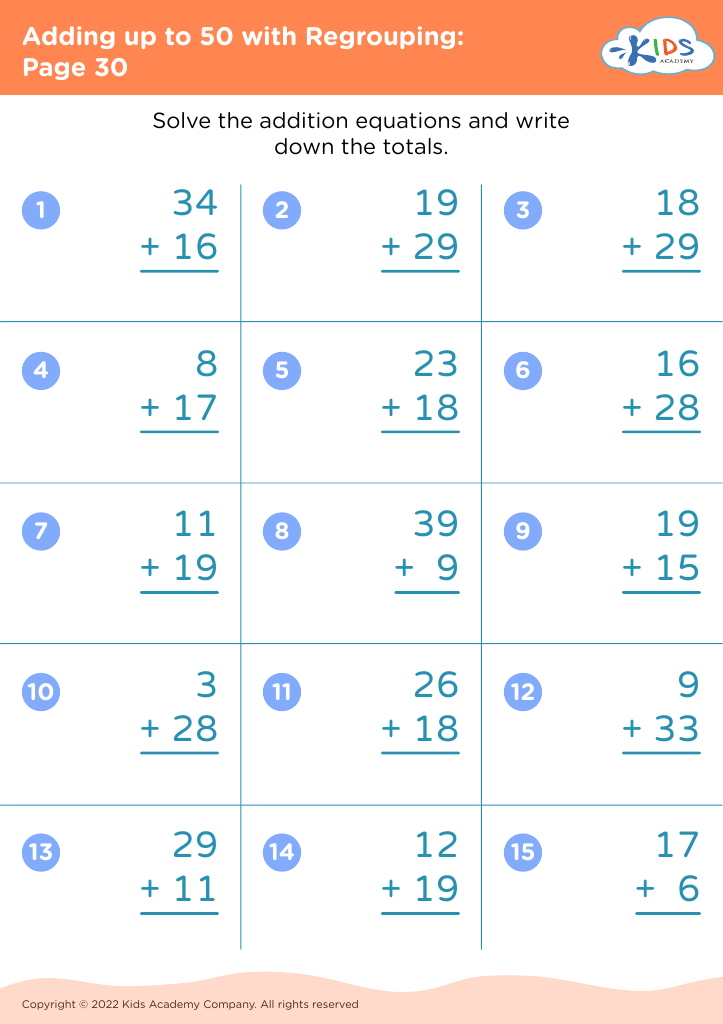
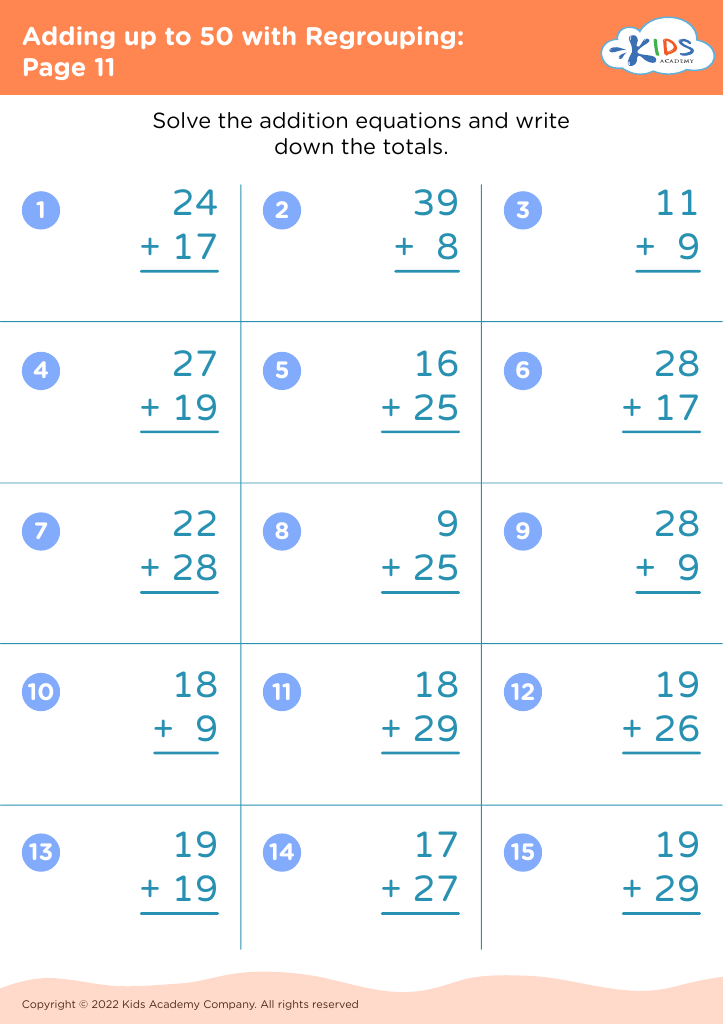
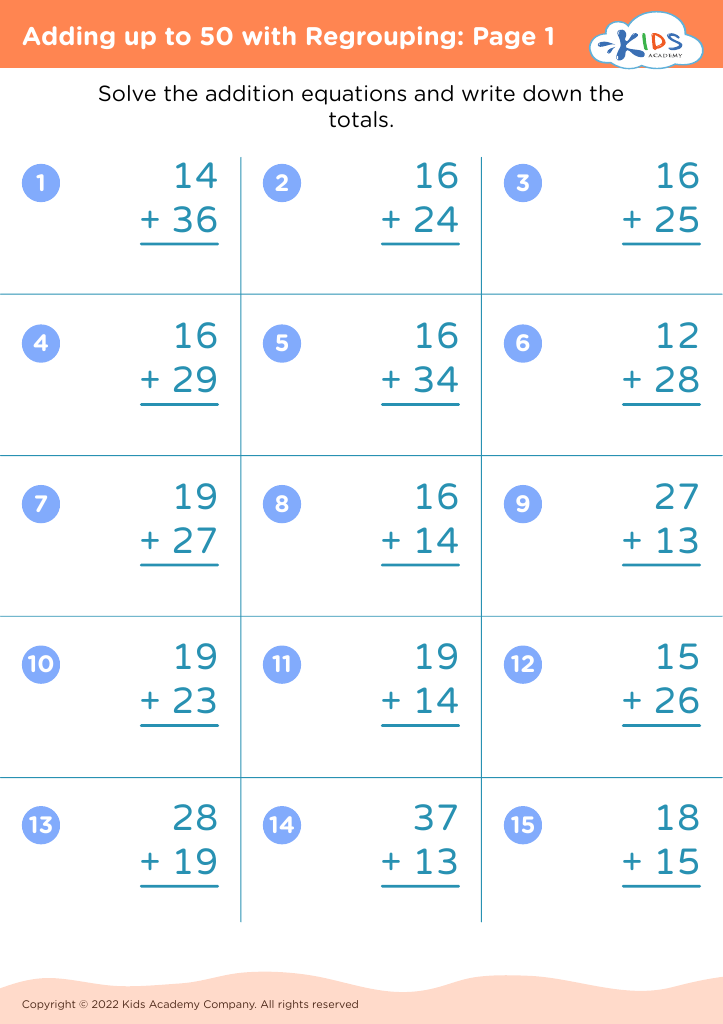
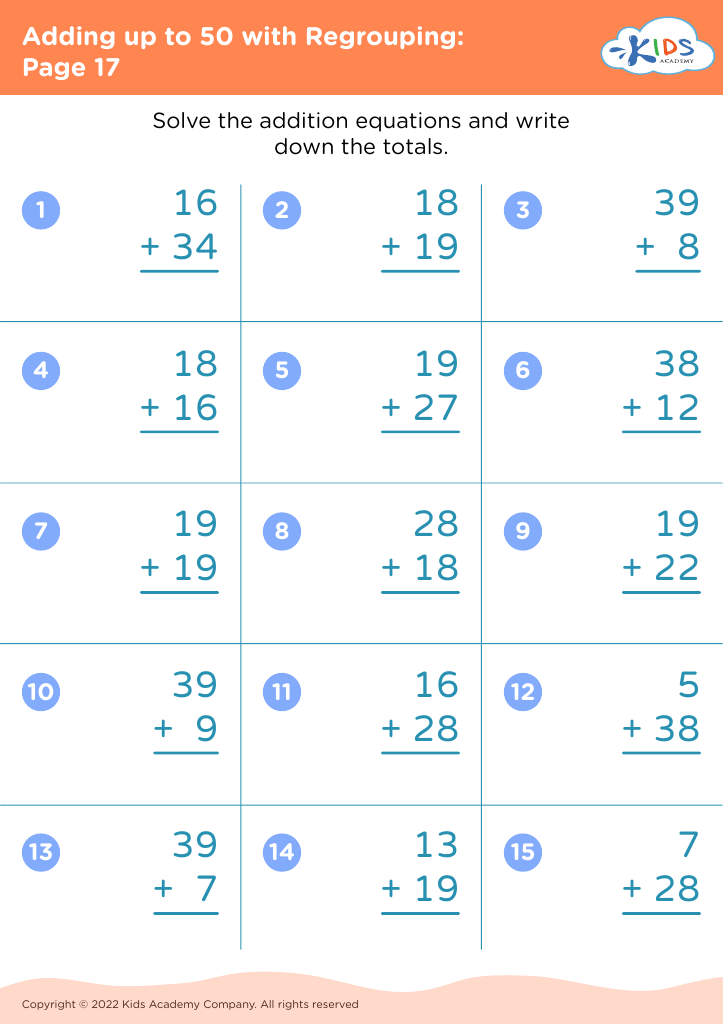
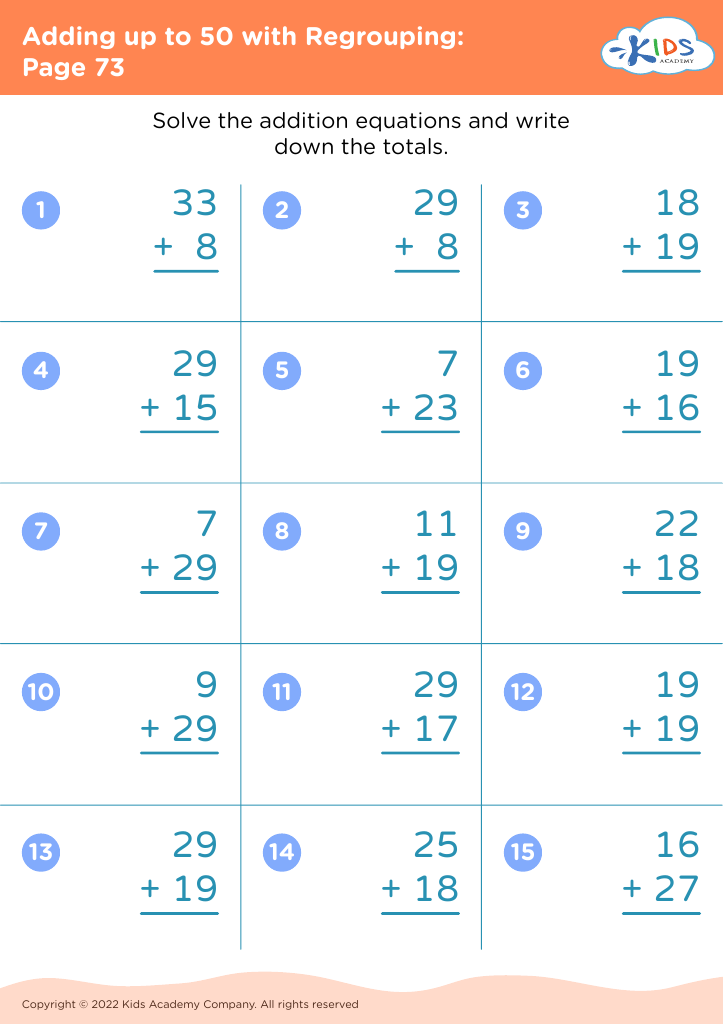
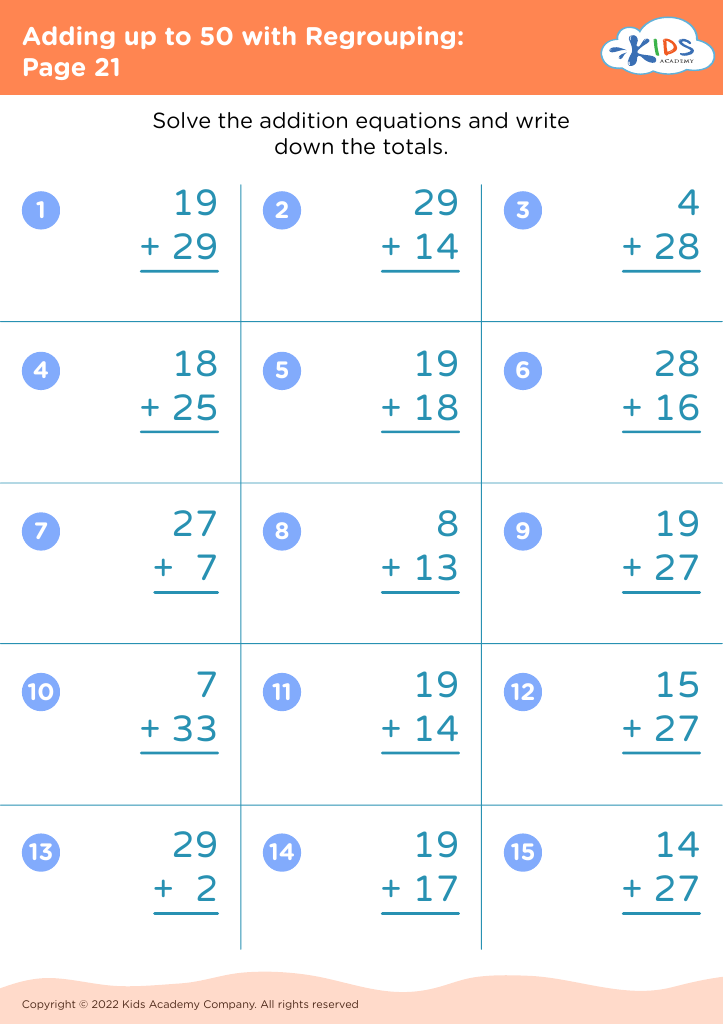


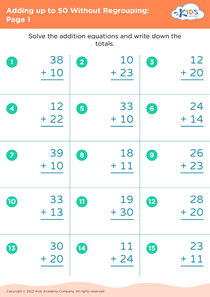
Shape recognition and understanding addition up to 50 with regrouping might seem like straightforward skills, yet they hold incredible significance in a 7-year-old’s educational growth. For parents and teachers, prioritizing these abilities is crucial because they lay foundational blocks for future learning experiences and cognitive development.
Firstly, shape recognition sharpens visual perception skills and spatial awareness, enabling children to better understand their environment and enhancing their geometry knowledge. It introduces essential terminologies and concepts that are prerequisites for more advanced mathematical learning. For example, recognizing the difference between a rectangle and a square helps in understanding simple area calculations later on.
Regarding addition up to 50 with regrouping, this skill doesn’t just enhance basic arithmetic proficiency; it instills a fundamental understanding of how numbers work together. It teaches important concepts like carrying over, which is vital for more complex arithmetic operations such as subtraction, multiplication, and division. This leads to better problem-solving skills and the ability to manage more comprehensive tasks in later schooling.
Finally, mastering these mathematical skills early on promotes confidence and independence in children. Early successes in math develop a positive attitude towards the subject, motivating continued learning and academic achievement. Hence, giving shape recognition and addition with regrouping the attention they deserve helps pave the way for a well-rounded and proficient student.