Problem-Solving Skills Adding up to 50 Without Regrouping Worksheets for 7-Year-Olds
6 filtered results
-
From - To
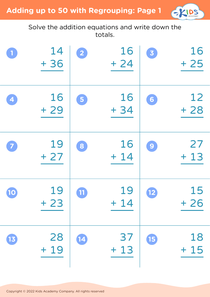
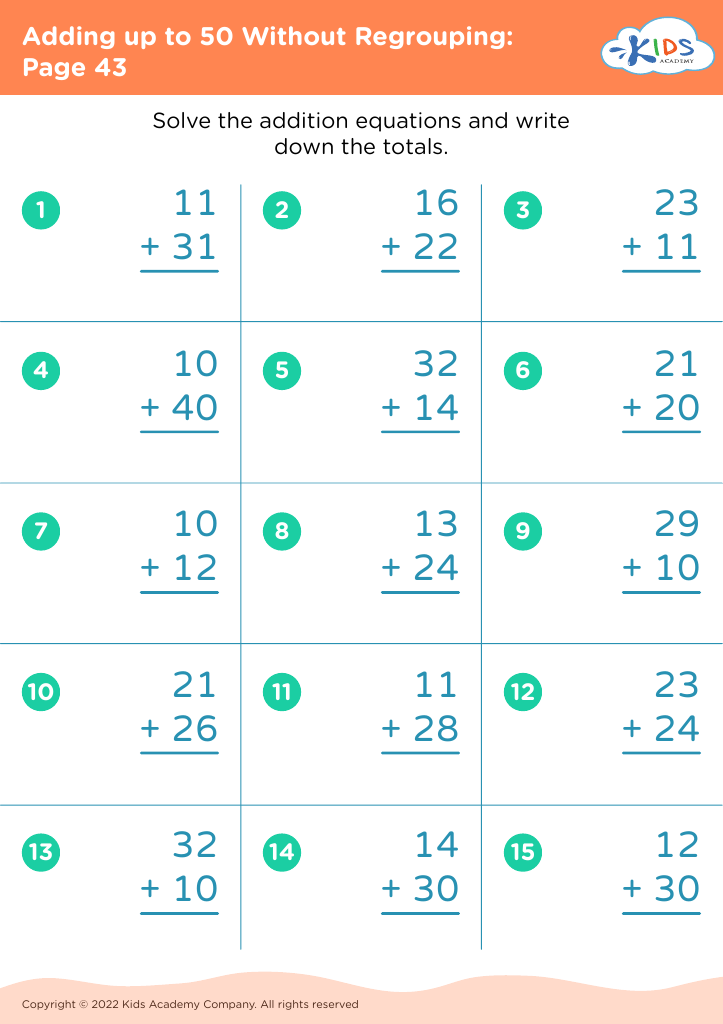
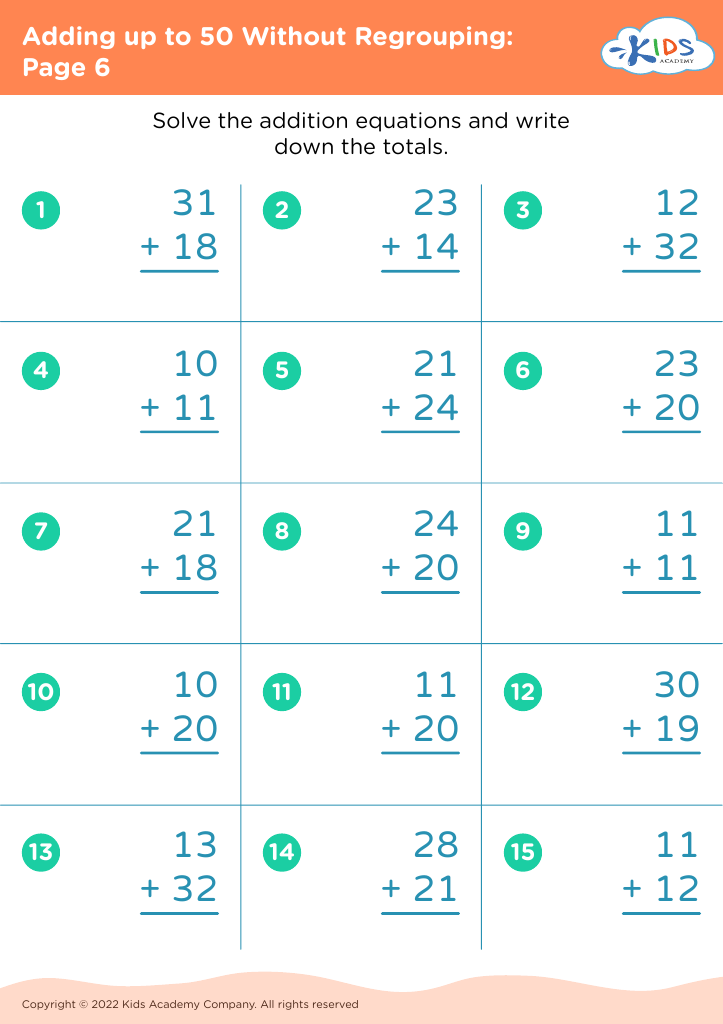
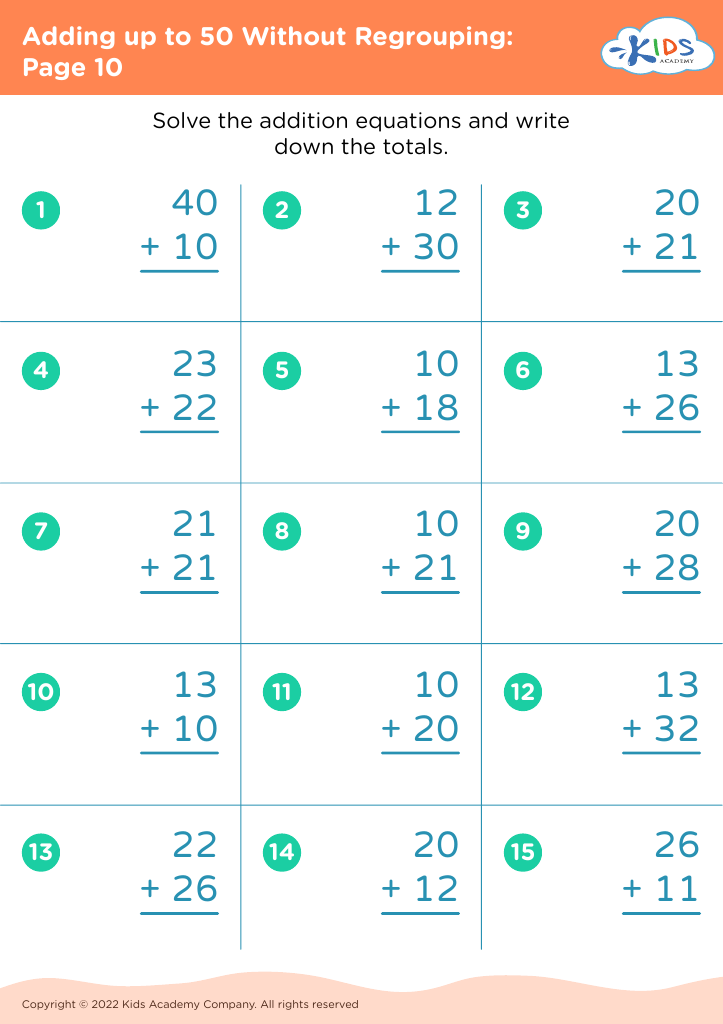
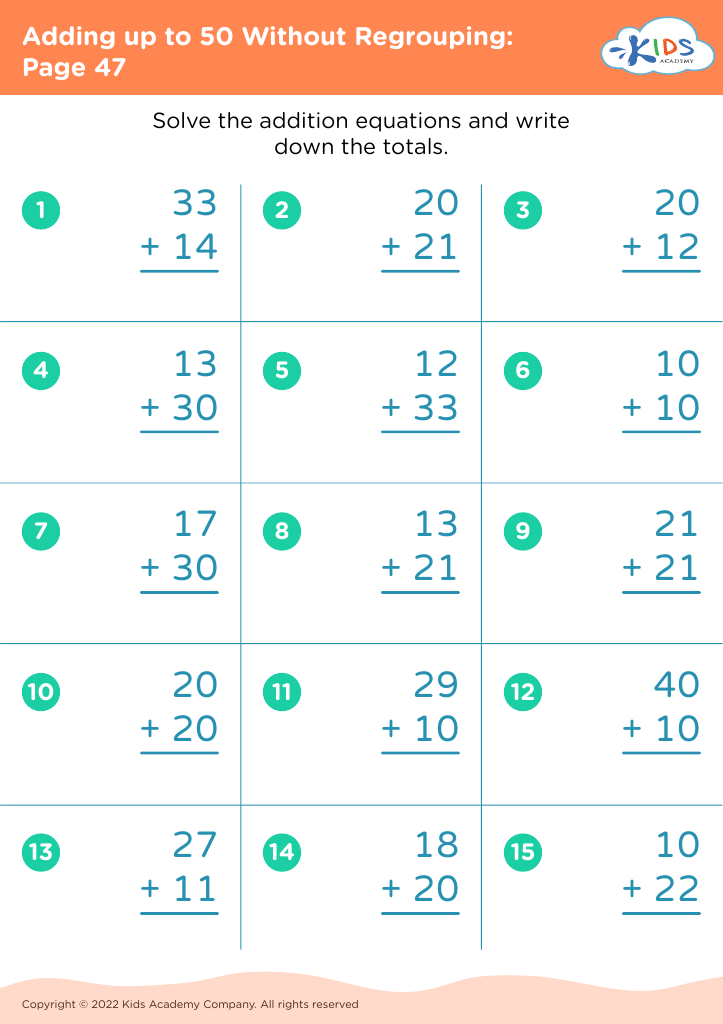
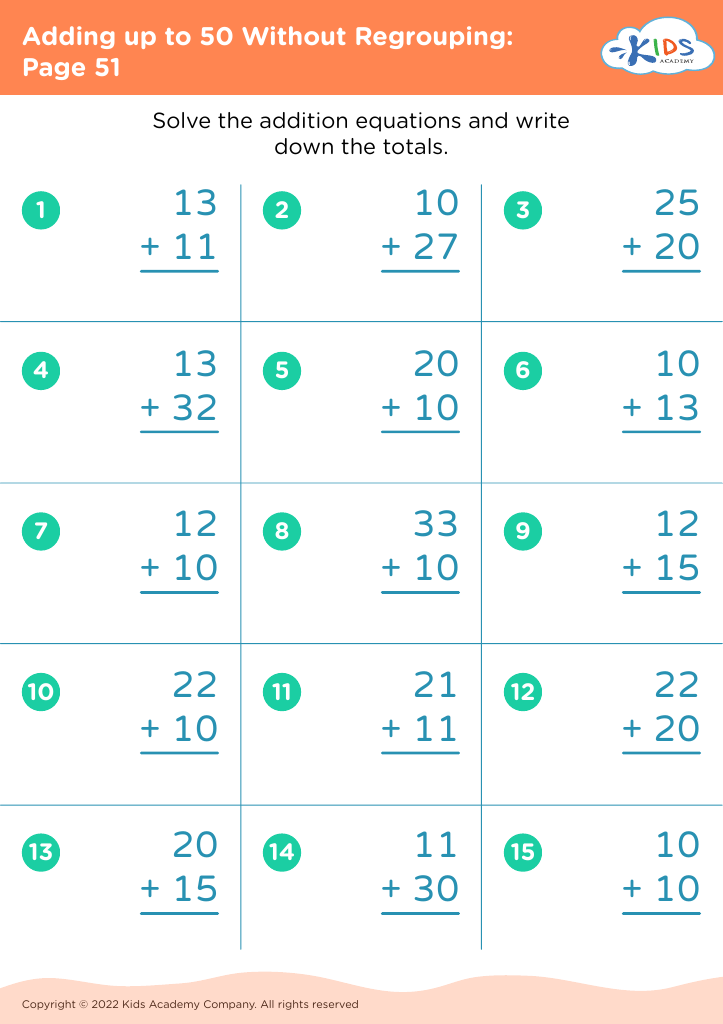
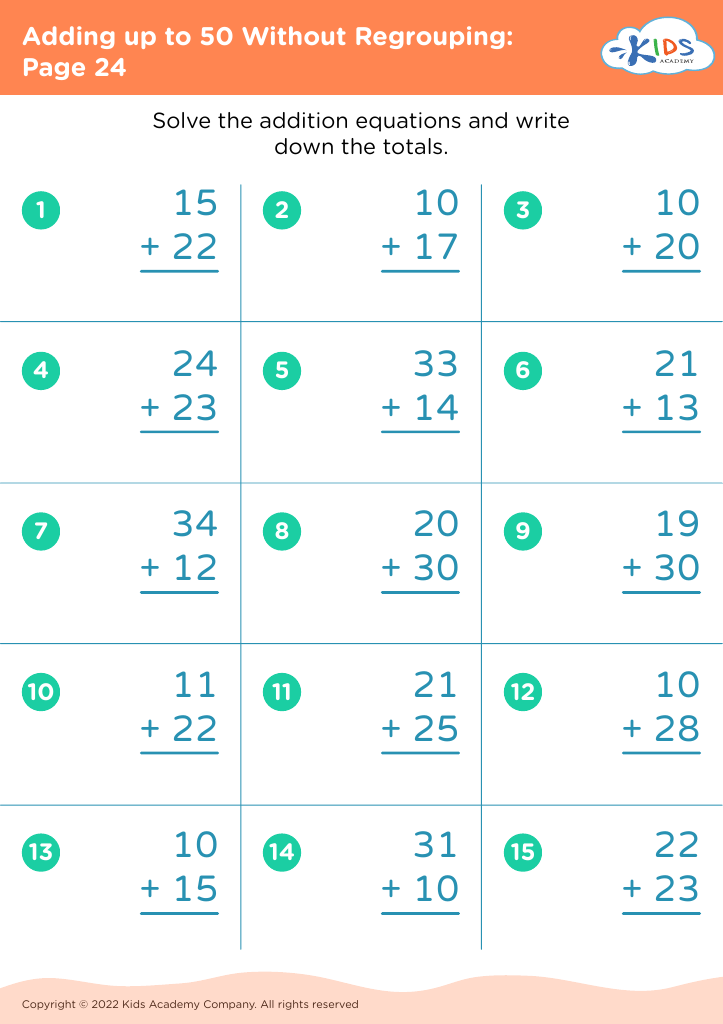
Our "Problem-Solving Skills: Adding Up to 50 Without Regrouping" worksheets are designed specifically for 7-year-olds to enhance their mathematical understanding and problem-solving abilities. These interactive activities teach students how to combine numbers effectively, reinforcing addition skills while eliminating regrouping challenges. Each worksheet offers engaging problems to practice, encouraging critical thinking and fostering a love for learning. Ideal for both classroom and home use, these resources help young learners build confidence in their math skills and develop essential strategies for solving problems independently. Explore the fun and educational world of numbers while setting a solid foundation for future math proficiency!


Parents and teachers should prioritize problem-solving skills that involve adding up to 50 without regrouping for several reasons. Firstly, mastering these skills lays a solid foundation in mathematics, essential for children’s future learning. At age seven, children are typically transitioning from basic arithmetic to more complex problem-solving. Developing their ability to add numbers within this range enhances their number sense, vital for understanding later mathematical concepts such as place value and algebra.
Moreover, these early learning experiences foster critical thinking and logical reasoning. As children encounter various strategies to reach a sum of 50, they learn to think flexibly and explore multiple avenues to solve a problem. This builds confidence and a positive attitude towards math, which can influence their performance in more advanced subjects.
Additionally, problem-solving fosters perseverance. Learning to find solutions, even when faced with challenging problems, teaches resilience—a lifelong skill applicable beyond academics. It also encourages collaboration when students work together to discuss methods and solutions.
Finally, helping children develop strong problem-solving skills can boost their self-esteem and assist in building their social skills, as they share ideas and solutions with peers, fostering a sense of community in the learning process. Hence, promoting these skills is vital for holistic child development.