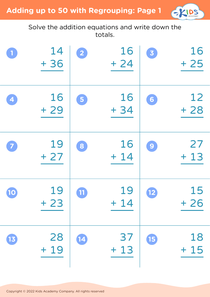
Understanding fractions Adding up to 50 Without Regrouping Worksheets for 7-Year-Olds
13 filtered results
-
From - To
Discover our engaging "Understanding Fractions: Adding up to 50 Without Regrouping" worksheets, specially designed for 7-year-olds! These interactive resources will help young learners grasp the concept of fractions while reinforcing their addition skills. With a focus on adding fractions that sum to 50, children will practice solving problems without the need for regrouping. Each worksheet is crafted to encourage critical thinking and enhance number sense in a fun way. Ideal for classroom settings or at-home learning, these worksheets pave the way for a solid understanding of fractions, setting the foundation for more advanced math concepts. Explore our collection today!
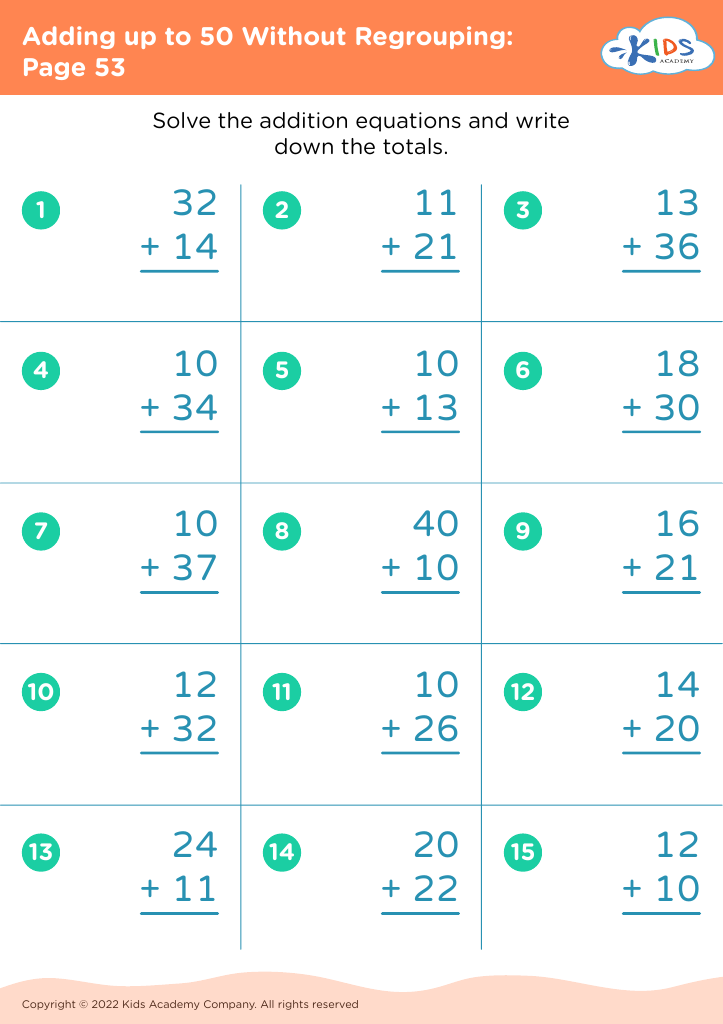
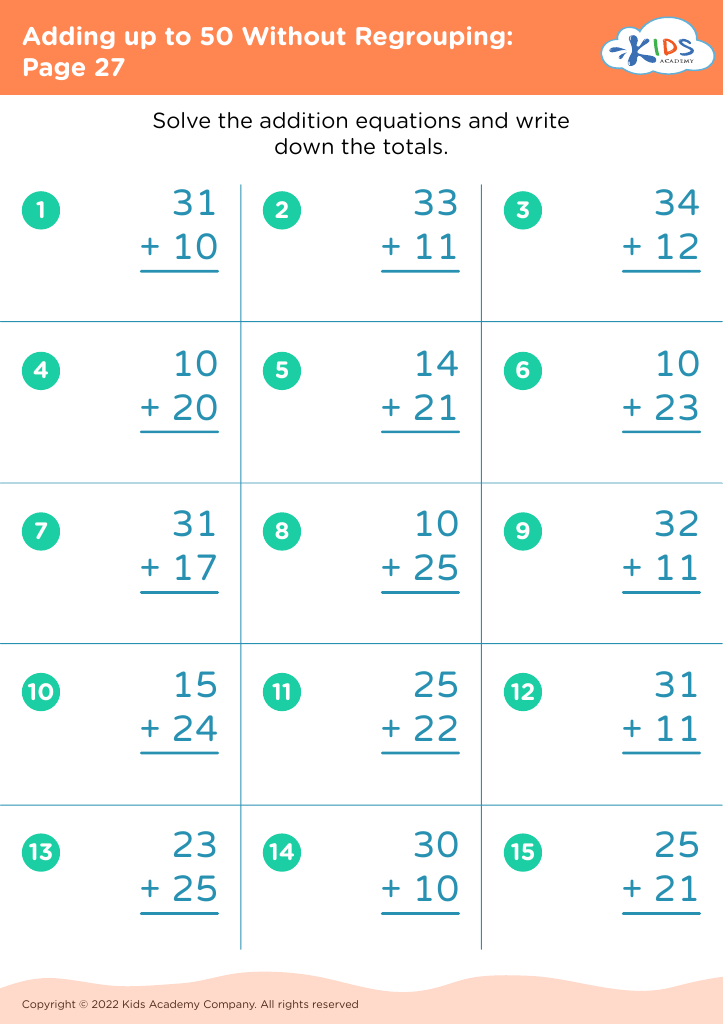
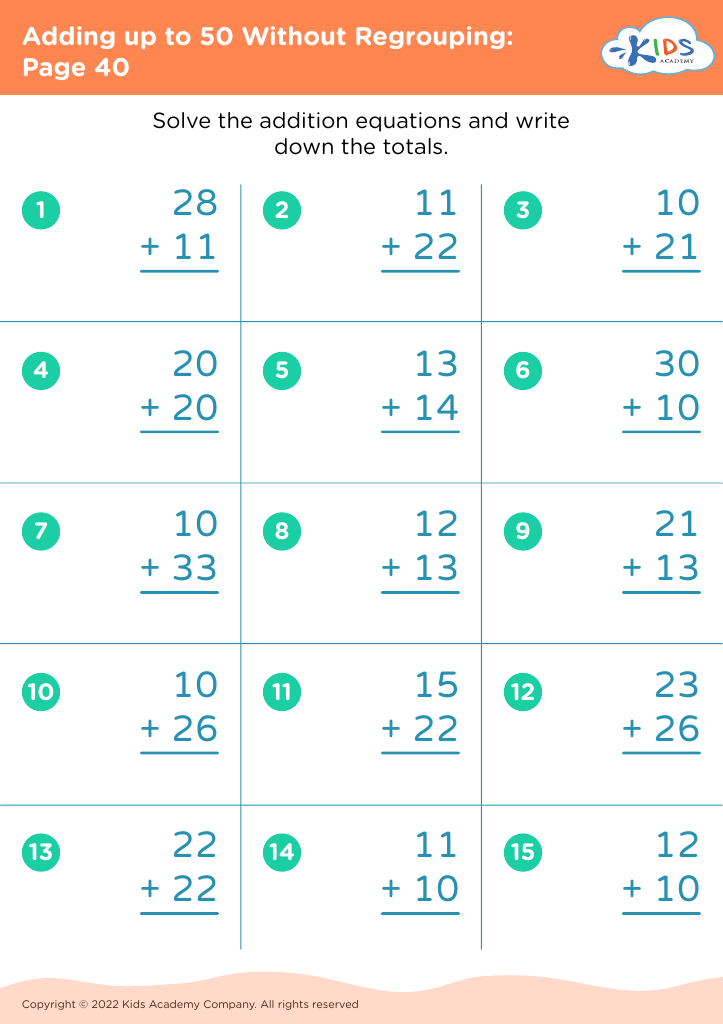
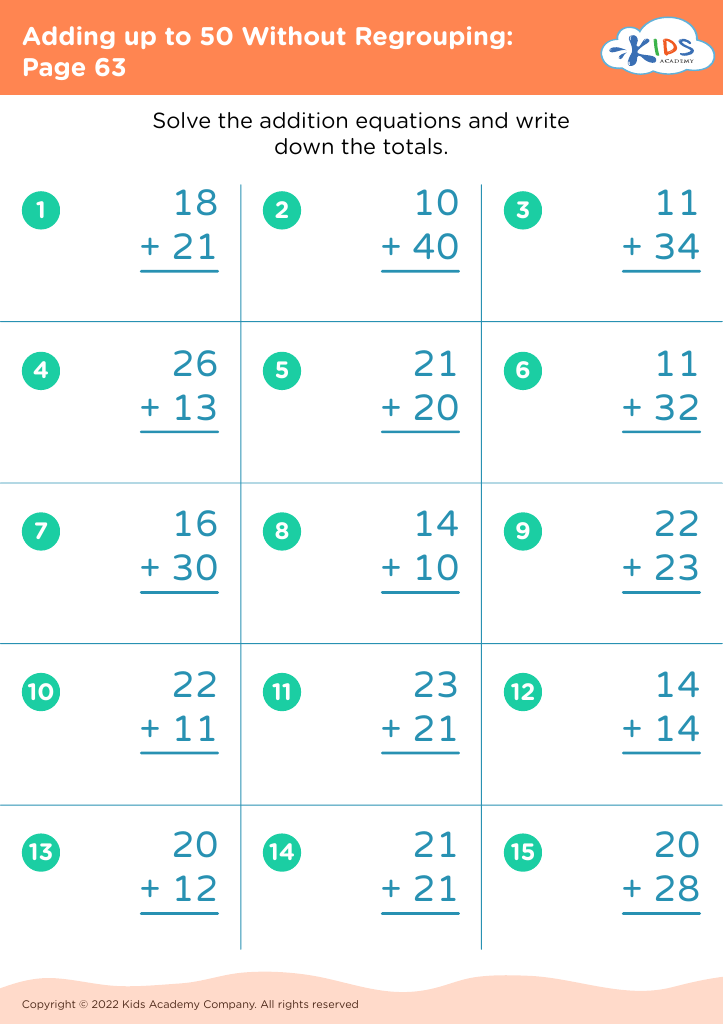
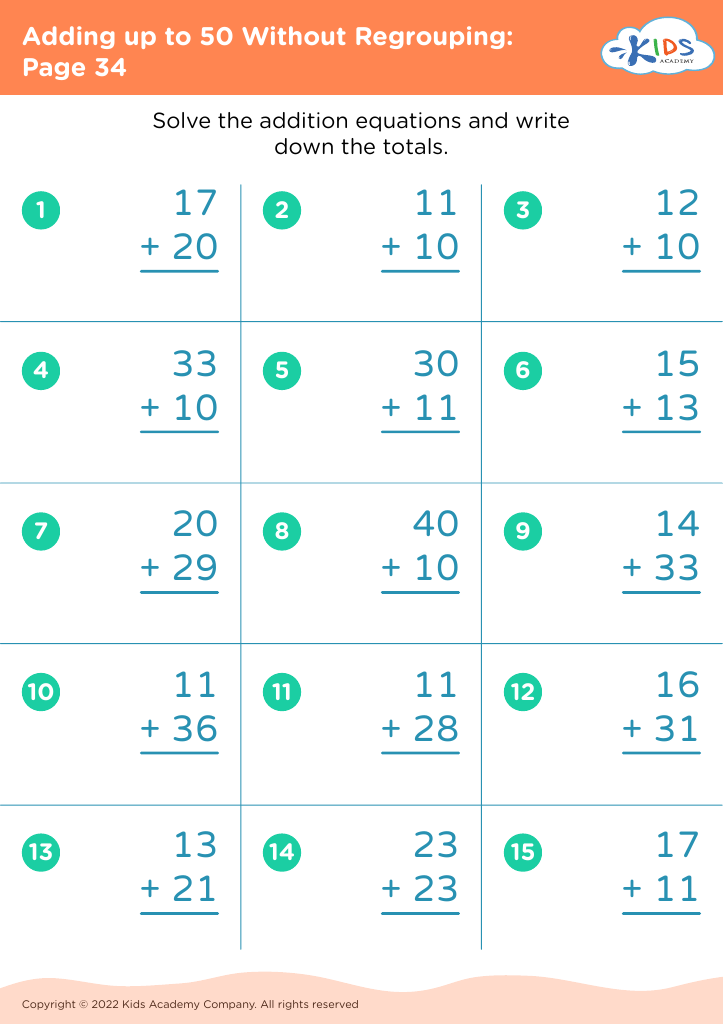
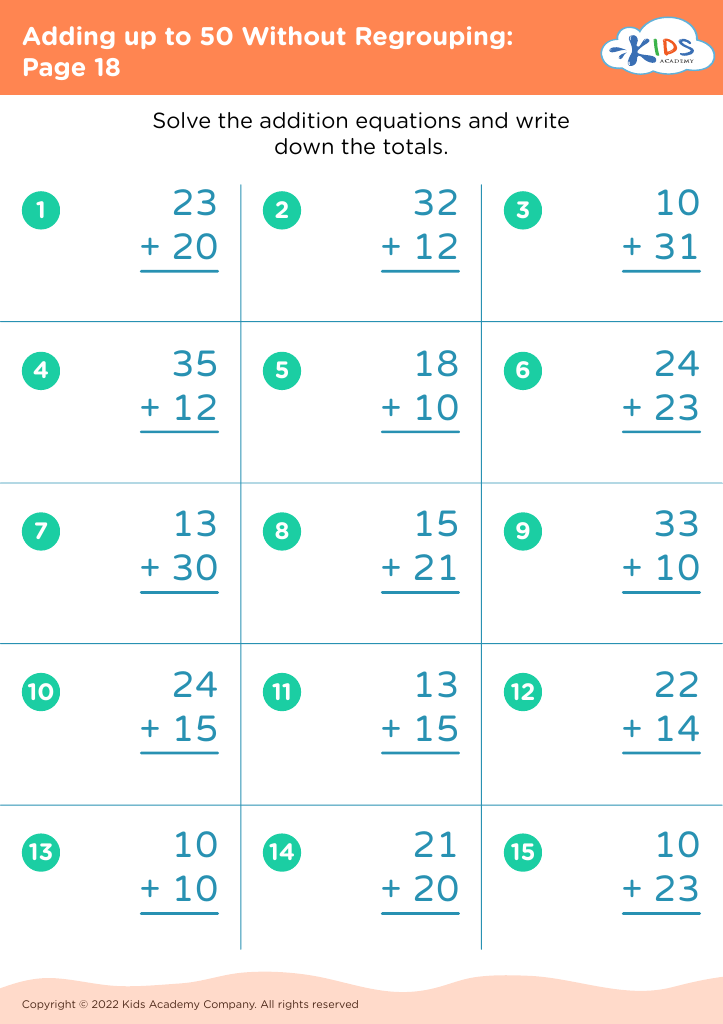
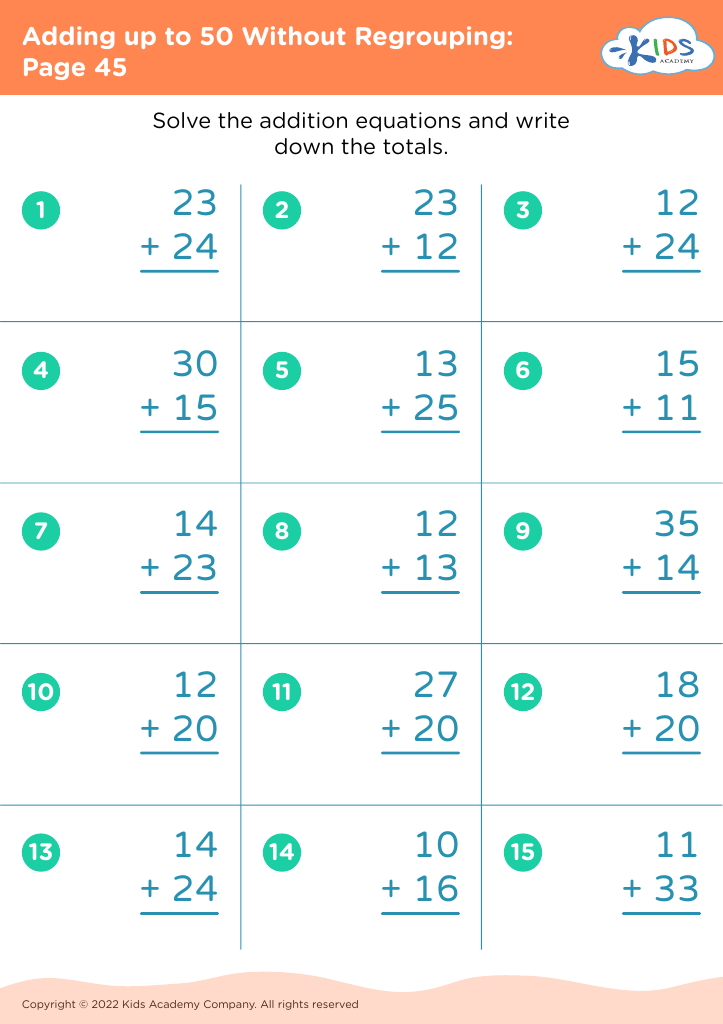
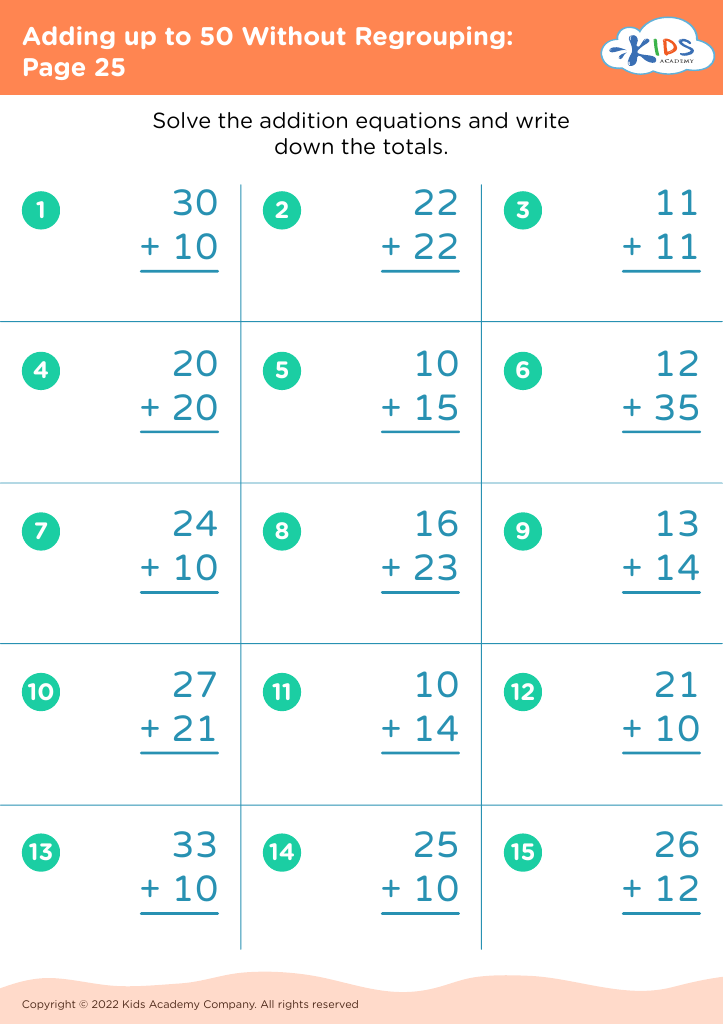
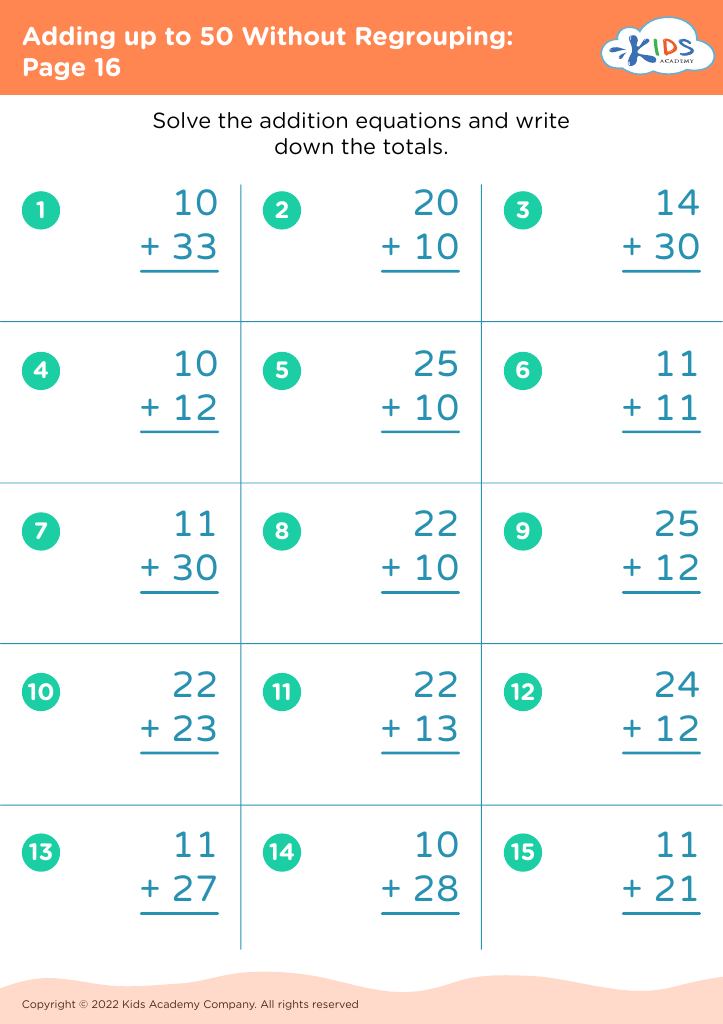
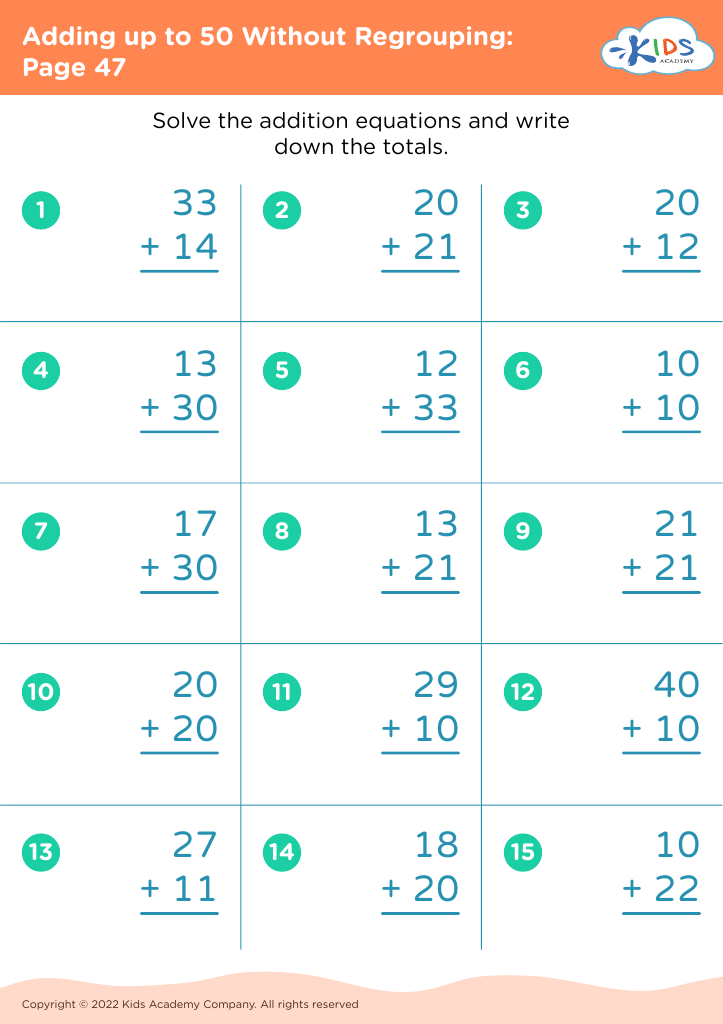
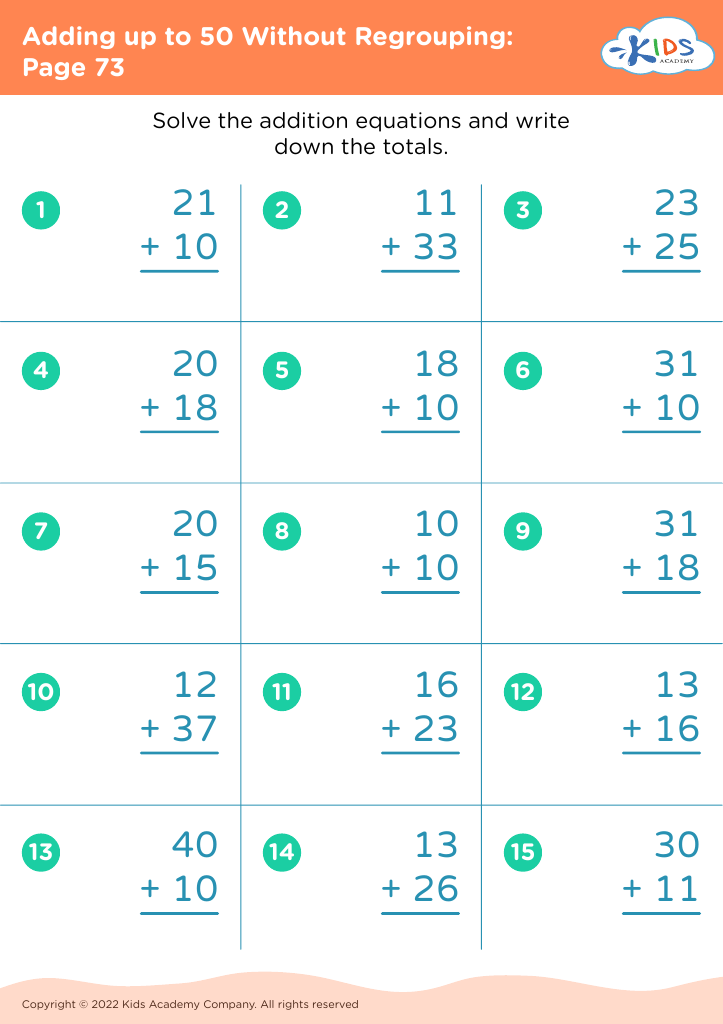
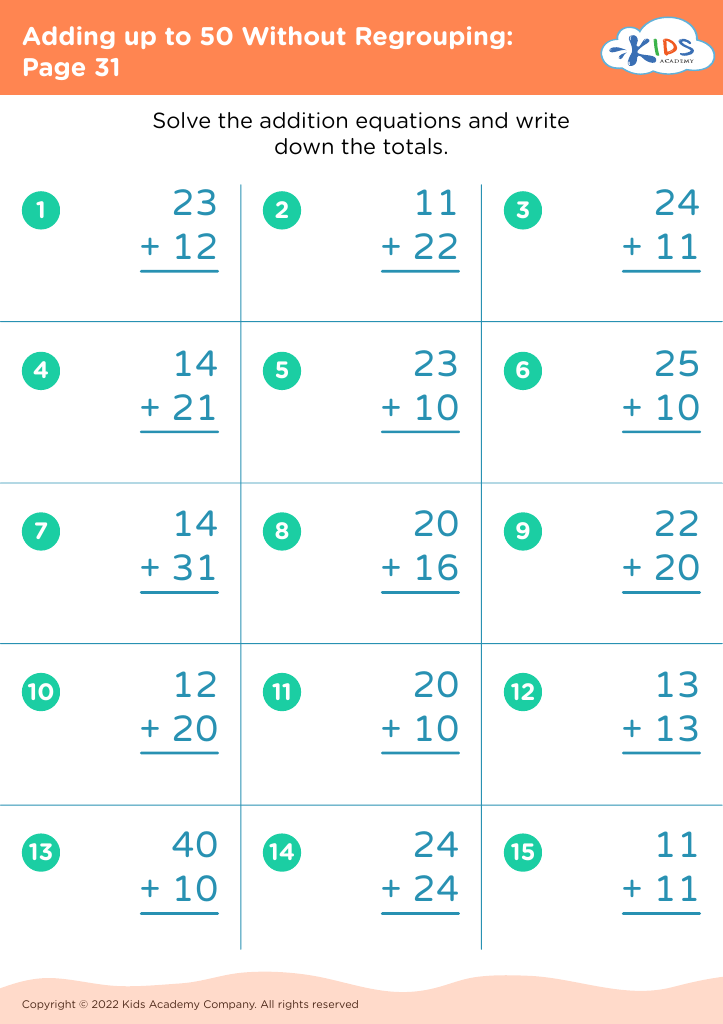
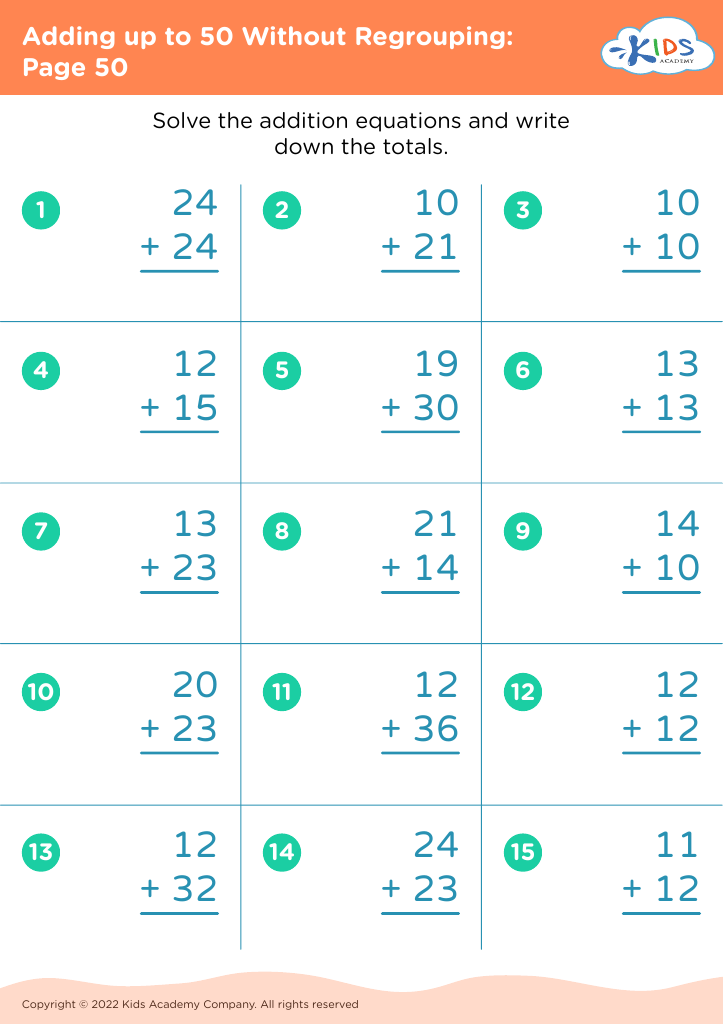


Understanding fractions and the ability to add fractions without regrouping is crucial for 7-year-olds, as it lays the foundation for their future math skills. At this age, children are typically learning about basic fractions—how to represent parts of a whole and compare them. This knowledge is vital not only for their academic progress but also for developing critical thinking and problem-solving abilities.
When children learn to add fractions that sum up to 50 without regrouping, they practice essential skills such as concentration, mental math, and pattern recognition. This process helps them build number sense and enhances their ability to visualize mathematical concepts. Additionally, recognizing and understanding fractions promotes foundational skills needed for more advanced topics like geometry, measurement, and algebra down the line.
For parents and teachers, fostering an understanding of these concepts is essential, as it encourages a positive attitude toward math and helps children feel confident in their abilities. Moreover, understanding fractions is all around them—in cooking, art, and daily life—reinforcing its importance. By supporting kids in mastering these initial mathematical concepts, parents and teachers equip them with tools for academic success and life skills needed for problem-solving in the real world.