
Boost critical thinking Addition Worksheets for 7-Year-Olds
3 filtered results
Difficulty Level
Grade
Age
-
From - To
Subject
Activity
Standards
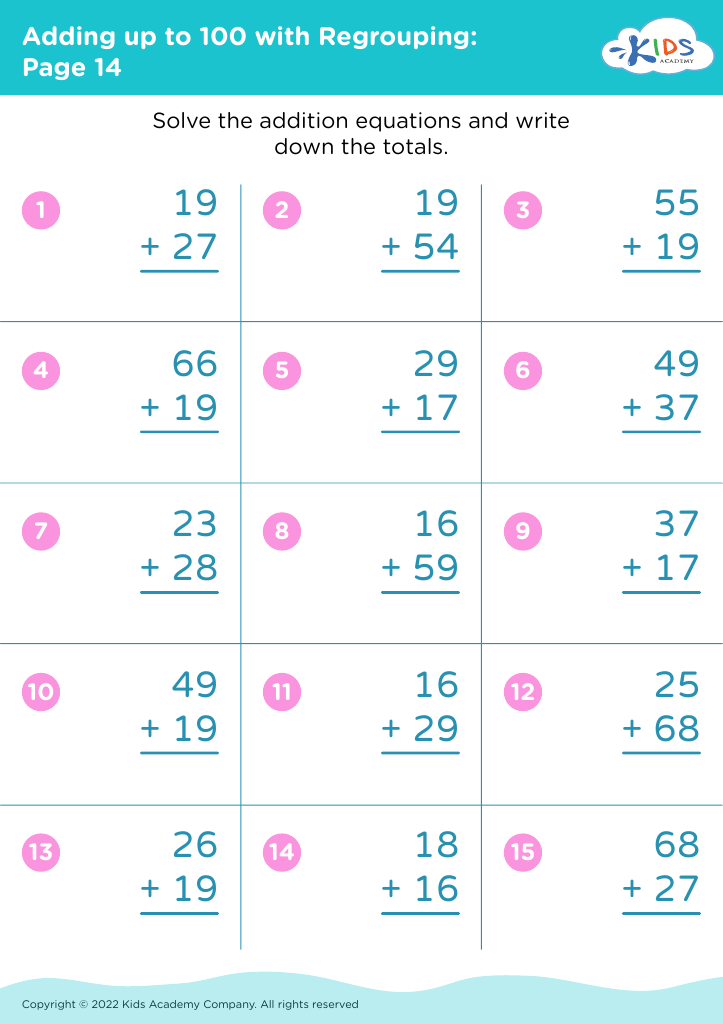
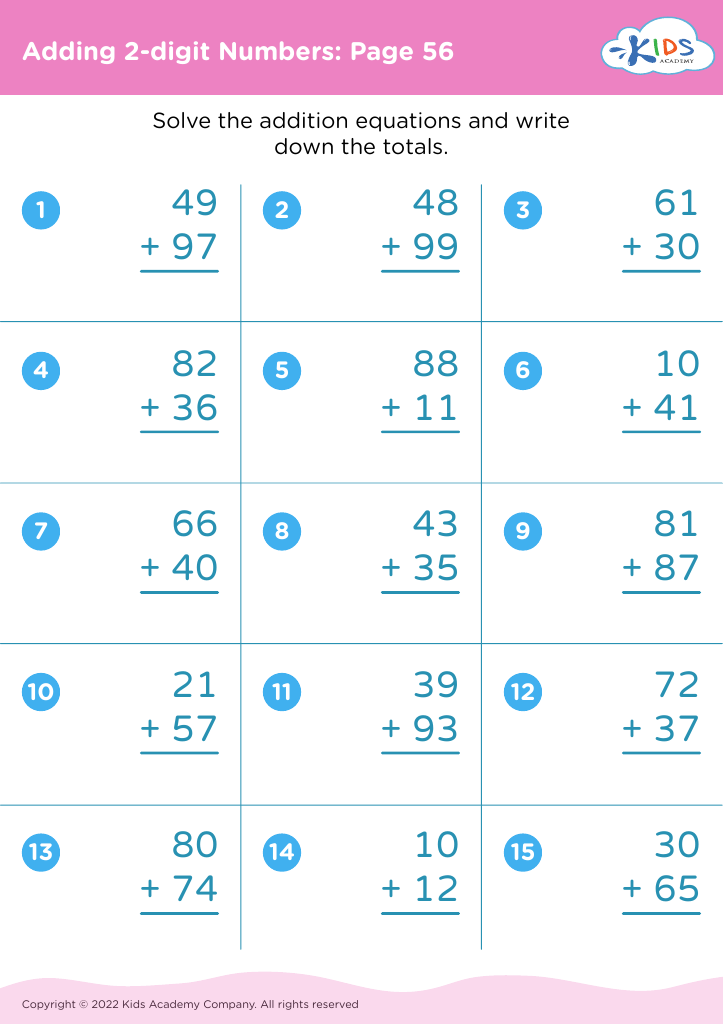
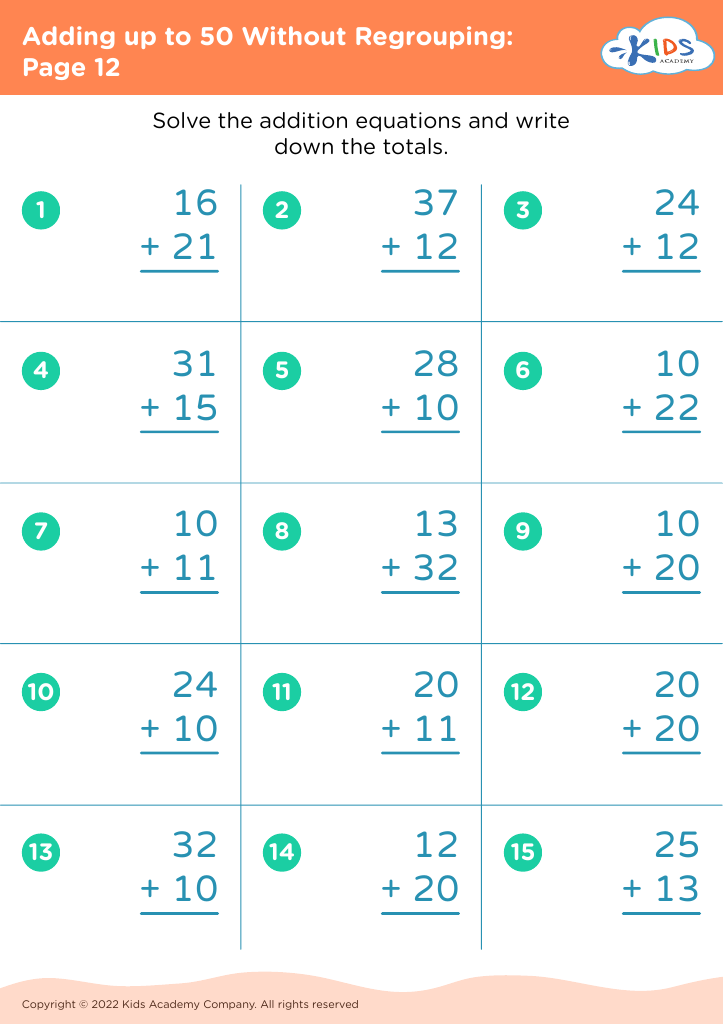
Unlock your child's potential with our "Boost Critical Thinking Addition Worksheets for 7-Year-Olds." Designed to enhance math skills and critical thinking, these engaging worksheets encourage young learners to explore addition in creative ways. With fun challenges that promote problem-solving and analytical skills, kids will develop a deeper understanding of concepts and improve their confidence in math. Each worksheet offers a blend of visual stimuli and thought-provoking questions, making learning both enjoyable and effective. Ideal for homeschooling or supplementary practice, these worksheets will transform math time into an exciting adventure, empowering your child to think critically while mastering addition. Explore now!
Favorites
With answer key
Interactive
Join Kids Academy for Free
Who is primarily going to use this learning content?








Critical thinking skills are essential for children's overall development, especially at the age of seven when they are increasingly capable of deeper reasoning and understanding. Boosting critical thinking in addition helps children not only to solve math problems but also to develop analytical skills that are applicable across various subjects and life situations. When parents and teachers engage students in activities that promote critical thinking, such as exploring different ways to approach addition, they encourage curiosity, creativity, and problem-solving abilities.
Fostering critical thinking in mathematics enhances kids' confidence and independence, preparing them for future academic challenges. It enables students to question their assumptions, recognize patterns, and develop logical reasoning, which are vital in today’s information-driven world. Furthermore, nurturing critical thinking can lead to improved communication skills, as children learn to articulate their thought processes, share ideas, and collaborate with peers.
By investing time and resources into critical thinking in mathematical concepts like addition, parents and teachers equip children with the tools necessary for lifelong learning. This foundational skill set not only enhances their academic performance but also cultivates a positive mindset towards learning and an eagerness to explore new challenges.








