Comparing Fractions Addition Worksheets for 7-Year-Olds - Page 4
82 filtered results
-
From - To
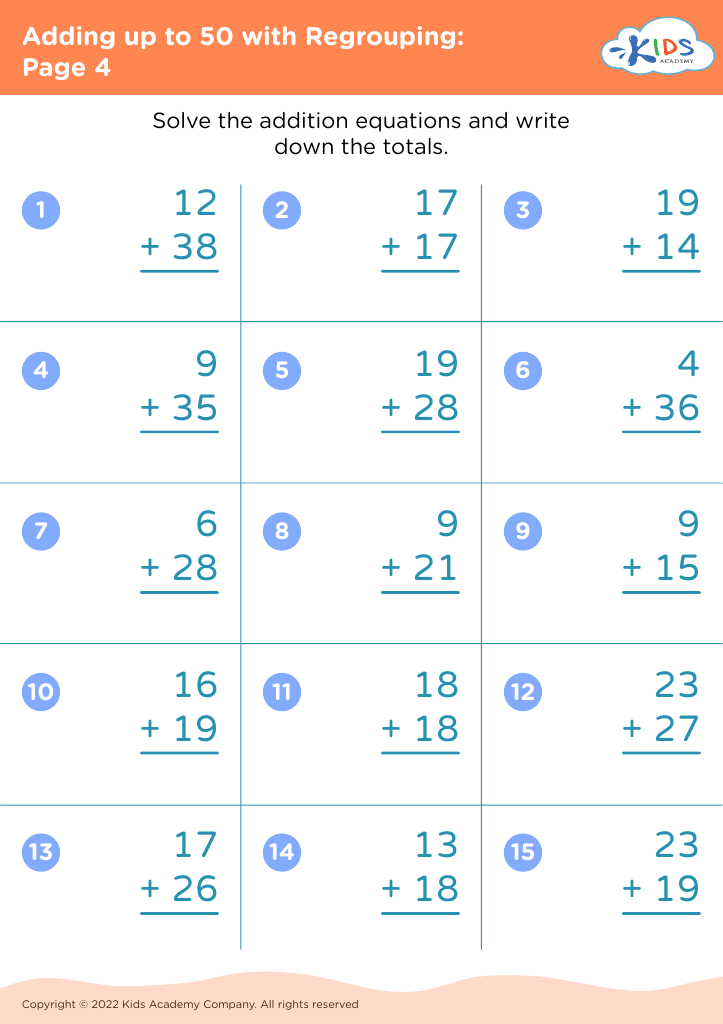
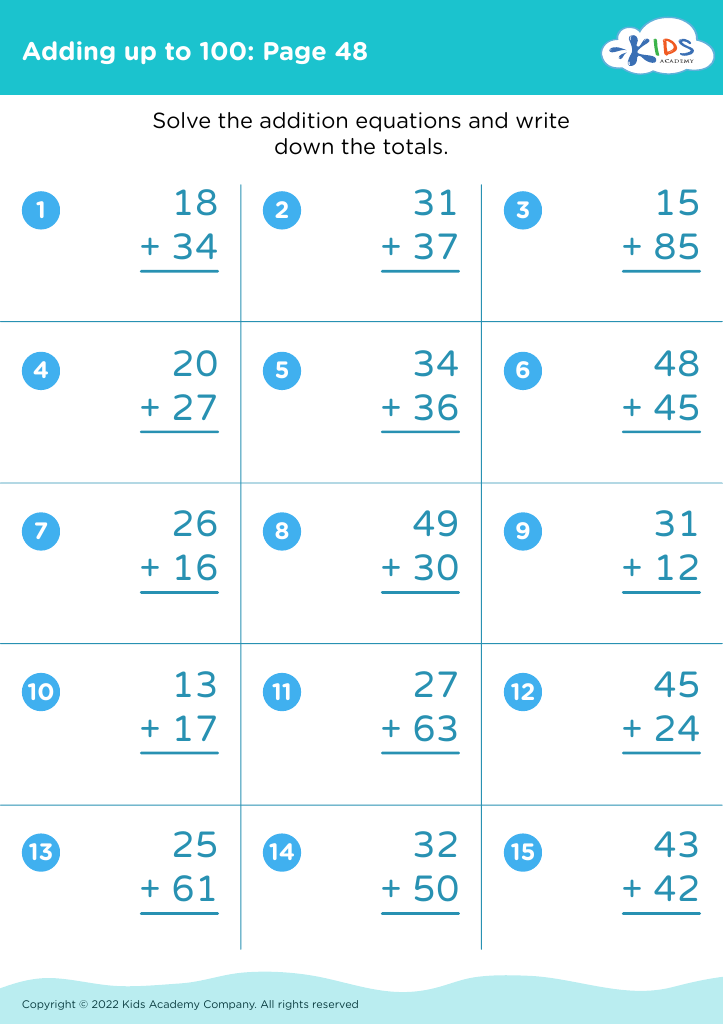
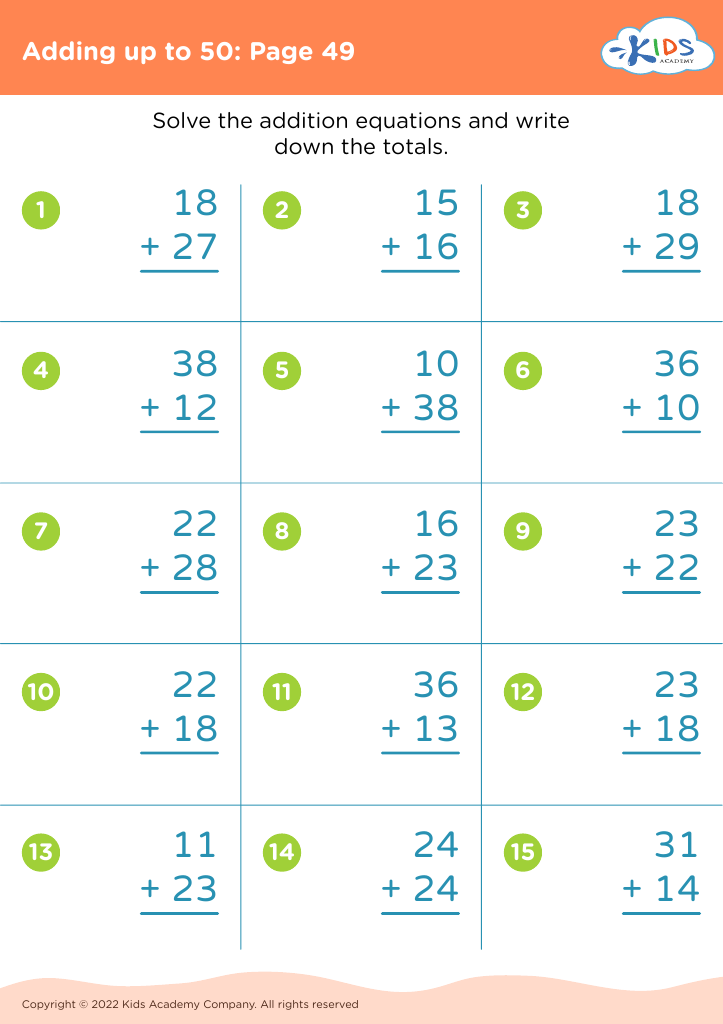
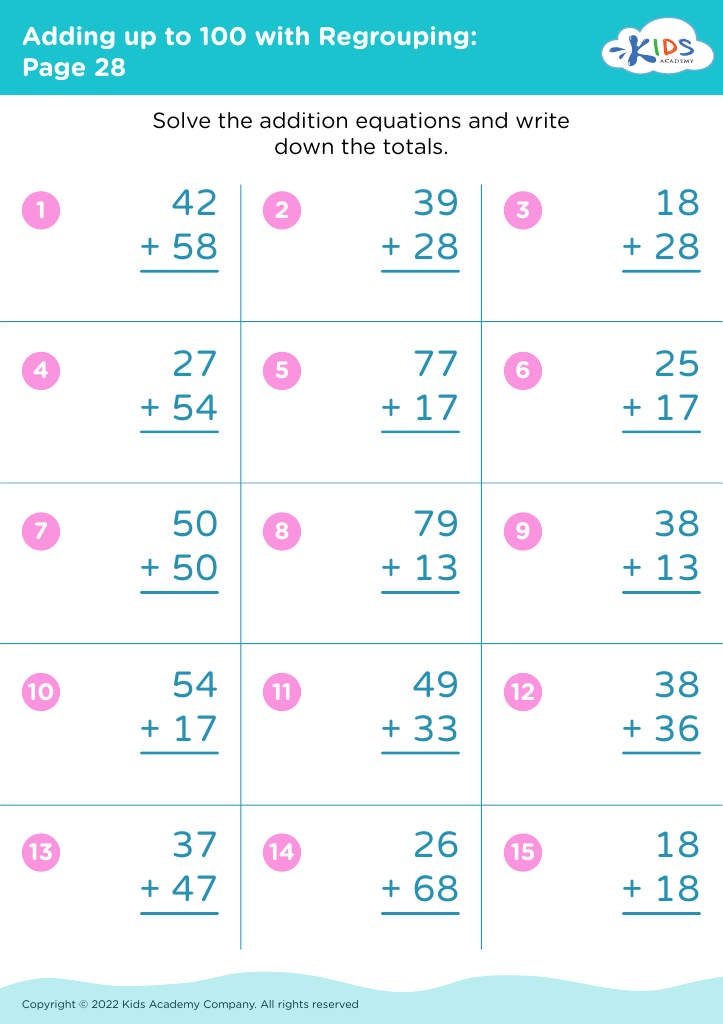








Understanding comparing and adding fractions is crucial for 7-year-olds, as it lays the foundation for more advanced mathematical concepts. At this age, children develop their numeracy skills, a vital part of their educational journey. Comparing fractions helps kids grasp the idea that fractions represent parts of a whole, which is fundamental in understanding that quantities can be divided into smaller, proportional parts.
Early exposure to fractions nurtures problem-solving skills and logical thinking. When children learn to compare and add fractions, they exercise their ability to reason and make judgments about quantitative relationships. These skills are not only essential in mathematics but also in everyday decision-making processes.
Moreover, mastering these concepts at a young age boosts a child’s confidence in their math abilities. It encourages a positive attitude towards tackling more complex mathematical challenges as they progress through school. Confidence in math often translates into better academic performance and greater engagement in STEM subjects.
From a practical standpoint, understanding fractions is vital in everyday life, such as when dealing with measurements in cooking, dividing resources, or understanding probabilities. Parents and teachers play an essential role in making these initial experiences with fractions positive and engaging, facilitating a child's long-term mathematical success and practical understanding of the world.








