
Enhance logical thinking Addition Worksheets for 7-Year-Olds
3 filtered results
Difficulty Level
Grade
Age
-
From - To
Subject
Activity
Standards
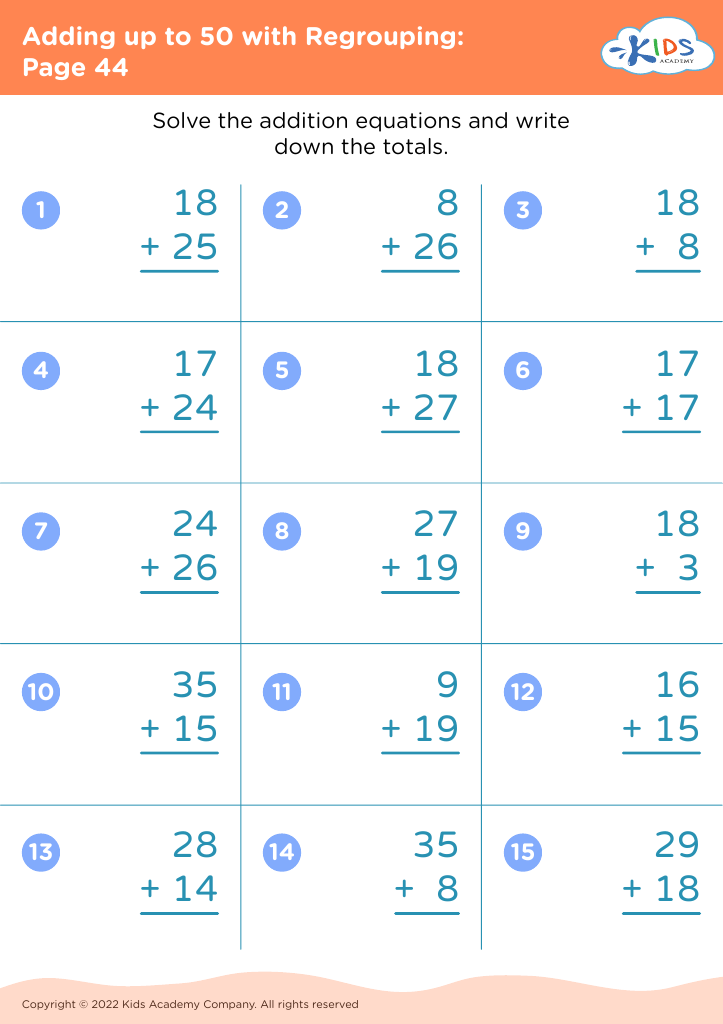
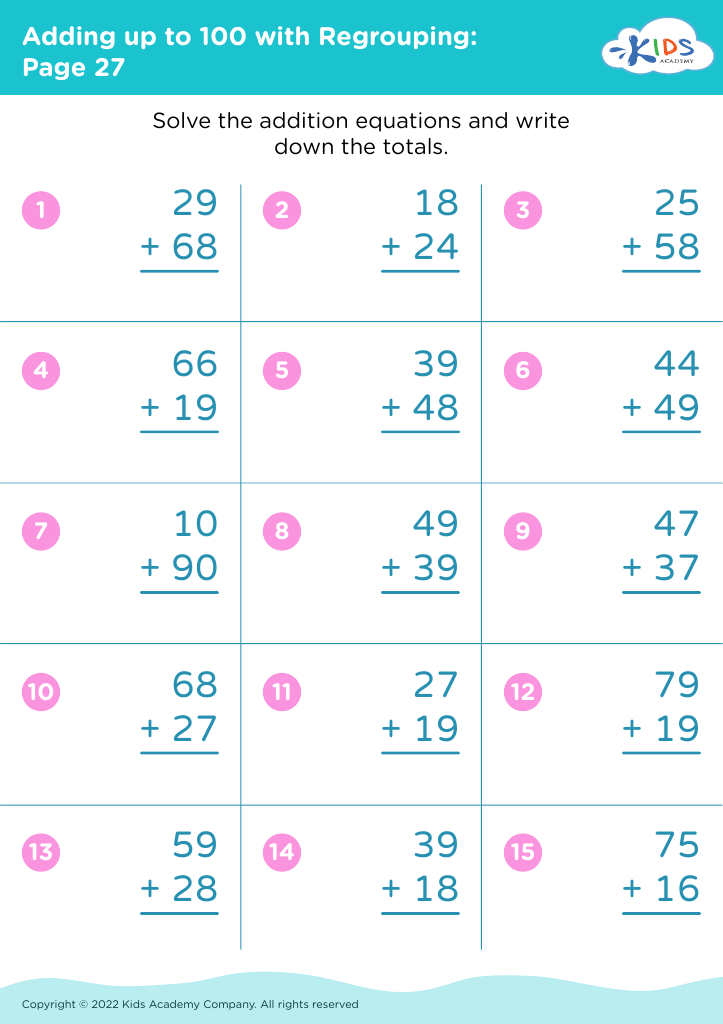
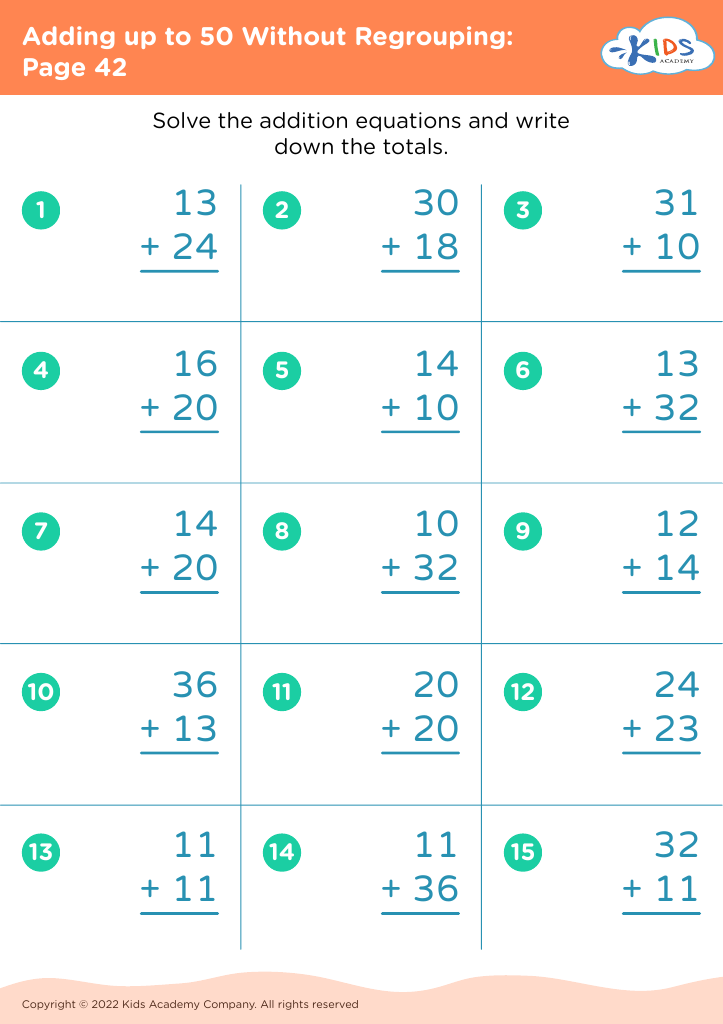
Boost your child’s logical thinking and addition skills with our engaging worksheets designed specifically for 7-year-olds. These carefully crafted resources not only focus on basic addition but also encourage critical thinking, problem-solving, and reasoning. With a variety of fun exercises, including puzzles and word problems, your child will learn to connect concepts and apply strategies in a dynamic way. Our worksheets align with educational standards, making them perfect for enhancing classroom learning or independent study. Help your young learner build a strong foundation in math while developing essential cognitive skills. Explore our collection today for an enriched learning experience!
Favorites
With answer key
Interactive
Join Kids Academy for Free
Who is primarily going to use this learning content?




.jpg)



Enhancing logical thinking through addition for 7-year-olds is crucial for several reasons. At this age, children are not only learning basic mathematical concepts but are also developing critical cognitive skills that shape their overall learning experiences. Logical thinking helps children understand patterns, make connections, and solve problems effectively, laying a strong foundation for future academic success.
By focusing on logical thinking in addition, parents and teachers can help children develop strategies for approaching math problems confidently. This encourages a deeper understanding of mathematical operations rather than just memorizing facts, promoting long-term retention and application of knowledge. Furthermore, strong logical reasoning skills foster resilience, as children learn to navigate challenges and puzzles systematically, boosting their self-esteem and motivation to learn.
Additionally, these skills are transferable and benefit other subjects, including science and language arts. Empowering children with logical thinking not only enriches their current academic experience but also equips them with essential life skills. Therefore, parents and teachers play a vital role in nurturing these abilities, ensuring that young learners become competent, independent thinkers ready to tackle future challenges. Emphasizing logical thinking today paves the way for a well-rounded, successful educational journey.








