
Following instructions Addition Worksheets for 7-Year-Olds
13 filtered results
Difficulty Level
Grade
Age
-
From - To
Subject
Activity
Standards
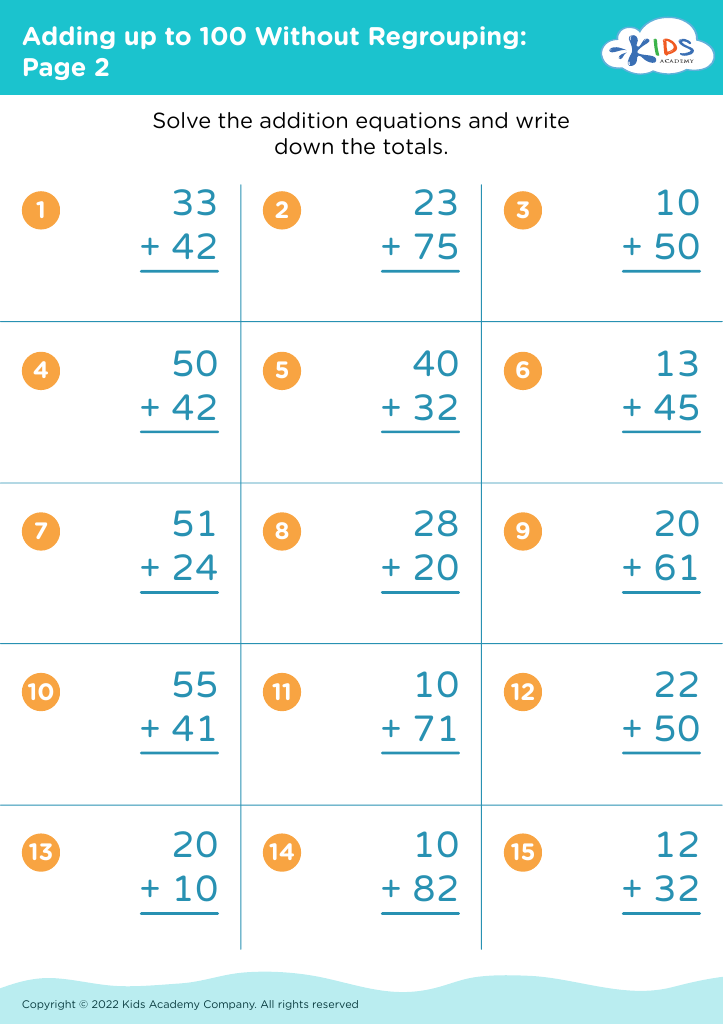
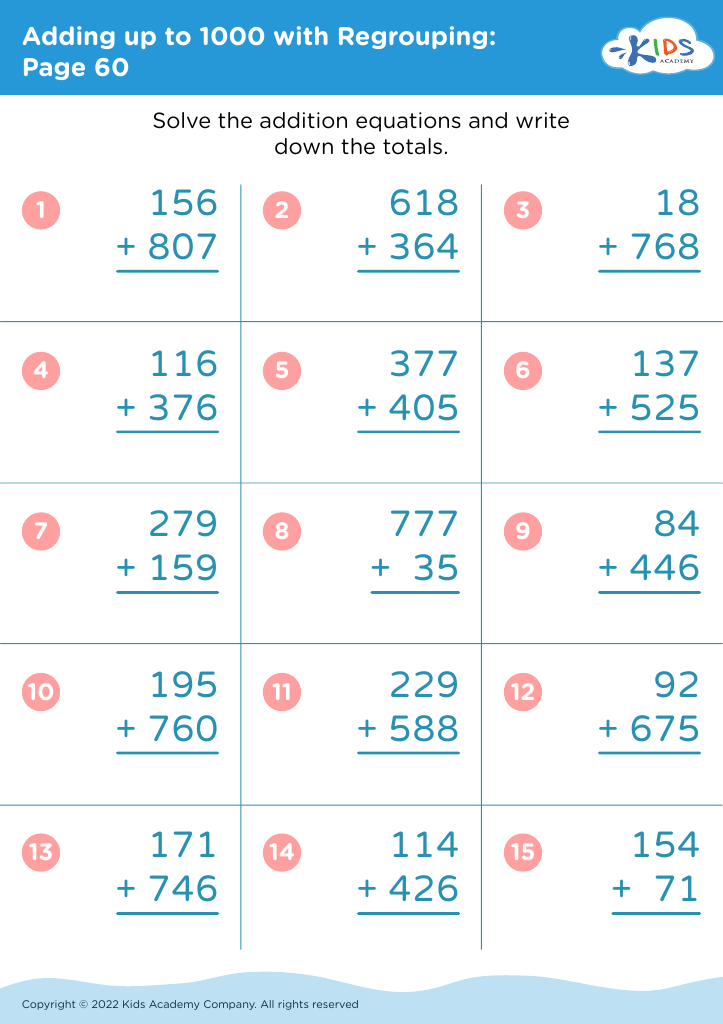
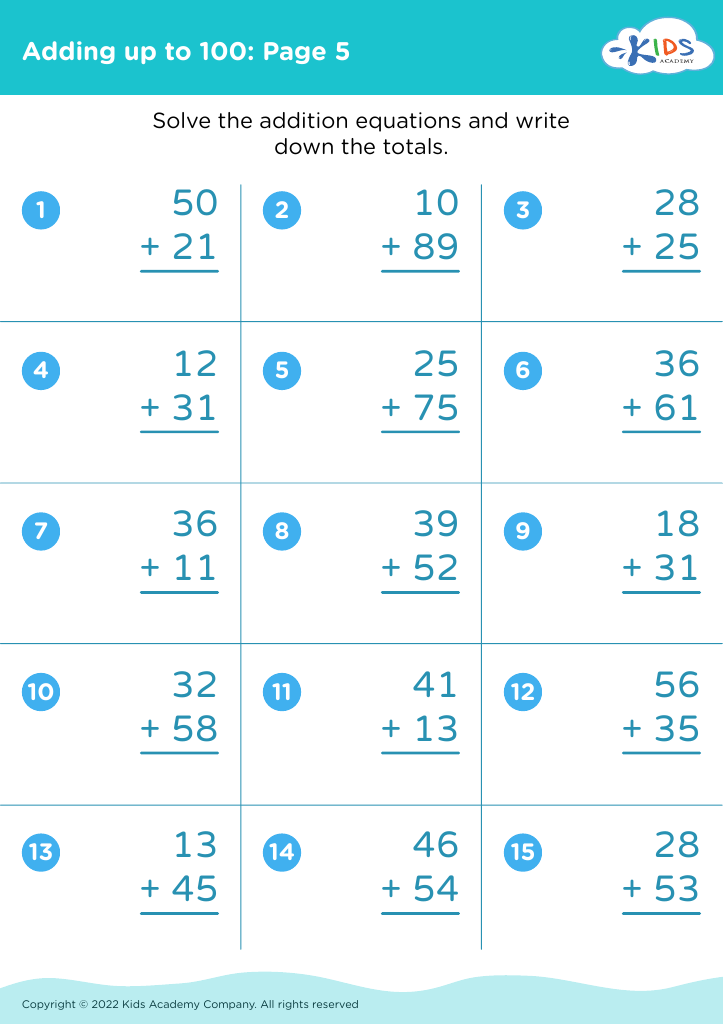
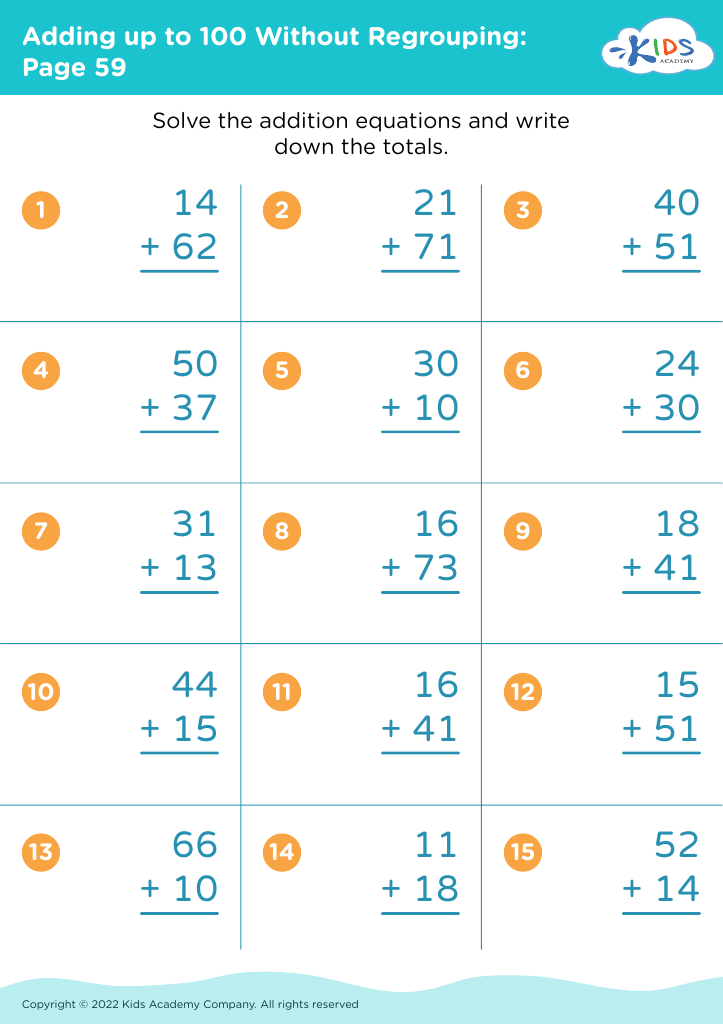
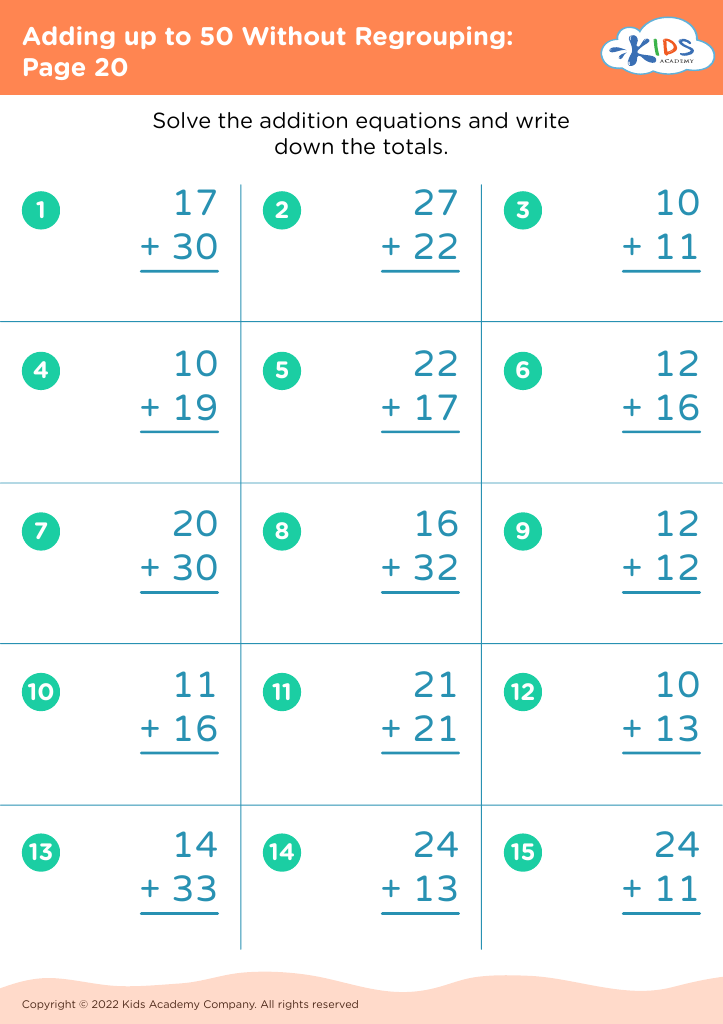
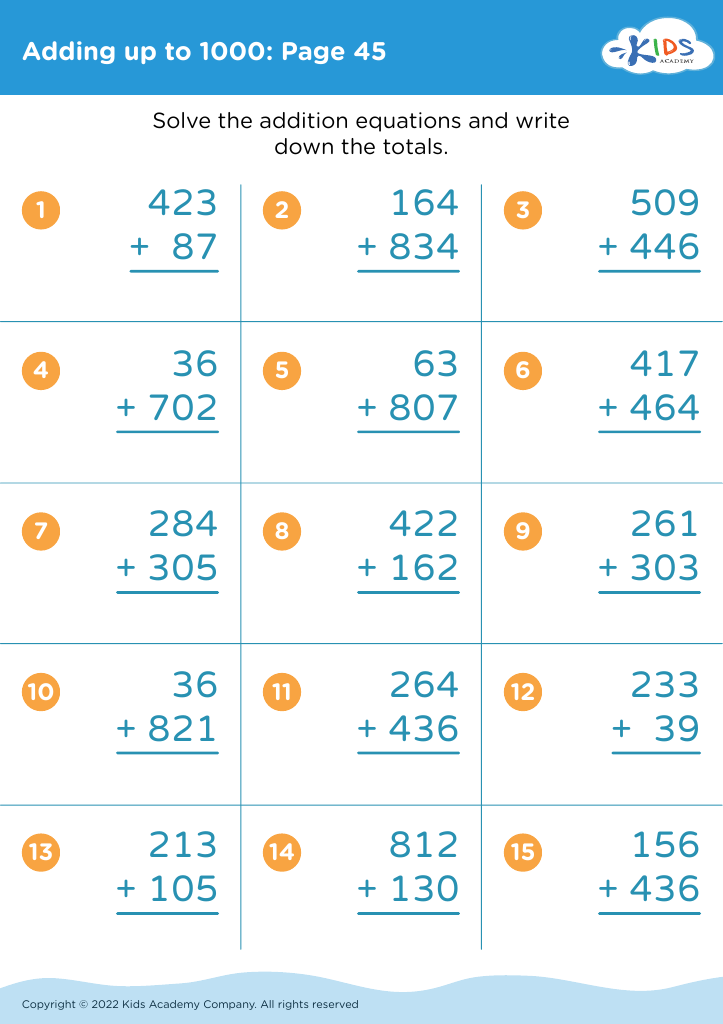
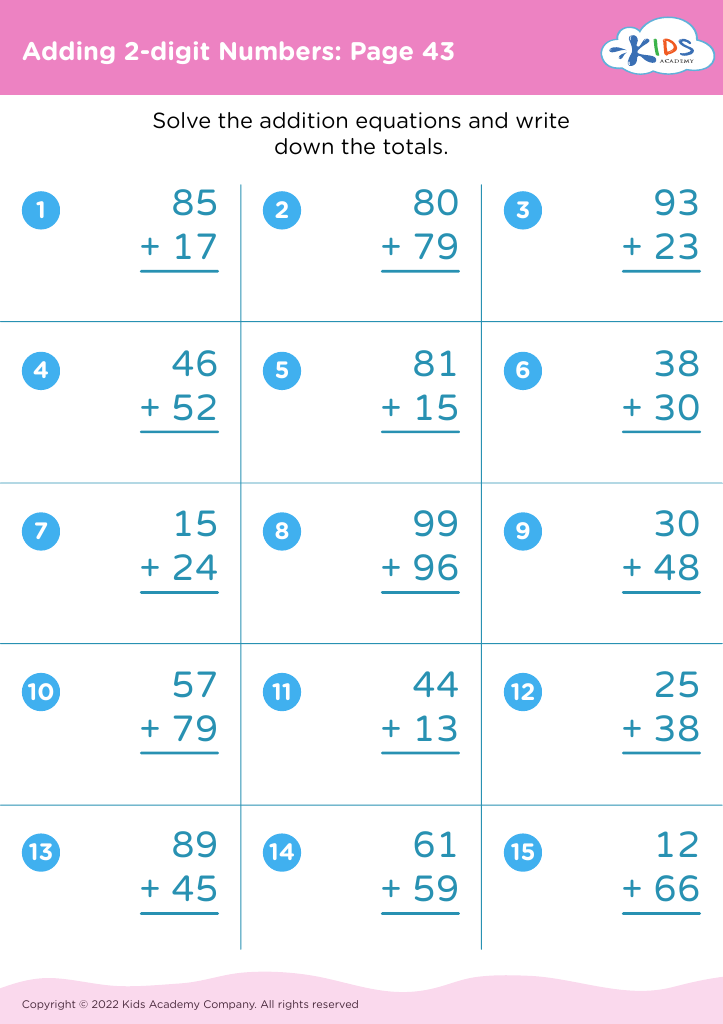
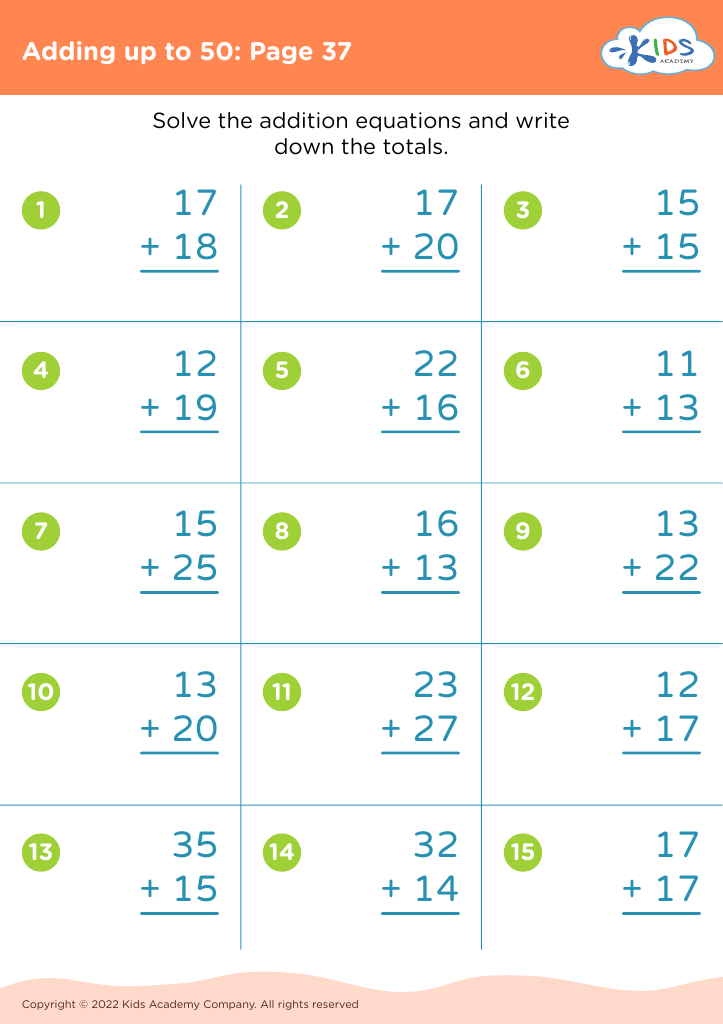
Welcome to our "Following Instructions Addition Worksheets for 7-Year-Olds"! These engaging worksheets are designed to enhance your child's mathematical skills while also improving their ability to follow directions accurately. Each worksheet presents fun scenarios that encourage kids to complete addition problems, fostering both independence and comprehension. Our resources are perfect for reinforcing classroom learning or providing additional practice at home. With clear instructions and visually appealing formats, children will find joy in solving problems and achieving success. Explore our collection today to empower your child with essential math skills while making learning an enjoyable experience!
Favorites
With answer key
Interactive
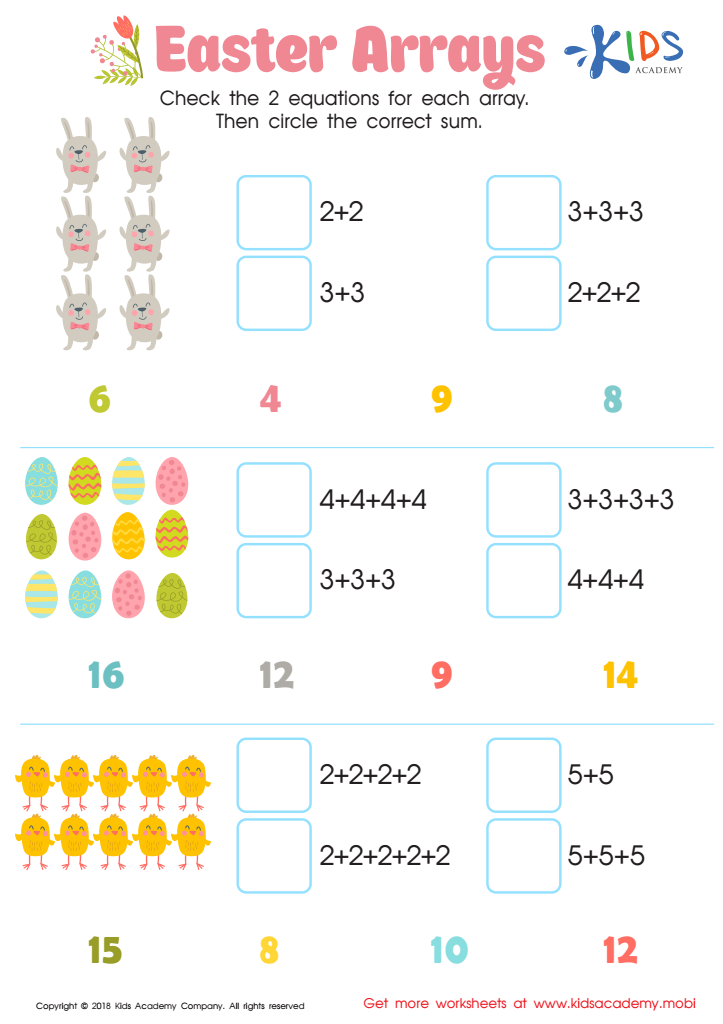
Easter Arrays Worksheet
Does your child love Easter? Do they adore the Easter bunny and egg hunts? Help them have fun with this worksheet! Go through it with them and check the equations for each array. Then, have them circle the correct sum. It's a great way to make the holiday extra exciting!
 Assign to My Students
Easter Arrays Worksheet
Worksheet
Join Kids Academy for Free
Who is primarily going to use this learning content?








Parents and teachers should care about teaching 7-year-olds to follow instructions in addition for several reasons. At this age, children are developing critical cognitive skills, and mastering basic addition serves as a foundation for more complex mathematical concepts. When children can follow instructions effectively, they not only enhance their math skills but also improve their ability to listen, understand, and execute tasks - essential skills for academic success and everyday life.
Additionally, following instructions in addition activities helps children build confidence. As they successfully complete exercises, they gain a sense of accomplishment, motivating them to tackle more challenging tasks. Furthermore, these skills translate beyond math; understanding how to follow multi-step directions is invaluable in subjects like science, reading comprehension, and even social interactions.
Additionally, encouraging children to follow instructions promotes persistence and resilience. If they encounter difficulties, it teaches them the importance of patience and determination in problem-solving. Thus, by emphasizing the significance of following instructions in addition, parents and teachers lay the groundwork for lifelong learning and self-discipline, crucial traits for further academic and personal growth. Ultimately, fostering these skills in young learners opens up a world of possibilities for their future educational journeys.








