Logical thinking development Addition Worksheets for 7-Year-Olds
7 filtered results
-
From - To
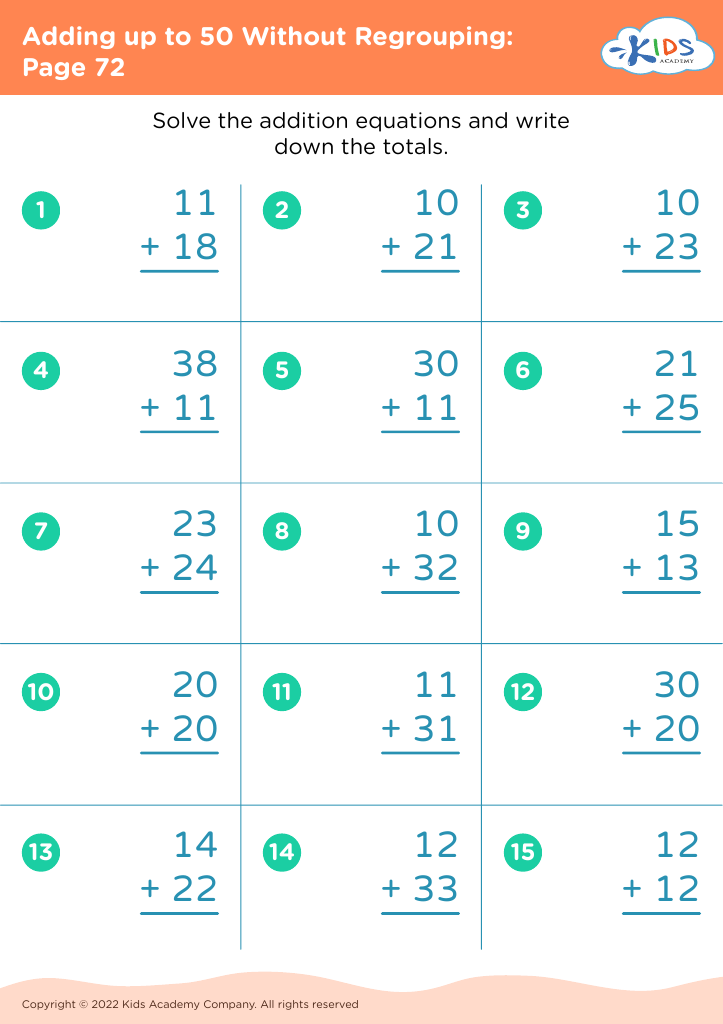
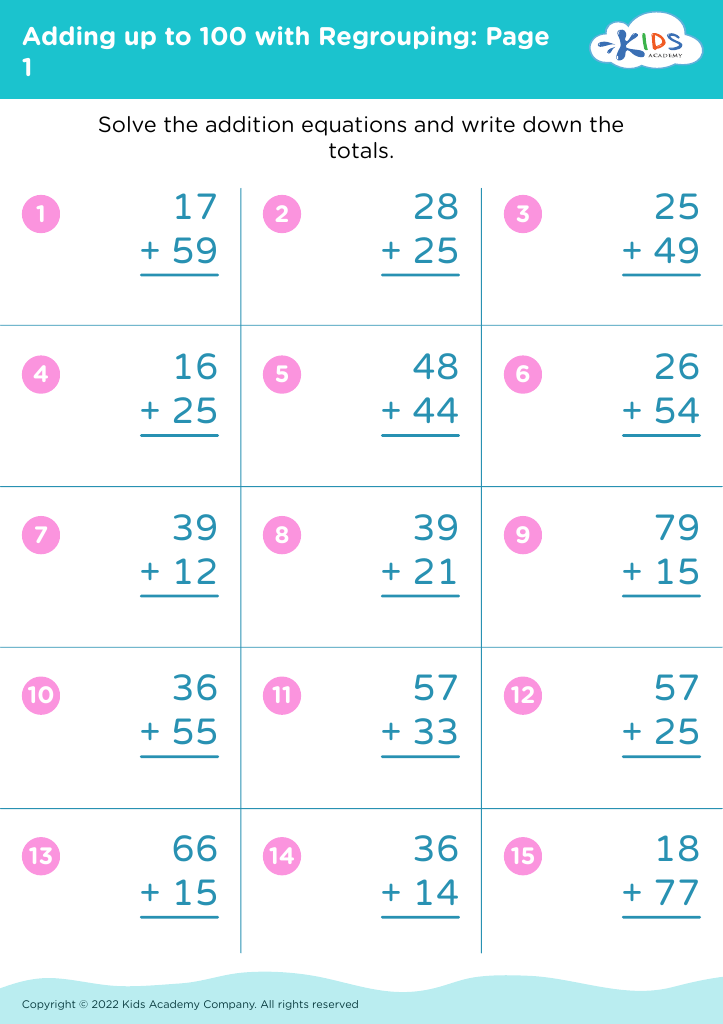
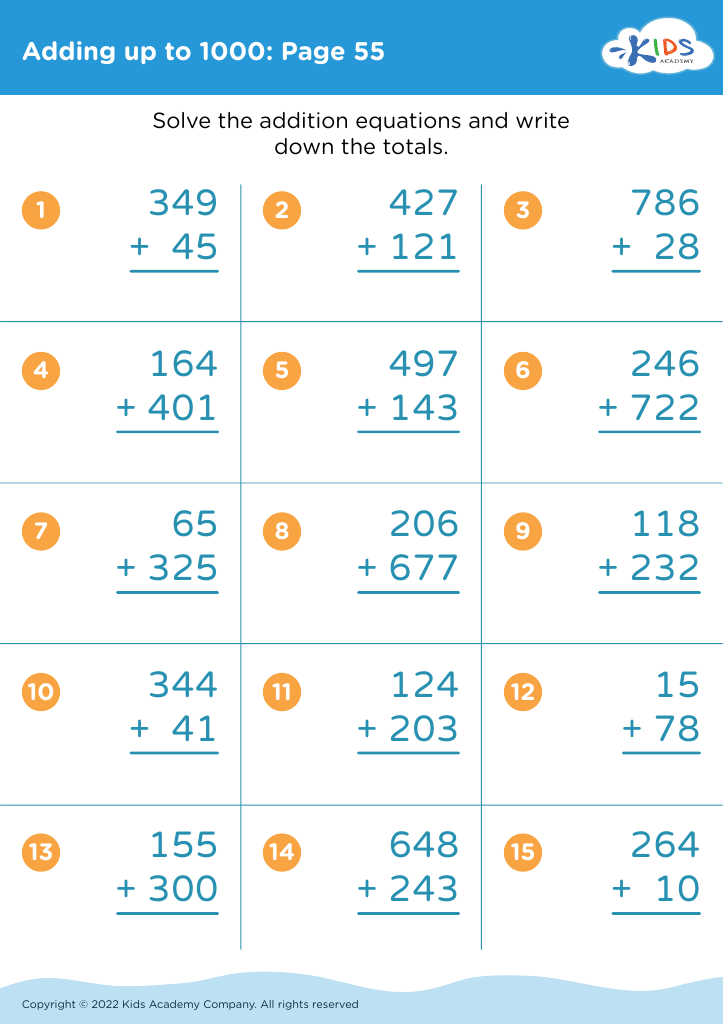
Enhance your child's logical thinking skills with our engaging Addition Worksheets specifically designed for 7-year-olds. These thoughtfully crafted exercises not only improve addition proficiency but also stimulate critical thinking and problem-solving abilities. Our worksheets feature a variety of fun themes and challenges that promote analytical reasoning as children explore different methods to solve addition problems. Ideal for both at-home learning and classroom activities, these worksheets support the development of key logical thinking strategies. Equip your child with essential skills that lay the groundwork for future academic success. Explore our collection today and watch your child's confidence and enthusiasm for math flourish!
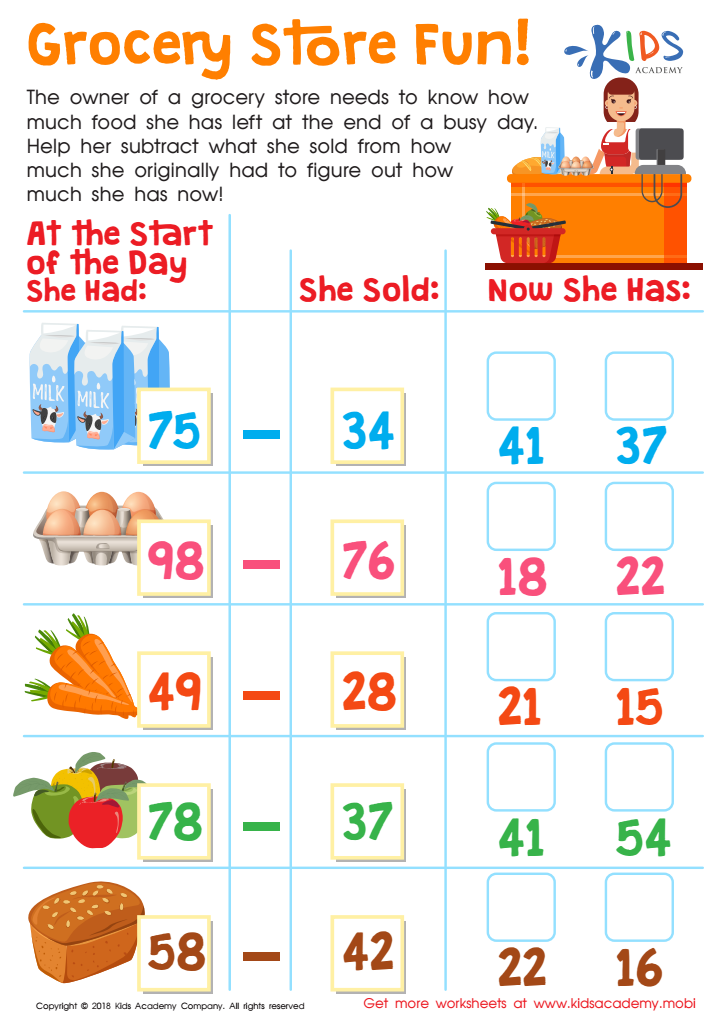
Grocery Store Fun! Worksheet
 Assign to My Students
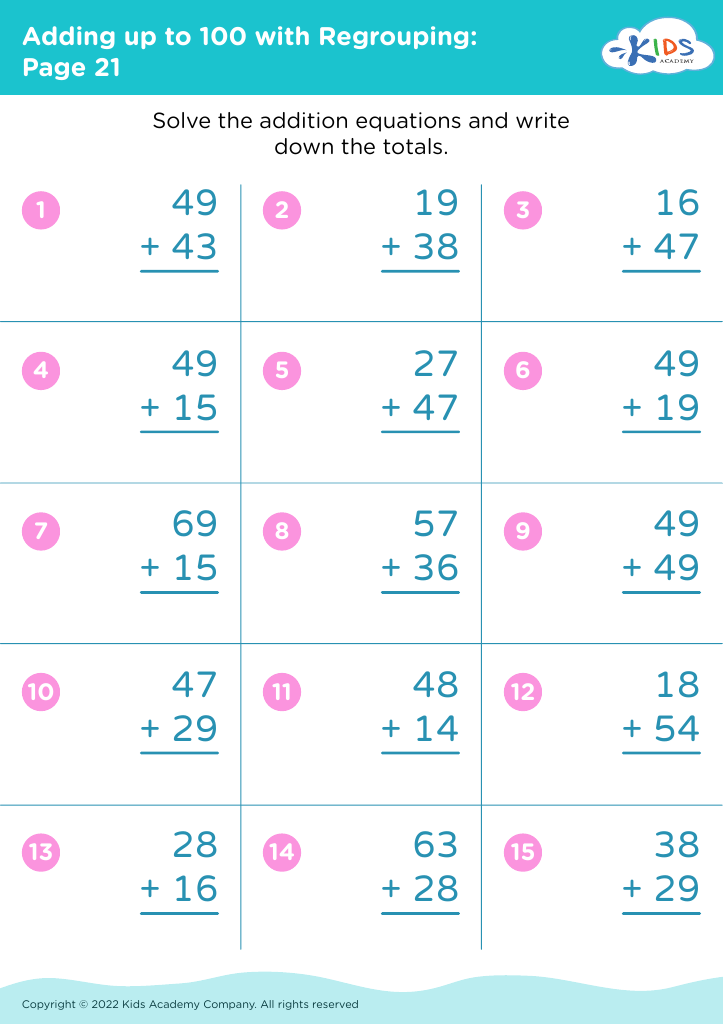
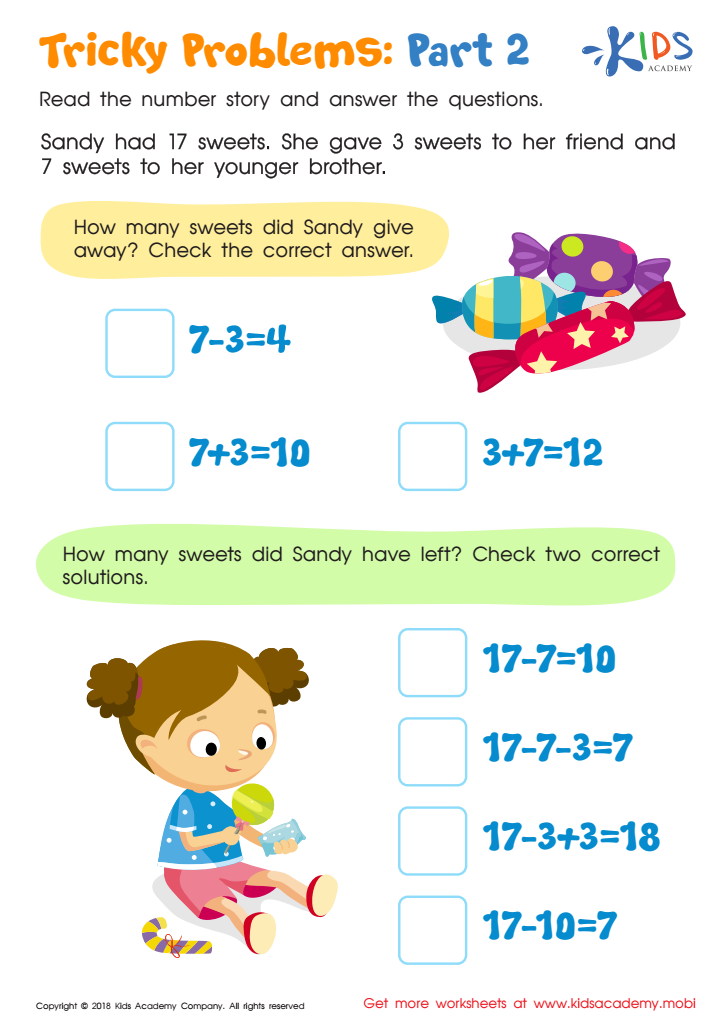
Tricky Problems Worksheet: Part 2
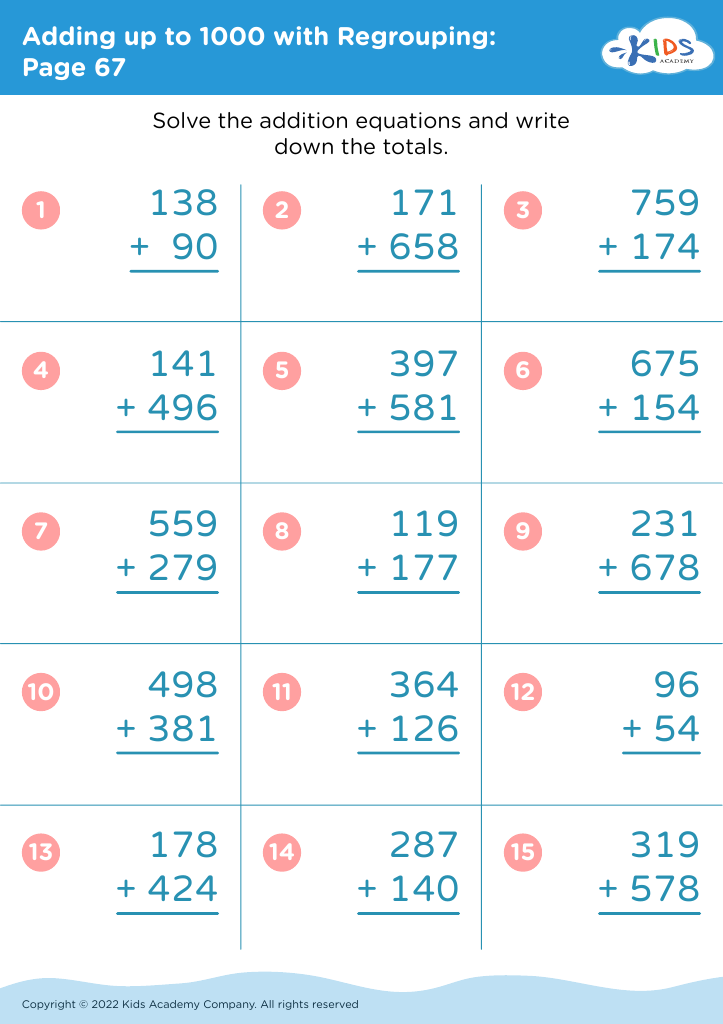








Logical thinking development, particularly in the context of addition for 7-year-olds, is crucial for several reasons. At this stage, children are building foundational skills that will impact their overall problem-solving abilities and academic success. Logical thinking helps children understand relationships between numbers, enabling them to grasp more complex mathematical concepts as they progress through school.
When children engage in addition tasks that require logical reasoning, they learn to approach problems systematically. This not only enhances their mathematical fluency but also fosters critical thinking skills, making them better equipped to tackle various challenges, both in academics and real life.
Moreover, effective logical thinking development in early childhood can instill confidence and a positive attitude toward learning. Children who feel competent in their mathematical abilities are more likely to engage in classroom discussions, ask questions, and seek help when needed. This engagement lays the groundwork for lifelong learning and academic resilience.
Parents and teachers play a significant role in nurturing this development through supportive environments, interactive activities, and age-appropriate challenges. By emphasizing the importance of logical thinking in addition, they can help children cultivate a rich understanding of mathematics that will serve them well throughout their education and beyond.








