
Mathematical reasoning Addition Worksheets for 7-Year-Olds
21 filtered results
Difficulty Level
Grade
Age
-
From - To
Subject
Activity
Standards
Enhance your 7-year-old's math skills with our Mathematical Reasoning Addition Worksheets! Designed to advance critical thinking and problem-solving abilities, these worksheets present engaging addition problems that go beyond simple calculations. Your child will learn to apply logical reasoning in various contexts, making math both challenging and fun. Perfectly tailored for first-graders, our colorful and interactive activities help students develop a strong foundation in addition while improving their overall mathematical understanding. Encourage your child’s curiosity and confidence in math with our compelling resources! Unlock endless learning possibilities today on Kids Academy.
Favorites
With answer key
Interactive
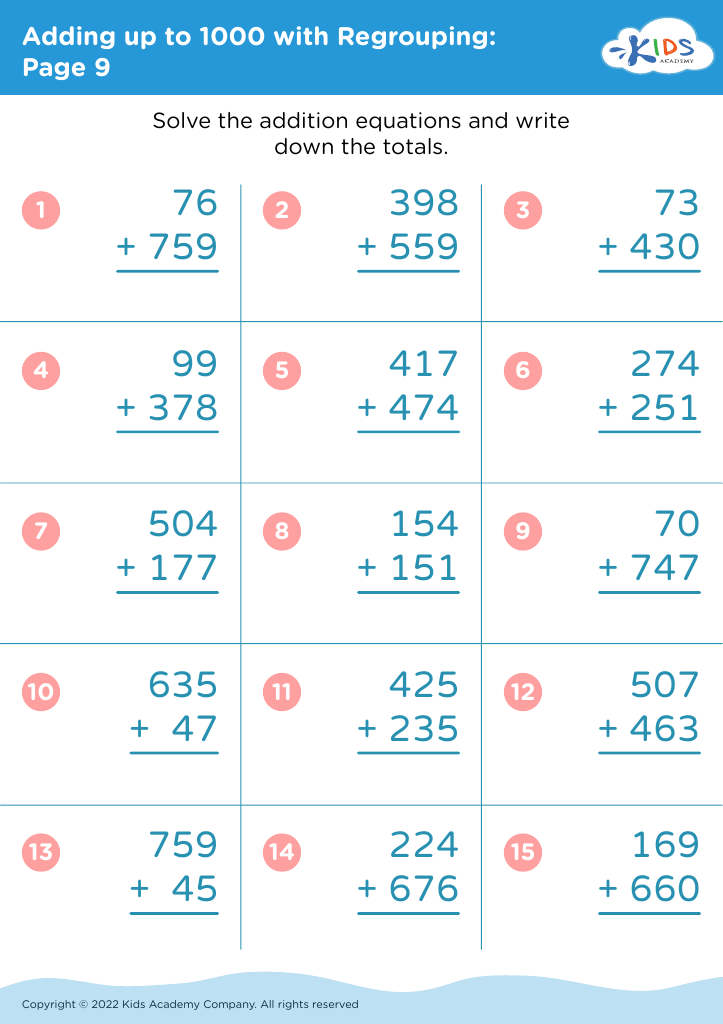
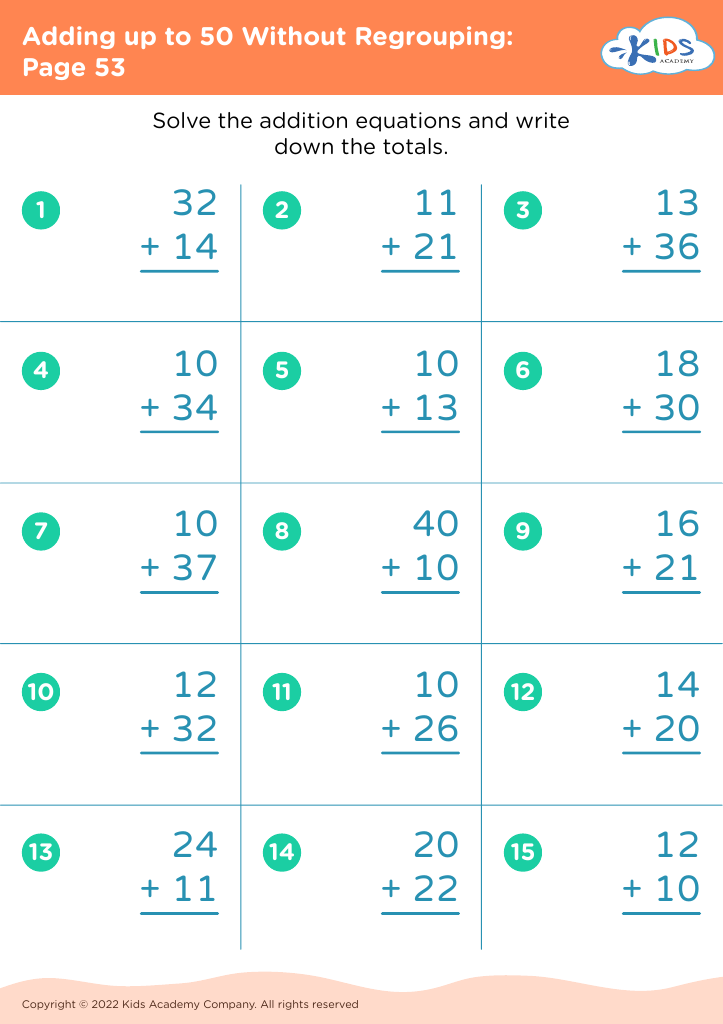
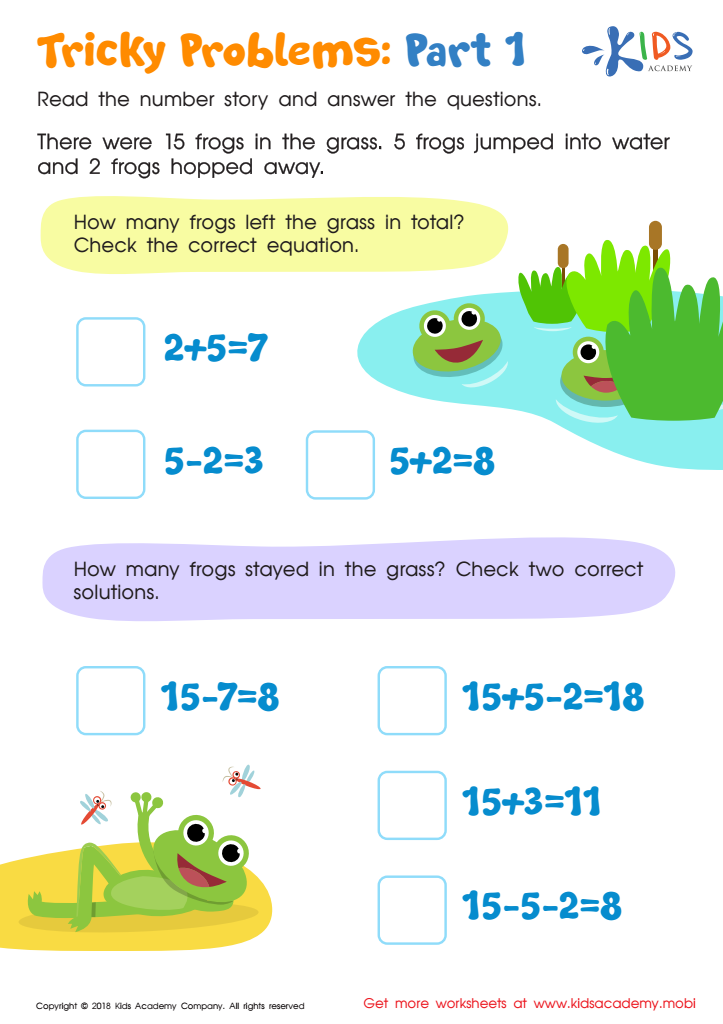
Tricky Problems Worksheet: Part 1
Visualizing word problems can help students solve them. This fun PDF worksheet encourages students to create mental images using math facts, then check boxes to match the equations for basic addition problems. It's a great way to build confidence in solving math.
 Assign to My Students
Tricky Problems Worksheet: Part 1
Worksheet
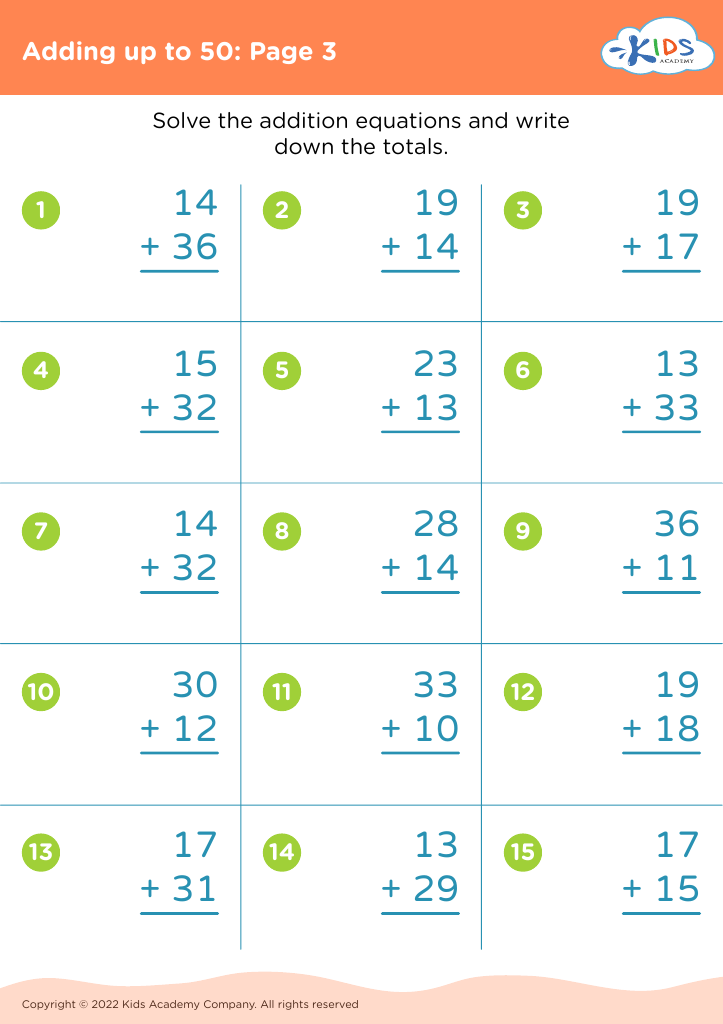
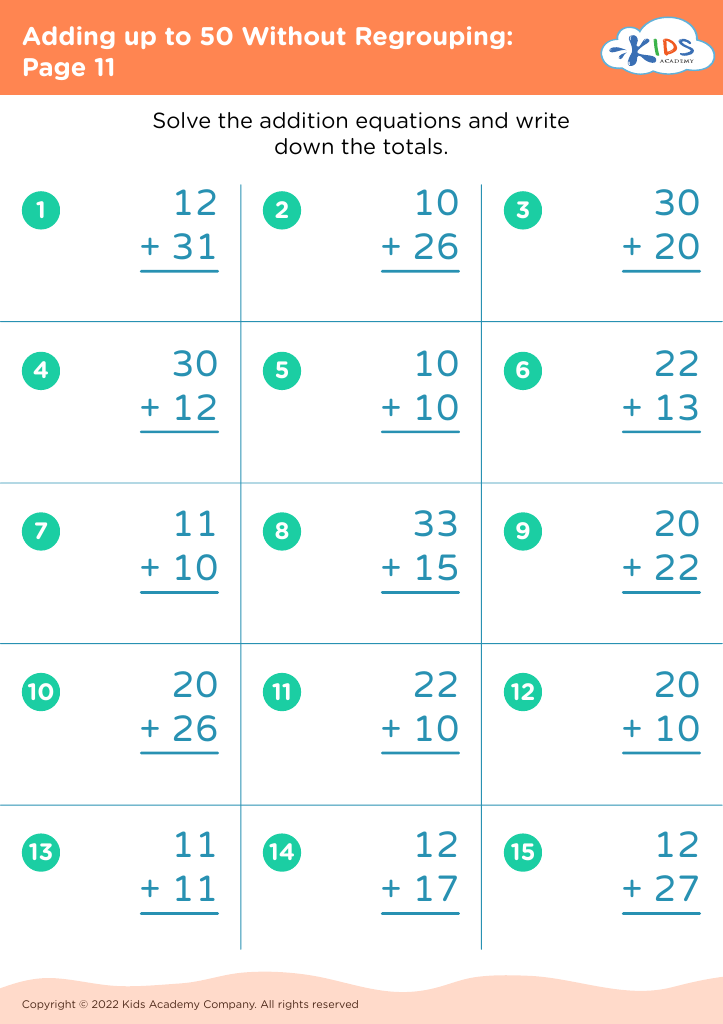
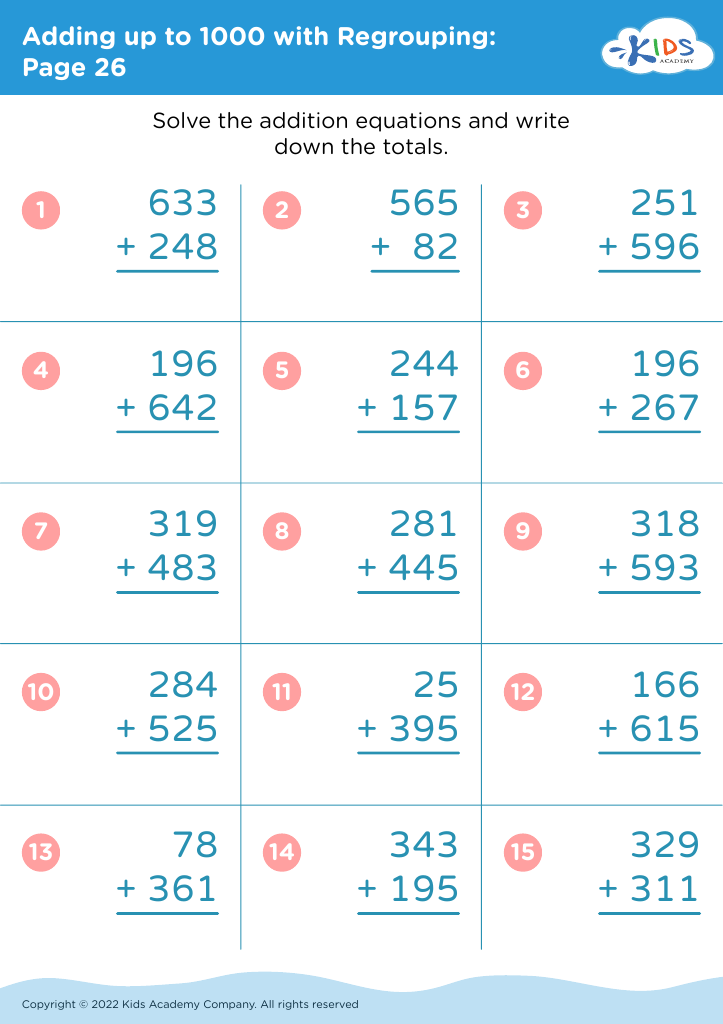
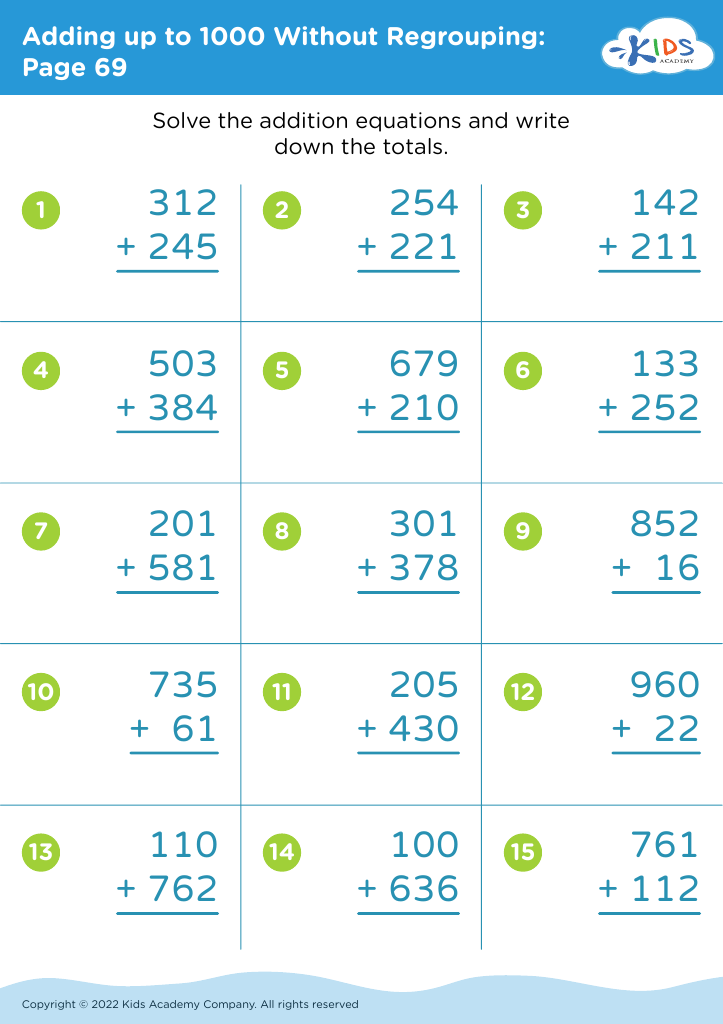
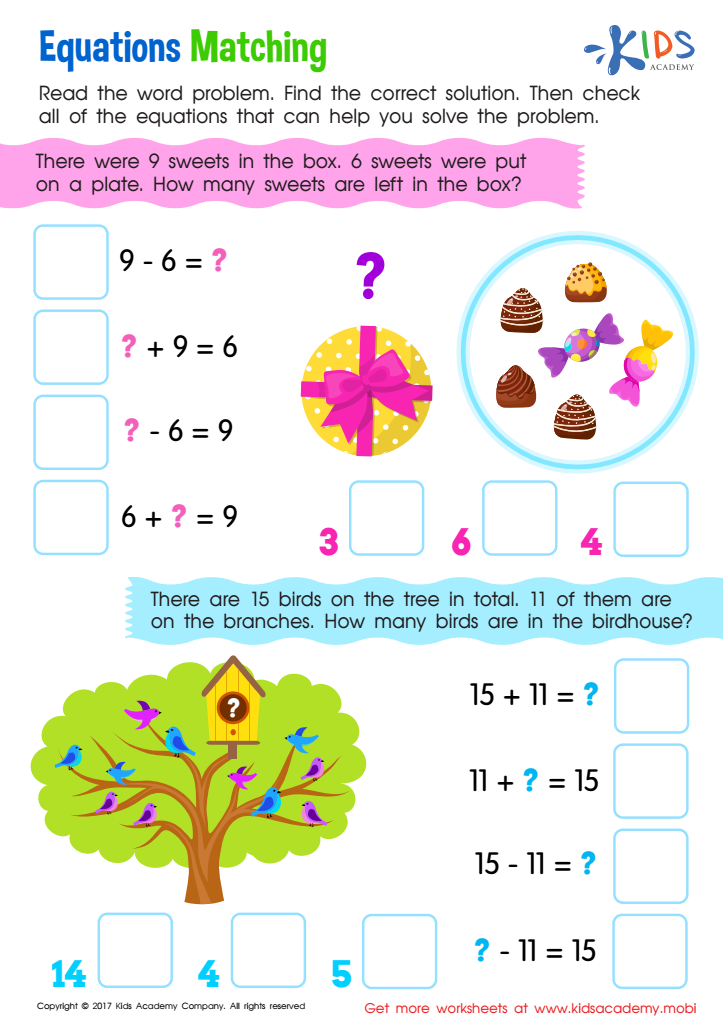
Equations Matching Word Problems Worksheet
Download this worksheet and give your young mathematician practice in solving equations using matching numbers and number family facts. They'll solve word problems, develop critical thinking and algebraic reasoning, and gain success with addition and subtraction.
Equations Matching Word Problems Worksheet
Worksheet
Addition or Subtraction? Worksheet
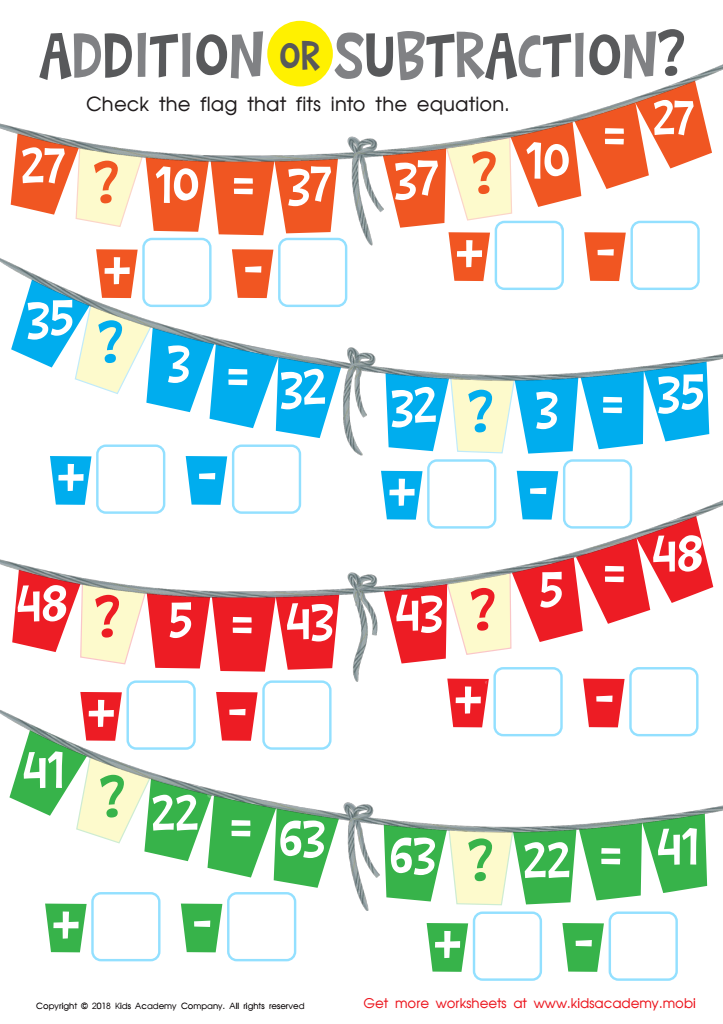
Help your math whiz's number skills advance with these colorful flag equations! With the free PDF, they'll learn to solve addition and subtraction facts by following the correct orders of operation. And the best part? They'll develop a deeper understanding of how the different operations work together within equations. Give it a try and watch their skills soar!
Addition or Subtraction? Worksheet
Worksheet
Join Kids Academy for Free
Who is primarily going to use this learning content?








Mathematical reasoning and addition are foundational skills for 7-year-olds and play a critical role in their cognitive development, problem-solving abilities, and academic success. At this age, children are at a crucial stage where they transition from using concrete objects to solve problems to employing more abstract thinking and mental strategies.
Understanding addition helps children grasp the basic principles of arithmetic, laying the groundwork for more complex mathematical concepts such as subtraction, multiplication, and division. This builds their confidence and encourages a positive attitude towards math, which can significantly influence their future learning experiences.
Mathematical reasoning, on the other hand, enhances children's ability to think logically, critically, and systematically. It allows them to make sense of numbers and patterns, understand relationships between numbers, and apply their knowledge to solve real-world problems. This type of reasoning strengthens their overall academic performance across subjects, as it fosters skills like analytical thinking and attention to detail.
For teachers and parents, nurturing these skills means providing children with engaging, hands-on activities and real-life scenarios where they can practice addition and problem-solving. This could include counting objects, playing math-based games, or involving them in everyday tasks that require simple calculations. Prioritizing these skills ensures children develop a strong mathematical foundation, which is essential for their long-term academic and personal success.








