Pattern recognition Addition Worksheets for 7-Year-Olds
5 filtered results
-
From - To
Enhance your 7-year-old's math skills with our engaging Pattern Recognition Addition Worksheets! These worksheets are designed to help children identify patterns in addition problems, fostering critical thinking and problem-solving abilities. By working through diverse exercises, kids will develop a deeper understanding of numerical relationships while improving their addition fluency. Each worksheet is tailored to encourage discovery and exploration, making math fun and interactive. Perfect for at-home practice or classroom use, our printable resources are ideal for reinforcing learning in a playful manner. Dive into a world of numbers and patterns to boost confidence and mastery in addition today!
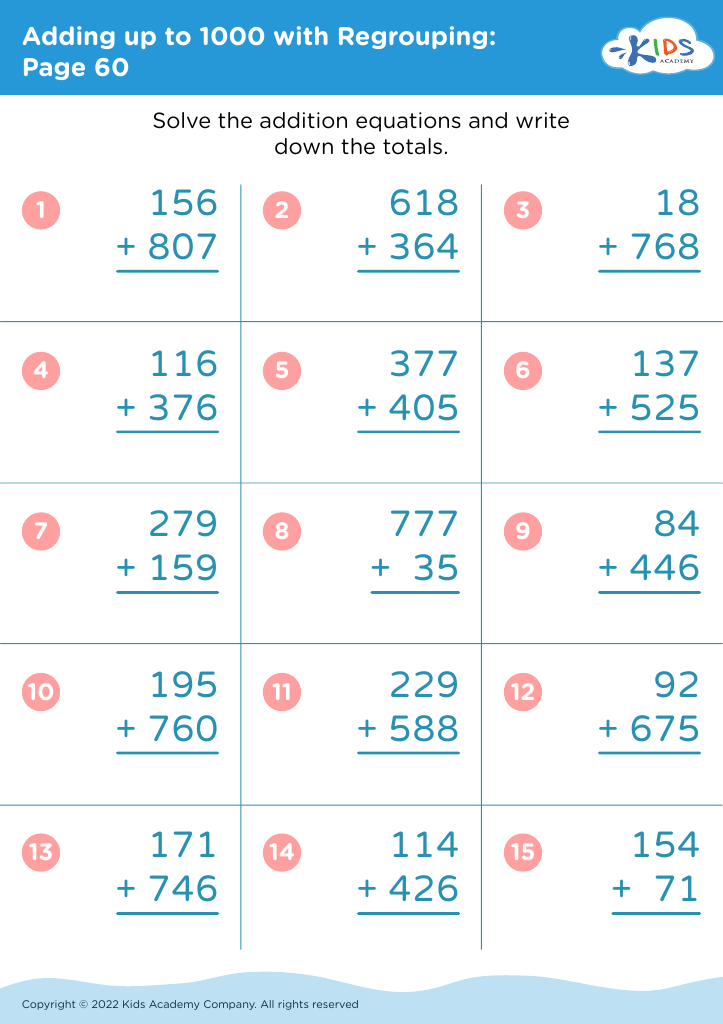
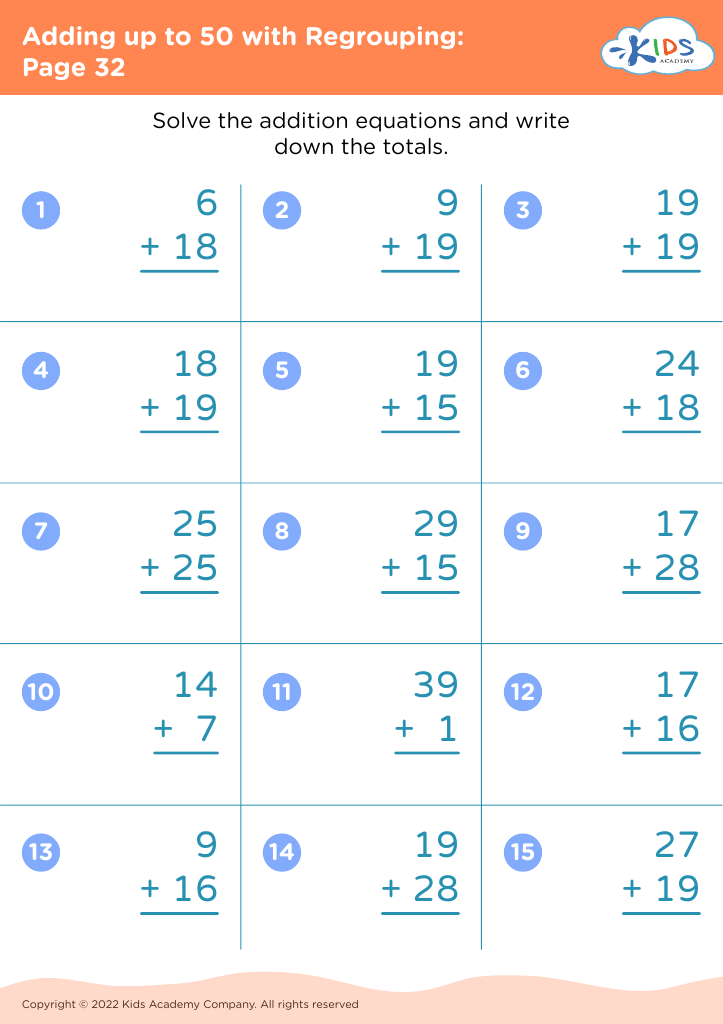
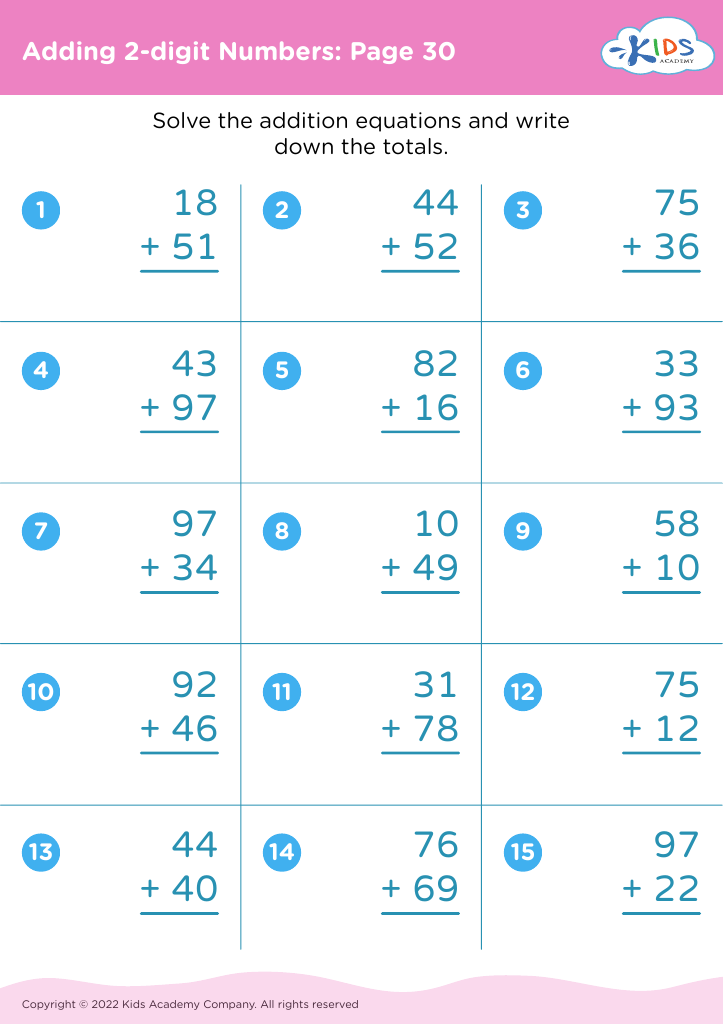
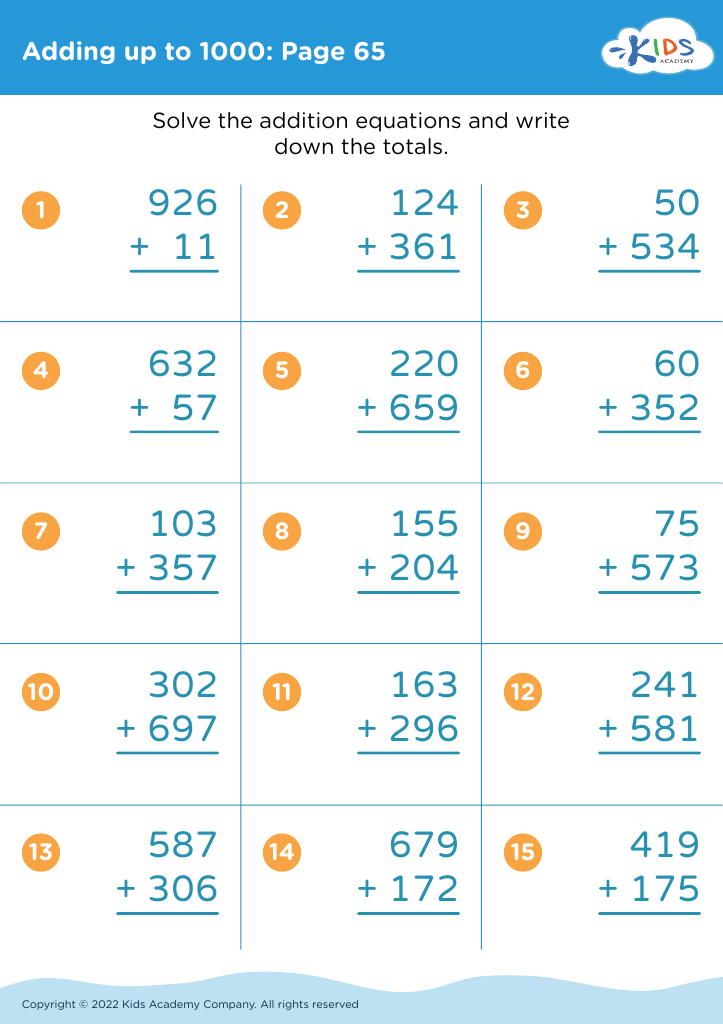
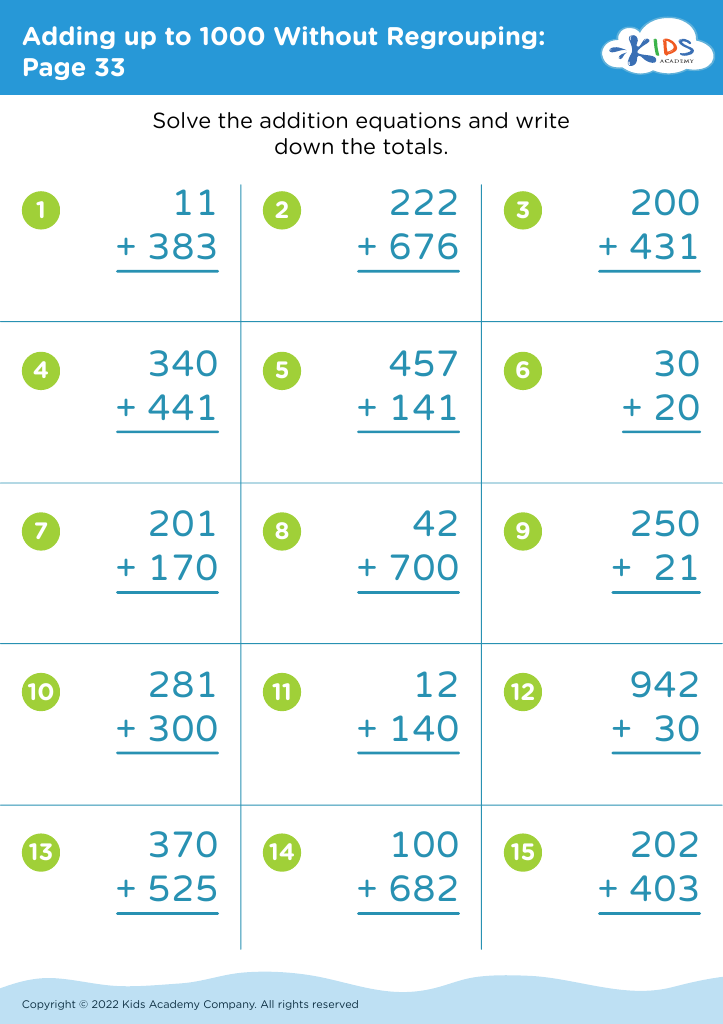








Pattern recognition in addition is a crucial mathematical skill for 7-year-olds, significantly impacting their overall cognitive development. Firstly, understanding patterns helps children grasp underlying mathematical concepts, enabling them to predict outcomes and solve problems more efficiently. This foundational skill encourages critical thinking and analytical reasoning, essential for advanced math and numerous real-life scenarios.
Moreover, early recognition of patterns fosters confidence in young learners. When children can identify and utilize patterns, they feel more adept at tackling mathematical challenges, which can lead to a positive attitude toward learning. This mindset is vital as they progress to more complex concepts, reducing anxiety that often accompanies mathematics.
In addition to academic benefits, recognizing patterns enhances other cognitive skills like memory retention and attention to detail. Parents and teachers play a pivotal role in this developmental stage by emphasizing the importance of patterns through engaging activities and everyday examples. From recognizing number sequences to visual patterns in objects, these experiences build a strong mathematical foundation that encourages creativity, problem-solving, and resilience.
Strengthening pattern recognition in addition supports a lifelong love for learning and math, equipping children with essential skills they will use throughout their educational journey and beyond.








