Recognizing equivalent fractions Addition Worksheets for 7-Year-Olds
4 filtered results
-
From - To
Our "Recognizing Equivalent Fractions Addition Worksheets for 7-Year-Olds" are meticulously designed to blend mathematical theory with fun activities. These printable worksheets guide young learners through the process of identifying and understanding equivalent fractions while honing their addition skills. Bright and engaging, each worksheet simplifies complex concepts with the use of colorful visuals and clear instructions, making learning feel like play. Ideal for classroom use or homework practice, our worksheets help reinforce key math skills, foster confidence in problem-solving, and lay a solid foundation for future math success. Perfect for young mathematicians eager to explore the world of fractions!
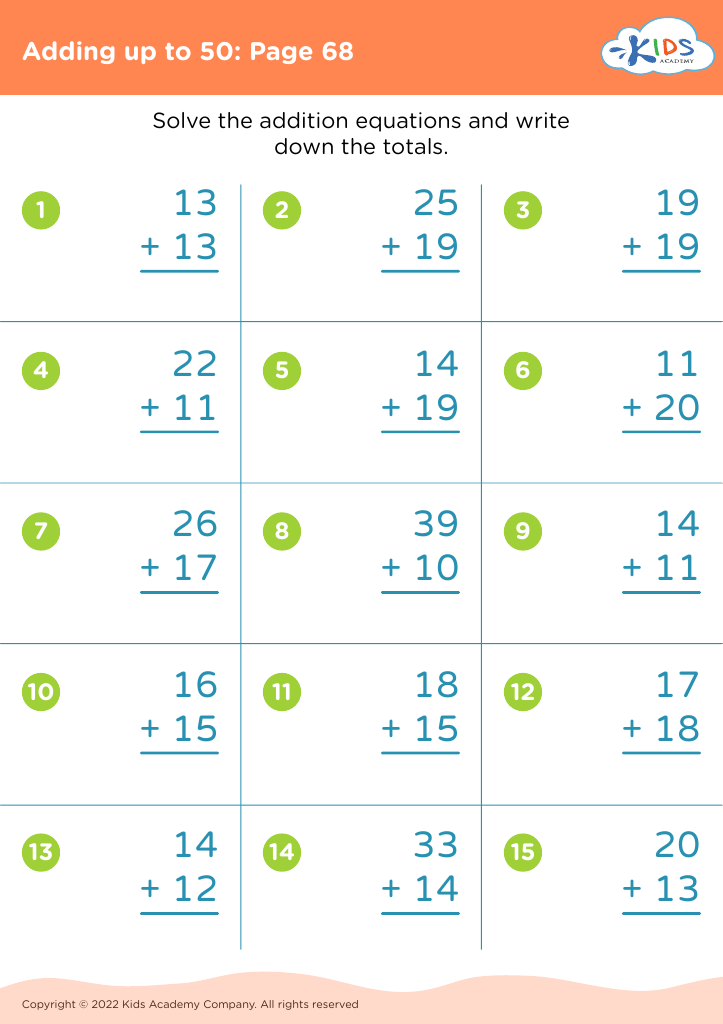
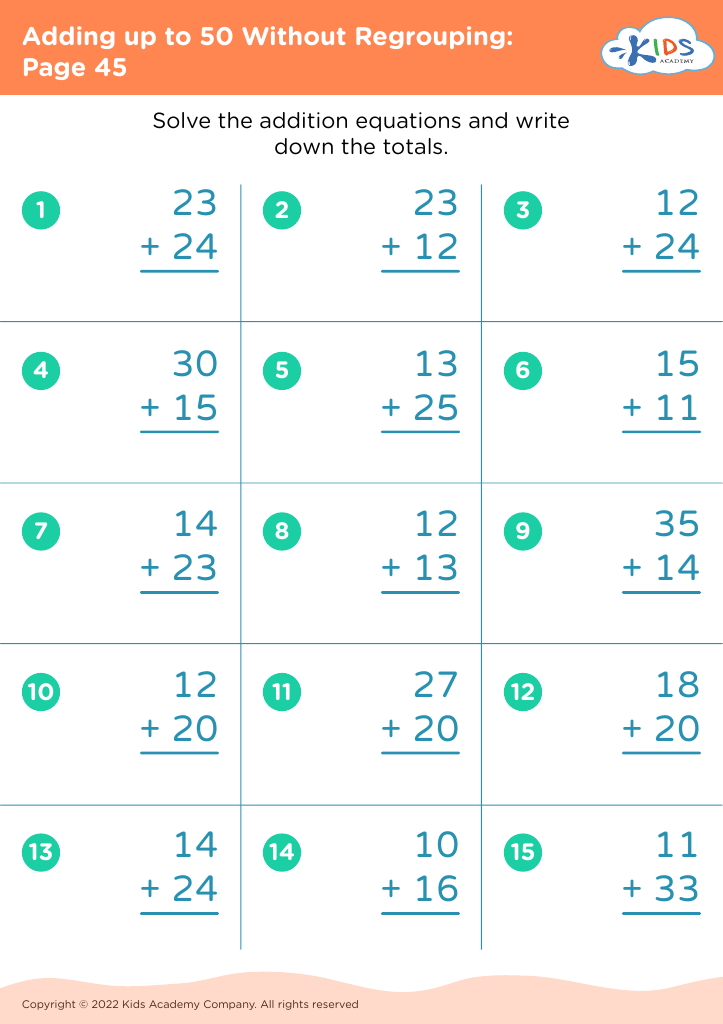
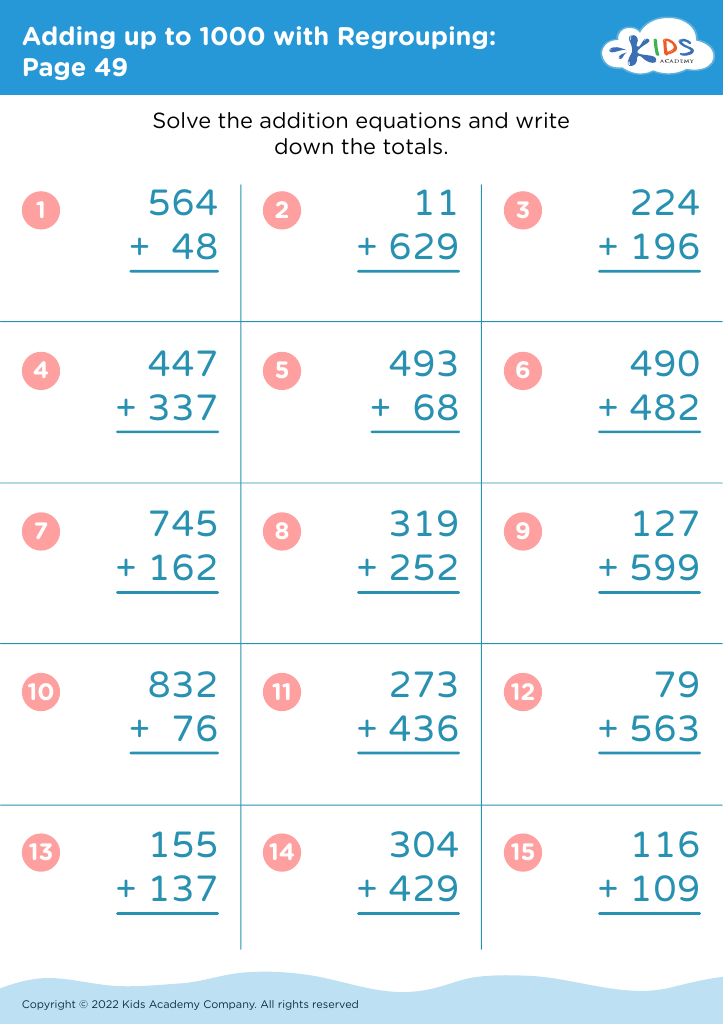
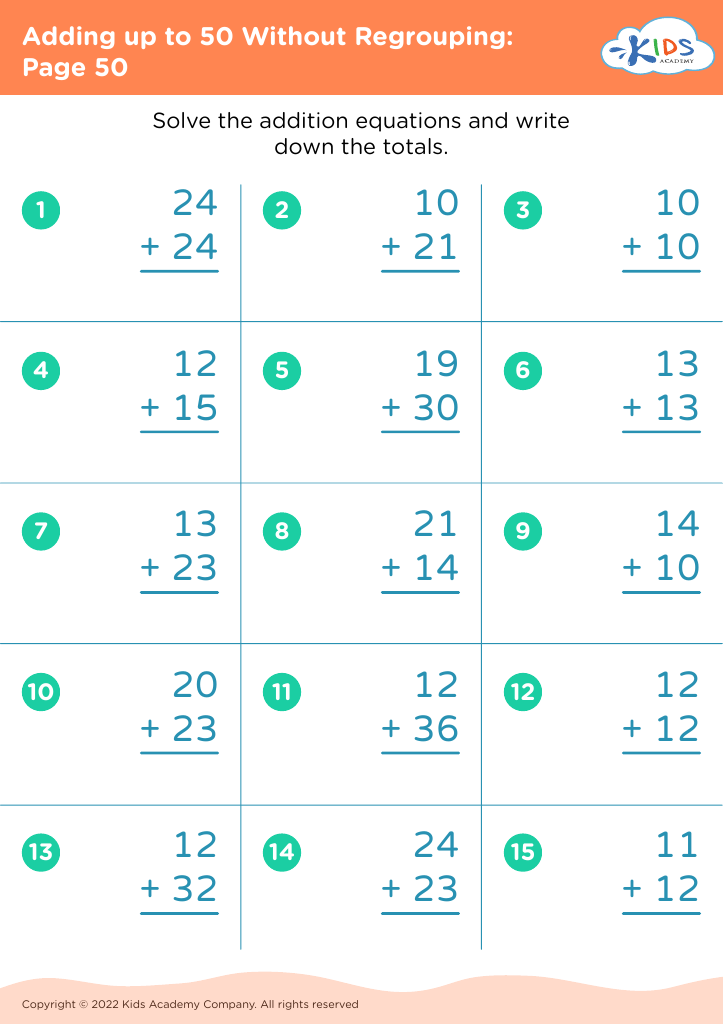








Understanding equivalent fractions and addition is a foundational math skill that significantly benefits 7-year-olds, setting them up for continued academic success. When parents and teachers invest in helping children recognize equivalent fractions, they contribute to a strong mathematical base that will aid in mastering more complex concepts in the future. For instance, grasping equivalent fractions introduces the notion that the same value can be represented in multiple ways— a critical understanding for areas like decimals, percentages, and algebra.
Additionally, teaching fraction addition equips children with practical skills used in daily life, such as measuring ingredients in recipes or dividing items into equal parts. This real-world application fosters not only academic growth but also life skills competence. Fluidity in recognizing and adding fractions also boosts a child's confidence and problem-solving capabilities, emphasizing logical thinking and attention to detail.
From a pedagogical perspective, integrating fractions through diverse, hands-on activities, such as using visual aids or interactive games, enhances engagement and consolidates learning in an enjoyable manner. Ultimately, by prioritizing these mathematical concepts early on, parents and teachers lay a crucial groundwork for continual learning and cognitive development, cultivating a more robust and intuitive grasp of mathematics in young learners.








