Understanding Sequences Addition Worksheets for 7-Year-Olds
13 filtered results
-
From - To
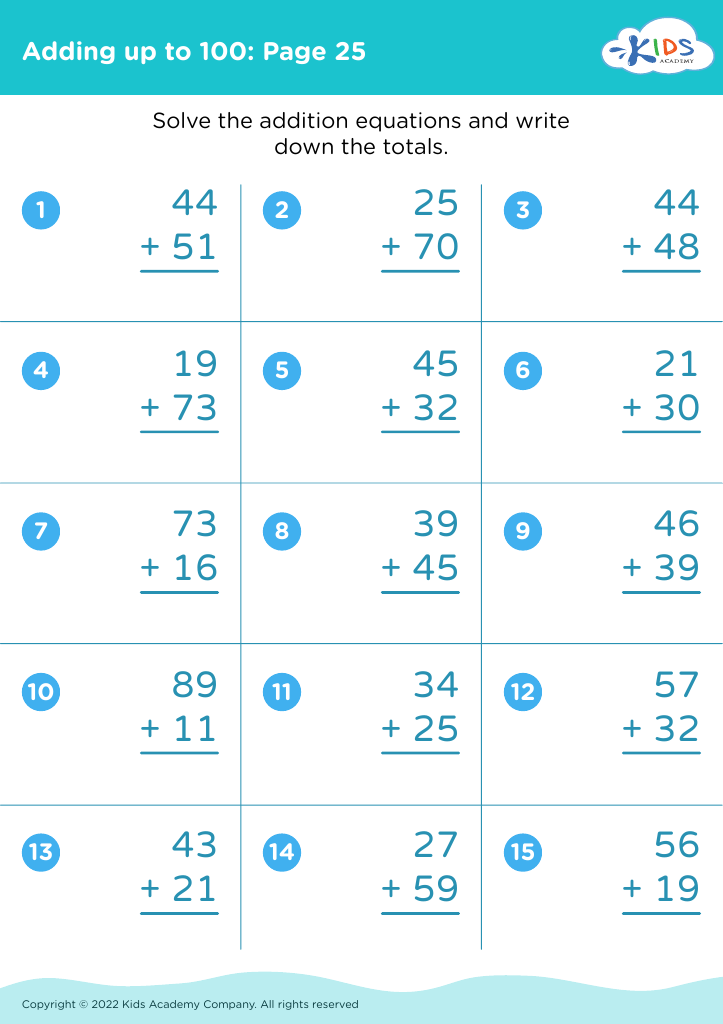
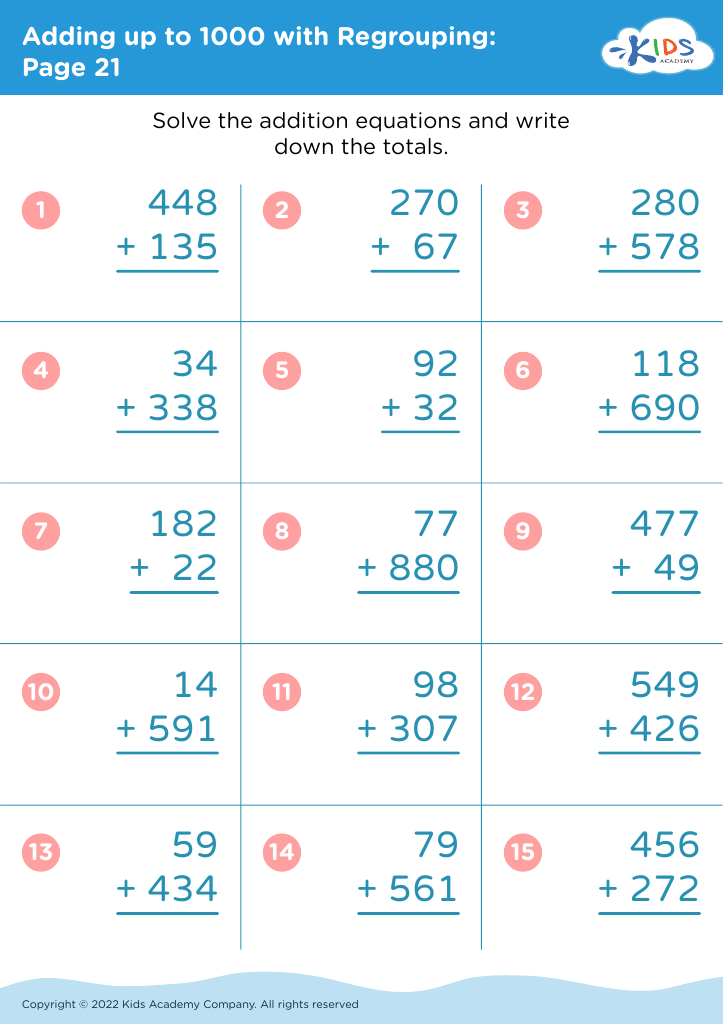
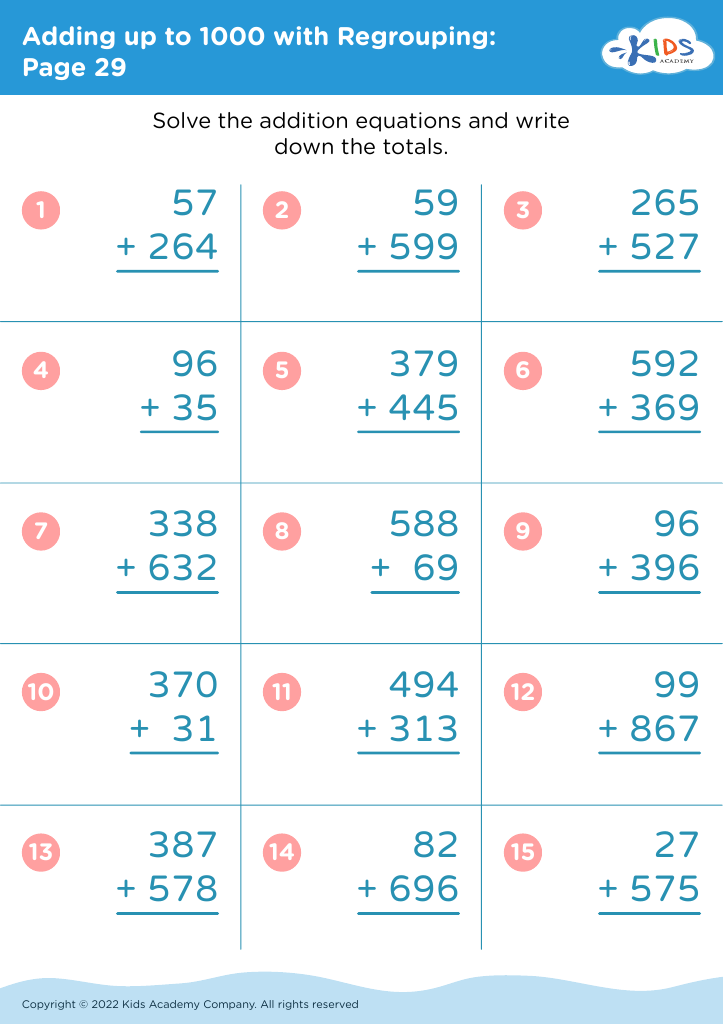
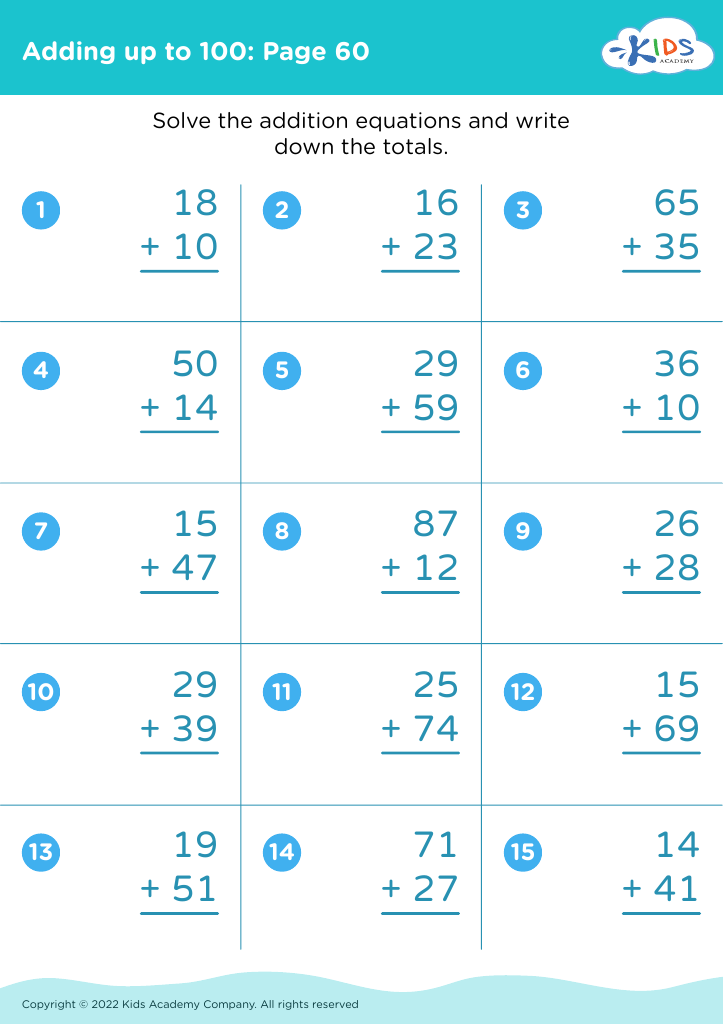
Explore our "Understanding Sequences Addition Worksheets" designed specifically for 7-year-olds! These engaging resources help young learners master the concept of adding sequences through fun, interactive exercises. Our worksheets encourage children to identify and continue numerical patterns, enhancing their addition skills while fostering critical thinking. With colorful visuals and age-appropriate challenges, students will enjoy practicing sequences in a supportive environment. Perfect for home or classroom use, these worksheets promote independence while reinforcing foundational math concepts. Equip your child with essential skills they’ll need in their educational journey. Start their adventure in mastering addition sequences today!
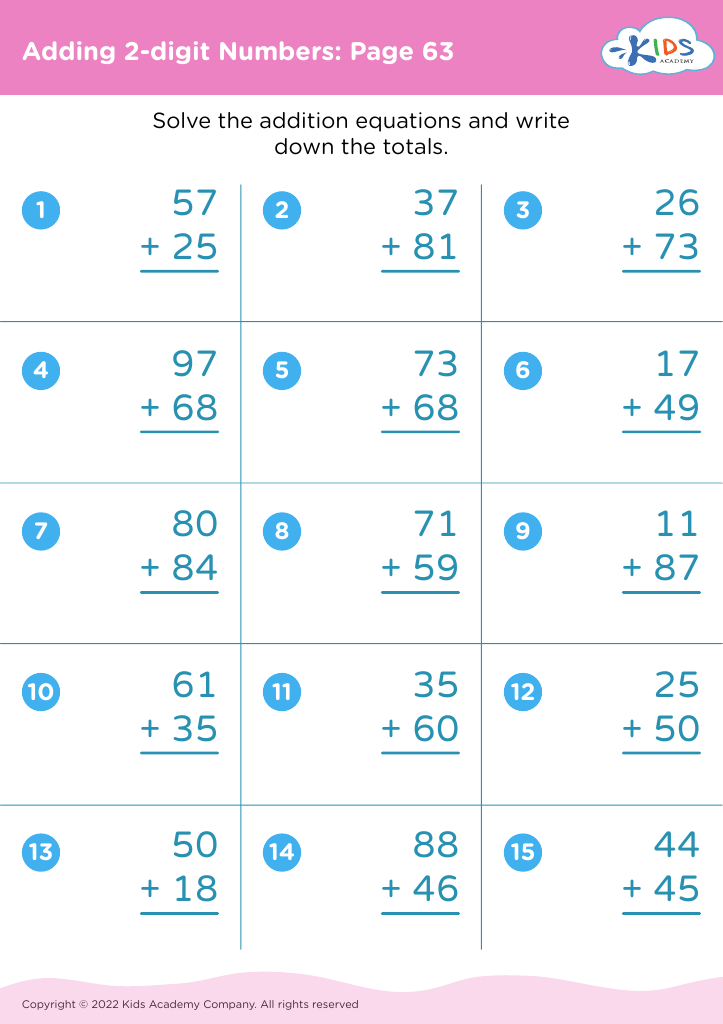
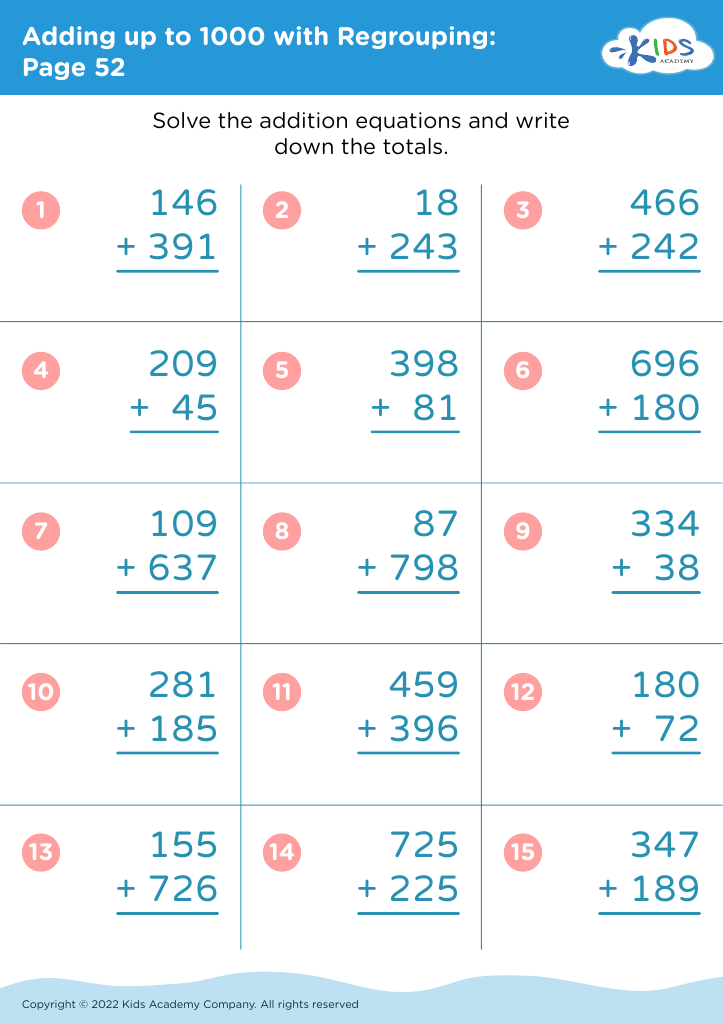
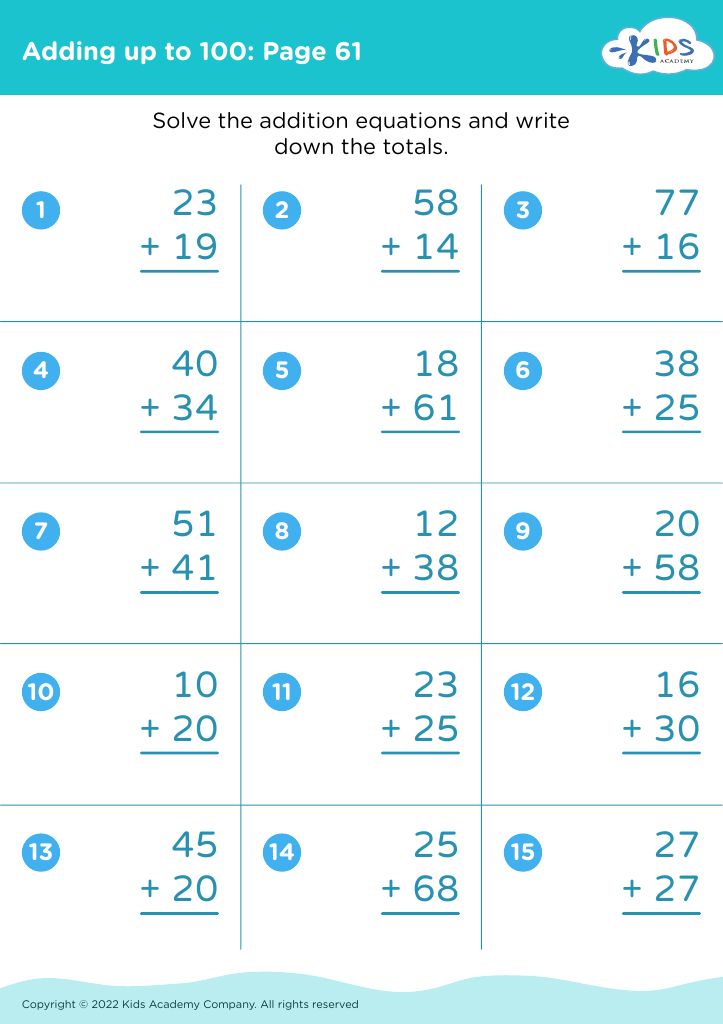
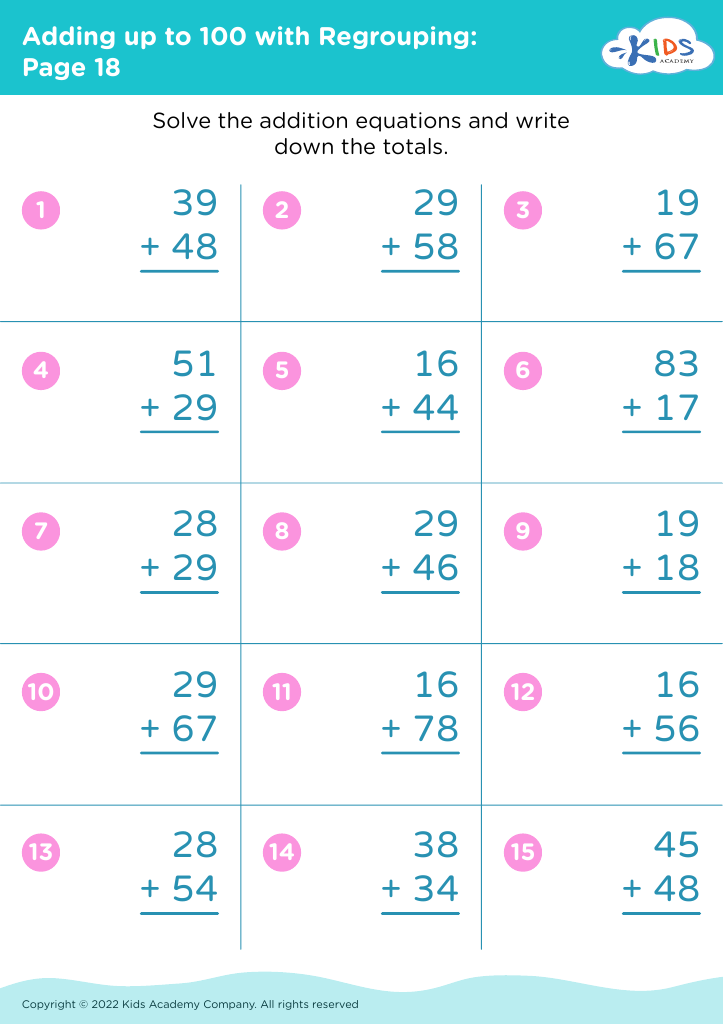
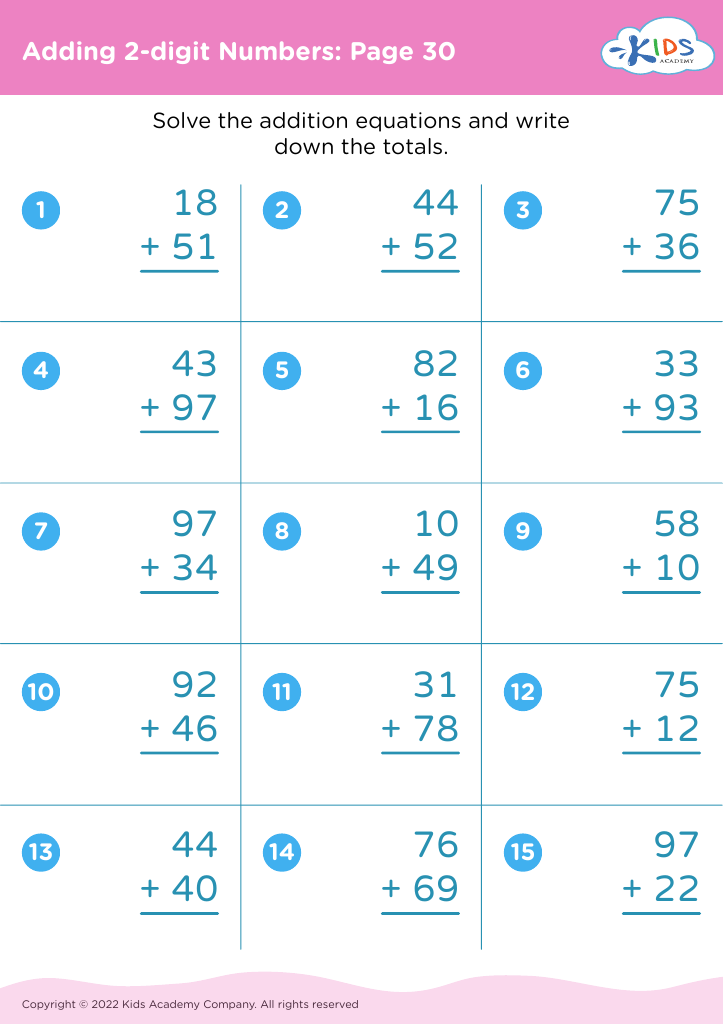
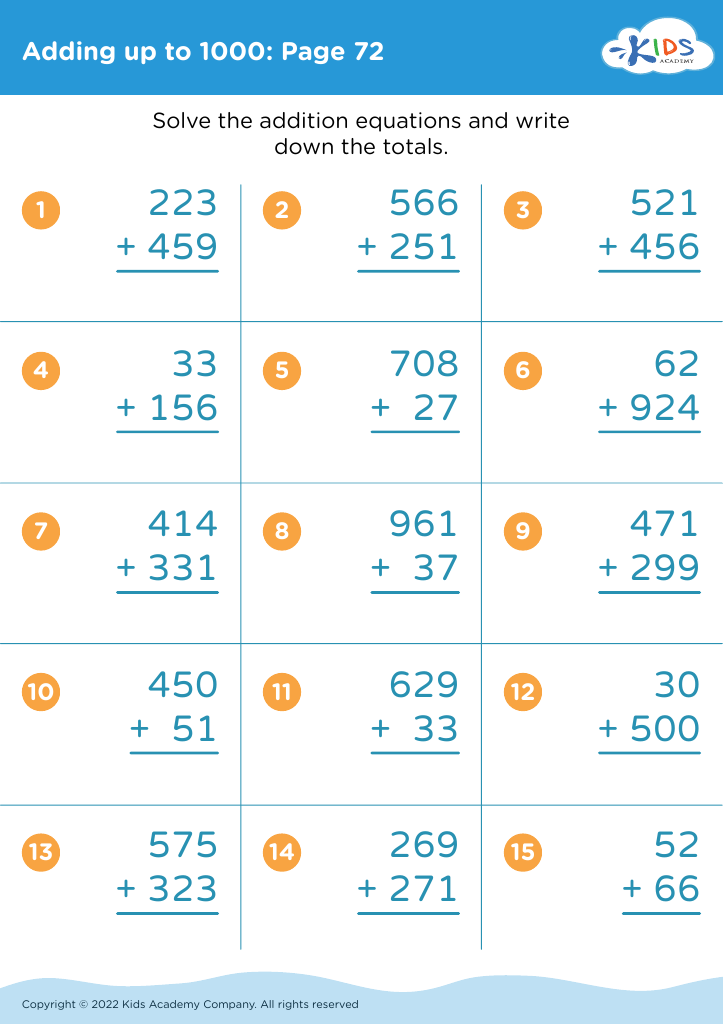
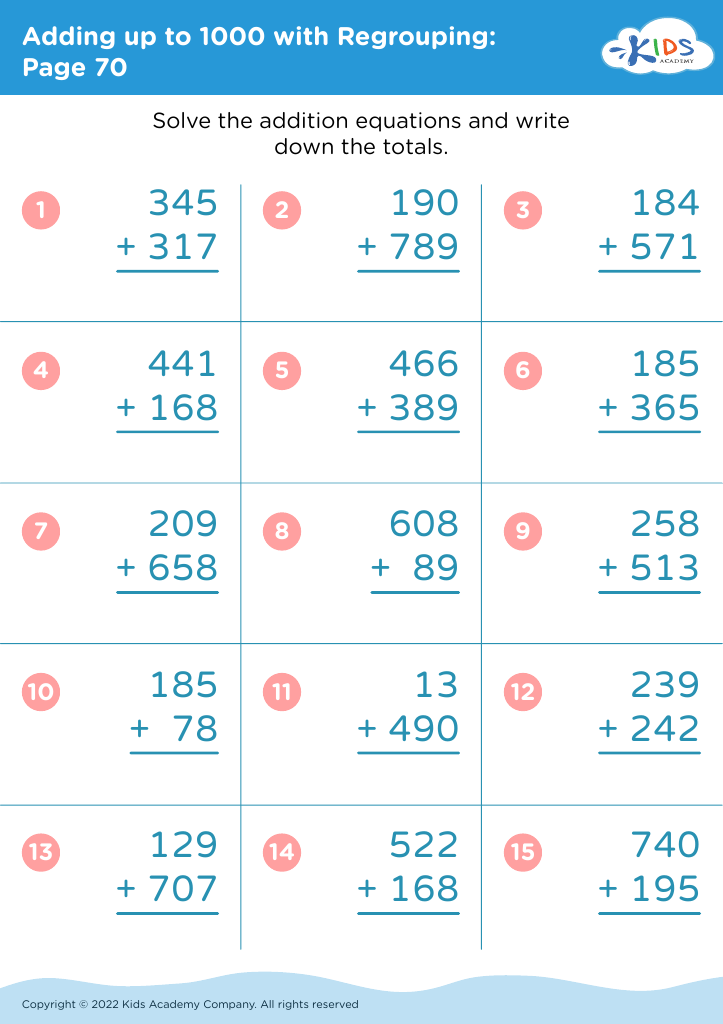
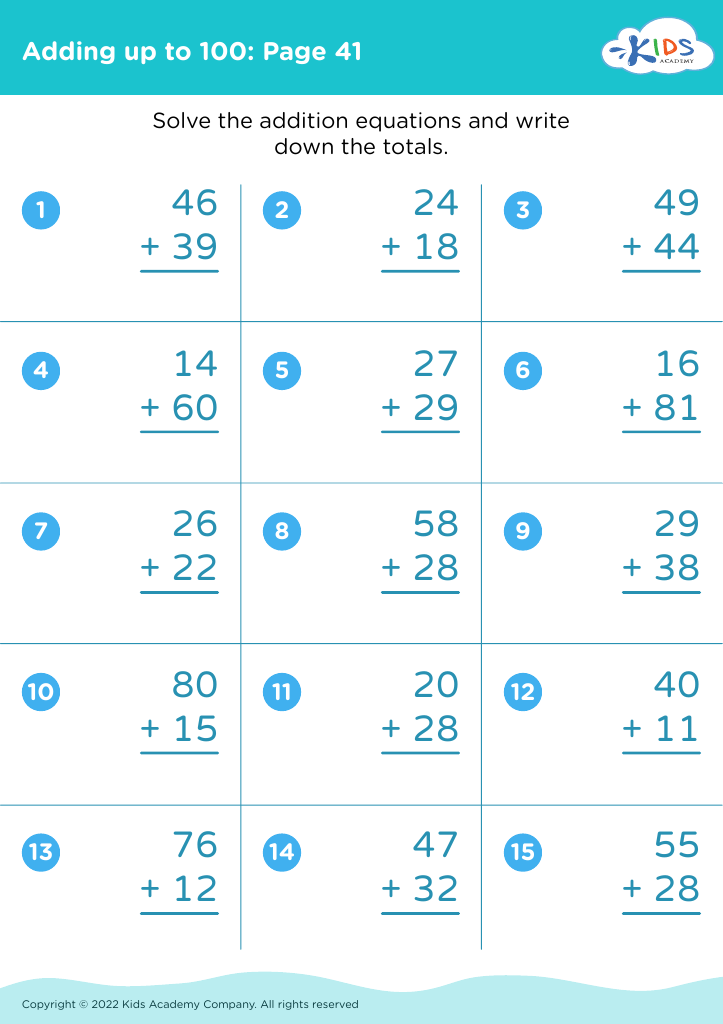
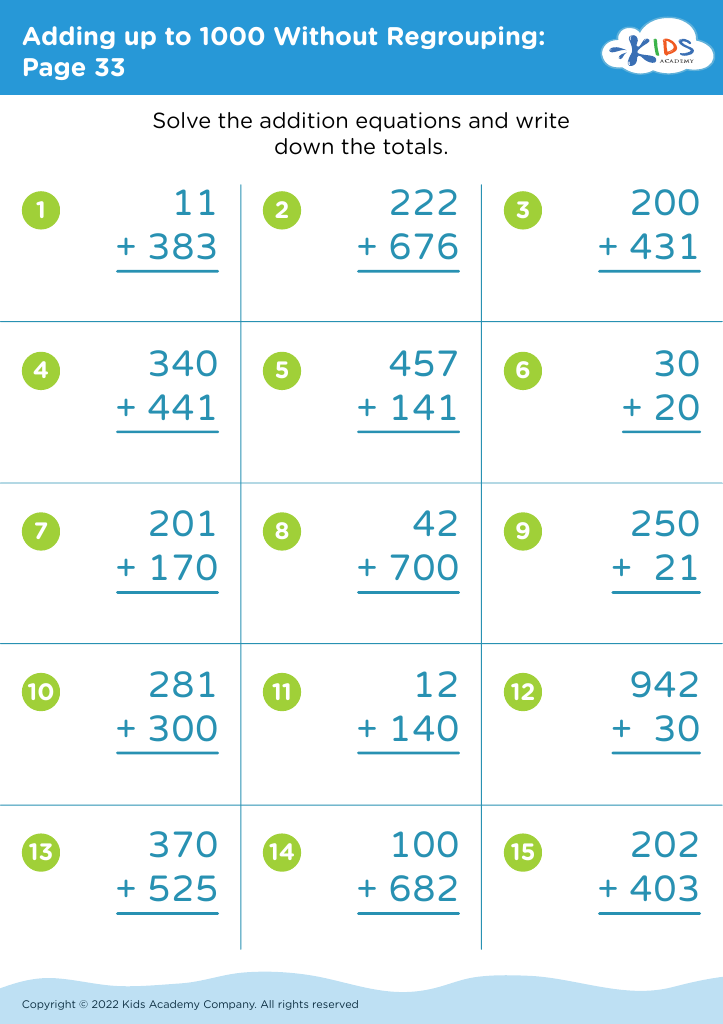








Understanding sequences and addition is crucial for 7-year-olds as it lays the foundation for their mathematical development. At this age, children are typically transitioning from basic number recognition to more complex mathematical concepts. Grasping sequences, such as counting by twos, fives, or tens, helps children develop pattern recognition and enhances their ability to solve addition problems efficiently.
When children learn about sequences in addition, they start to see relationships between numbers, making it easier to perform calculations. For example, understanding that adding 2, and then 2 again, can be visualized as counting by twos, promotes a deeper conceptual understanding of addition. This skill not only benefits academic performance but also translates to real-life situations, such as managing time, money, and measurements.
Moreover, by focusing on sequences and addition, educators foster critical thinking and problem-solving skills. This practice encourages pupils to explore various strategies and develop resilience when faced with challenges.
For parents and teachers, engaging children with these concepts creates a supportive learning environment, enhances confidence, and motivates a lifelong interest in mathematics. In fostering a solid understanding of sequences and addition now, we are preparing children for future academic success in all areas of learning.








