Addition skills Money Worksheets for 7-Year-Olds
3 filtered results
-
From - To
Enhance your 7-year-old’s math abilities with our engaging Addition Skills Money Worksheets. Designed for young learners, these worksheets focus on strengthening addition through fun, practical exercises involving real-world scenarios and counting money. Kids will gain confidence in their math skills by adding coins and bills, making learning interactive and enjoyable. Our worksheets are tailor-made to align with educational standards, ensuring that your child builds a strong foundation in addition while developing essential financial literacy from an early age. Perfect for both classroom use and homeschooling, these worksheets make math practice exciting and relevant. Empower your child’s learning journey today!
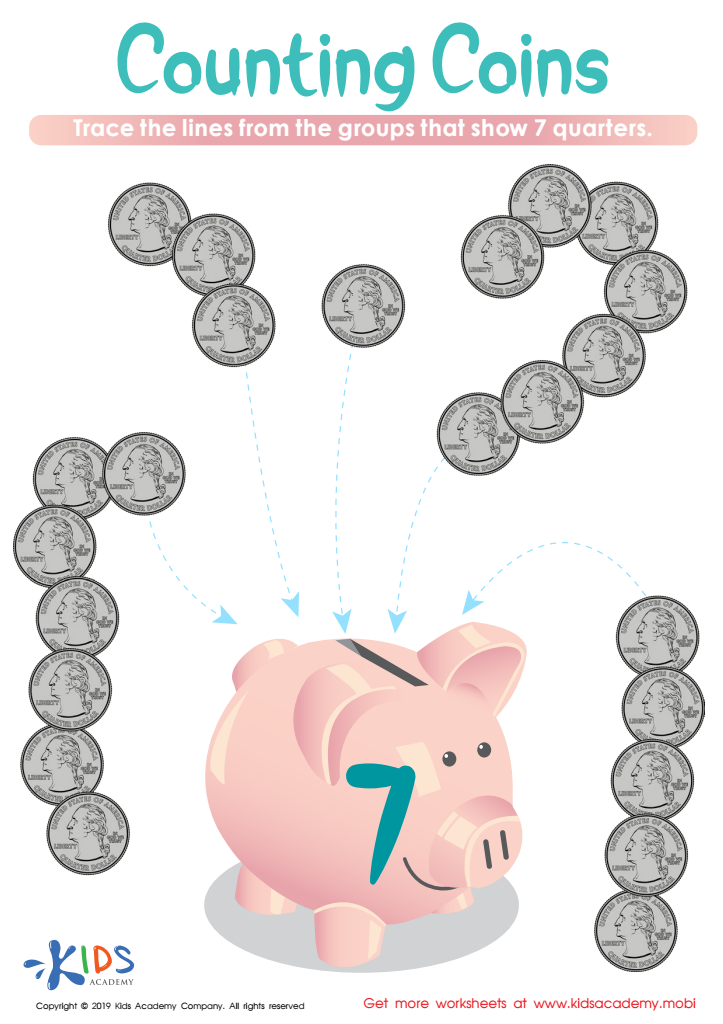
Counting Coins Worksheet
 Assign to My Students
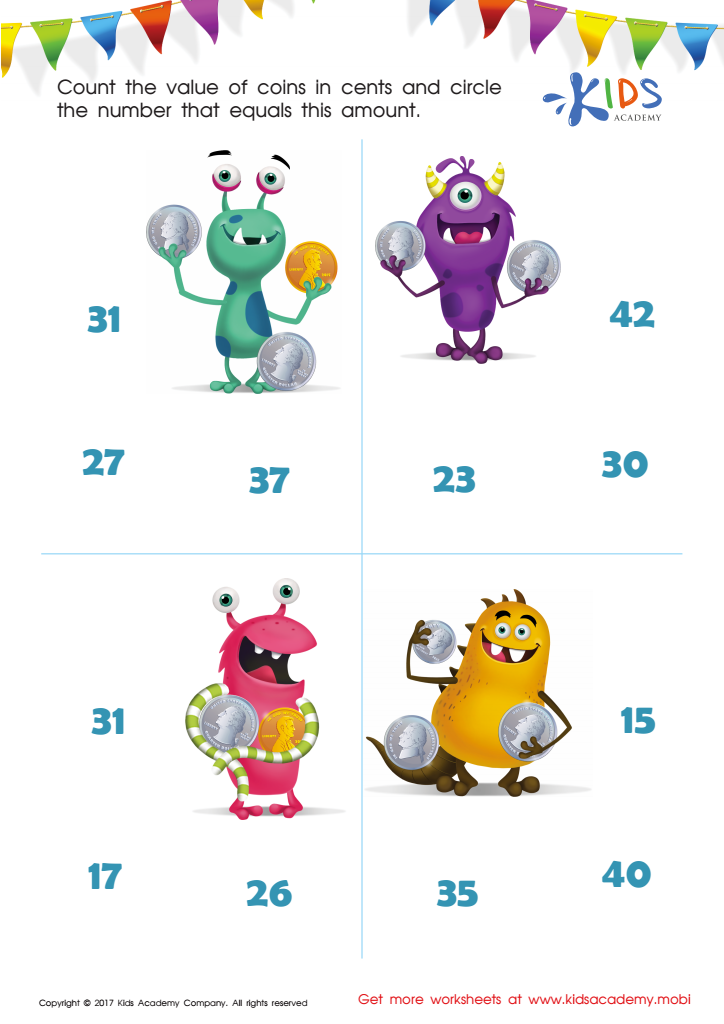
How Many Coins Money Worksheet
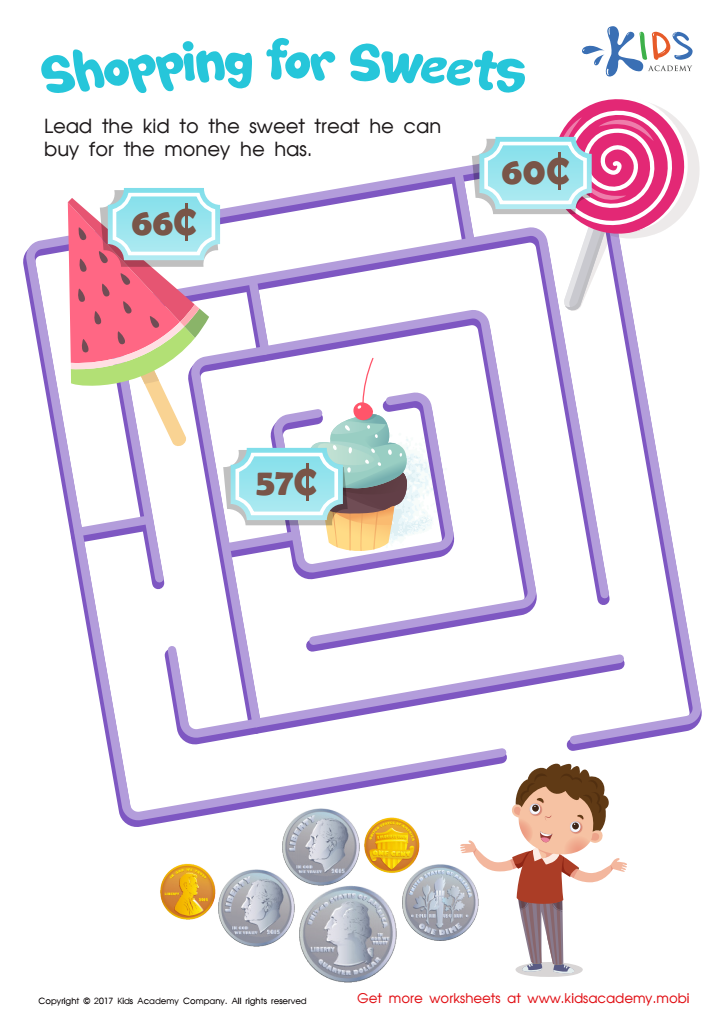
Shopping for Sweets Worksheet








Developing addition skills using money for 7-year-olds is crucial as it lays a strong foundation for their future mathematical proficiency and practical life skills. By integrating money into math lessons, children can grasp the value of different denominations and understand how real-world transactions work. This makes learning more engaging and relevant, helping students relate abstract numbers to tangible concepts.
Mastering addition with money enhances critical thinking and problem-solving abilities. When children work out the cost of items and the change they should receive, they are not only practicing basic math but also improving their analytical skills. It introduces them to budgeting, a vital life skill, emphasizing the importance of making informed financial decisions.
Moreover, these exercises promote financial literacy from a young age, preparing children for independent living. As they grow, they need to know how to manage allowances, save for goals, and develop responsible spending habits.
Teachers and parents play an integral role in this learning process. By providing opportunities for hands-on experiences with money, they can offer meaningful and practical context for children to apply their addition skills. Encouraging strong mathematical abilities early on ensures that children are well-equipped for academic challenges and everyday responsibilities in the future.








