Money recognition Money Worksheets for 7-Year-Olds
5 filtered results
-
From - To
Our Money Recognition Worksheets for 7-Year-Olds are designed to make learning about money fun and engaging. Perfectly tailored for young learners, these worksheets help kids identify and understand different coins and bills, improve their counting skills, and develop a strong sense of financial literacy. Through interactive exercises and colorful visuals, children practice recognizing and naming U.S. currency, building a solid foundation for future money management skills. Ideal for classroom use or at-home practice, these worksheets are an excellent resource for helping your child gain confidence in their monetary knowledge. Empower your 7-year-old with the tools they need for real-world money understanding!
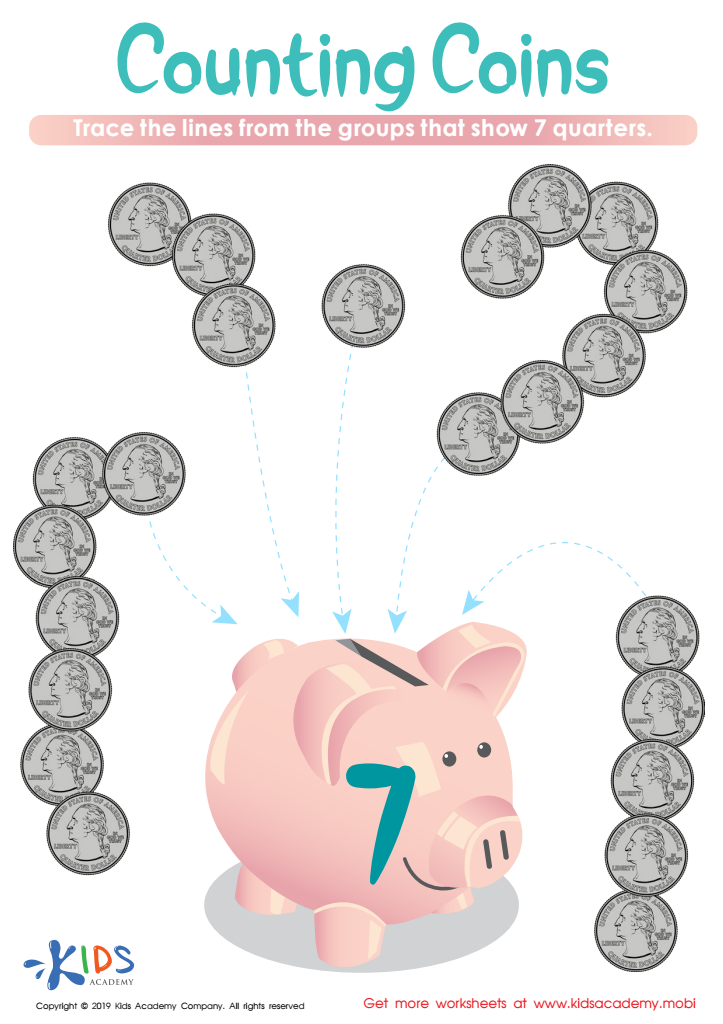
Counting Coins Worksheet
 Assign to My Students
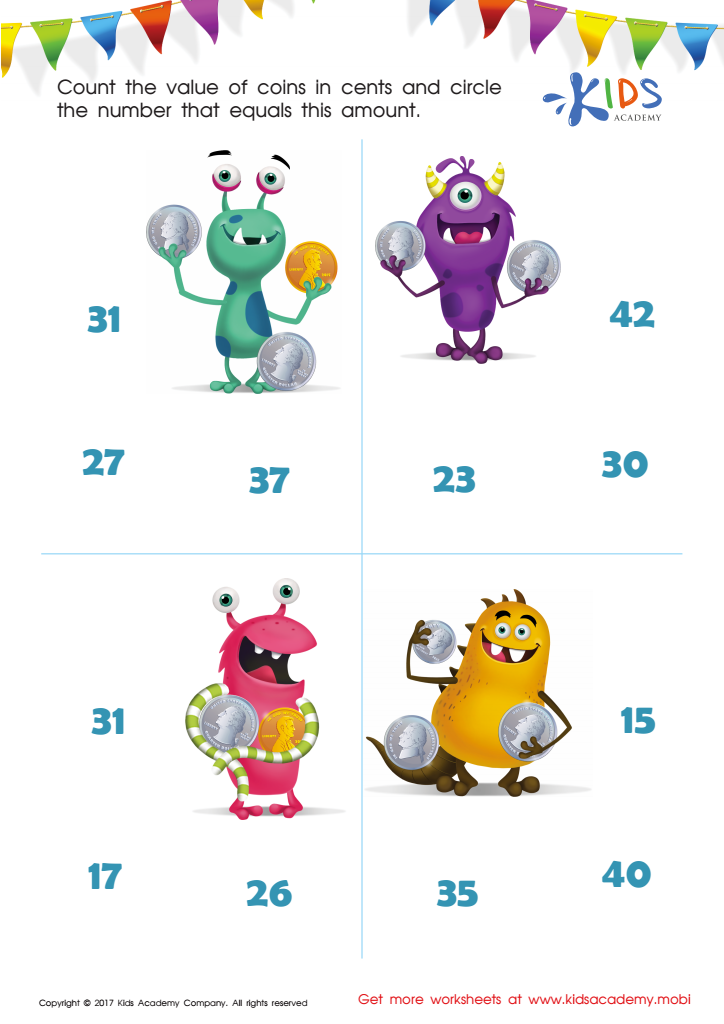
How Many Coins Money Worksheet
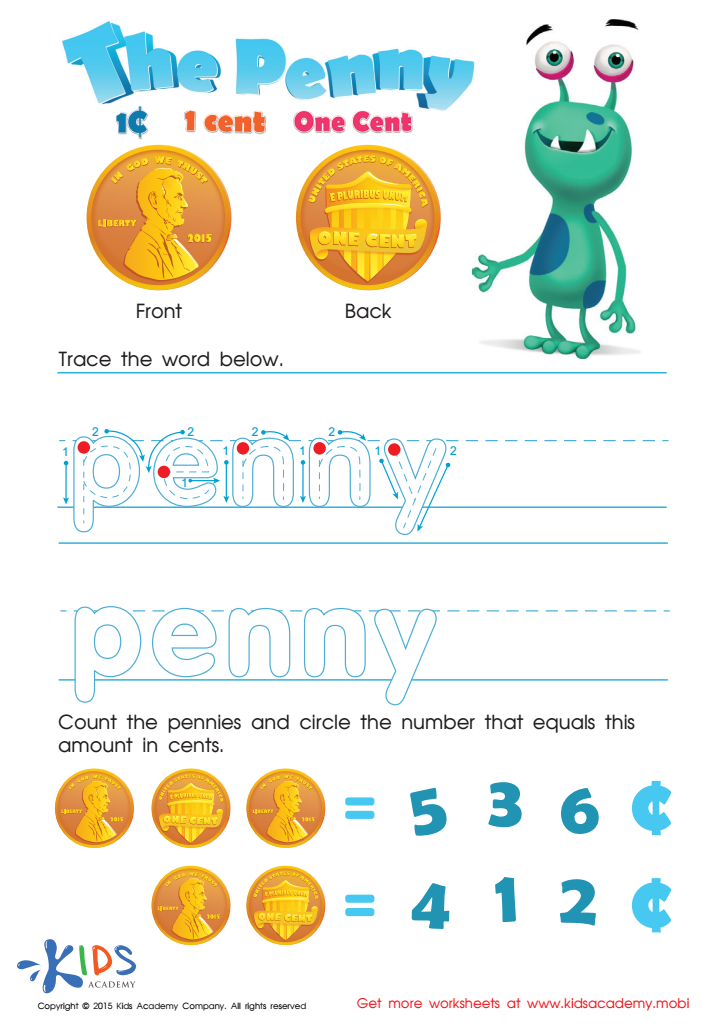
One Cent or the Penny Money Worksheet
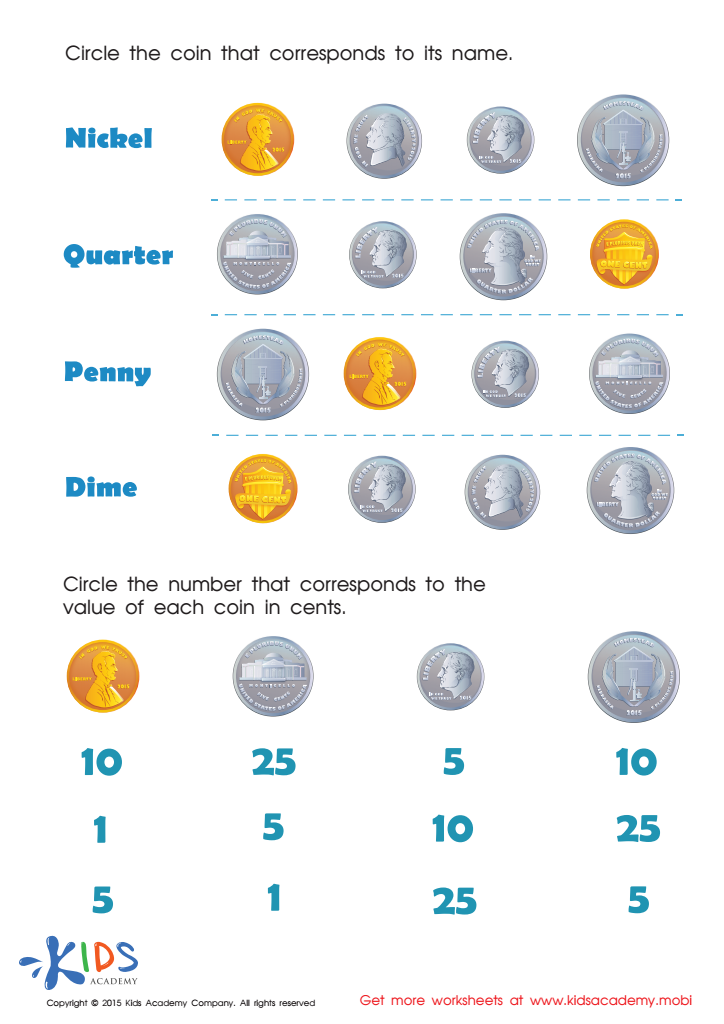
Coin Names and Values Money Worksheet
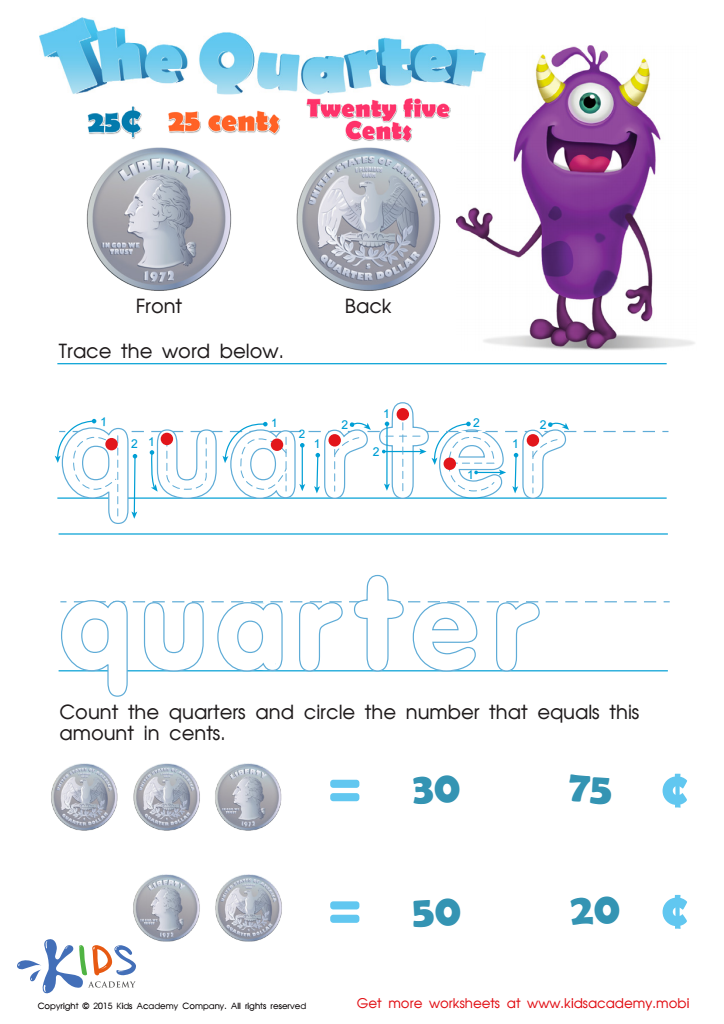
Twenty Five Cents or the Quarter Money Worksheet








Money recognition at a young age is a foundational life skill that carries numerous benefits for a child's overall development. When parents or teachers focus on teaching money recognition to 7-year-olds, they are equipping children with critical cognitive and practical competencies.
Firstly, understanding money helps children grasp basic mathematical concepts such as addition, subtraction, and multiplication. These are essential skills that support their academic progress in mathematics and other subjects. Recognizing different coins and notes, knowing their values, and making change require logical thinking and reasoning, which enhances a child’s problem-solving abilities.
Secondly, money recognition fosters financial literacy from an early age. Children learn the value of currency, which is vital in developing an understanding of responsible spending and saving habits. This foundation can influence their financial decisions in adulthood, promoting goals like budgeting, saving for future needs, and avoiding unnecessary debt.
Furthermore, money recognition contributes to a sense of independence and confidence. When children understand money, they can make choices in real-world scenarios, such as purchasing items or understanding monetary exchanges. These experiences build their self-reliance and decision-making capabilities.
Finally, introducing money recognition through interactive activities can also strengthen the relationship between parents/teachers and children, turning learning into an engaging and collaborative process. In summary, focusing on money recognition sets a child up for lifelong financial awareness, essential mathematics skills, and practical independence.








