Check out this FREE Trial Lesson on Math for age 7!

H

Favorites
With answer key
Interactive
  • 7
  • Fraction simplification
  • Math
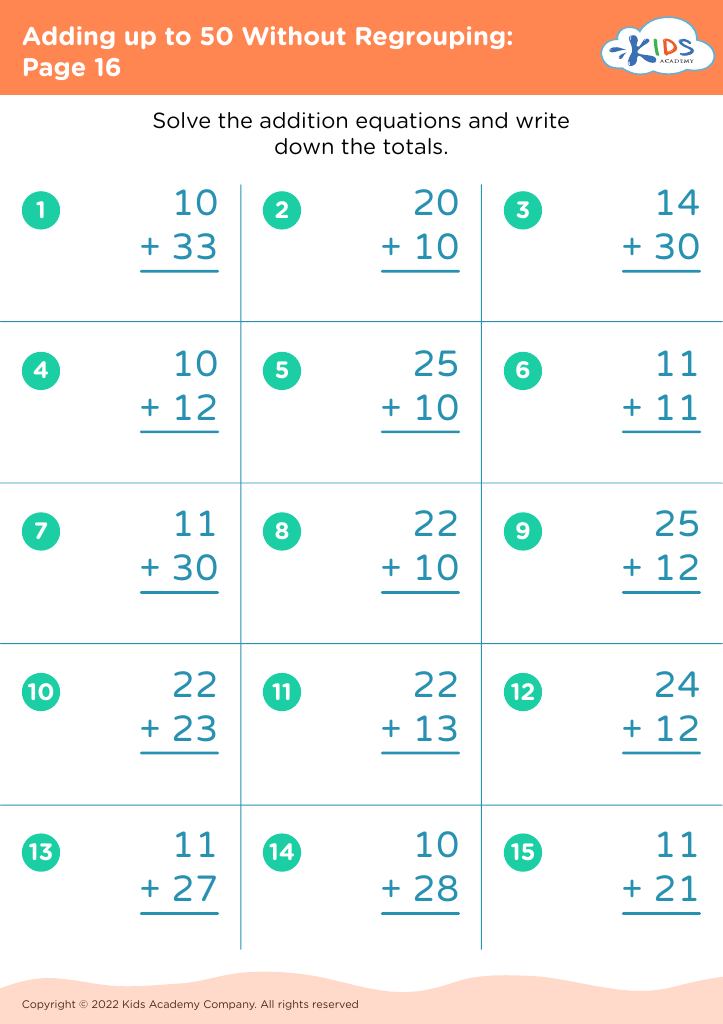
Adding up to 50 Without Regrouping: Page 16
Worksheet
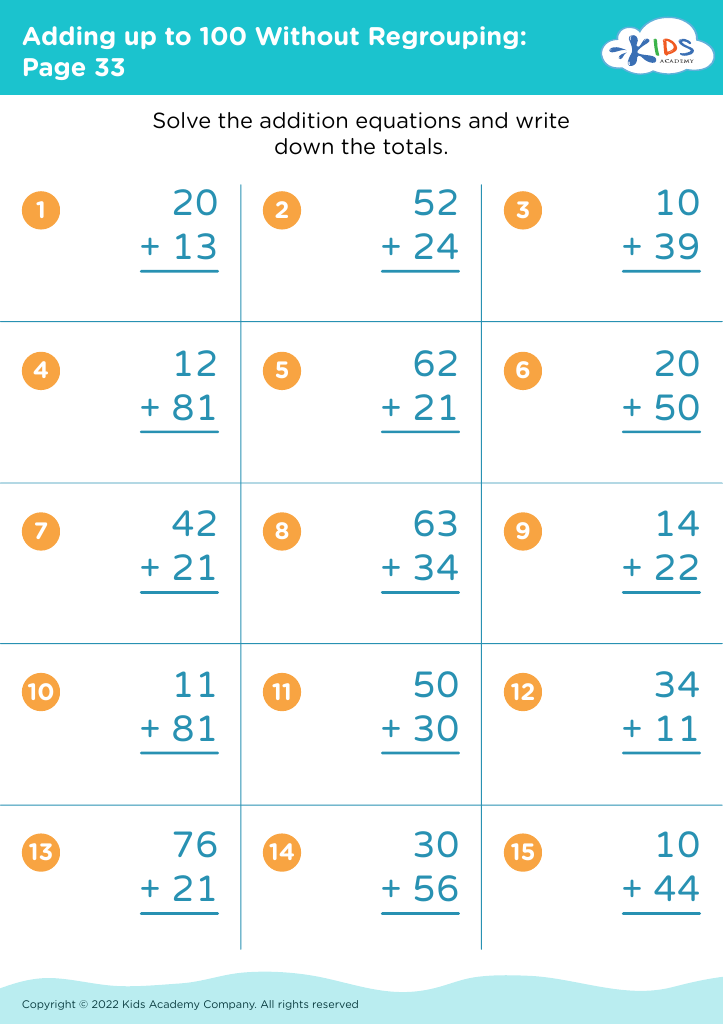
Adding up to 100 Without Regrouping: Page 33
Worksheet
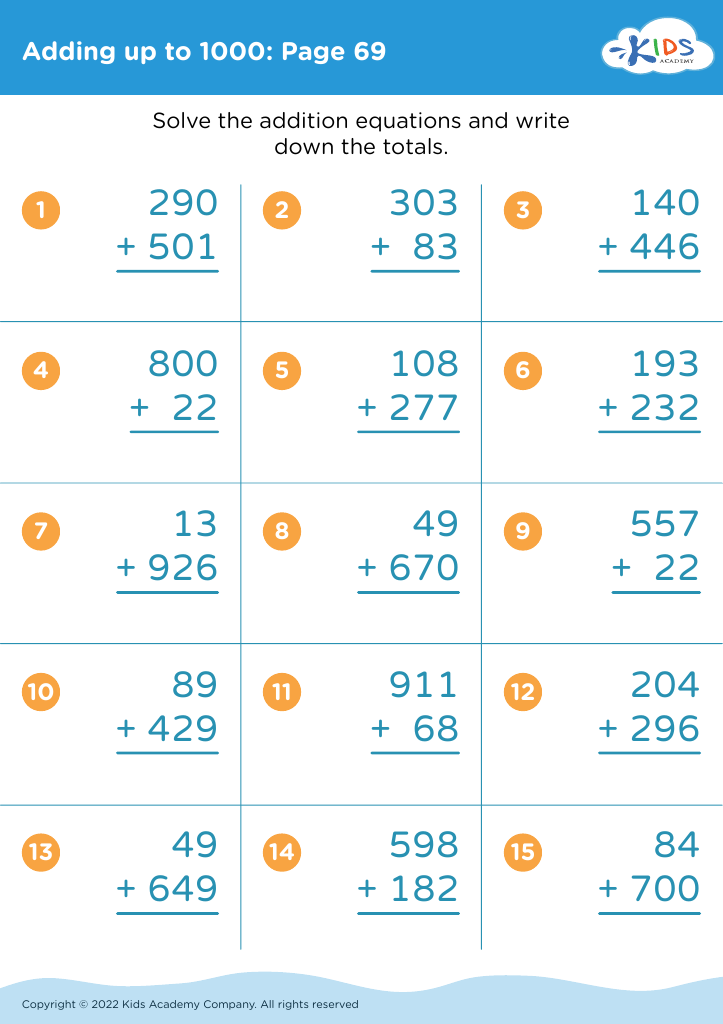
Adding up to 1000: Page 69

Adding up to 1000: Page 69

Adding up to 1000: Page 69
Worksheet
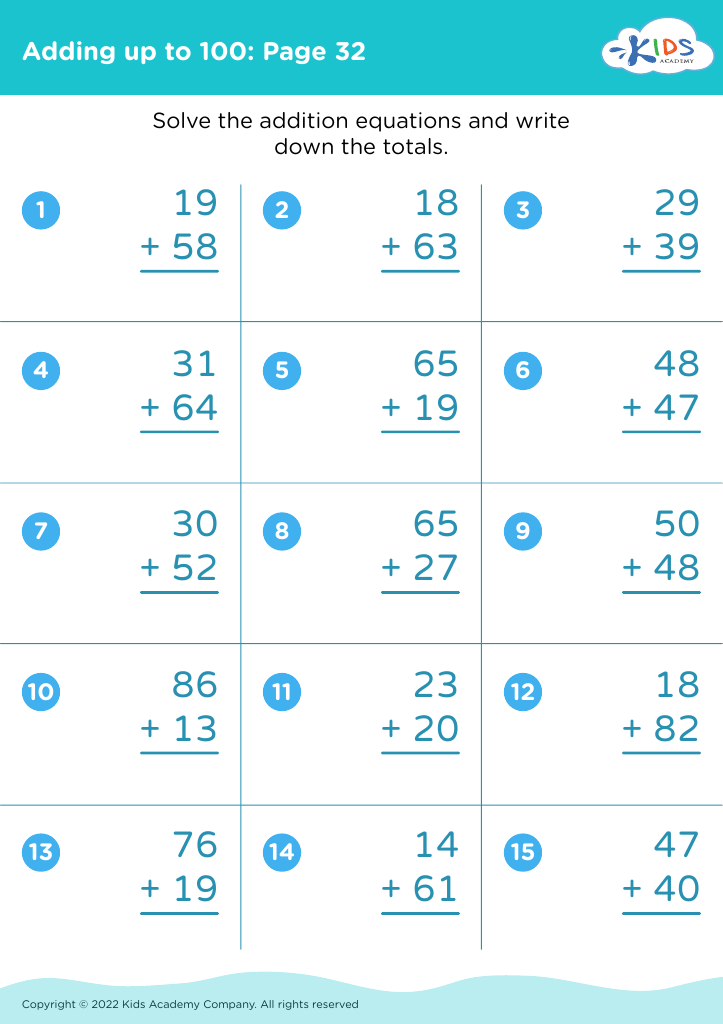
Adding up to 100: Page 32

Adding up to 100: Page 32

Adding up to 100: Page 32
Worksheet
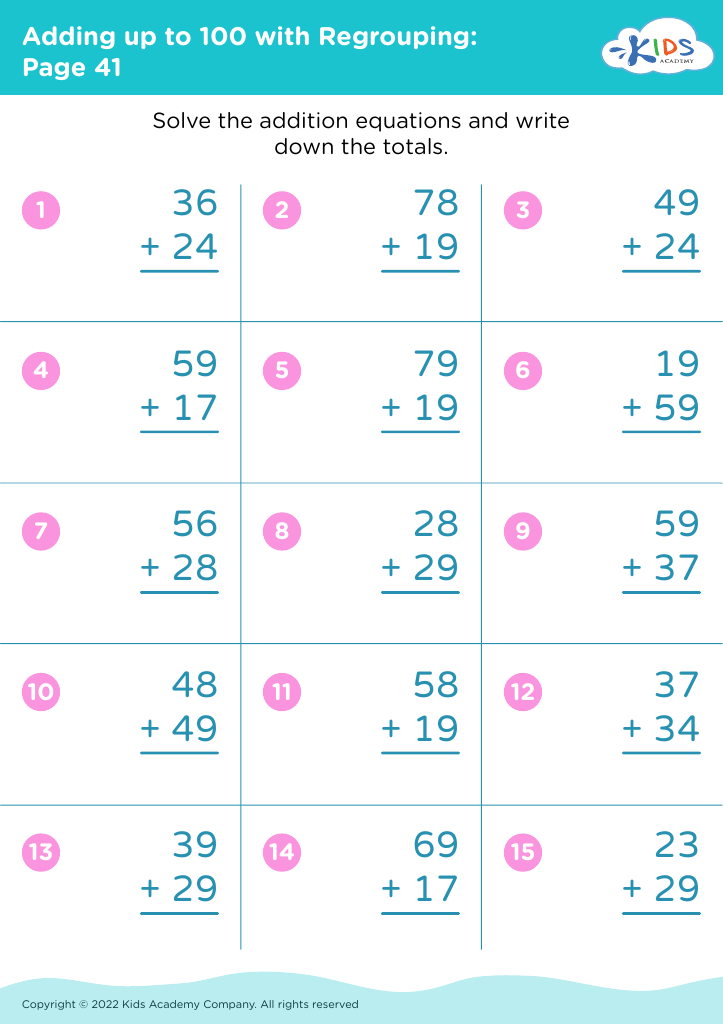
Adding up to 100 with Regrouping: Page 41
Worksheet
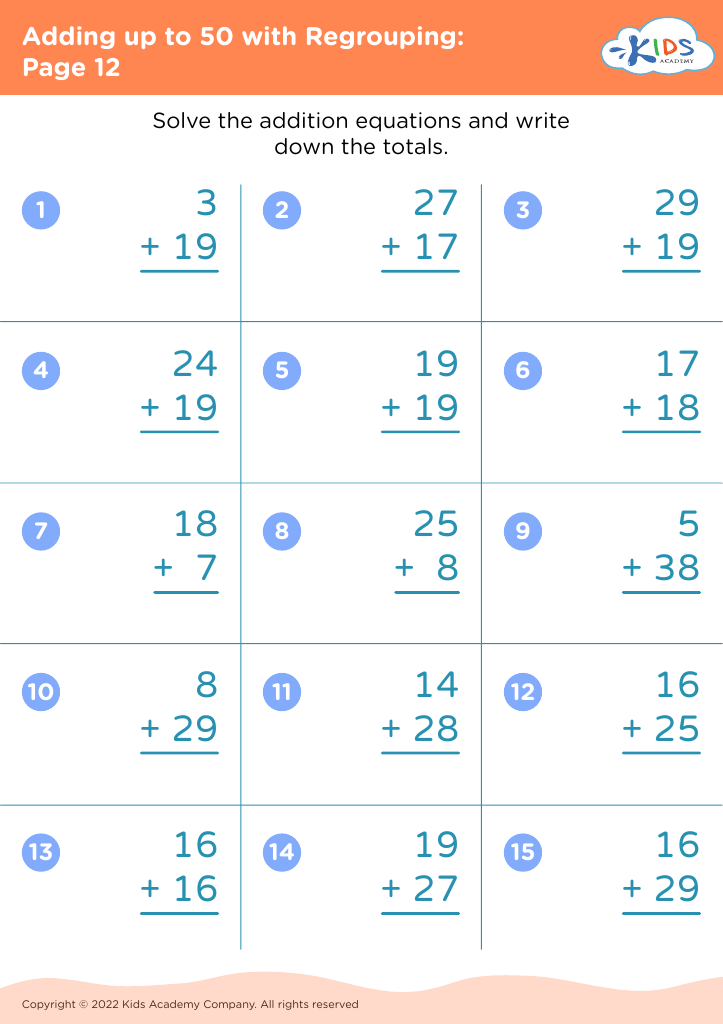
Adding up to 50 with Regrouping: Page 12
Worksheet
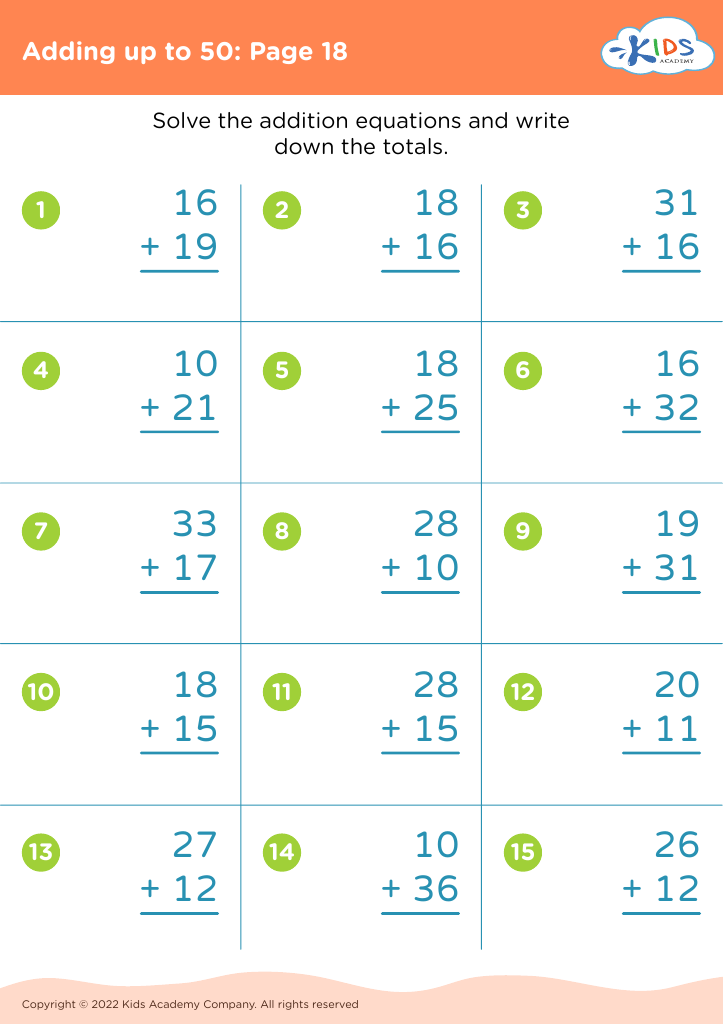
Adding up to 50: Page 18

Adding up to 50: Page 18

Adding up to 50: Page 18
Worksheet
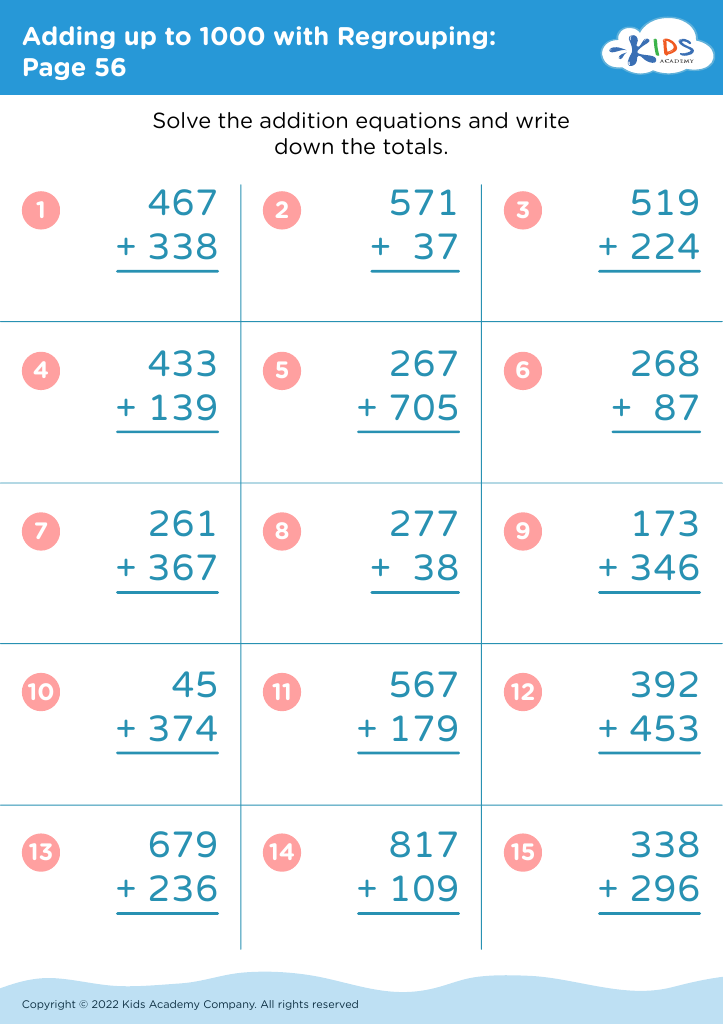
Adding up to 1000 with Regrouping: Page 56
Worksheet
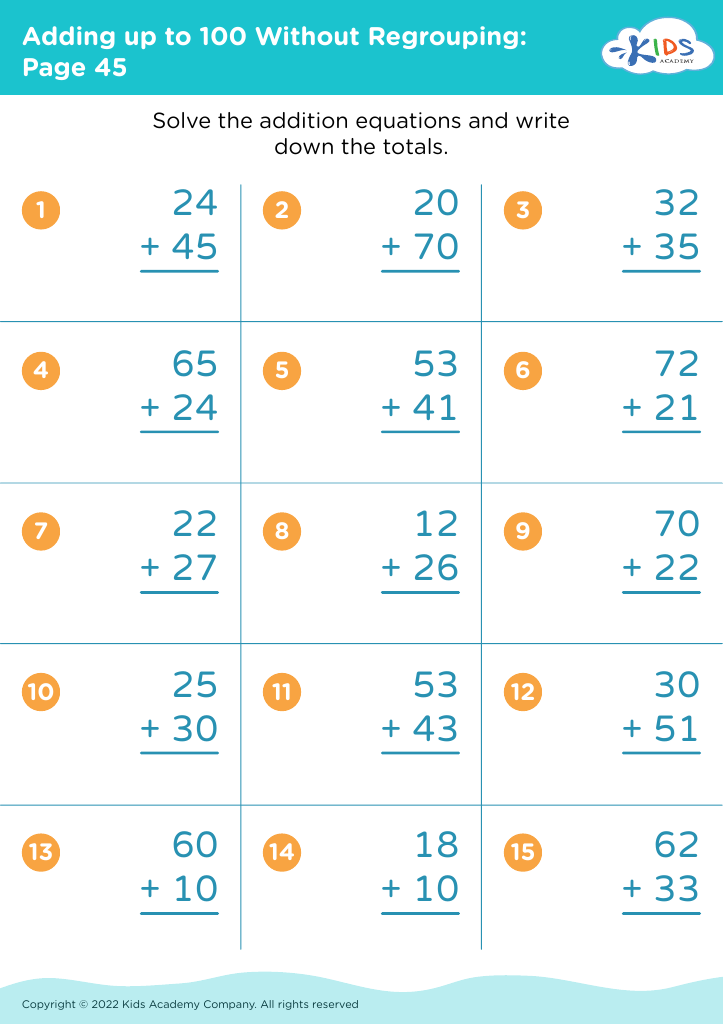
Adding up to 100 Without Regrouping: Page 45
Worksheet
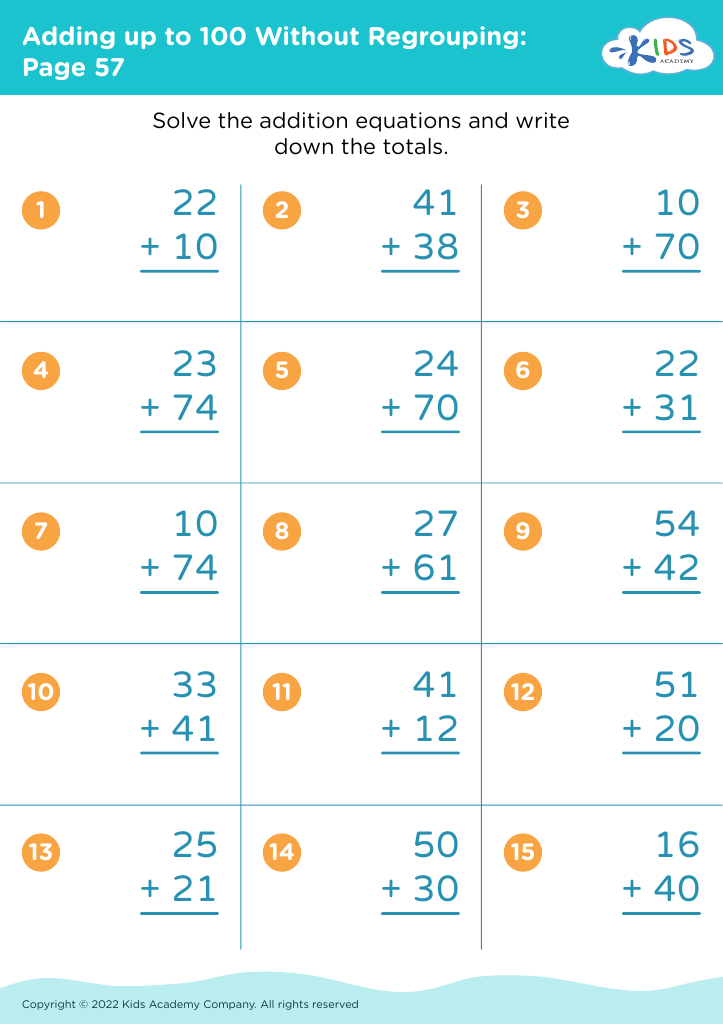
Adding up to 100 Without Regrouping: Page 57
Worksheet
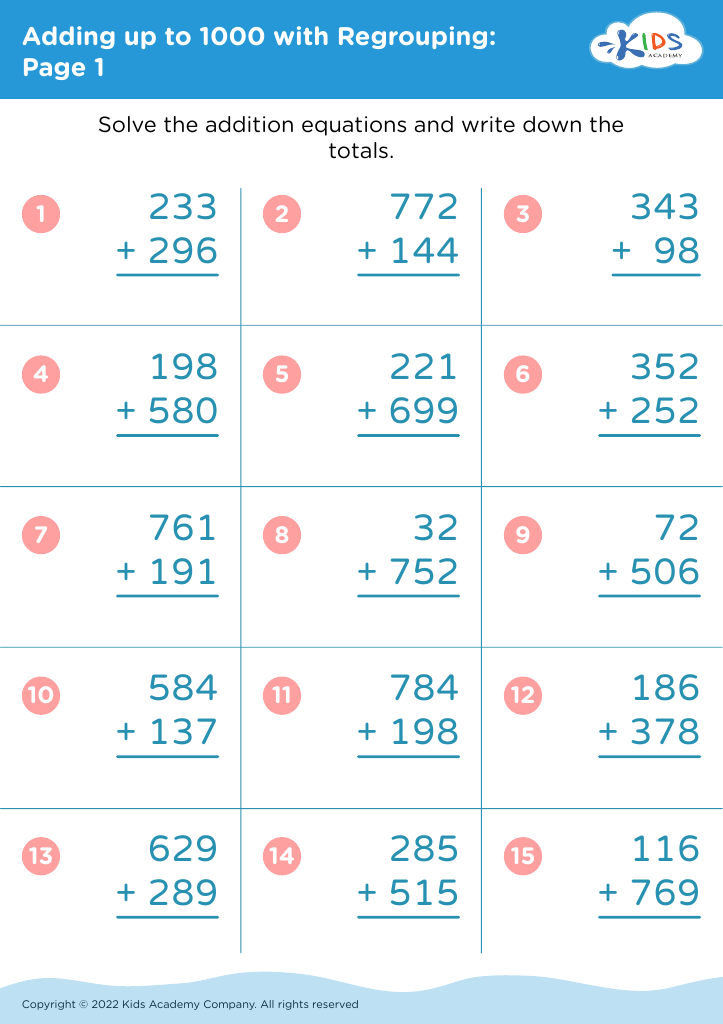
Adding up to 1000 with Regrouping: Page 1
Worksheet
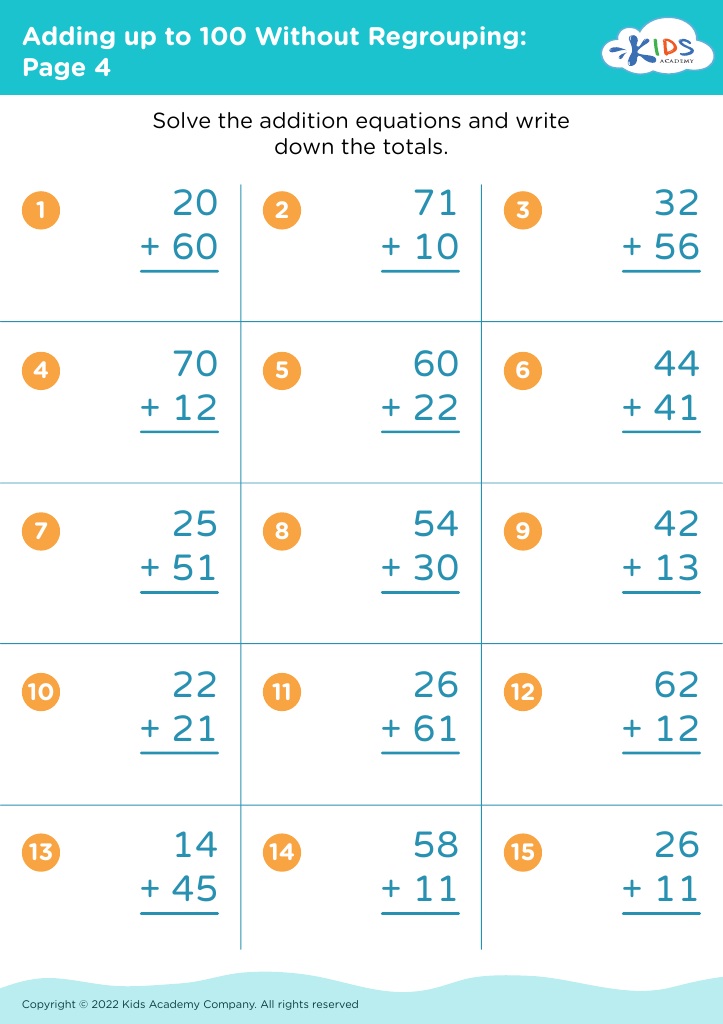
Adding up to 100 Without Regrouping: Page 4
Worksheet
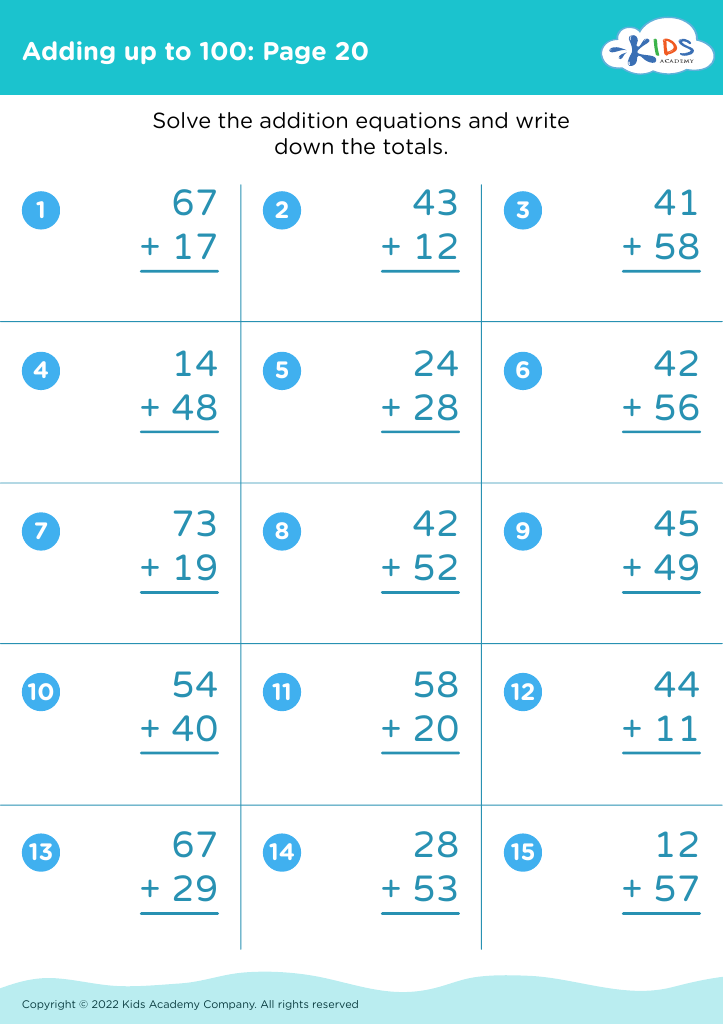
Adding up to 100: Page 20

Adding up to 100: Page 20

Adding up to 100: Page 20
Worksheet
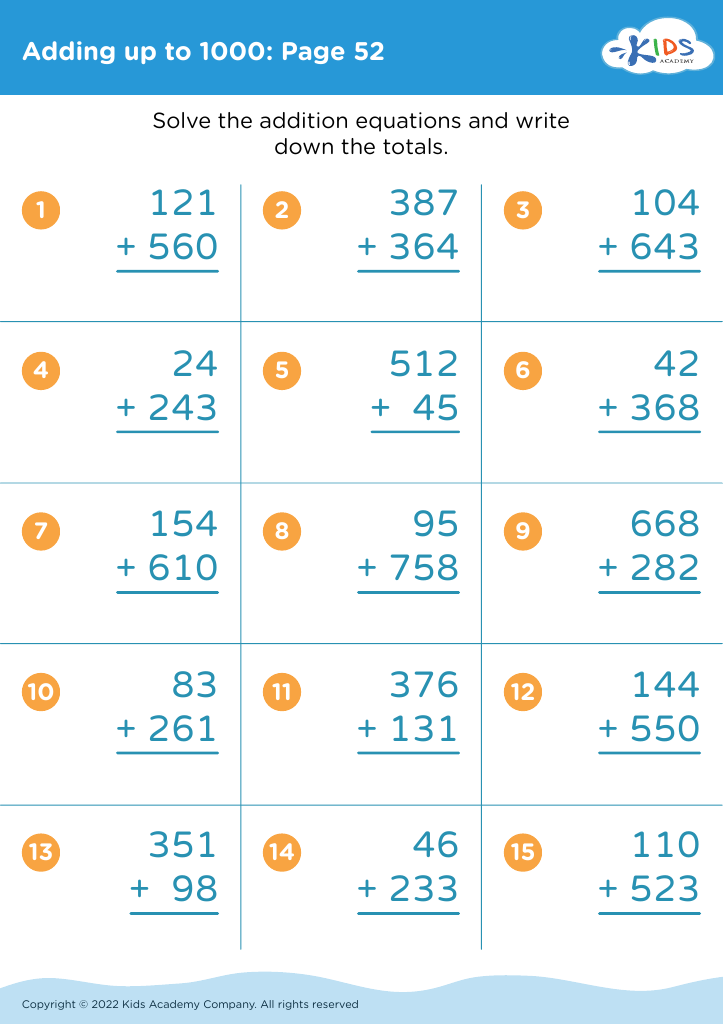
Adding up to 1000: Page 52

Adding up to 1000: Page 52

Adding up to 1000: Page 52
Worksheet
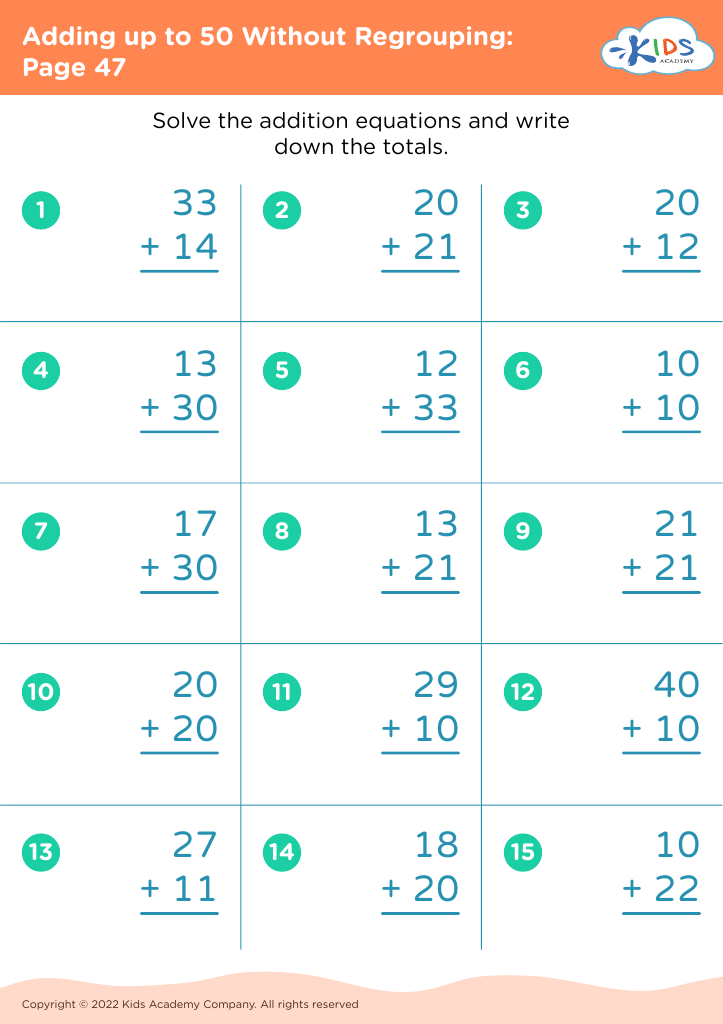
Adding up to 50 Without Regrouping: Page 47
Worksheet
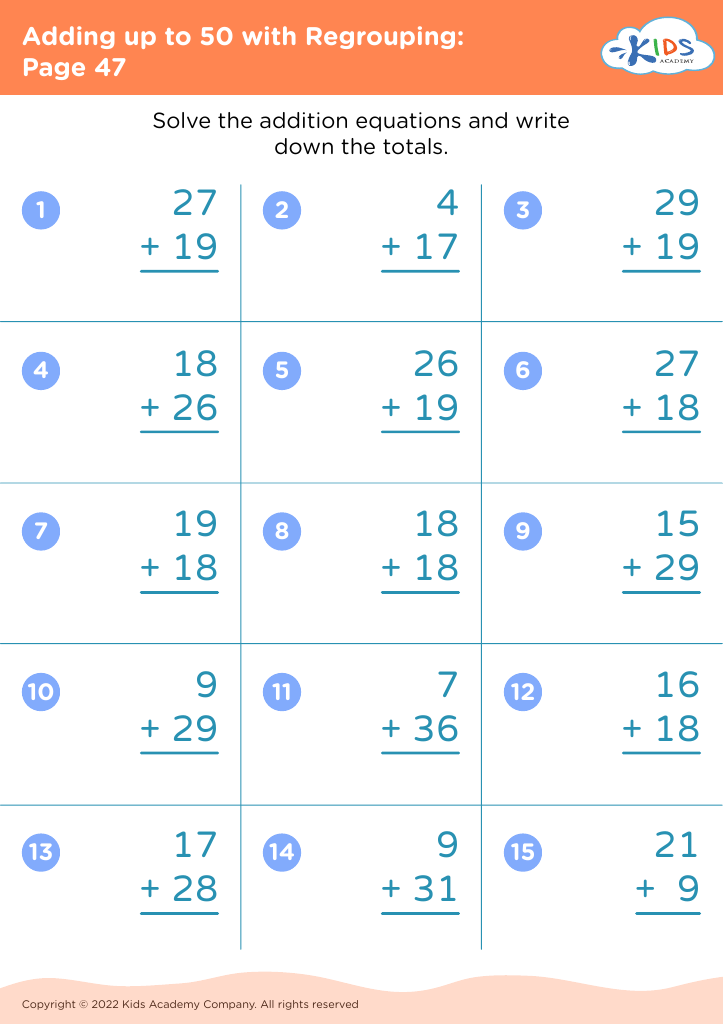
Adding up to 50 with Regrouping: Page 47
Worksheet
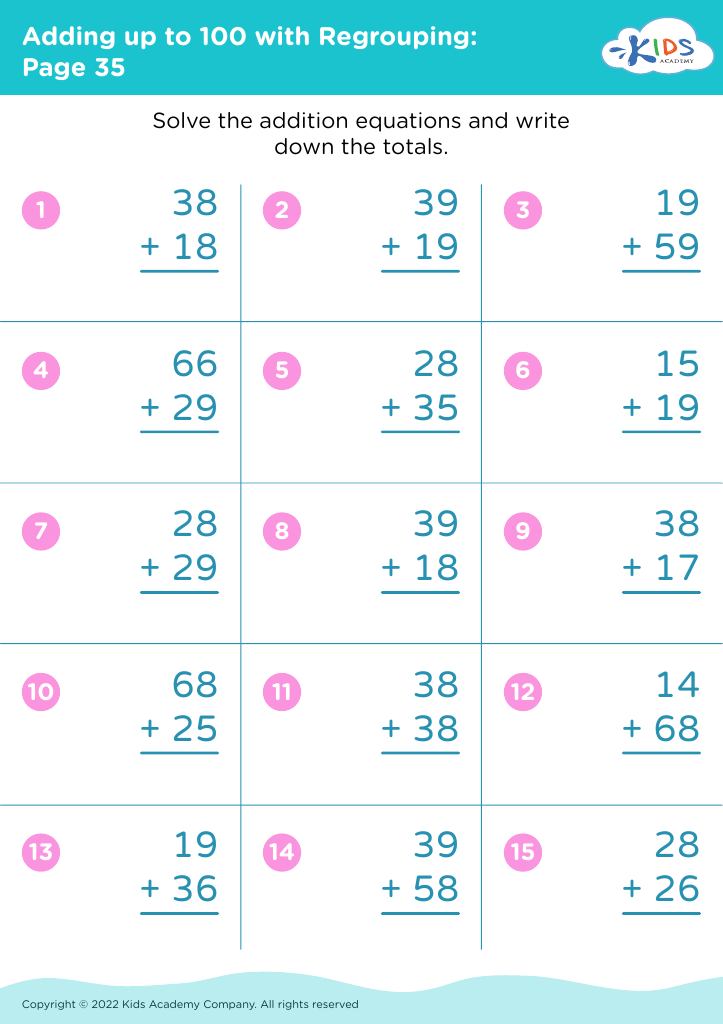
Adding up to 100 with Regrouping: Page 35
Worksheet
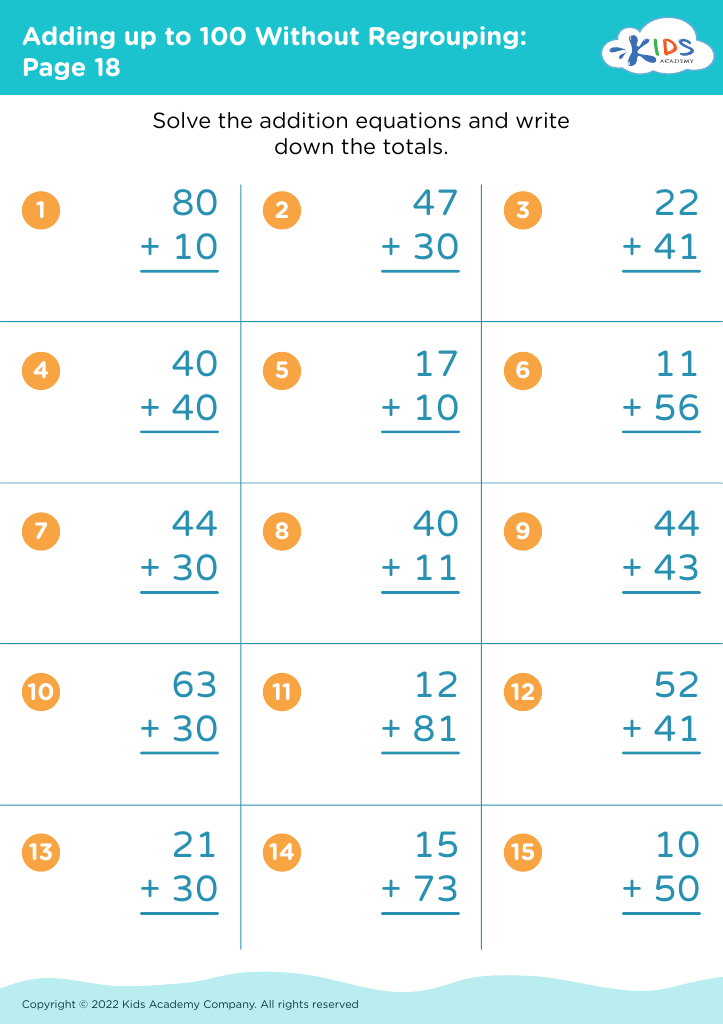
Adding up to 100 Without Regrouping: Page 18
Worksheet
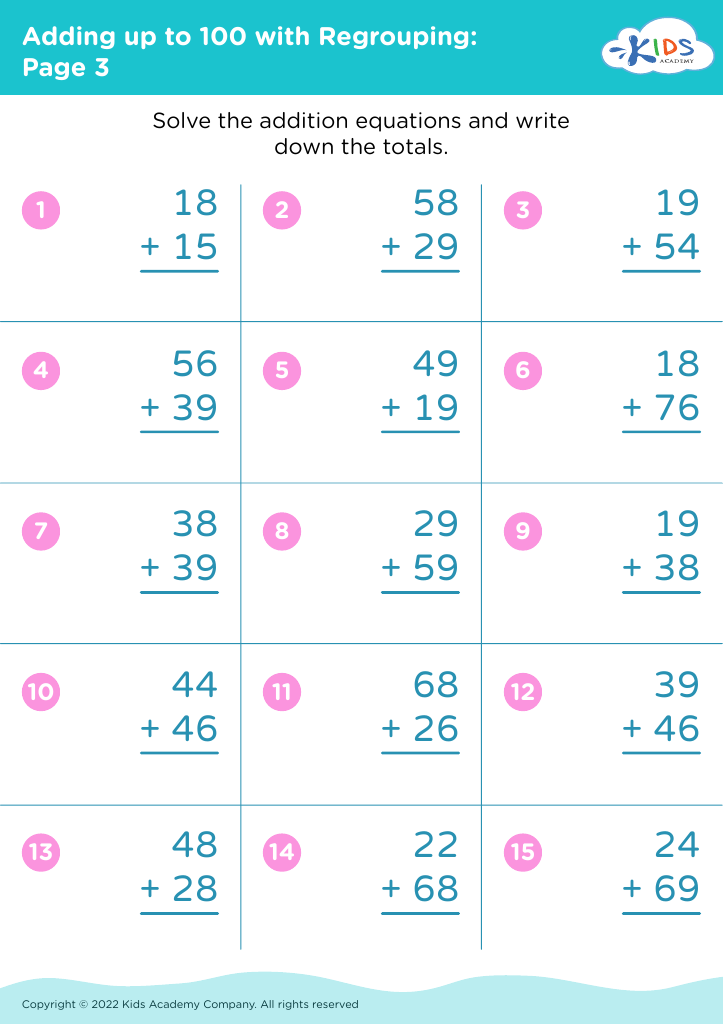
Adding up to 100 with Regrouping: Page 3
Worksheet
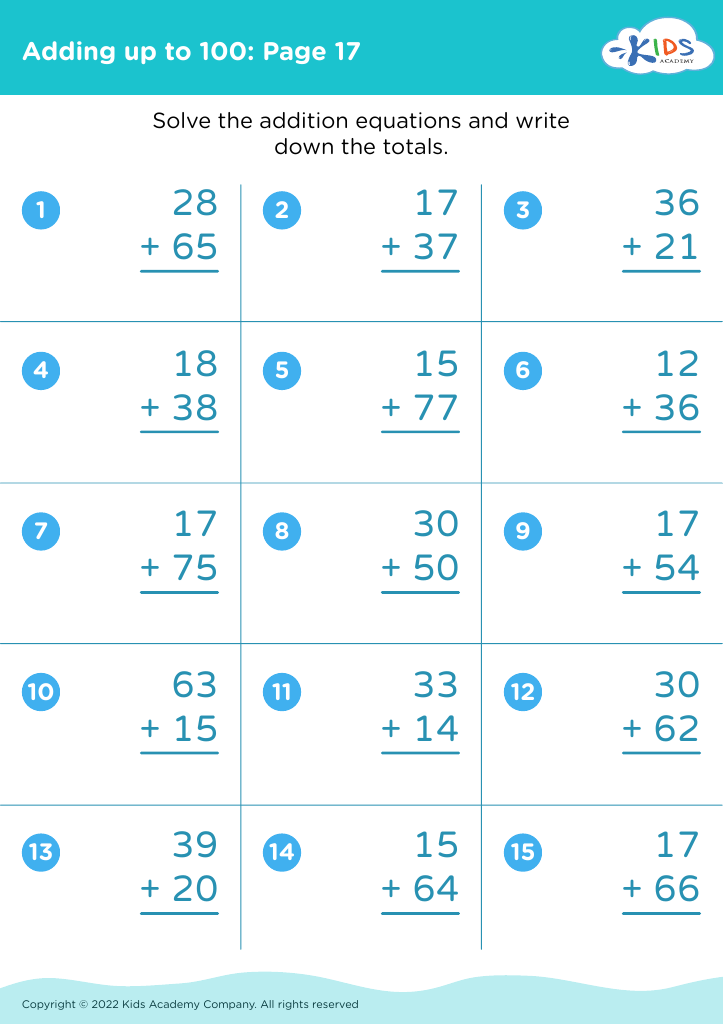
Adding up to 100: Page 17

Adding up to 100: Page 17

Adding up to 100: Page 17
Worksheet
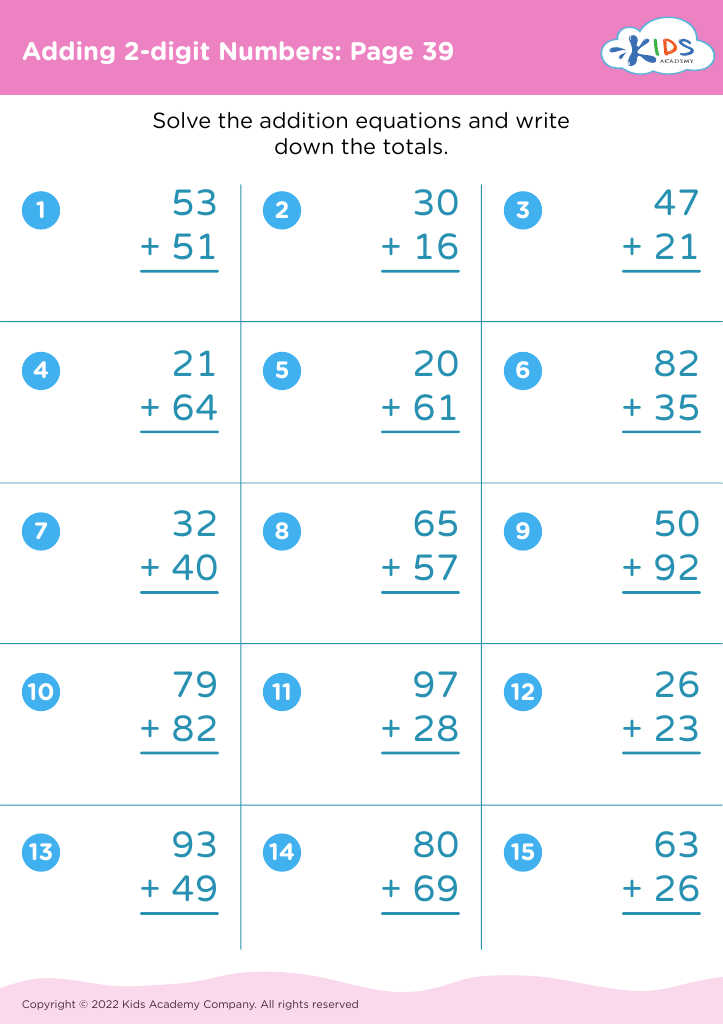
Adding 2-digit Numbers: Page 39

Adding 2-digit Numbers: Page 39

Adding 2-digit Numbers: Page 39
Worksheet
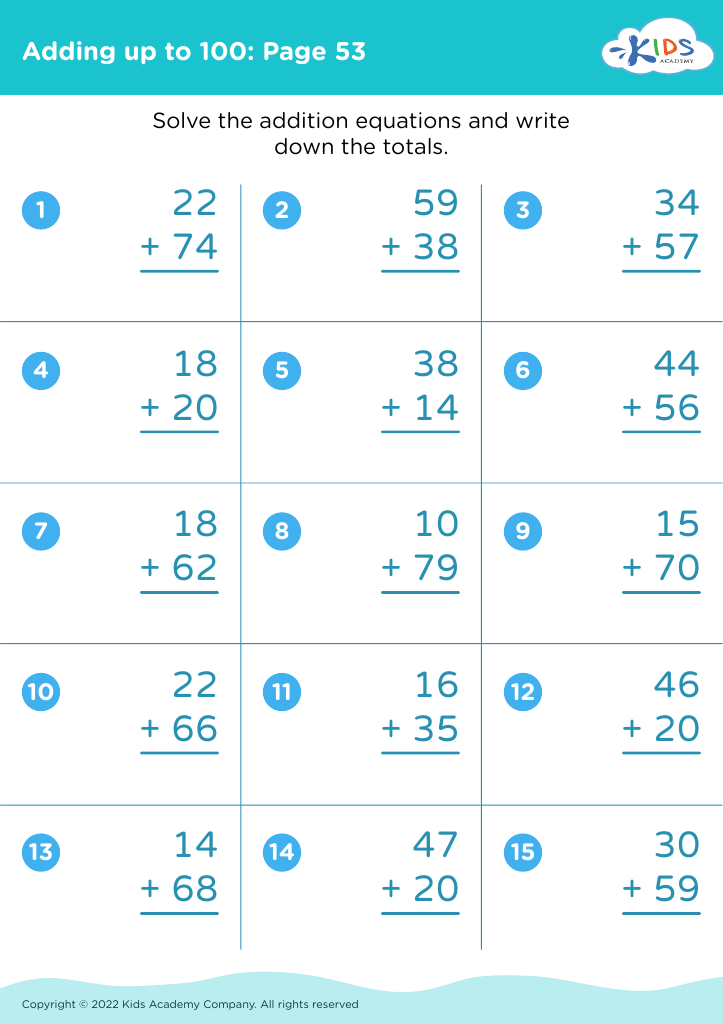
Adding up to 100: Page 53

Adding up to 100: Page 53

Adding up to 100: Page 53
Worksheet
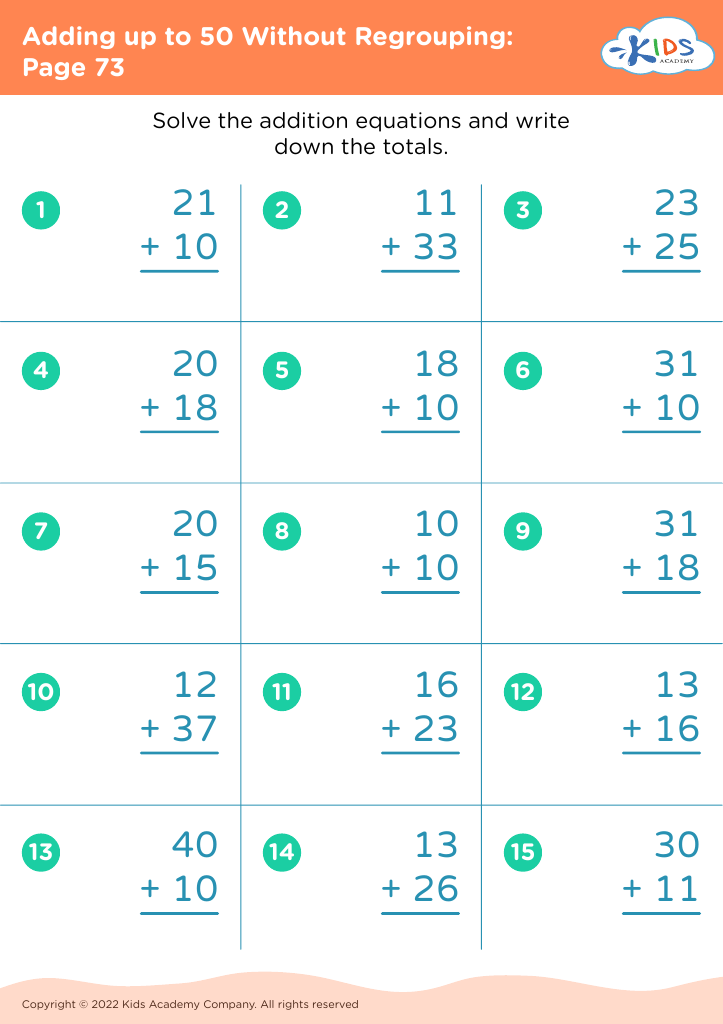
Adding up to 50 Without Regrouping: Page 73
Worksheet
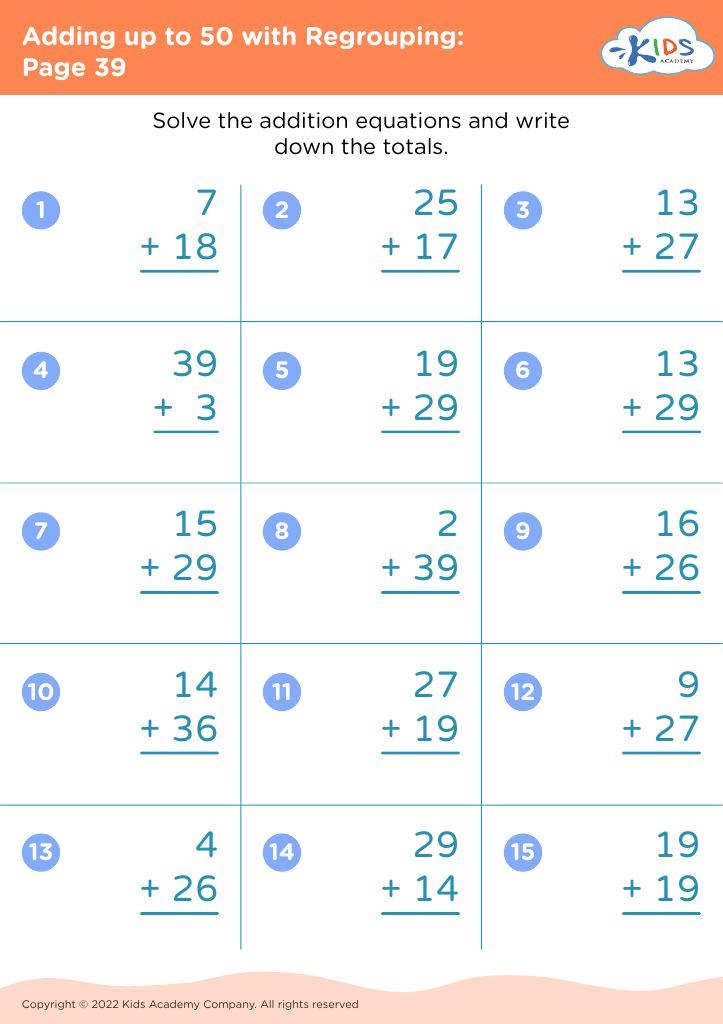
Adding up to 50 with Regrouping: Page 39
Worksheet


Fraction simplification is a crucial skill for 7-year-olds, and parents and teachers should prioritize it for several reasons. First, understanding fractions builds a strong mathematical foundation. At this age, children begin to learn about parts of a whole, making it essential to grasp how fractions work. Simplifying fractions helps them recognize equivalent values and enhances their number sense.

Moreover, mastering fraction simplification enhances problem-solving skills. When children can break down complex fractions into simpler forms, they can tackle more challenging math concepts later, such as addition, subtraction, or multiplication of fractions. This ability fosters confidence and independence in their mathematical abilities.

Additionally, fraction simplification is not just a standalone skill. It is interconnected with real-life applications, such as cooking, sharing, or budgeting. Parents and teachers can illustrate these concepts through practical examples, making learning more relatable and meaningful.

This early exposure to fraction simplification also helps develop critical thinking and reasoning skills, as children learn to analyze and manipulate numbers logically. Overall, emphasizing fraction simplification in early education prepares children for future success in math and enriches their everyday decision-making, making it essential for lifelong learning.