Mathematics skills Math Worksheets for 7-Year-Olds
3 filtered results
-
From - To
Unlock your child’s potential with our engaging Mathematics skills worksheets designed specifically for 7-year-olds! These thoughtfully crafted resources help young learners enhance their understanding of essential math concepts, including addition, subtraction, basic multiplication, and problem-solving strategies. Our worksheets cater to diverse learning styles and promote confidence in mathematics while making learning fun. Each activity encourages critical thinking and fosters a solid mathematical foundation, preparing your child for future success. Explore our comprehensive collection of printable worksheets at Kids Academy and watch your child thrive as they master foundational math skills with ease and joy! Perfect for home and classroom use!
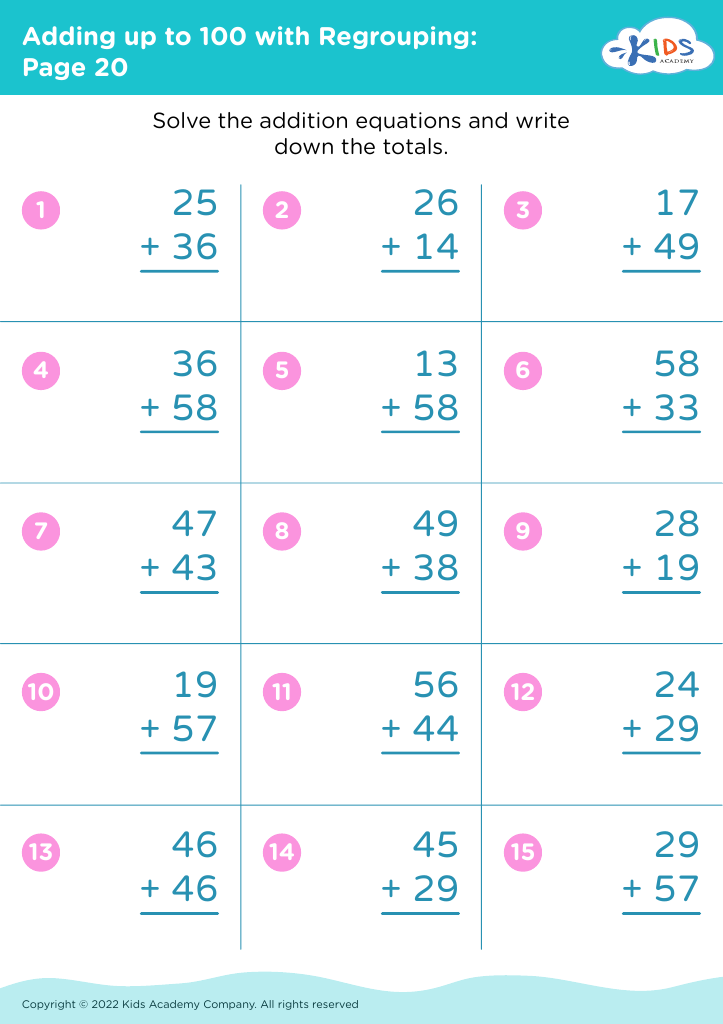
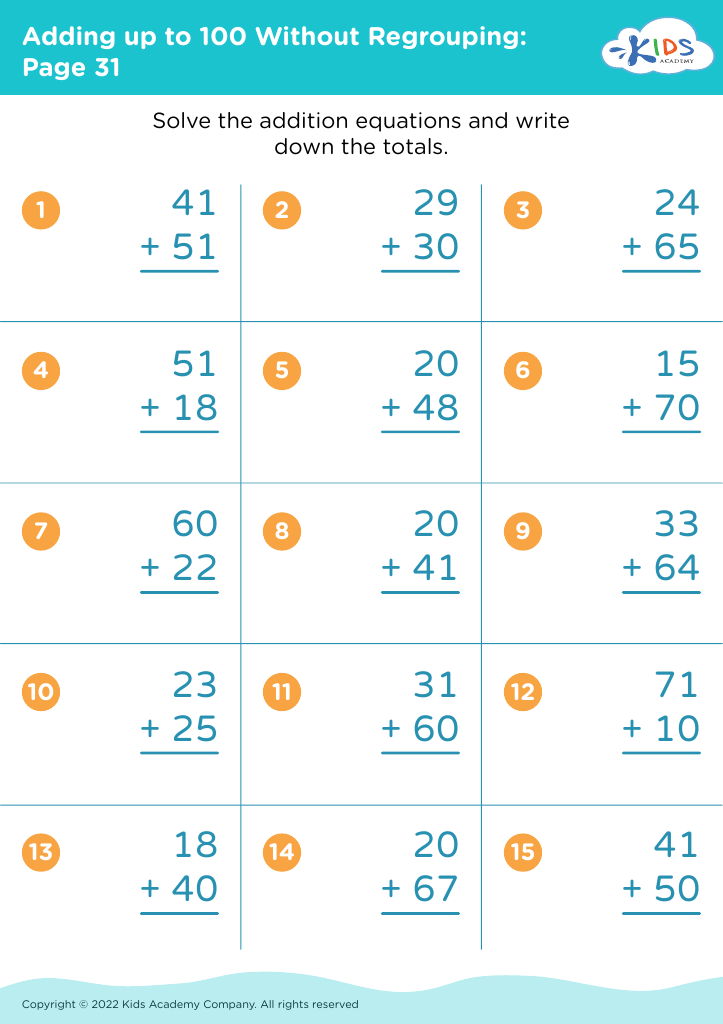
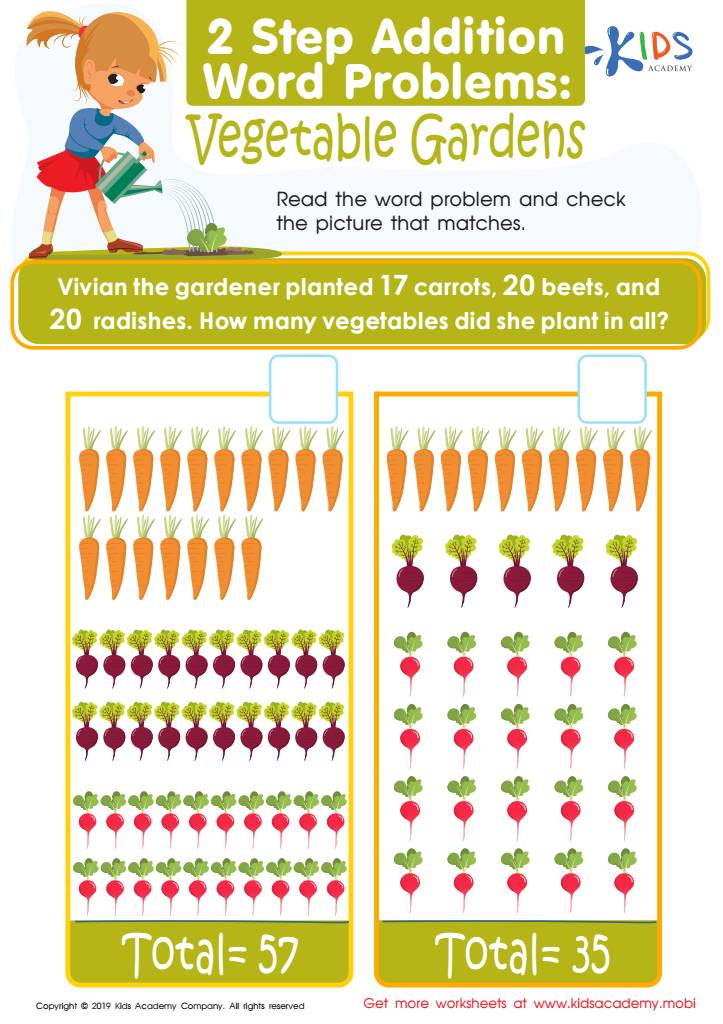
Vegetable Gardens Worksheet
 Assign to My Students







Mathematics skills for 7-year-olds are crucial, laying the foundation for a child’s future academic success and everyday problem-solving abilities. At this age, children begin to develop logical reasoning, critical thinking, and analytical skills. Mastering basic math concepts such as addition, subtraction, and number sense helps foster confidence and positive attitudes towards learning.
Parents and teachers should care about these skills because they extend beyond the classroom. Math literacy supports children in making informed decisions, managing finances, and approaching challenges practically. Engaging with math also cultivates a strong understanding of patterns and relationships, crucial for other subjects like science and technology.
Moreover, early proficiency in math has been linked to improved educational outcomes in later grades and enhances a child's self-esteem. When children struggle with these foundational skills, their confidence may wane, potentially leading to math anxiety and a negative attitude toward schooling.
It is vital for parents and educators to encourage math exploration at home and school, using games, practical activities, and real-life examples. By prioritizing math skills at this age, we nurture a generation of critical thinkers primed for lifelong learning and success in an increasingly complex world.








