Practice writing numbers Math Worksheets for 7-Year-Olds
6 filtered results
-
From - To
Enhance your 7-year-old’s numerical skills with our engaging “Practice Writing Numbers” math worksheets! Specially designed to make learning fun, these worksheets help young learners confidently master writing numbers. Perfect for developing fine motor skills and number recognition, each sheet offers traceable numbers and interactive activities that build a strong math foundation. Ideal for both classroom and home settings, our worksheets support gradual learning, ensuring kids enjoy a seamless transition from elementary math concepts to more advanced topics. Give your child a head start with these beautifully illustrated, easy-to-follow practice sheets from Kids Academy!
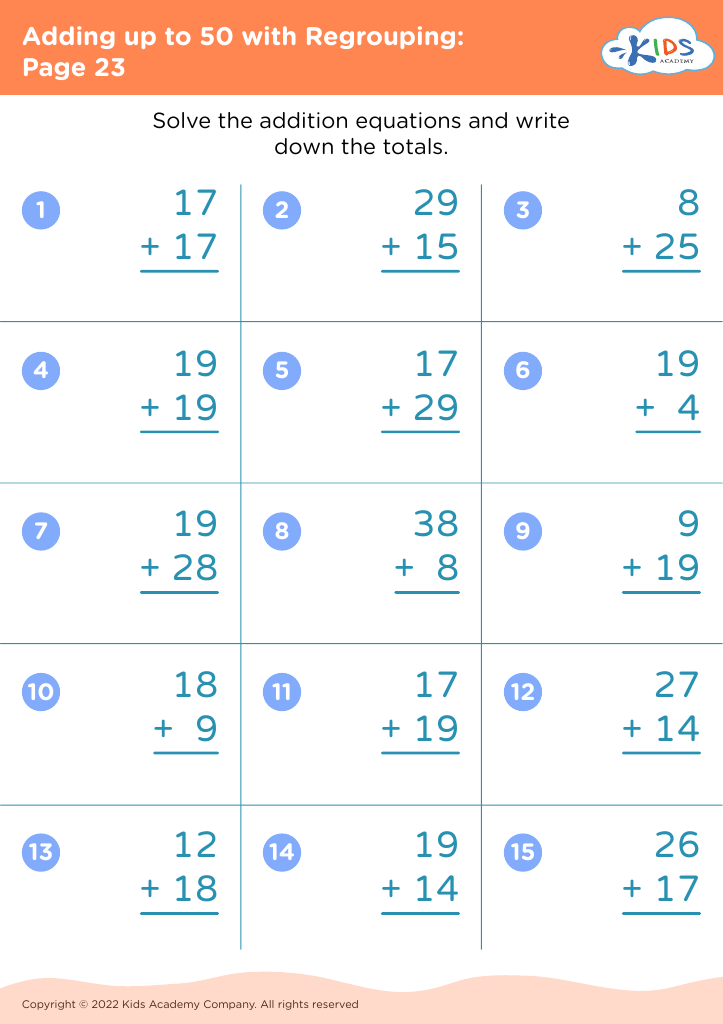
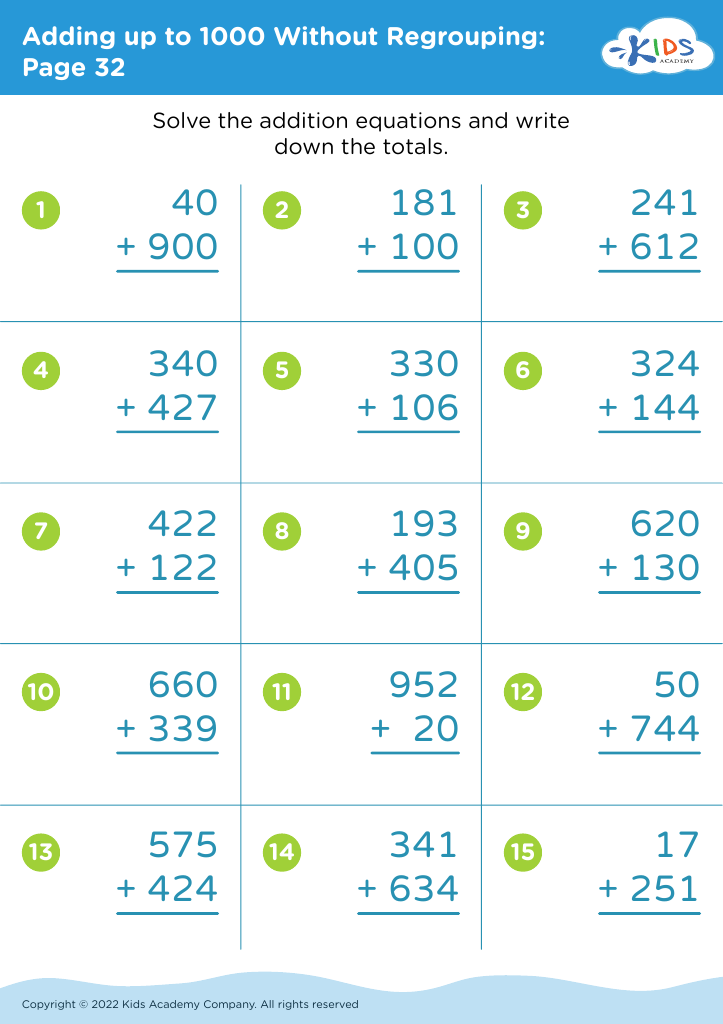
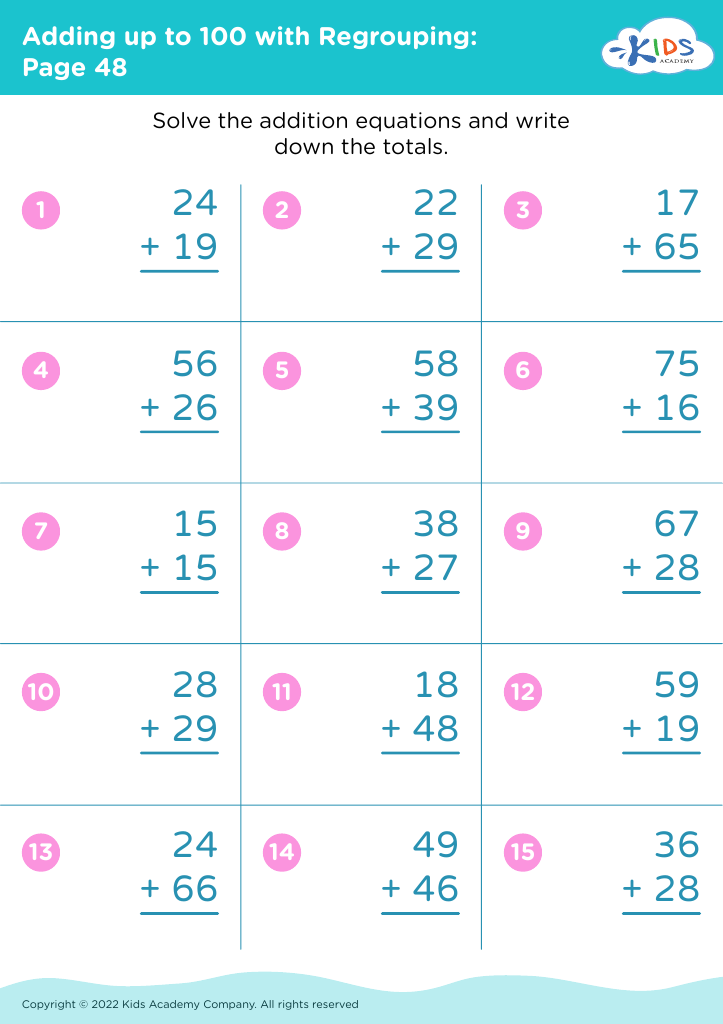
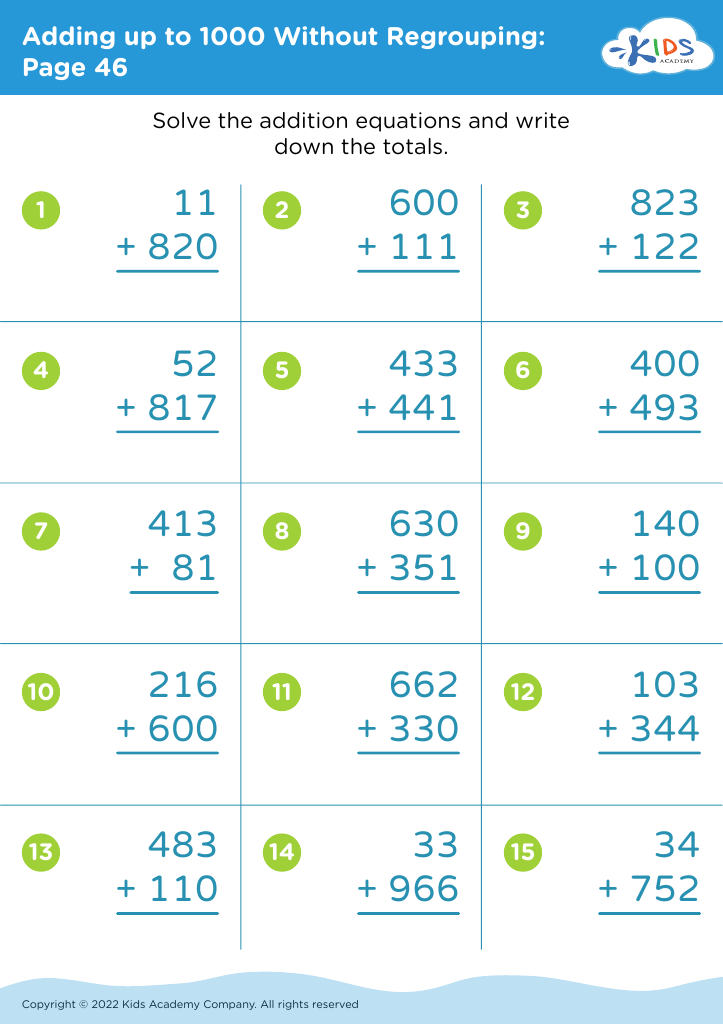
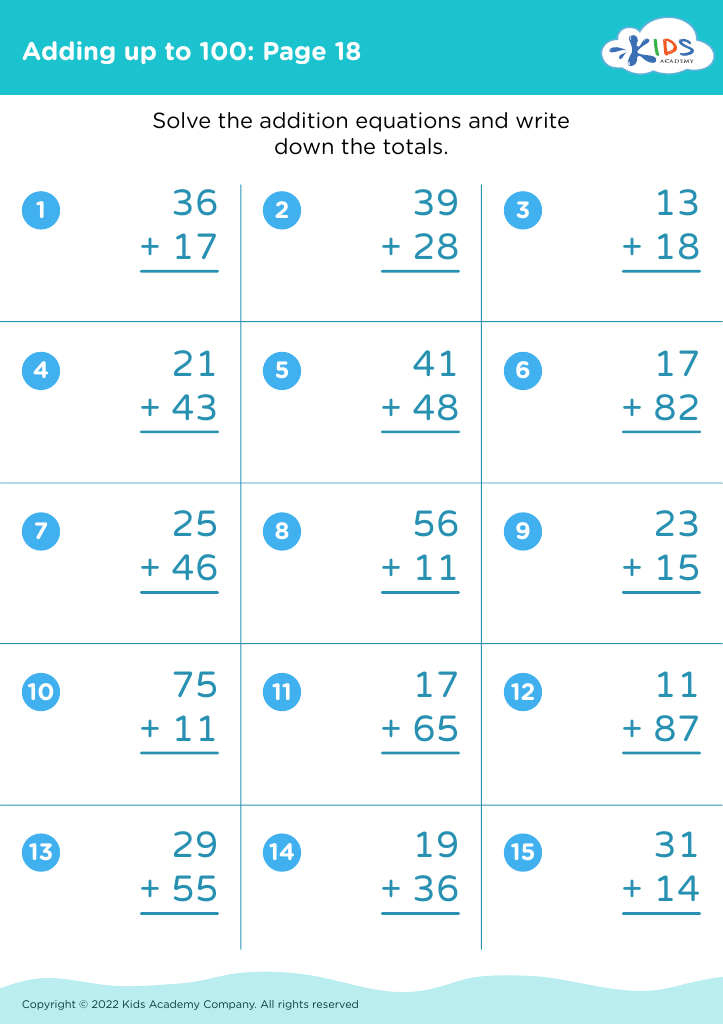
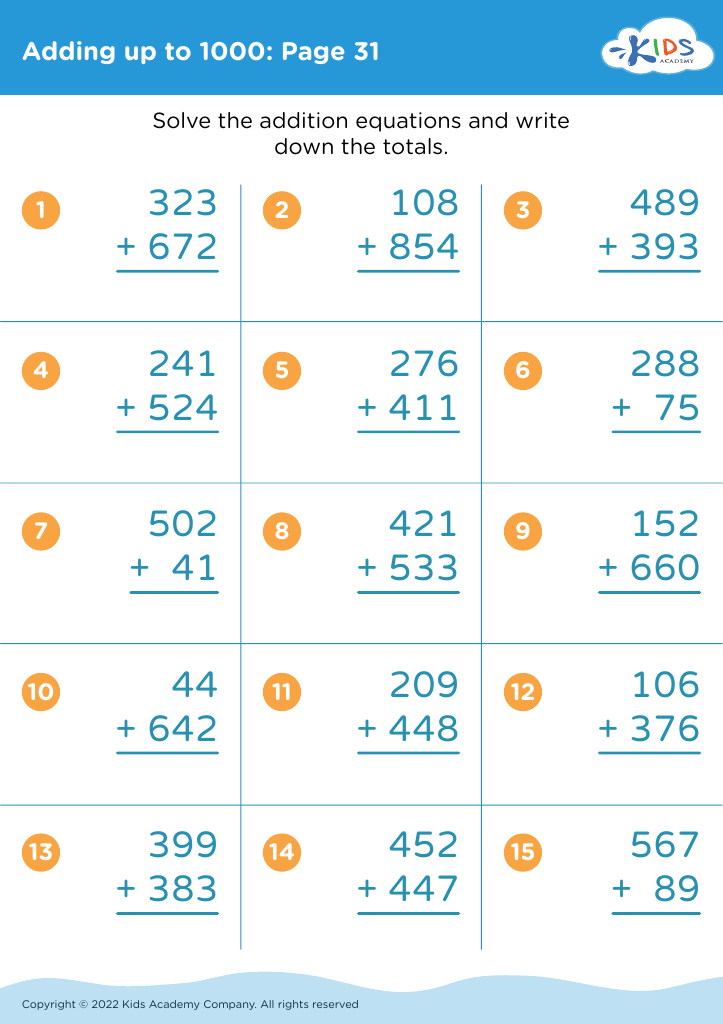








Practicing writing numbers is crucial for 7-year-olds, as it forms the foundation of their mathematical education and cognitive development. At this age, children are transitioning from simple counting to more complex arithmetic concepts, and being able to write numbers clearly and correctly is vital for understanding and communicating these concepts.
Firstly, consistent practice helps to reinforce number recognition, aiding in the development of numerical fluency. When children can quickly and accurately identify and write numbers, they are better equipped to tackle addition, subtraction, and eventually, more advanced operations without getting confused or making errors.
Secondly, writing numbers enhances fine motor skills and hand-eye coordination. Mastery of number formation supports handwriting skills overall, which are essential for clear written communication across all subjects.
Moreover, working on number writing exercises builds confidence. Children take pride in their ability to correctly form and use numbers, encouraging a positive attitude towards math. This proactive engagement is critical; a positive early math experience can foster a lifelong interest and proficiency in the subject.
Finally, teachers and parents play a pivotal role in this learning process. By providing encouragement and resources, they ensure that children are better prepared for academic challenges ahead, ultimately leading to improved educational outcomes. Therefore, nurturing this fundamental skill sets the groundwork for future success in math and beyond.








