Understanding number relationships Math Worksheets for 7-Year-Olds
5 filtered results
-
From - To
Explore our collection of "Understanding Number Relationships Math Worksheets for 7-Year-Olds," designed to promote mathematical proficiency and critical thinking. These engaging worksheets help young learners grasp number bonds, place values, sums, differences, and pattern recognition, catering specifically to second grade curriculum standards. Vibrant visuals and interactive activities make learning a fun adventure, ensuring children stay motivated and confident as they build foundational math skills. Ideal for both classroom and home use, these resources support educators and parents in providing targeted practice to enhance their child’s understanding of essential math concepts. Join us in making math mastery enjoyable!
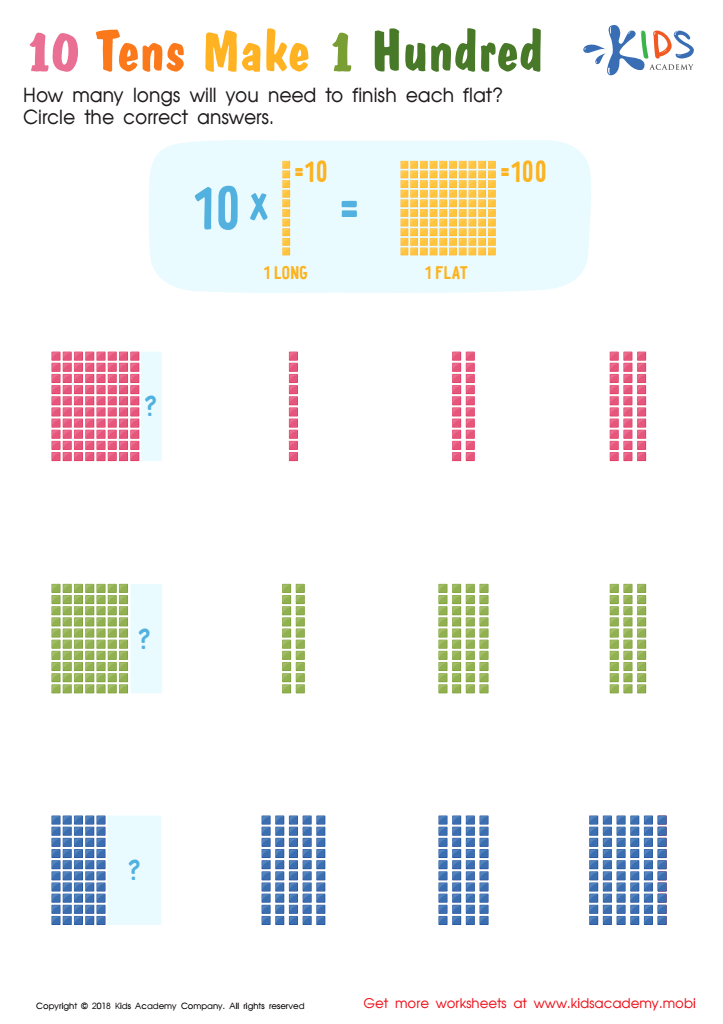
10 Tens Make 1 Hundred Worksheet
 Assign to My Students
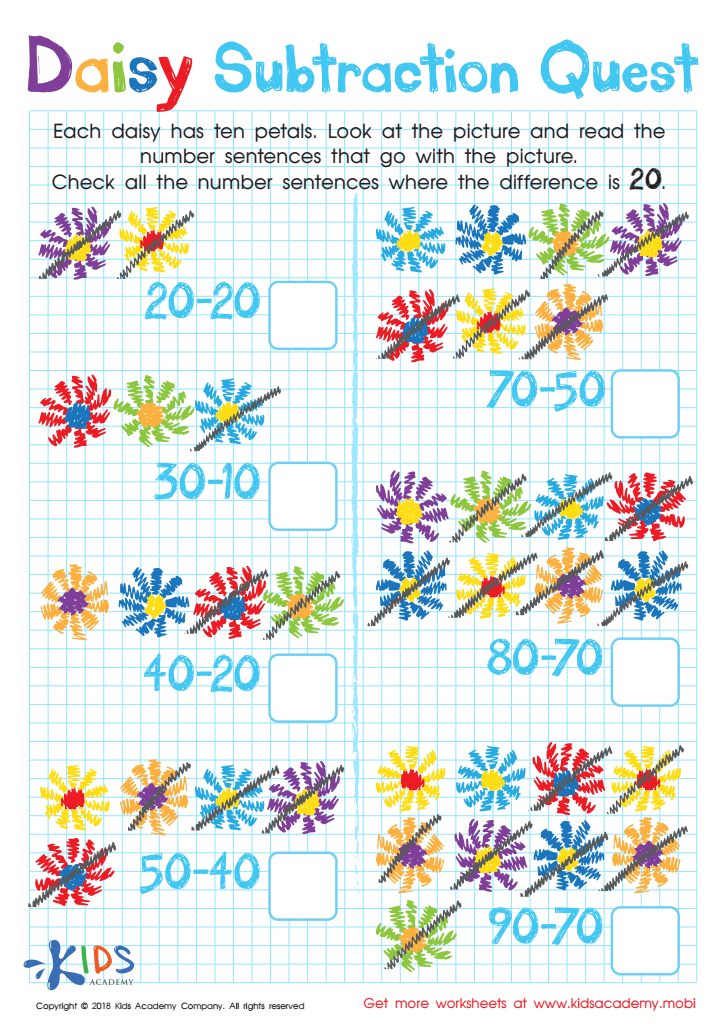
Daisy Subtraction Quest Worksheet
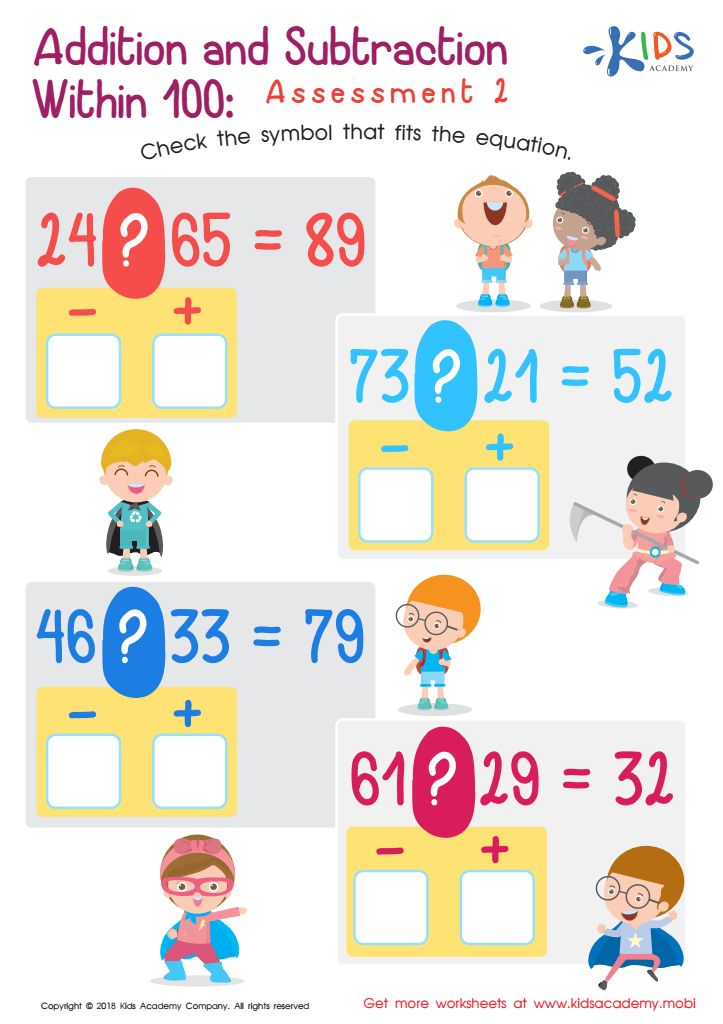
Addition and Subtraction Within 1: Assessment 2 Worksheet
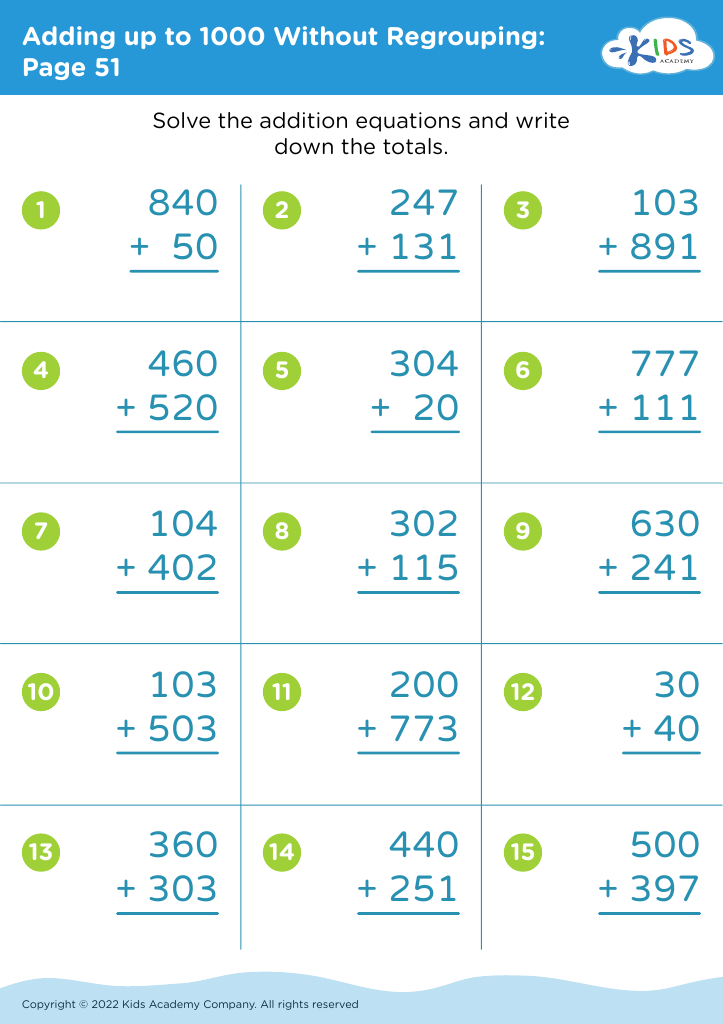


%20(1).jpg)




Understanding number relationships in math is crucial for 7-year-olds as it lays the foundation for more advanced mathematical concepts and problem-solving abilities. At this age, children transition from basic counting to recognizing patterns, comparisons, and the value of numbers in various contexts. Number relationships involve understanding how numbers interact, such as through addition, subtraction, and recognizing number families.
Parents and teachers should care about fostering this understanding because it enhances a child's numerical fluency and confidence. Grasping number relationships allows children to make sense of the math they encounter daily, whether in the classroom, during play, or in real-life situations such as measuring ingredients in a recipe or figuring out change at a store. Additionally, this foundational knowledge enables children to develop critical thinking skills and logical reasoning.
Without a strong grasp of number relationships, children may struggle with more complex mathematical operations as they progress through their education. Hence, dedicated effort from parents and teachers to support a child's learning with interactive games, practical examples, and consistent practice is invaluable. By developing a solid understanding of number relationships, children build a positive relationship with math, setting the stage for continued academic success and lifelong learning.








