Counting practice Reading Non-Fiction Worksheets for 7-Year-Olds
3 filtered results
-
From - To
Unlock your child's potential with our engaging Counting Practice Reading Non-Fiction Worksheets, designed specifically for 7-year-olds! These worksheets blend reading comprehension with essential counting skills, making learning both fun and educational. Children will explore intriguing non-fiction texts while practicing their counting abilities, enhancing their literacy and numeracy skills simultaneously. Each worksheet encourages critical thinking, improves vocabulary, and deepens understanding through real-world contexts. Perfect for both classroom and home learning, our resources foster a lifelong love of reading and learning. Help your child thrive academically while discovering the fascinating world around them—get started today with our easy-to-use worksheets!
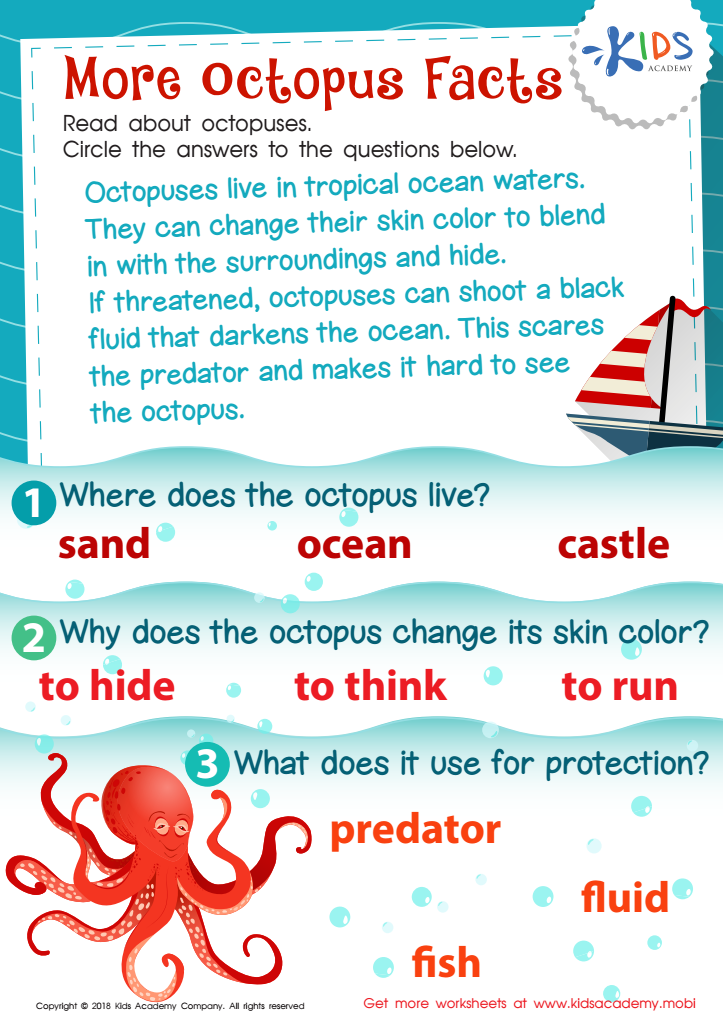
More Octopus Facts Worksheet
 Assign to My Students
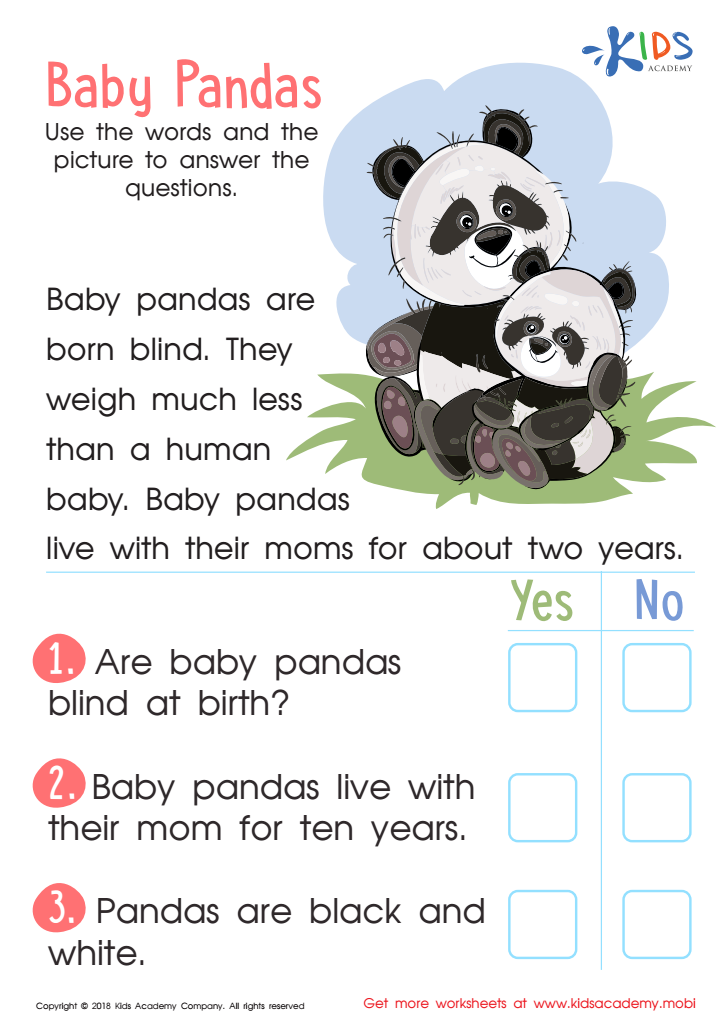
Baby Pandas Worksheet
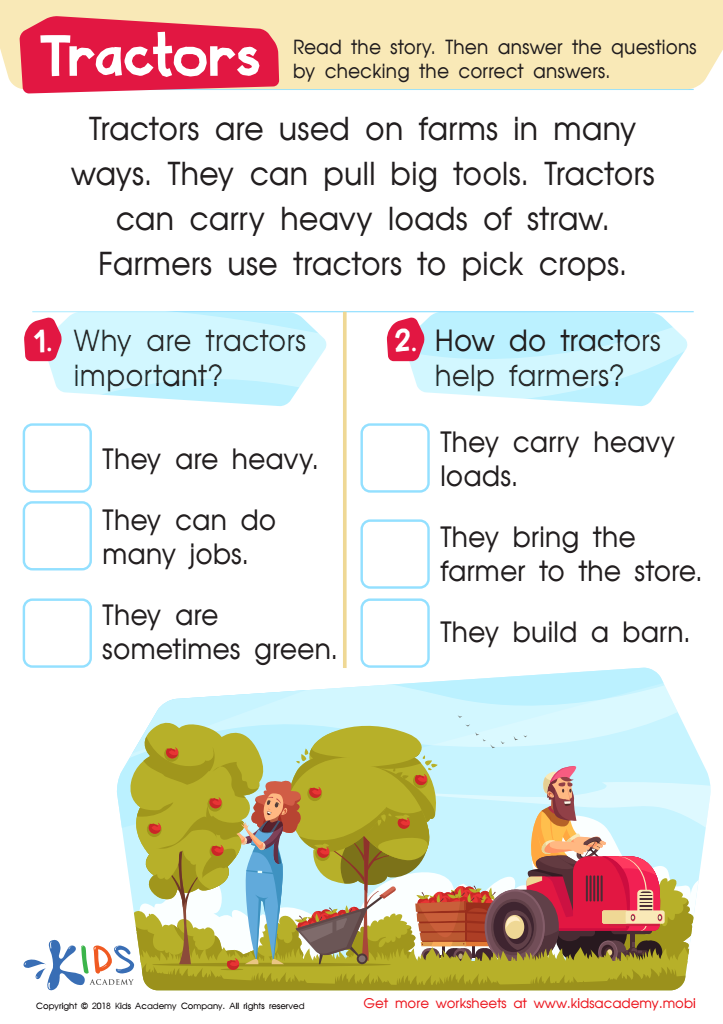
Tractors Worksheet








Counting practice and reading non-fiction are essential components of a 7-year-old's development that parents and teachers should prioritize. At this age, children are rapidly developing their cognitive skills, and both practices play a vital role in their academic foundation.
Counting practice reinforces numerical literacy, enabling children to understand basic arithmetic and develop critical problem-solving skills. Mastery of counting lays the groundwork for more complex mathematical concepts in later years. Additionally, engaging in counting activities promotes essential skills such as logical reasoning and critical thinking.
On the other hand, reading non-fiction exposes children to various subjects, broadening their vocabulary and comprehension skills. Non-fiction texts foster curiosity and knowledge about the world, making learning more engaging and relatable. By encountering real-world topics, children learn to connect information and develop analytical skills.
Moreover, combining both practices helps to create a well-rounded educational experience. For example, counting can be incorporated into non-fiction reading through measurement, statistics, or data representation, making subjects more tangible and exciting.
In summary, prioritizing counting practice and non-fiction reading cultivates essential life skills, fosters a lifelong love of learning, and prepares children for future academic challenges. Parents and teachers play a crucial role in supporting this balanced approach to education.








