Understanding life cycles Reading Non-Fiction Worksheets for 7-Year-Olds
3 filtered results
-
From - To
Discover the fascinating world of life cycles with our "Understanding Life Cycles" reading non-fiction worksheets, specially designed for 7-year-olds! These engaging worksheets take young learners on a journey through the stages of various organisms, helping them grasp essential biological concepts. Each activity encourages critical thinking and reinforces reading comprehension skills, making learning enjoyable and interactive. As students explore the fascinating transformations of plants, insects, and animals, they will develop a deeper understanding of nature and the interconnectedness of life. Enhance your classroom experience with these fun, informative resources and inspire a love for science in your students today!
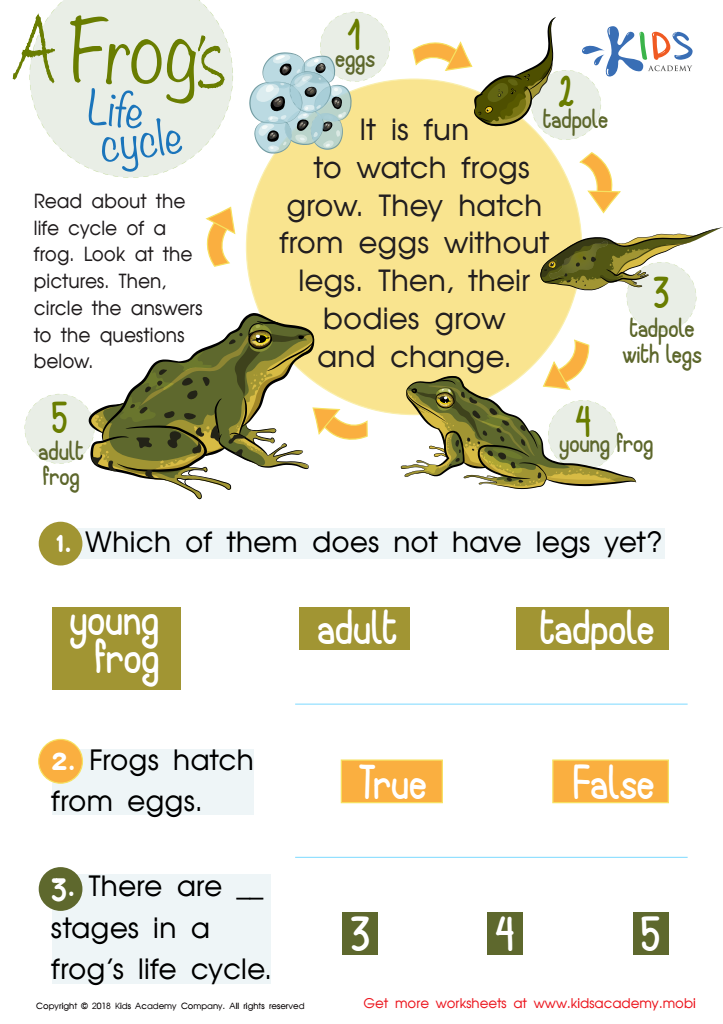
A Frog’s Life Cycle Worksheet
 Assign to My Students
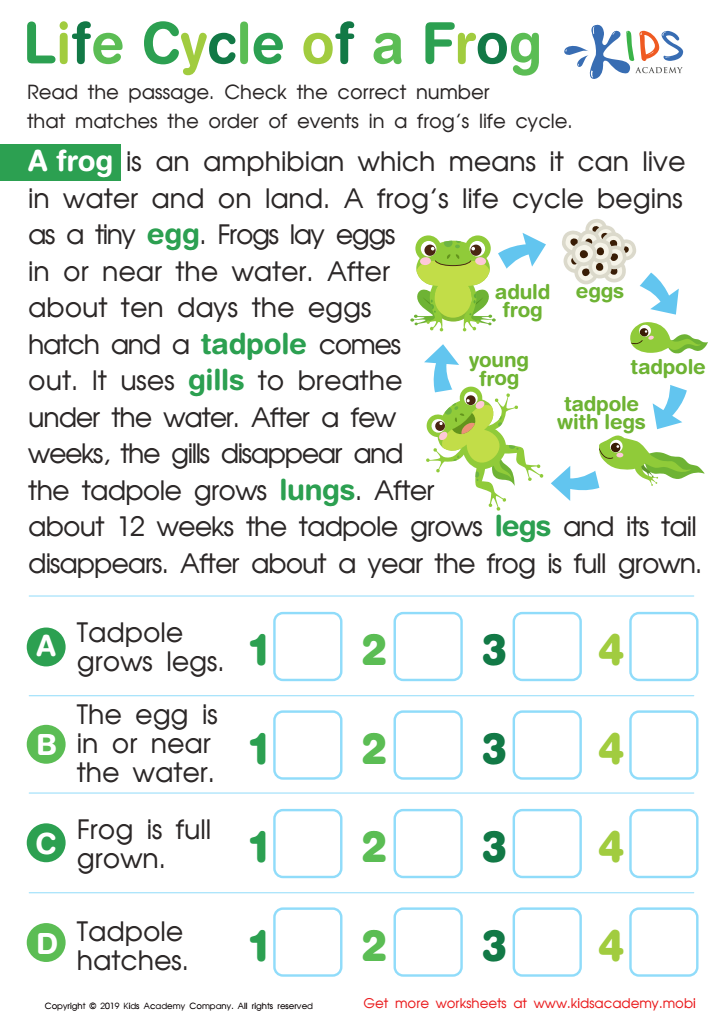
Life Cycle of a Frog Worksheet
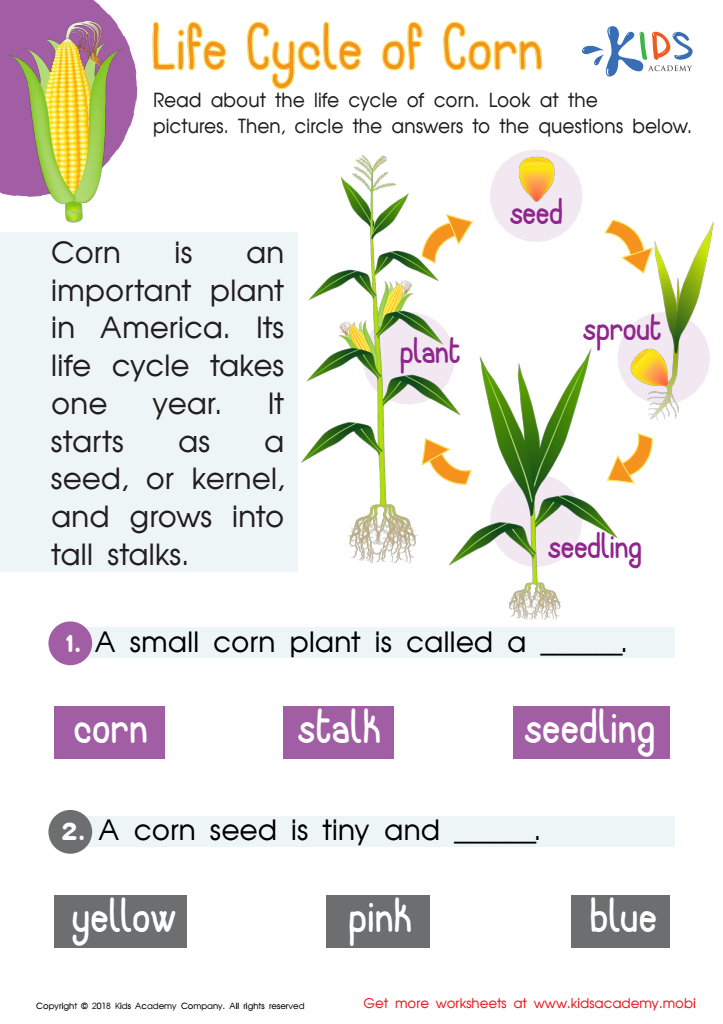
Life Cycle of Corn Worksheet








Understanding life cycles is crucial for 7-year-olds, and reading non-fiction about this topic enriches their education. At this developmental stage, children are highly curious and eager to explore the world around them. Non-fiction texts provide factual information, allowing them to discover the stages of life for various organisms—plants, insects, animals, and humans alike.
By engaging with this material, children develop critical thinking skills as they compare and contrast different life cycles. These lessons foster an appreciation for nature and instill a sense of responsibility for the environment. Moreover, recognizing life cycles encourages empathy, as children understand that all living things have interconnected lives.
For parents and teachers, promoting non-fiction reading about life cycles supports literacy development, enhancing vocabulary and comprehension skills. It creates opportunities for discussions that stimulate curiosity and inquiry. These conversations pave the way for hands-on projects, like growing plants or observing insects, making learning more dynamic and relevant.
Ultimately, fostering an understanding of life cycles in young children not only enhances their scientific knowledge but also nurtures a lifelong love for learning and a respect for the environment, essential qualities in today’s world.








