Practice writing numbers Worksheets for 9-Year-Olds
3 filtered results
-
From - To
Enhance your 9-year-old's number writing skills with our engaging practice worksheets! Designed to make learning fun, these resources help children develop their handwriting and improve number recognition. Our worksheets feature a variety of exercises, from tracing and completing missing numbers to writing them independently. As kids practice, they gain confidence in numeracy and fine motor skills. Ideal for both classroom and home use, these worksheets cater to different learning styles, ensuring every child can thrive. Unlock your child's potential in math with our expertly crafted writing number worksheets – a perfect tool for mastering numbers while enjoying the learning process!
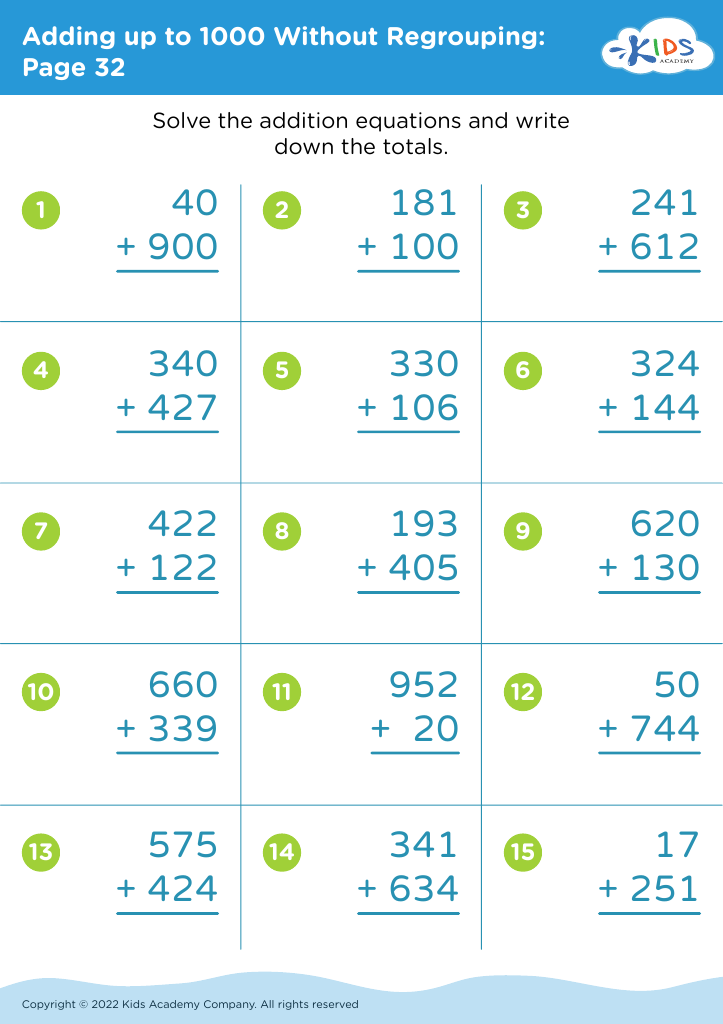
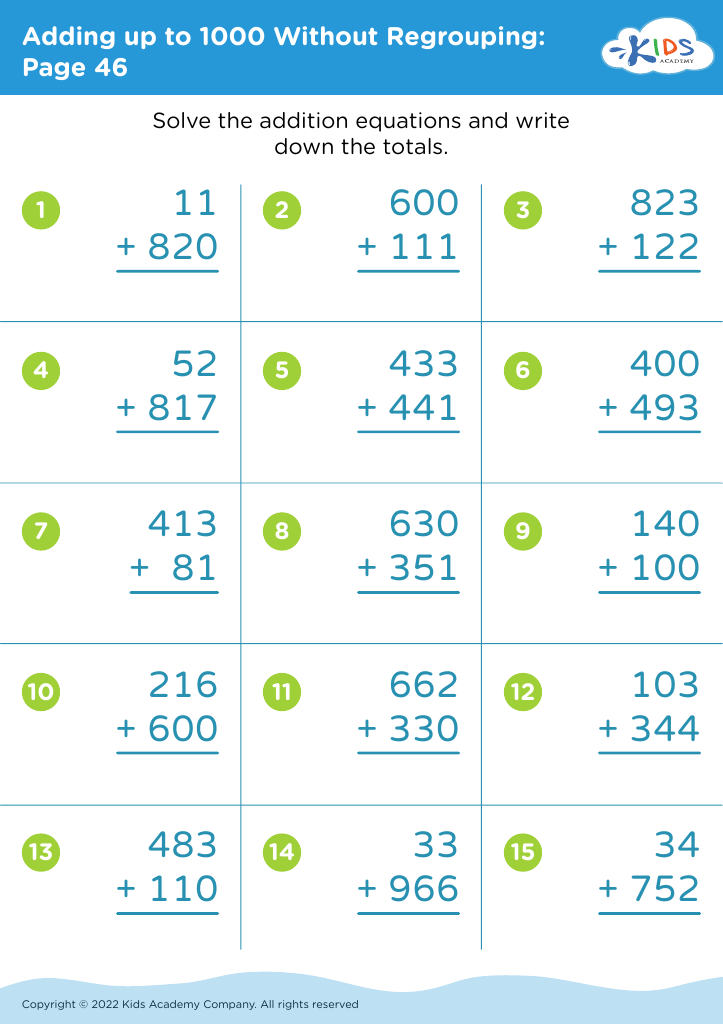
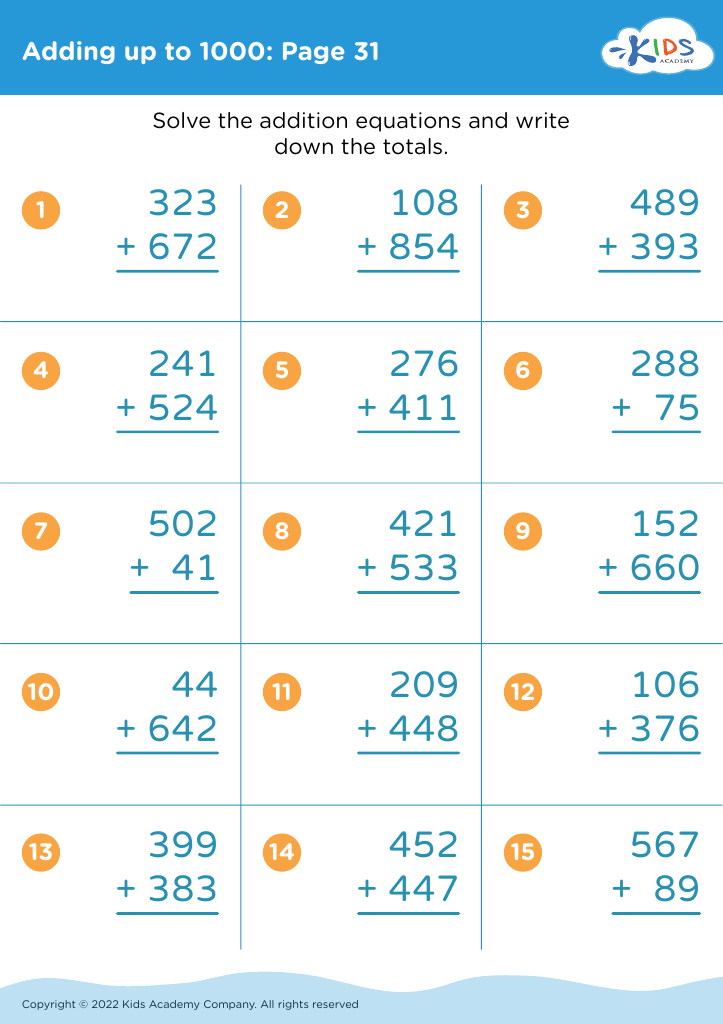








Practicing writing numbers is crucial for 9-year-olds as it lays the foundation for essential mathematical skills and cognitive development. First, this practice enhances fine motor skills, allowing children to develop the dexterity needed for writing and drawing. A solid grasp of number formation is essential for building confidence in math, encouraging children to engage more actively in learning.
Moreover, writing numbers helps reinforce number sense, which is vital for understanding mathematical concepts such as addition, subtraction, multiplication, and division. When children write numbers repeatedly, they develop familiarity with numeric patterns, spatial relationships, and sequencing, which boosts their problem-solving abilities. This is especially important at this age, as many students start exploring more complex mathematical concepts.
Additionally, encouraging regular practice fosters a positive attitude toward math, reducing anxiety and helping children see the subject as accessible and enjoyable. Teachers and parents should actively engage in this practice, offering support and creating a conducive learning environment. When children feel confident in their number writing skills, they are more likely to approach mathematics with enthusiasm, leading to a successful educational journey. Thus, investing time in practicing number writing is key to nurturing future learners and achievers.








