Understanding adjectives Worksheets for 9-Year-Olds
3 filtered results
-
From - To
Welcome to our "Understanding Adjectives Worksheets for 9-Year-Olds"! These engaging and interactive worksheets are designed to help young learners enhance their vocabulary and improve their descriptive writing skills. Through a variety of exercises, children will explore different types of adjectives, such as descriptive, comparative, and superlative forms. By identifying and using adjectives in sentences, students will gain confidence in their language abilities. Our carefully crafted worksheets aim to make learning fun and accessible, perfect for classroom use or at-home study. Discover the world of adjectives and watch as your child's creativity blossoms through thoughtful descriptions!
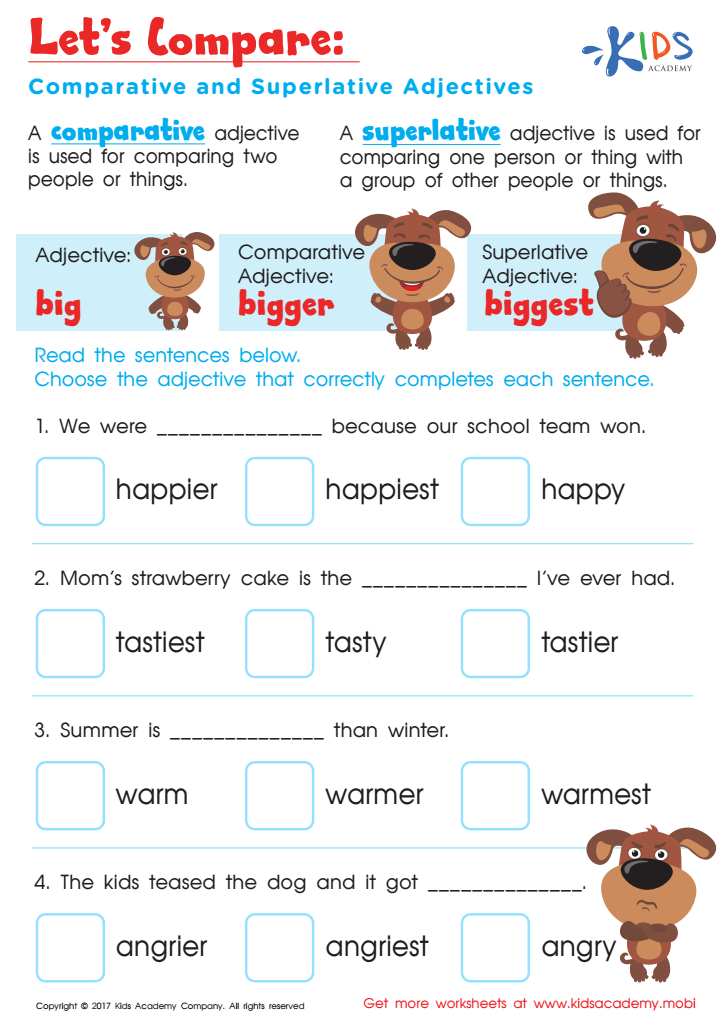
Comparative and Superlative Worksheet
 Assign to My Students
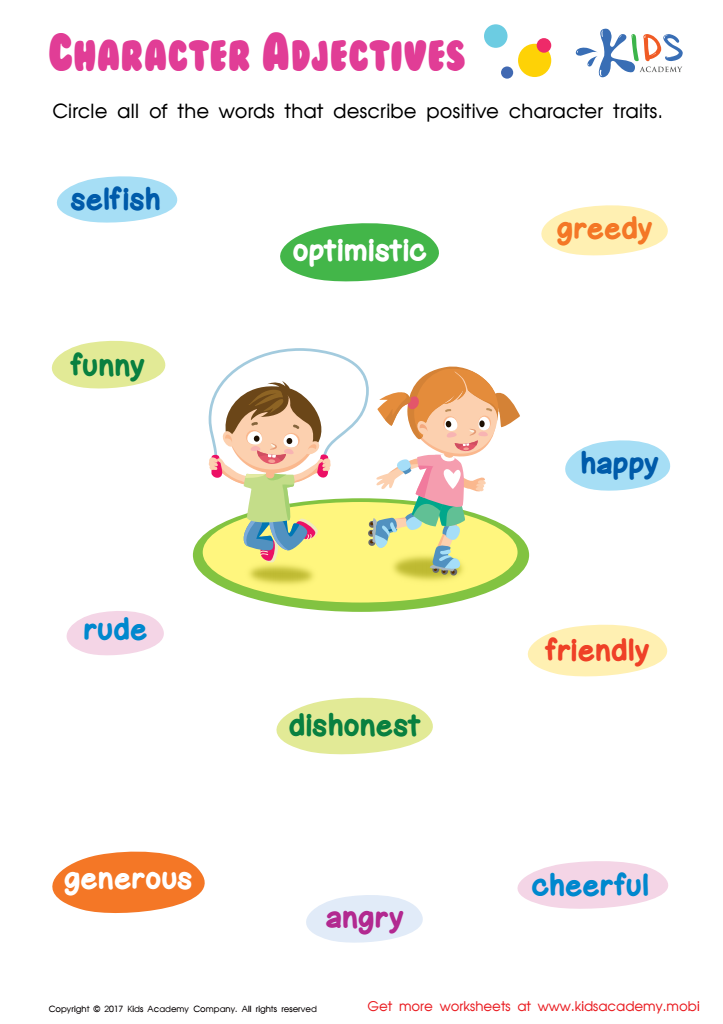
Character Adjectives Worksheet
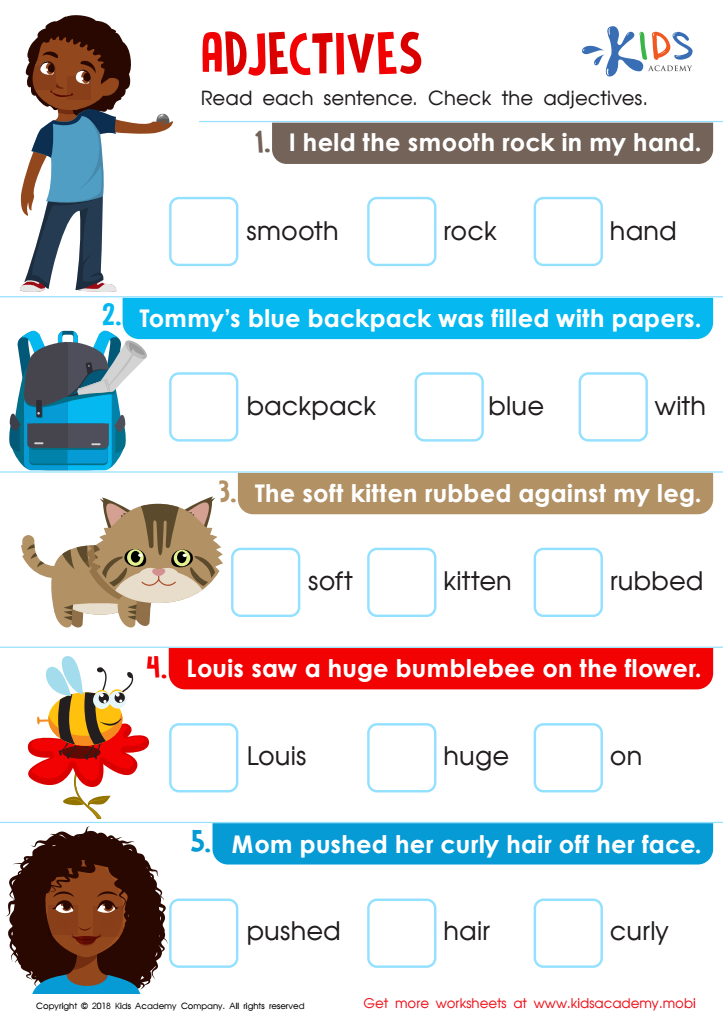
Adjectives Worksheet








Understanding adjectives is crucial for 9-year-olds as it enhances their language skills, making communication more effective and engaging. At this age, children are developing their reading and writing abilities, and adjectives play a significant role in these processes. By learning how to use adjectives, they can more vividly describe people, places, and things, which not only enriches their vocabulary but also helps them express their thoughts and feelings more clearly.
Parents and teachers should care about this because strong descriptive skills contribute to better reading comprehension. When children understand the function of adjectives, they can grasp subtleties in literature, leading to more meaningful discussions and analyses. Furthermore, a command of adjectives fosters creativity; children can paint vivid pictures in their writing, inviting readers into their imaginative worlds.
Moreover, nurturing these skills at this stage can set a solid foundation for future learning. As they grow, the ability to express themselves articulately will empower them in academic settings and in everyday interactions. By encouraging the understanding of adjectives, parents and teachers not only support children’s immediate literacy skills but also equip them with essential tools for lifelong communication.








