Understanding equations Worksheets for 9-Year-Olds
3 filtered results
-
From - To
Unlock the world of mathematics with our "Understanding Equations Worksheets for 9-Year-Olds"! Tailored specifically for young learners, these engaging worksheets help children grasp the basics of equations through fun, interactive activities. Your child will explore number relationships, improve problem-solving skills, and build a solid foundation in algebraic concepts. Featuring a variety of questions that cater to different learning styles, our worksheets encourage critical thinking and foster a love for learning. Whether at home or in the classroom, these resources are perfect for enhancing mathematical understanding and preparing your child for future success. Start their mathematical journey today!
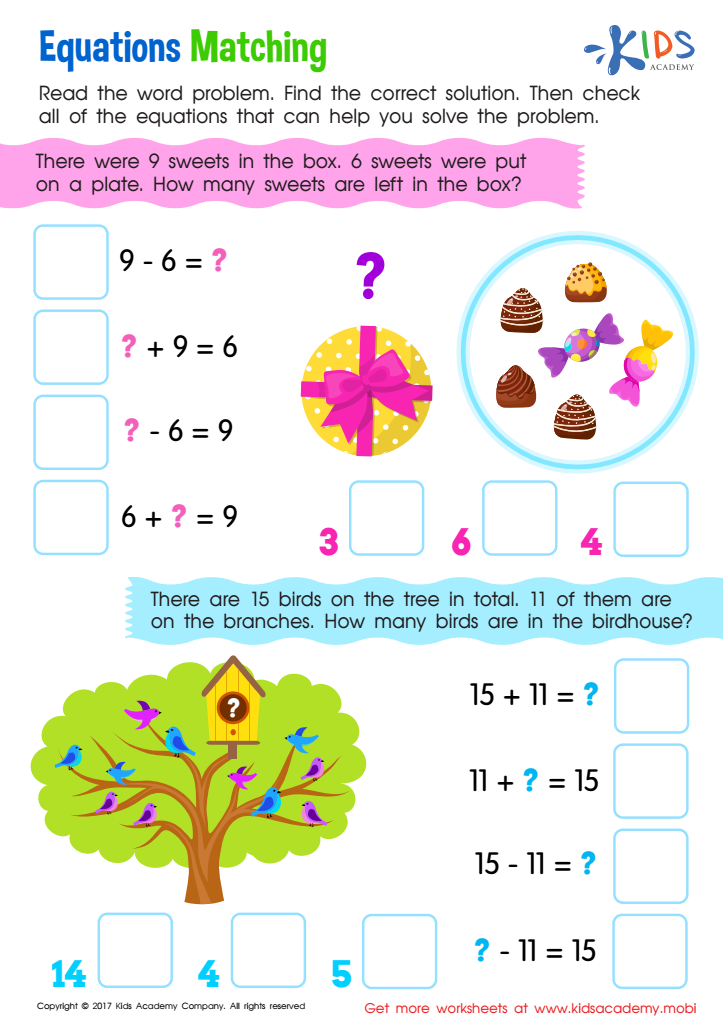
Equations Matching Word Problems Worksheet
 Assign to My Students
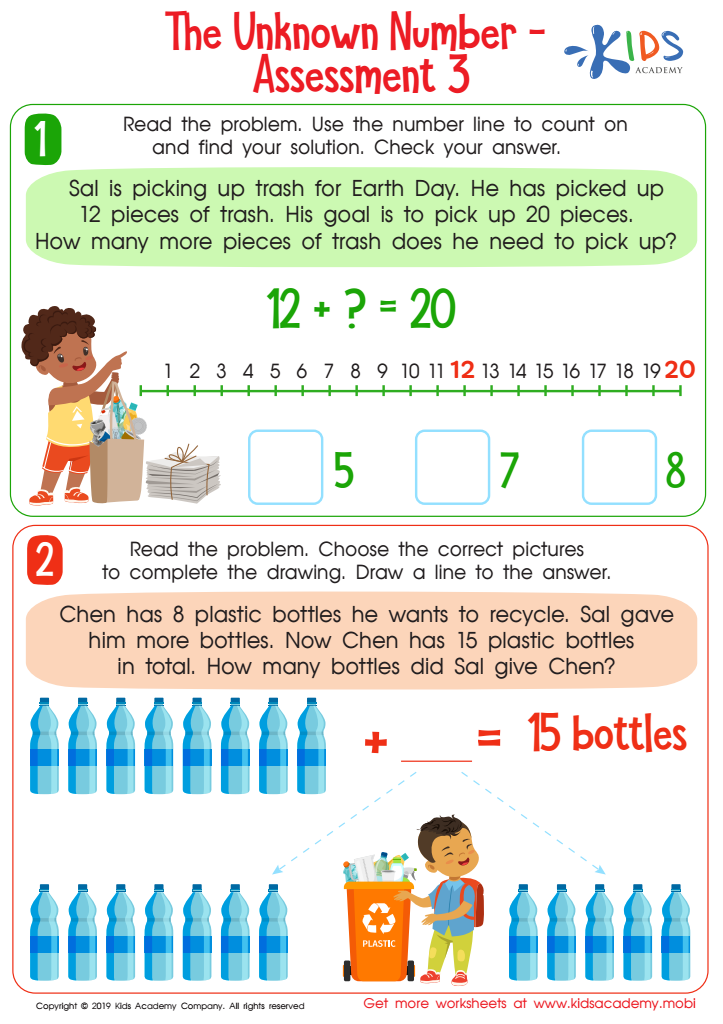
The Unknown Number - Assessment 3 Worksheet
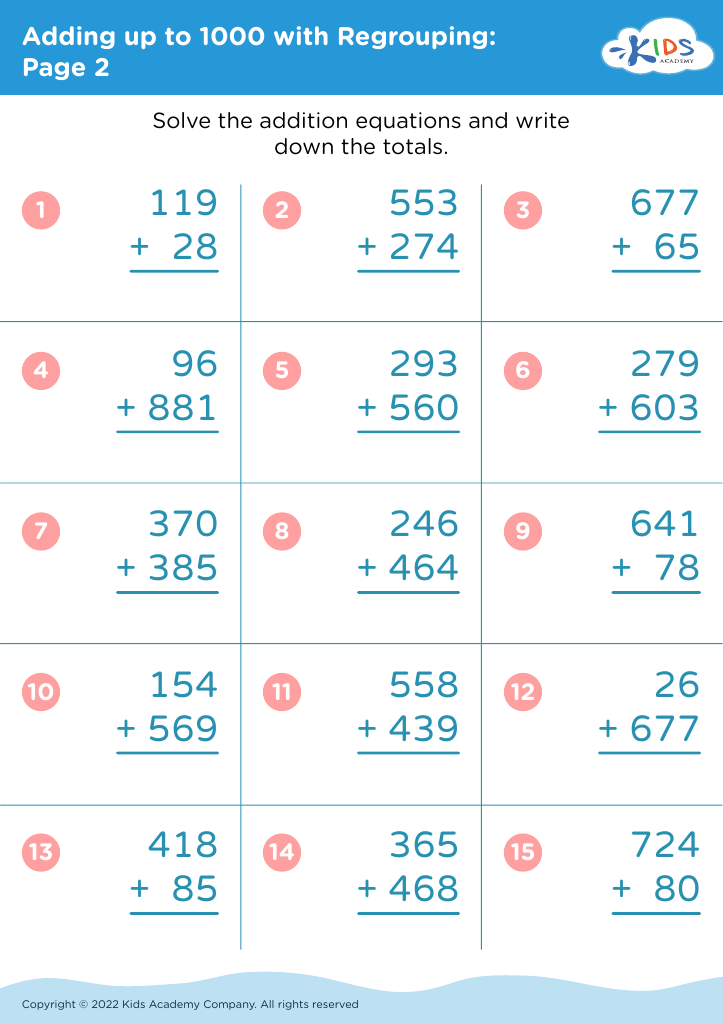




.jpg)


Understanding equations is crucial for 9-year-olds as it lays the foundation for essential mathematical skills they will use throughout their education. At this age, children are transitioning from basic arithmetic to more complex problem-solving, making it the perfect time to introduce them to equations and algebraic thinking.
Firstly, comprehension of equations enhances critical thinking and logic. It encourages children to analyze relationships between numbers and decipher patterns, which are beneficial skills not just in math but in everyday situations. When students understand that equations represent balance, they grasp the concept of maintaining equality, both in math and in real-world scenarios.
Additionally, proficiency in equations fosters confidence in mathematical abilities. As children successfully solve equations, they build a positive attitude towards math, reducing anxiety associated with complex topics later in their schooling.
Moreover, the curriculum increasingly emphasizes STEM (science, technology, engineering, and math) skills, making it imperative for children to be equipped with solid algebraic foundations.
Lastly, support from parents and teachers in this area demonstrates a commitment to holistic education. Engaging children in fun equation-related activities reinforces learning and shows that math can be enjoyable. In essence, understanding equations empowers children, equipping them with valuable tools for their academic journey ahead.








