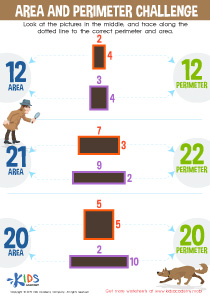
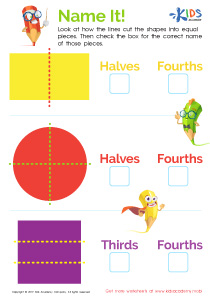
Understanding quadrilaterals 2D Shapes Worksheets for 9-Year-Olds
4 filtered results
Difficulty Level
Grade
Age
-
From - To
Subject
Activity
Standards
Unlock the world of 2D shapes with our "Understanding Quadrilaterals" worksheets, designed specifically for 9-year-olds! These engaging resources help students explore the properties of quadrilaterals, including squares, rectangles, trapezoids, and rhombuses. Through a variety of interactive and fun activities, children will learn to identify, classify, and analyze these essential geometric shapes. Our worksheets reinforce key skills like shape recognition and measurement, making math both enjoyable and educational. Perfect for classroom use or at-home practice, these worksheets enhance critical thinking and build a strong foundation in geometry. Empower your child’s learning journey with our thoughtfully crafted activities today!
Favorites
With answer key
Interactive
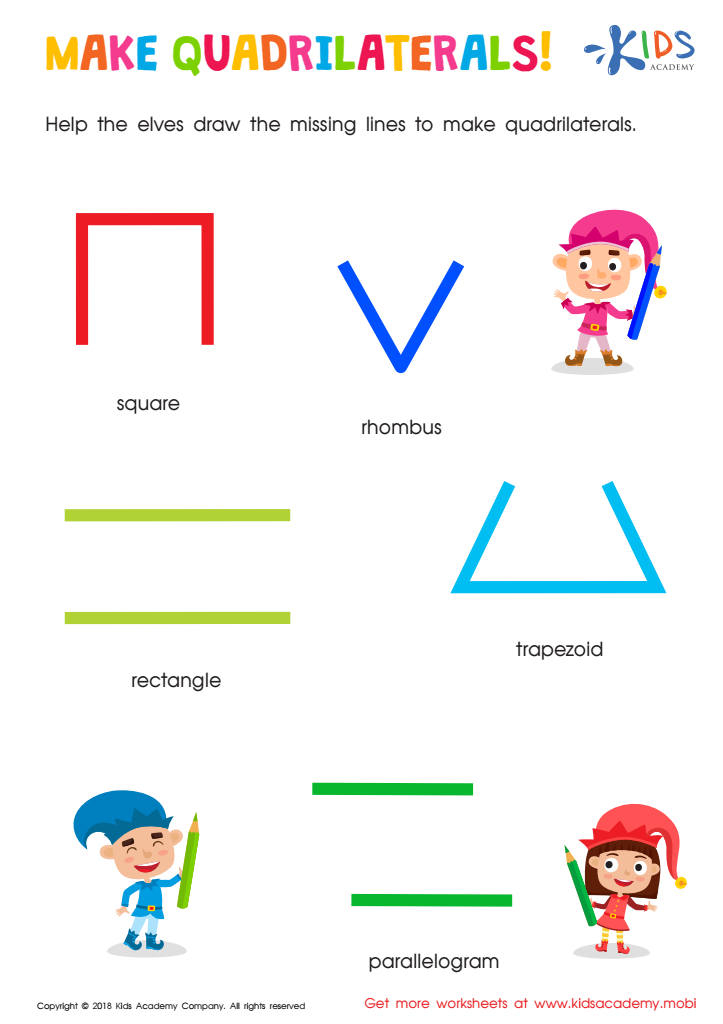
Make Quadrilaterals Worksheet
This fun and colorful worksheet will help your child understand and identify quadrilaterals. It's simple and encourages them to draw lines to create a square, rectangle, rhombus, trapezoid, and parallelogram. Stimulate their minds and watch them learn while they have fun!
 Assign to My Students
Make Quadrilaterals Worksheet
Worksheet


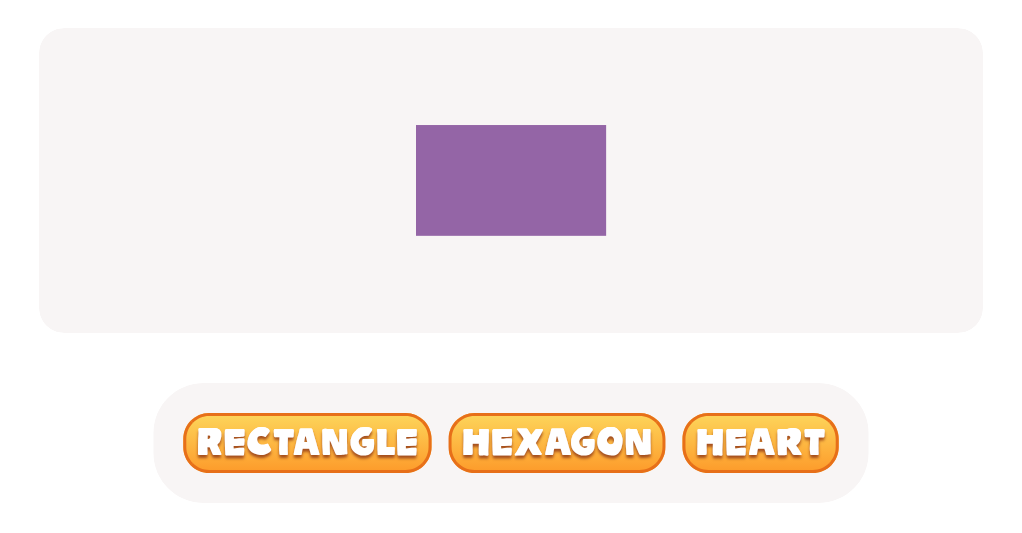
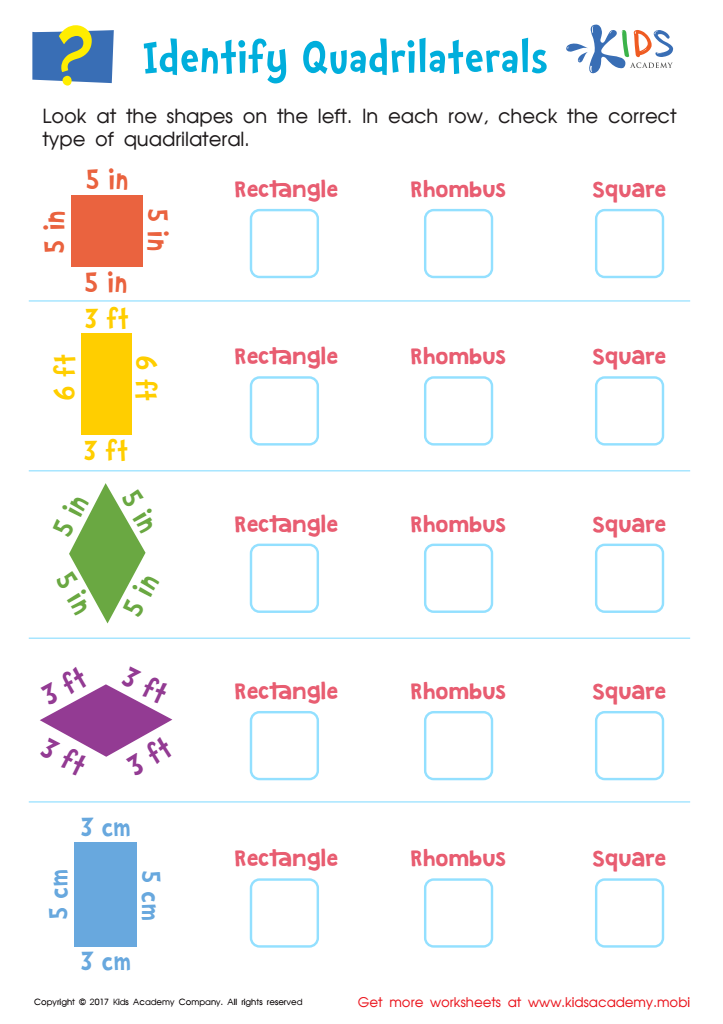
Identify Quadrilaterals Worksheet
This PDF worksheet helps kids identify different quadrilaterals using pictures and measurements. From rectangles to diamonds, children will use their knowledge of geometry to observe and classify shapes. A colorful and fun way to learn!
Identify Quadrilaterals Worksheet
Worksheet
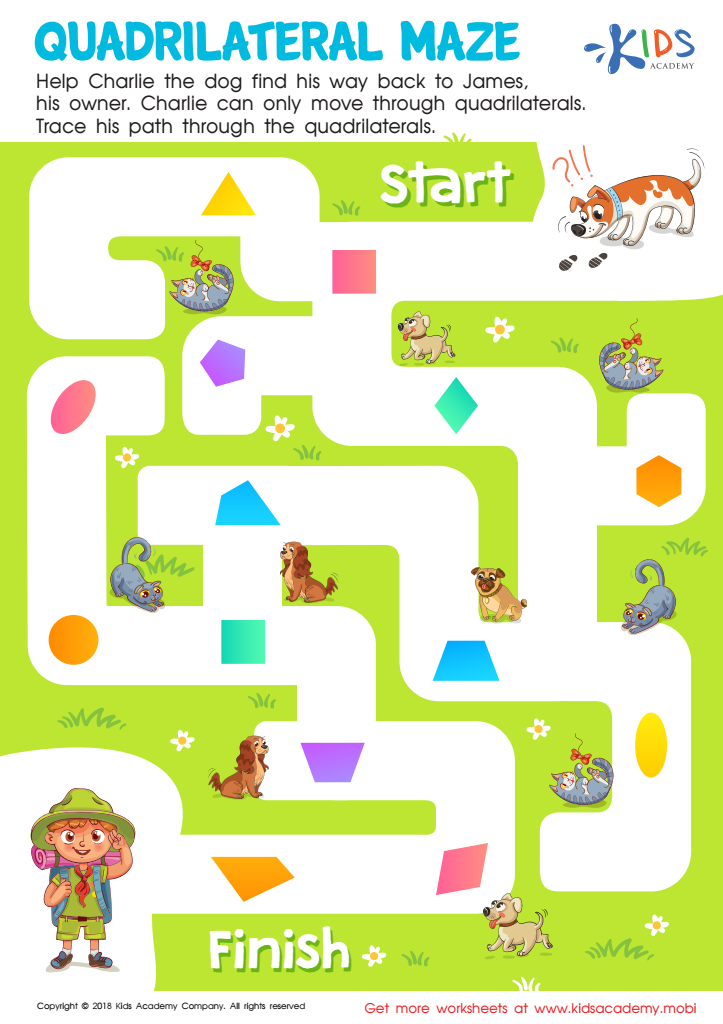
Quadrilateral Maze Worksheet
Does your kid love dogs? If so, this exercise is ideal for them! Help Charlie the pup find his way back to his owner, James, in the quadrilateral maze worksheet. Your child must trace Charlie's path only through squares and rhombuses in order to solve it. Careful planning is key!
Quadrilateral Maze Worksheet
Worksheet
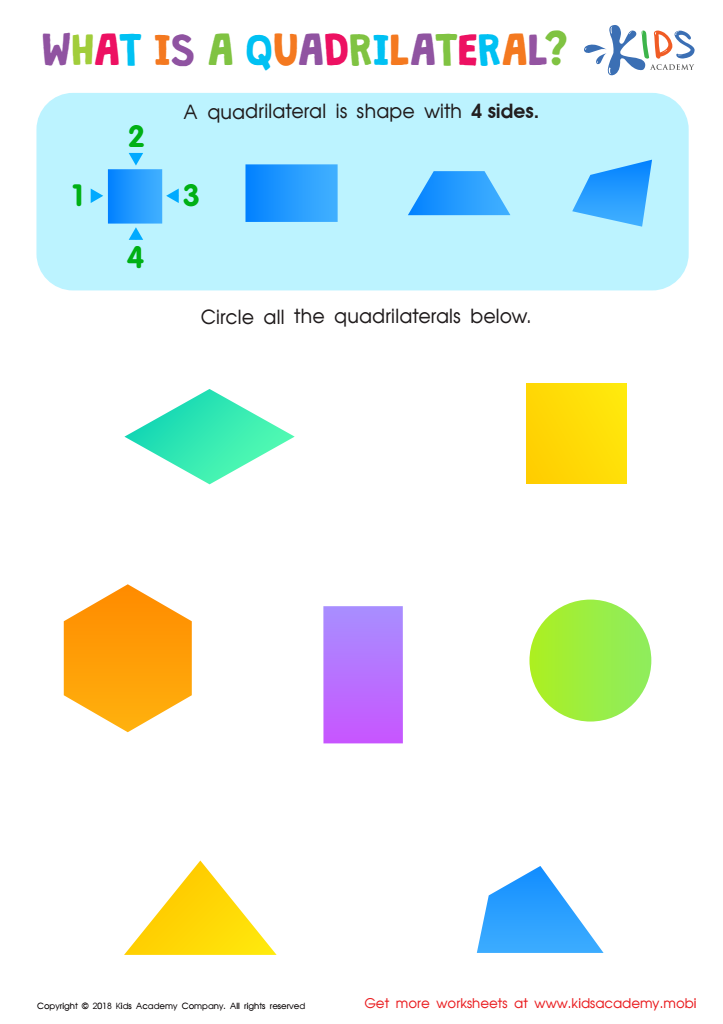
What Is a Quadrilateral? Worksheet
Does your kid know what a quadrilateral is? If not, this worksheet can help teach them. Explain that a quadrilateral is a shape with four sides and give examples, like a square or a rectangle. Then ask them to circle the quadrilaterals in the pictures. If they already know what a quadrilateral is, this task might be too easy.
What Is a Quadrilateral? Worksheet
Worksheet
Join Kids Academy for Free
Who is primarily going to use this learning content?








Understanding quadrilaterals and 2D shapes is crucial for 9-year-olds, and parents and teachers should prioritize this learning for several reasons. First, geometric knowledge forms the foundation of spatial reasoning, an essential skill in mathematics and everyday life. By grasping the properties of various quadrilaterals—such as squares, rectangles, trapezoids, and parallelograms—children develop critical thinking and problem-solving abilities that are applicable in higher math and real-world scenarios.
Moreover, learning about shapes fosters creativity and innovation. Recognizing patterns, symmetry, and angles encourages kids to explore design and art, enhancing their overall critical thinking. Understanding these concepts also lays the groundwork for advanced topics, such as area, perimeter, and even basic algebra.
Additionally, this knowledge supports the development of fine motor skills through engaging activities like drawing and constructing shapes. Parents and teachers can use everyday contexts—like architecture and nature—to demonstrate the relevance of quadrilaterals, making math enjoyable and relatable.
Ultimately, by nurturing an understanding of quadrilaterals, adults can equip children with important cognitive skills while enhancing their confidence in math and science, thereby supporting their lifelong learning journey.