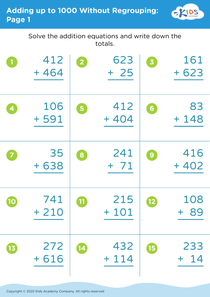
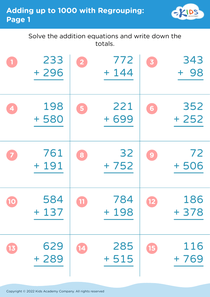
Comparing Fractions Adding up to 1000 Misc Worksheets for 9-Year-Olds
5 filtered results
-
From - To
Explore our engaging "Comparing Fractions Adding Up to 1000" worksheets designed specifically for 9-year-olds! These fun and interactive materials help young learners master the concept of comparing fractions while working with larger numbers up to 1000. Perfect for enhancing math skills, our worksheets promote critical thinking and support students in understanding how to evaluate and compare different fractions effectively. Each activity is crafted to encourage active learning and boost confidence in math. Dive into our resources today and watch your child excel in their understanding of fractions, all while enjoying a playful learning experience!
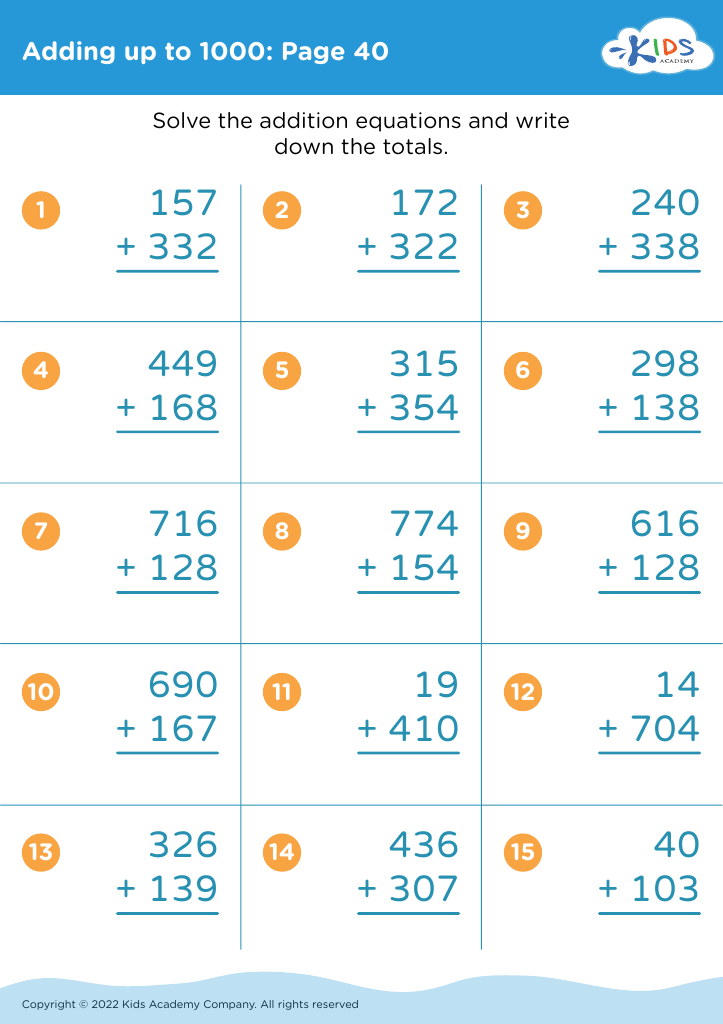
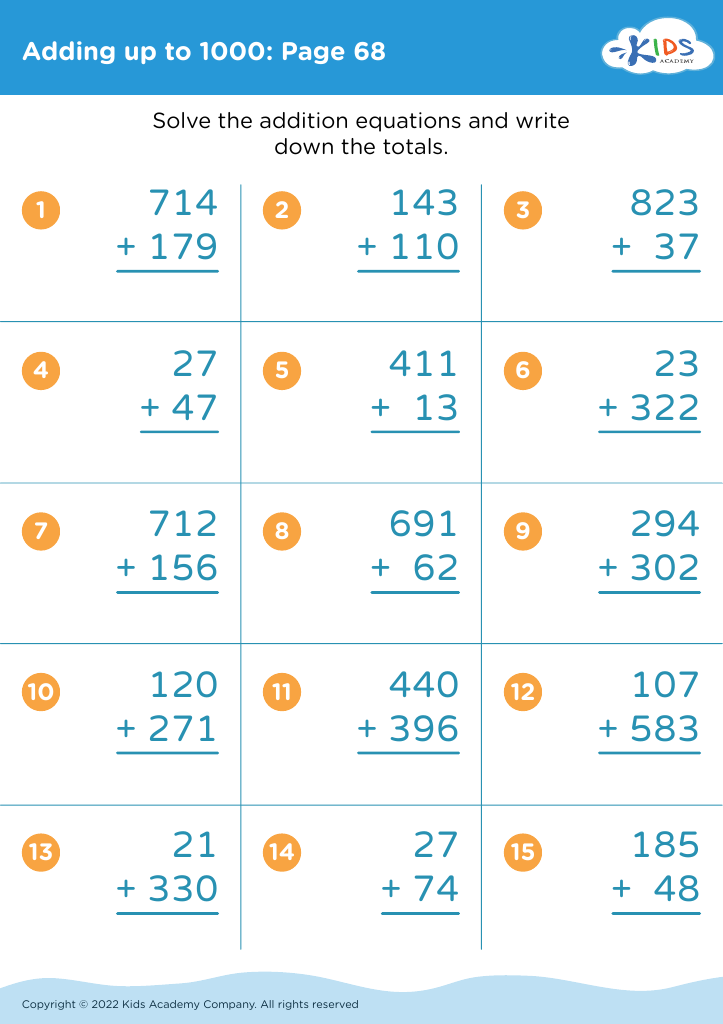
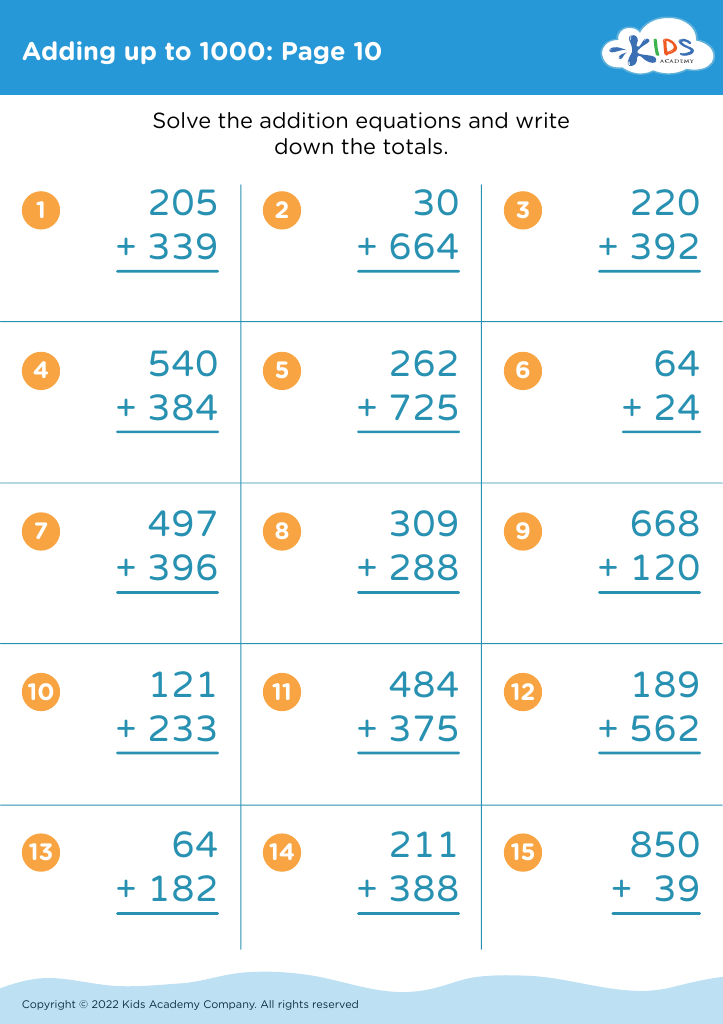
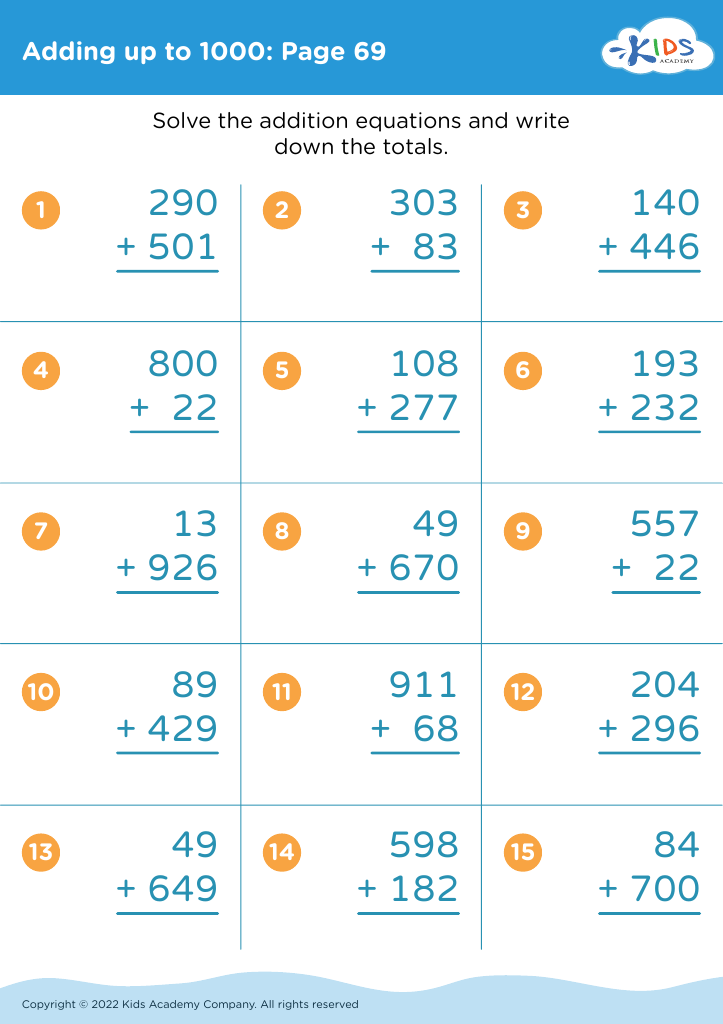
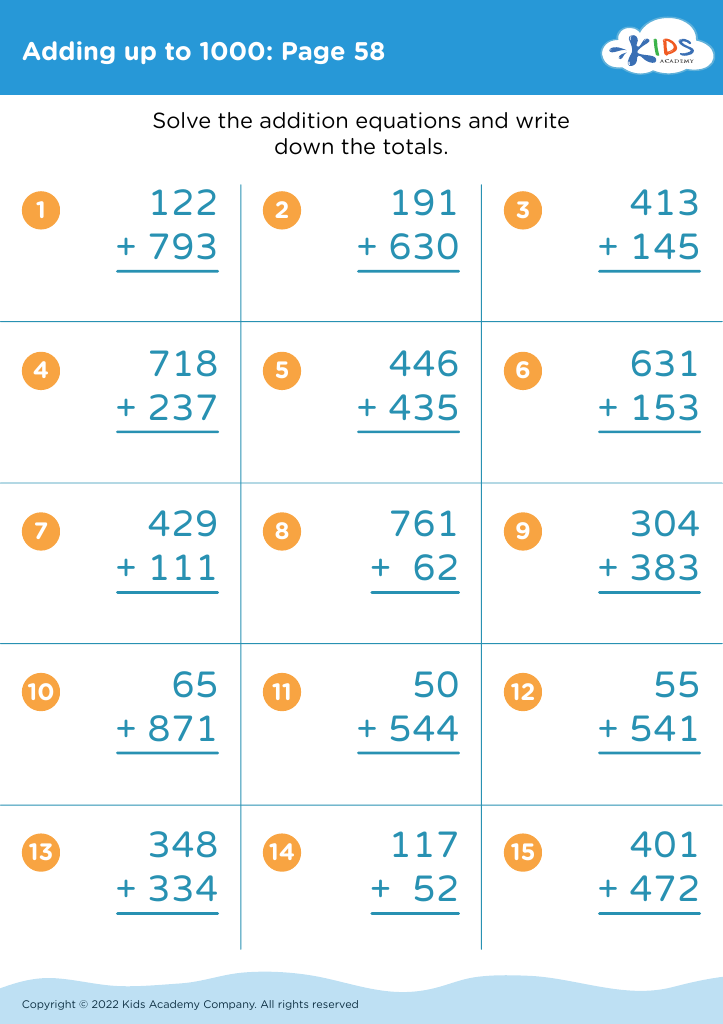


Understanding the concept of comparing fractions is fundamental for 9-year-olds, as it lays the groundwork for more advanced mathematical skills in their academic journey. Parents and teachers should care about this because mastering fraction comparison helps children develop critical thinking skills and enhances their problem-solving abilities. At this age, students begin to encounter real-world applications of fractions, from cooking to budgeting, making it essential for them to grasp how to compare and evaluate different parts of a whole.
Furthermore, comparing fractions can also foster mathematical reasoning, enabling children to analyze situations more effectively. For instance, in activities like calculating discounts or understanding proportions in various scenarios, the ability to compare fractions directly impacts their decision-making skills.
When parents and teachers invest time in helping children understand how to compare fractions up to 1000, they also encourage a positive attitude toward mathematics. This builds confidence and encourages further exploration of the subject. Overall, ensuring that children grasp these essential concepts provides them with the tools and confidence needed to navigate not just their classrooms, but also everyday situations, fostering a lifelong appreciation and understanding of mathematics.