Critical Thinking Adding up to 1000 Misc Worksheets for 9-Year-Olds
3 filtered results
-
From - To
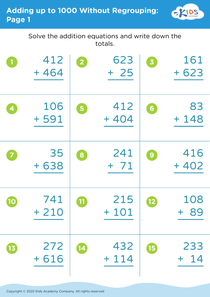
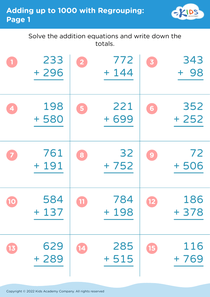
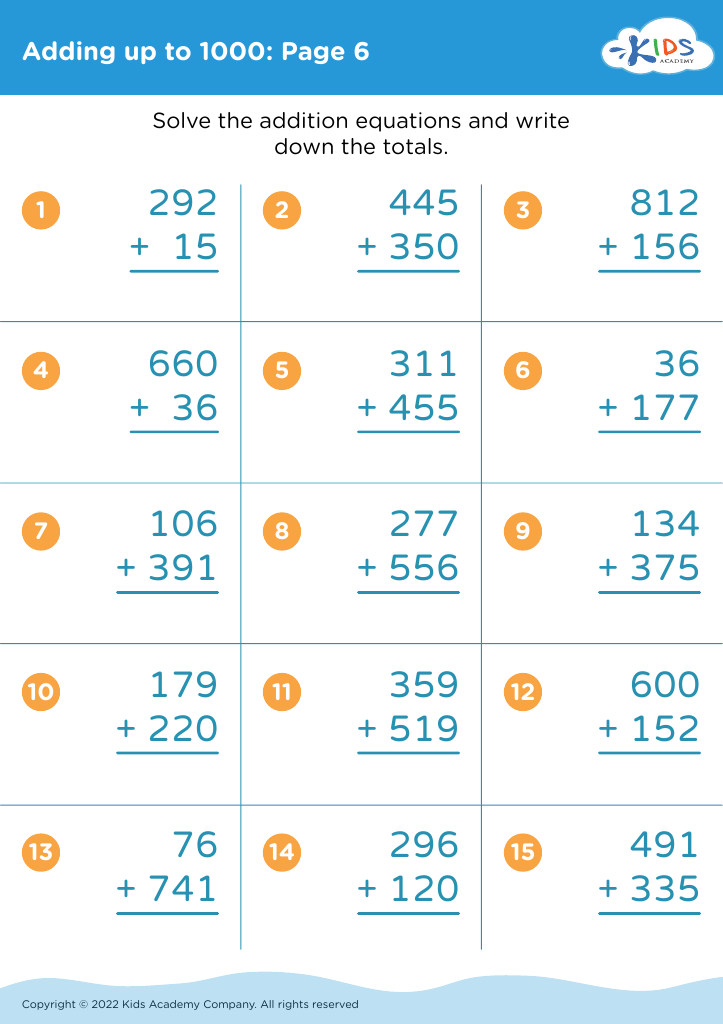
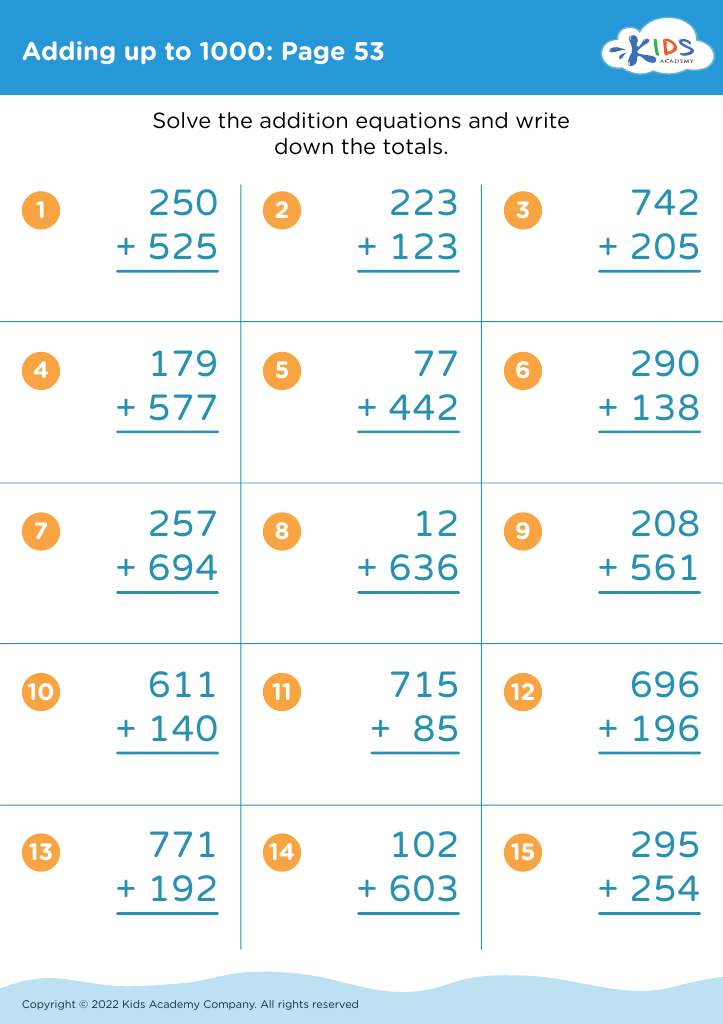
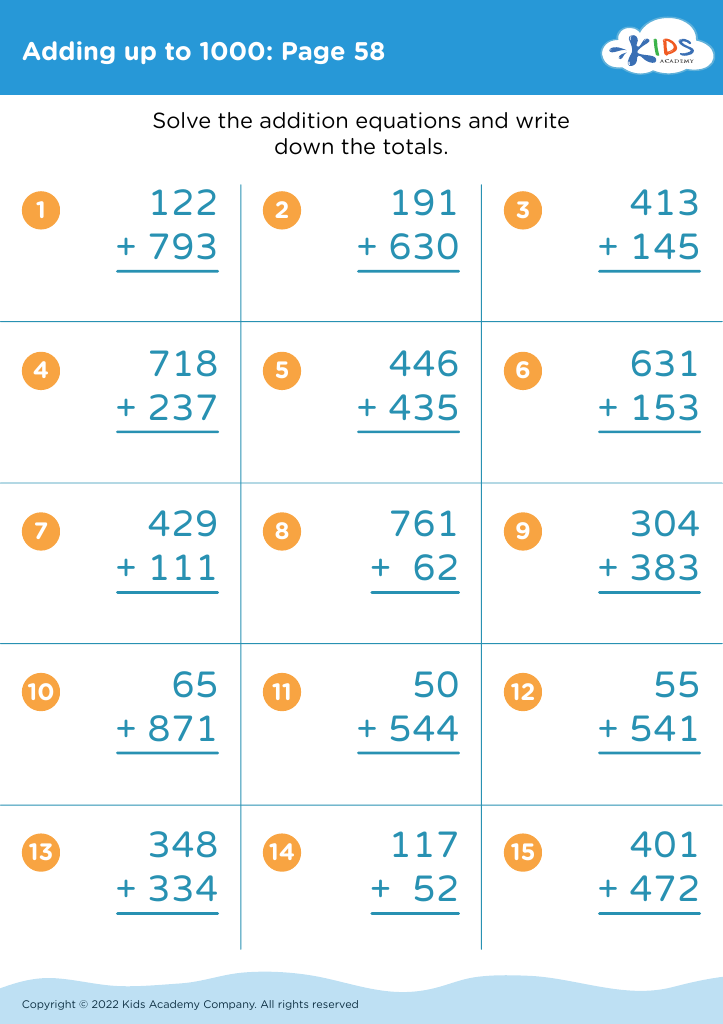
Unlock your child's potential with our "Critical Thinking Adding up to 1000 Misc Worksheets" designed specifically for 9-year-olds. These engaging worksheets go beyond basic arithmetic, encouraging students to explore problem-solving and analytical skills as they tackle various math challenges involving addition up to 1000. Each worksheet is crafted to stimulate critical thinking, foster creativity, and reinforce mathematical concepts through real-world applications. Suitable for independent study or guided learning, our comprehensive collection aims to make math both fun and educational. Give your child the tools they need to succeed and watch their confidence grow with our thoughtfully designed resources!


Critical thinking is an essential skill for children, especially 9-year-olds who are beginning to think more independently. Parents and teachers should prioritize fostering critical thinking for several reasons. Firstly, it enhances problem-solving skills. As children encounter challenges, critical thinking helps them evaluate options, assess evidence, and reach logical conclusions. This lays the foundation for academic success and prepares them for real-world scenarios.
Secondly, it encourages curiosity and creativity. When children are taught to think critically, they learn to ask questions, consider different perspectives, and generate their own ideas. This not only makes learning more engaging but also fosters a love for discovery and innovation.
Moreover, critical thinking aids in decision-making. At 9 years old, children start to face choices, whether in friendships or activities. Teaching them to analyze their options helps them make thoughtful, responsible decisions.
Finally, critical thinking promotes emotional intelligence by encouraging empathy and understanding of others' viewpoints. This is vital for social interactions and building relationships.
In summary, parents and teachers should focus on critical thinking because it equips children with essential life skills, promotes intellectual growth, and fosters emotional intelligence, all of which are foundational for a successful future.