Fraction simplification Adding up to 1000 Misc Worksheets for 9-Year-Olds
5 filtered results
-
From - To
Welcome to our engaging and educational Fraction Simplification Worksheets designed specifically for 9-year-olds! These resources offer a fun and interactive way to help young learners master the art of simplifying fractions while seamlessly practicing addition up to 1000. Each worksheet features a variety of colorful exercises that make learning enjoyable and effective. By focusing on fraction simplification, kids will gain confidence in their math skills and develop a solid foundation for more advanced concepts. Perfect for home or classroom use, our worksheets encourage independent learning and critical thinking. Explore our diverse selection and watch your child's mathematical abilities flourish!
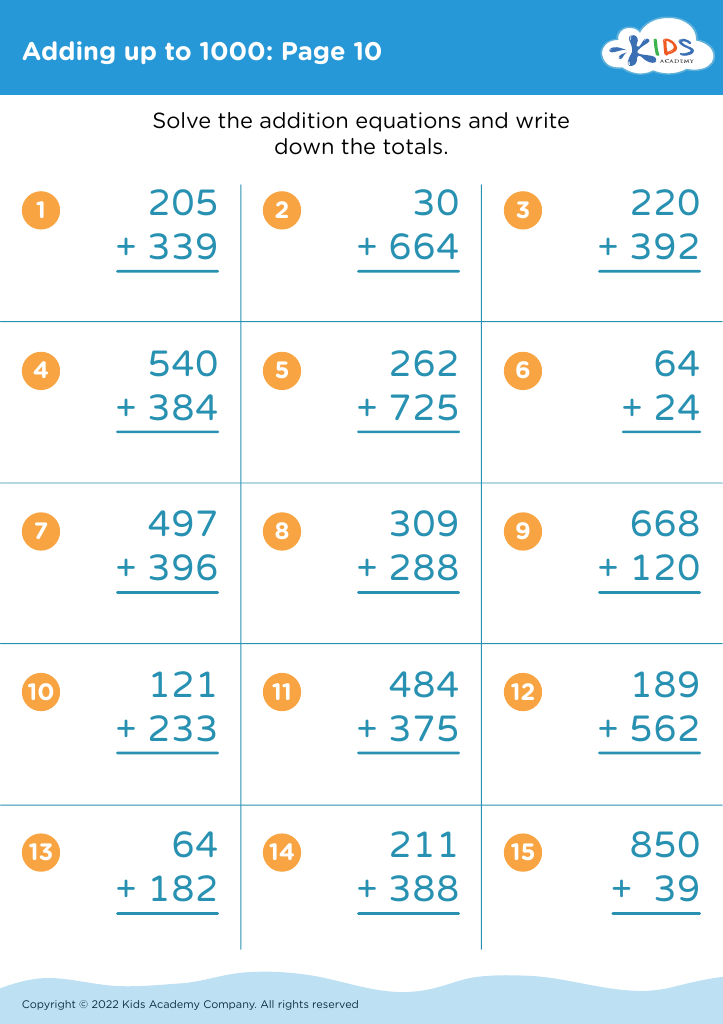
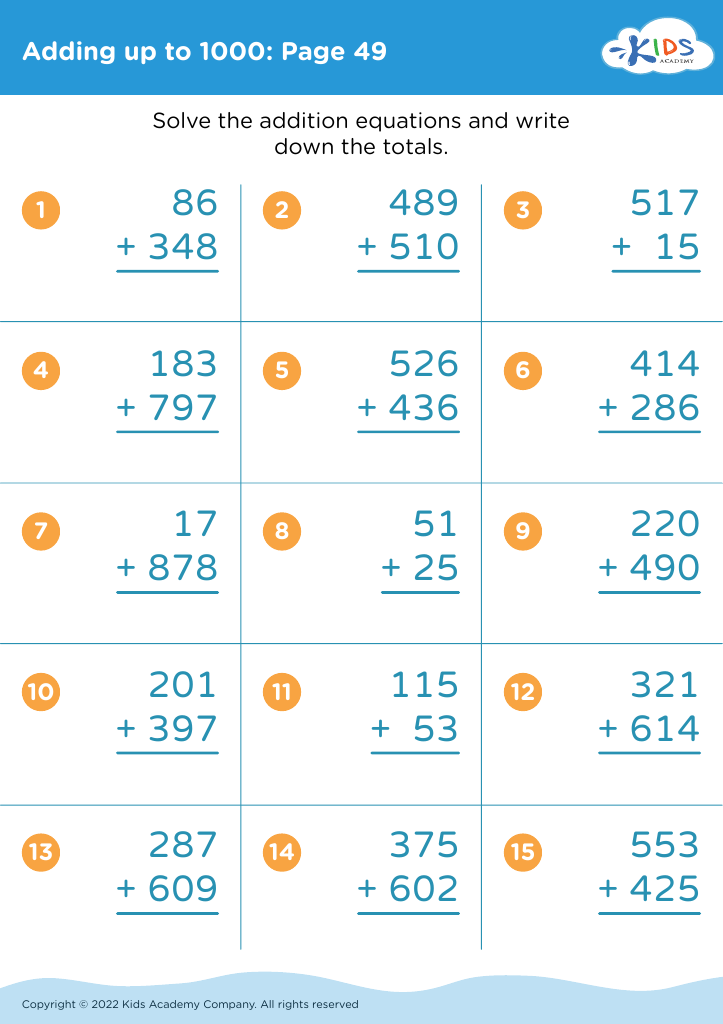
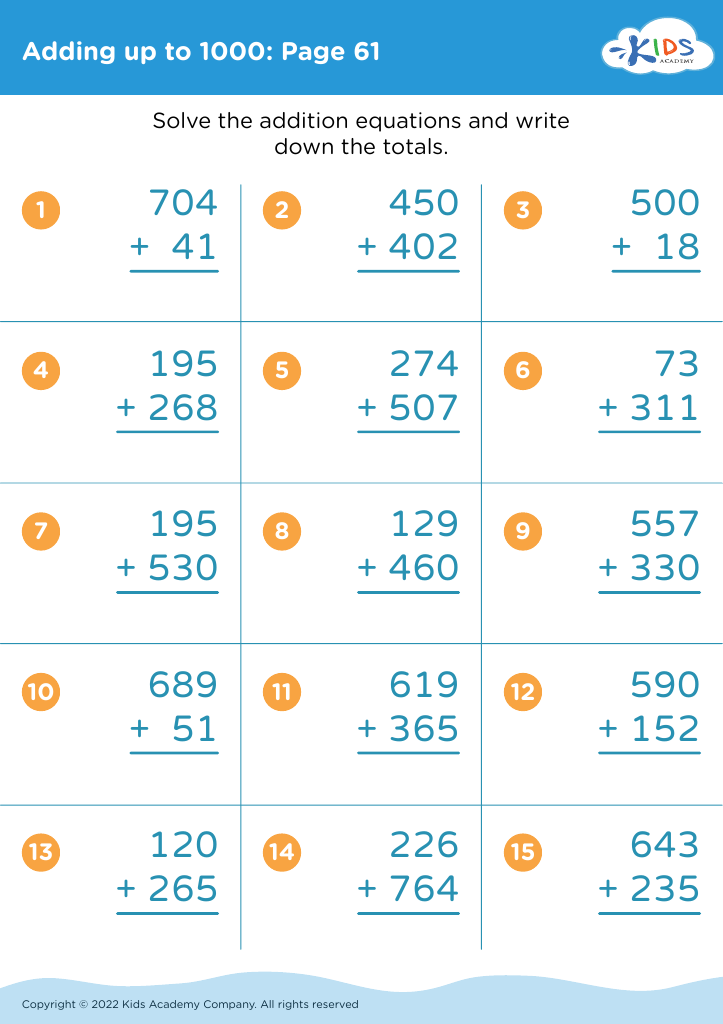
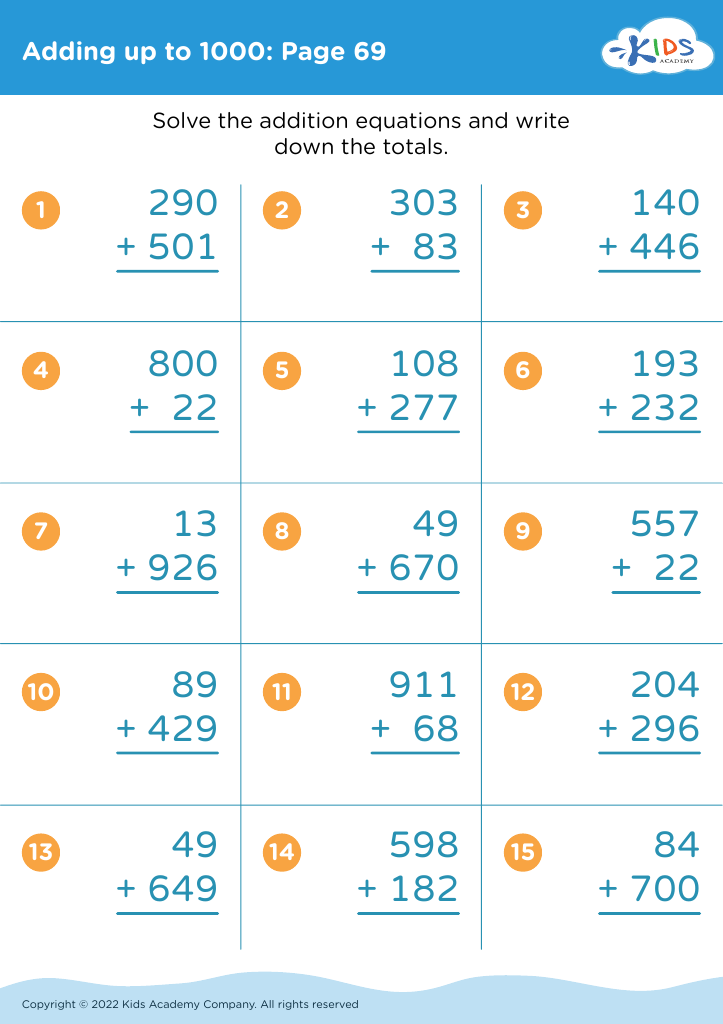
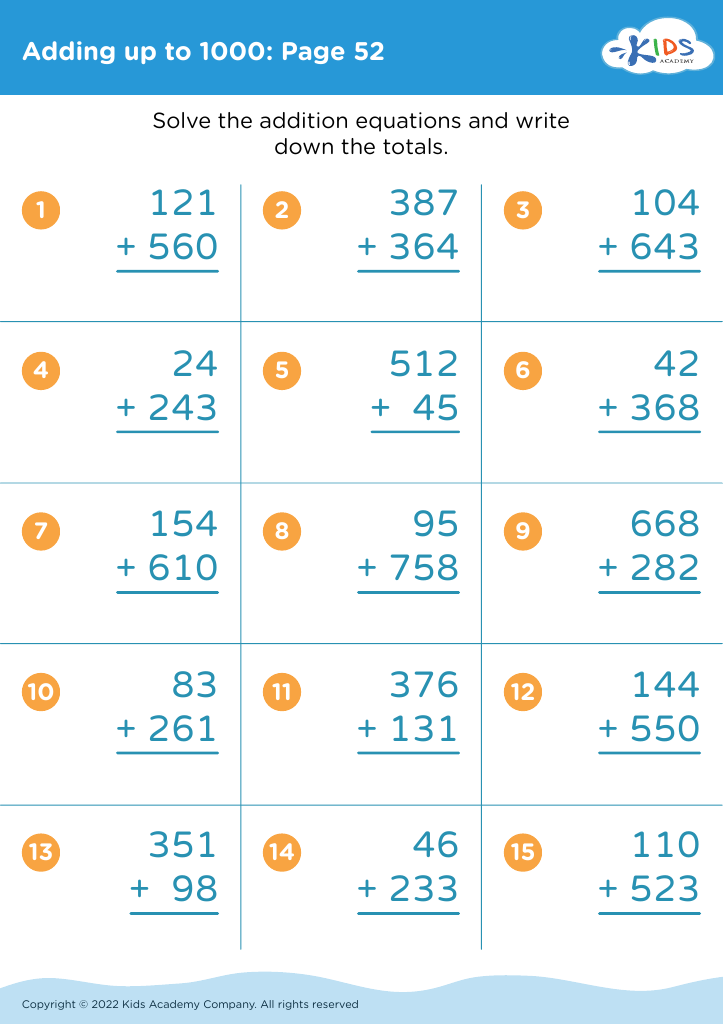


Parents and teachers should care about teaching 9-year-olds fraction simplification and adding up to 1000 because these skills form the foundation for advanced mathematical concepts and problem-solving abilities. Mastering fractions is essential, as they are used in everyday situations, such as cooking, budgeting, or dividing items among friends. Simplifying fractions helps students understand equivalency, learn about ratios, and enhances their ability to compare different quantities.
Moreover, the skill of adding up to 1000 is crucial for developing strong numerical literacy. It encourages students to become more agile with mental arithmetic, boosting their confidence in handling numbers. These skills also serve as building blocks for more complex operations, such as multiplication and division, and are pertinent for real-life applications like shopping or planning events.
By focusing on these competencies, teachers and parents can foster a deeper appreciation for math, turning it from a perceived chore into an engaging subject. Additionally, practicing these skills helps students improve their focus and critical thinking abilities, which are valuable throughout their education and personal lives. Therefore, investing time in fraction simplification and addition empowers students on their journey toward math proficiency and enhances their overall cognitive development.