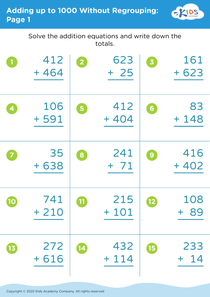
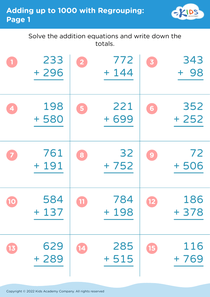
Problem-Solving Skills Adding up to 1000 Misc Worksheets for 9-Year-Olds
14 filtered results
-
From - To
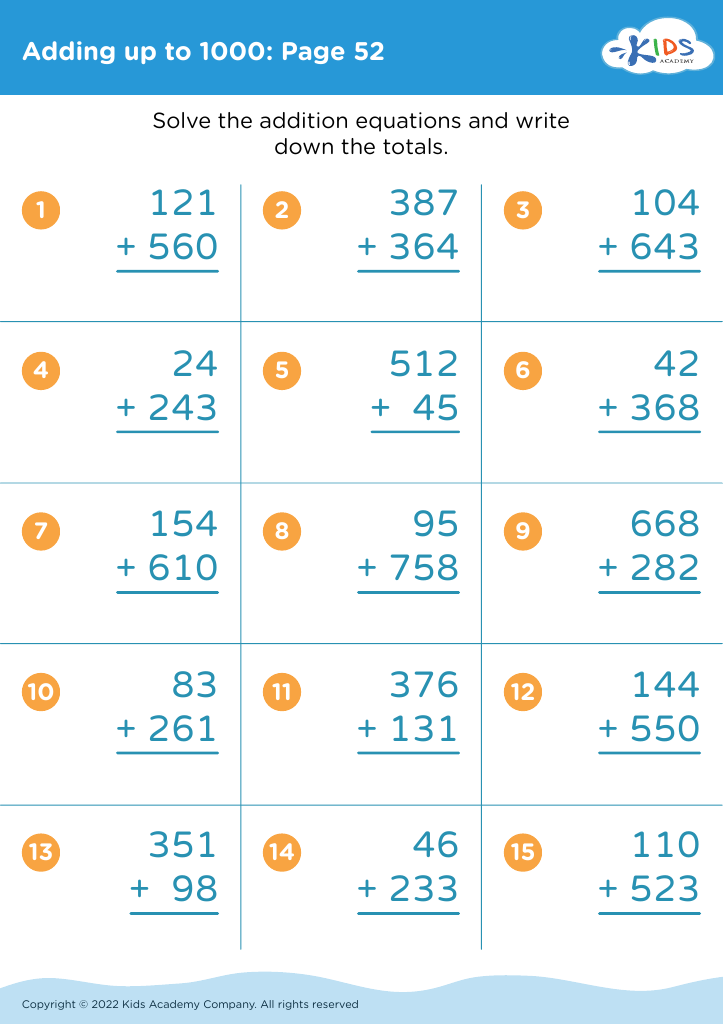
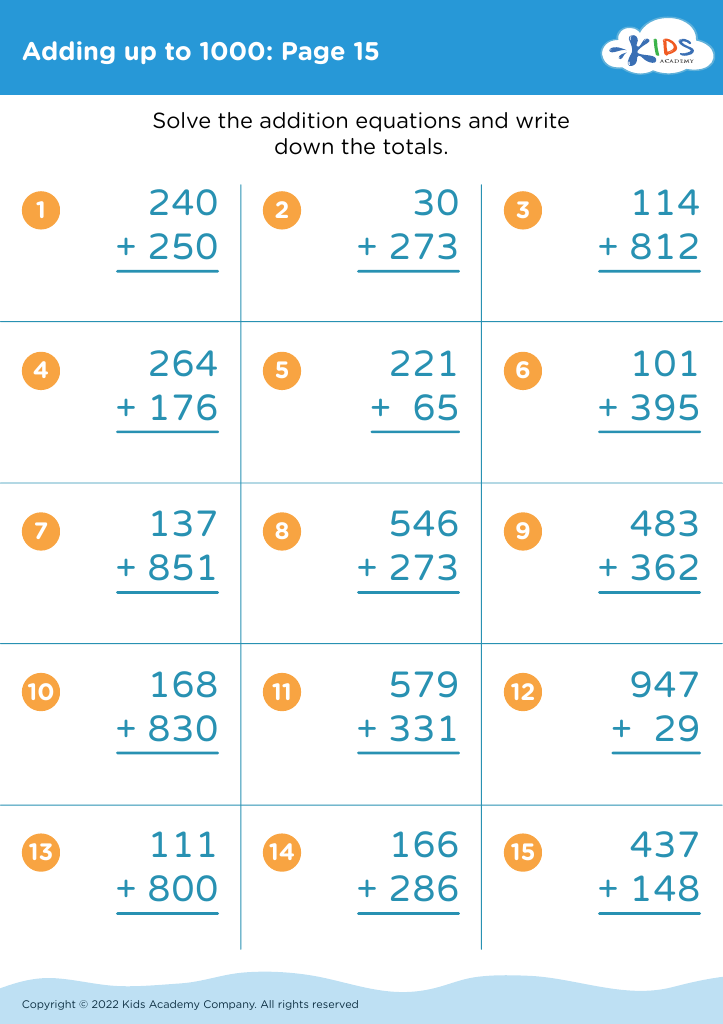
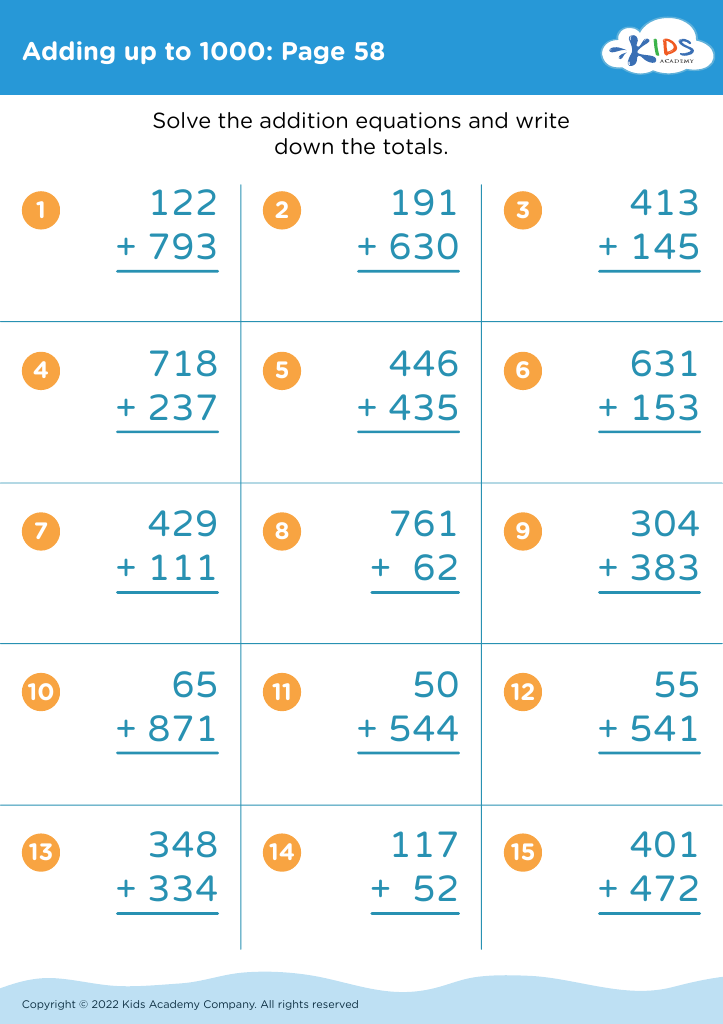
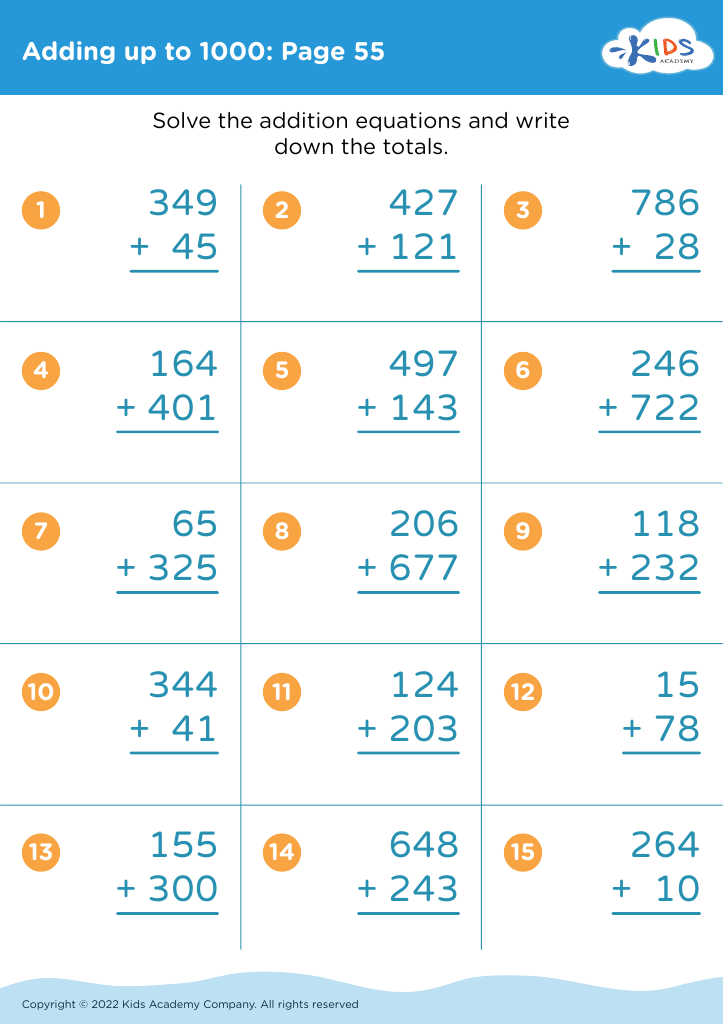
Unlock your child's potential with our "Problem-Solving Skills Adding Up to 1000 Misc Worksheets" designed specifically for 9-year-olds. This collection of engaging worksheets enhances critical thinking and math skills by challenging students to solve diverse problems involving addition, subtraction, and measurement. Each worksheet promotes interactive learning, encouraging students to think creatively and develop robust problem-solving strategies. Perfect for at-home practice or classroom activities, your child will gain confidence as they master concepts aligned with their grade level. Spark a love for math while building essential skills today! Explore our worksheets and watch your child's proficiency thrive!
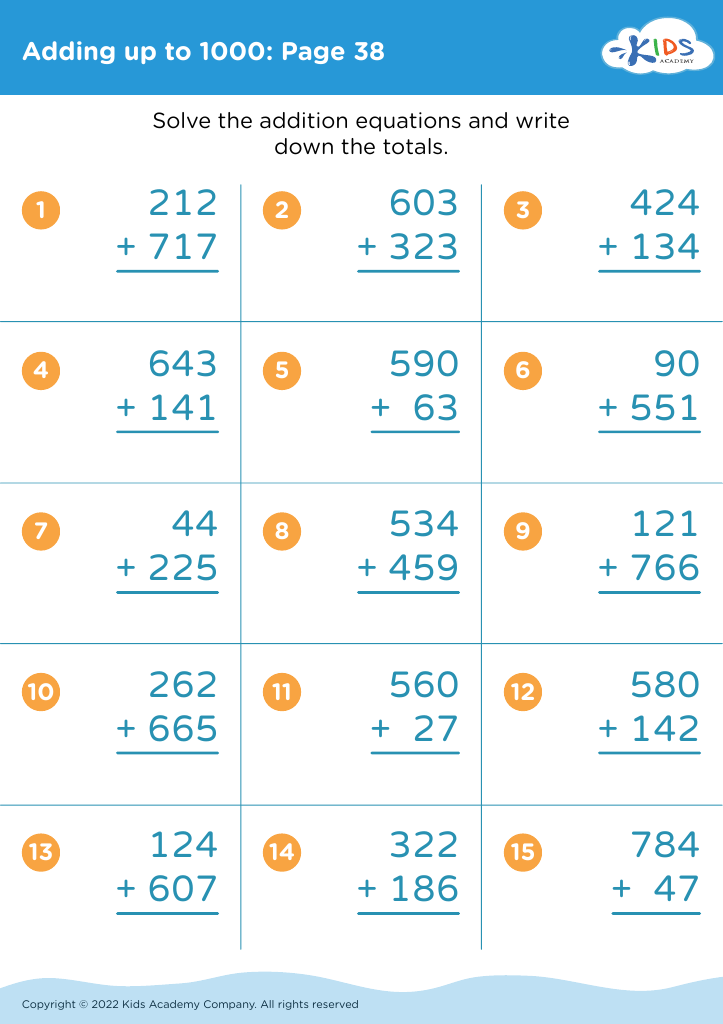
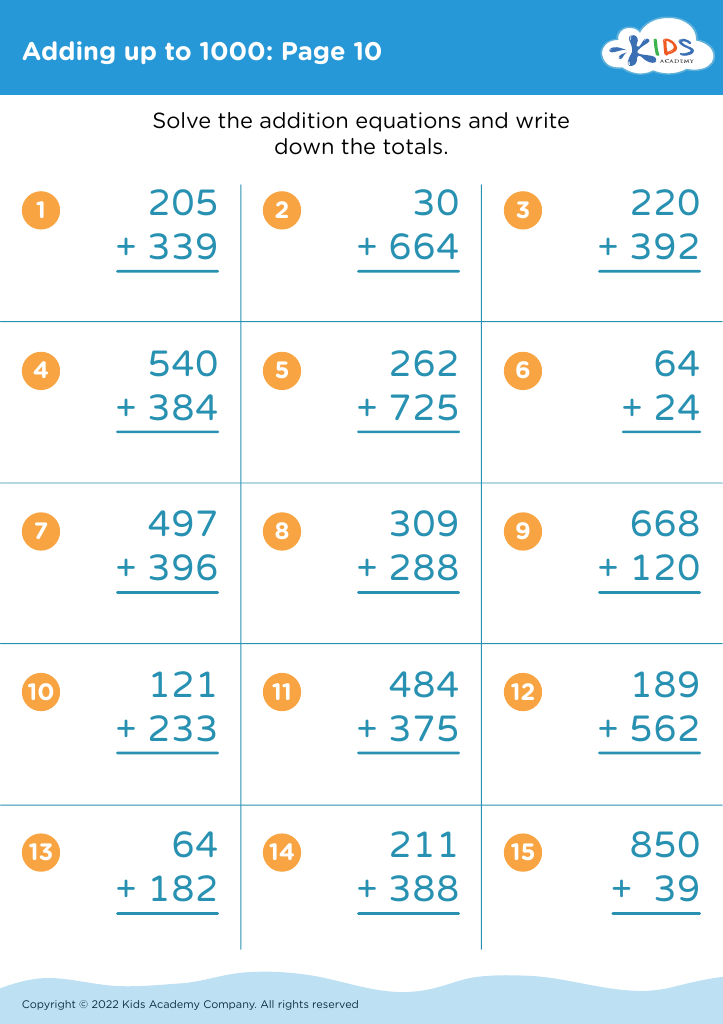
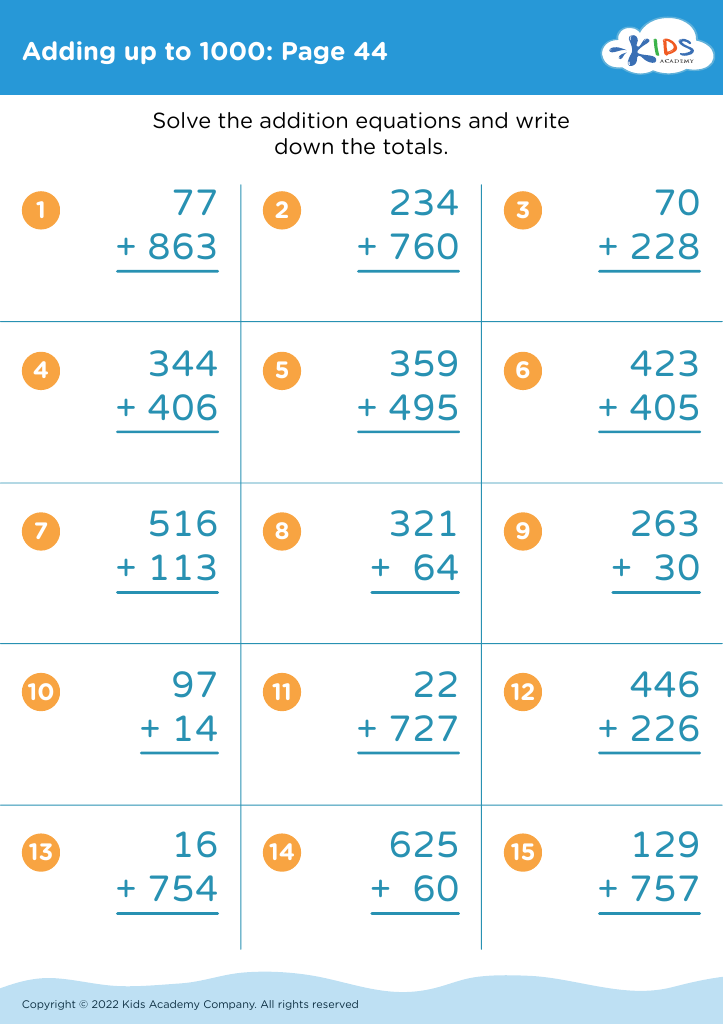
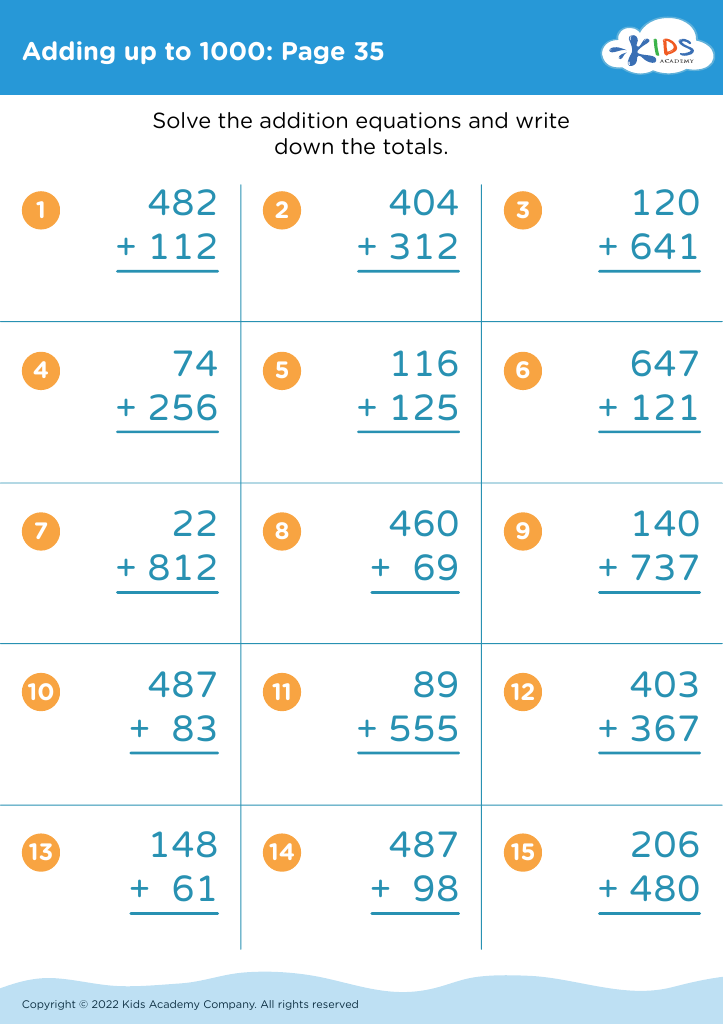
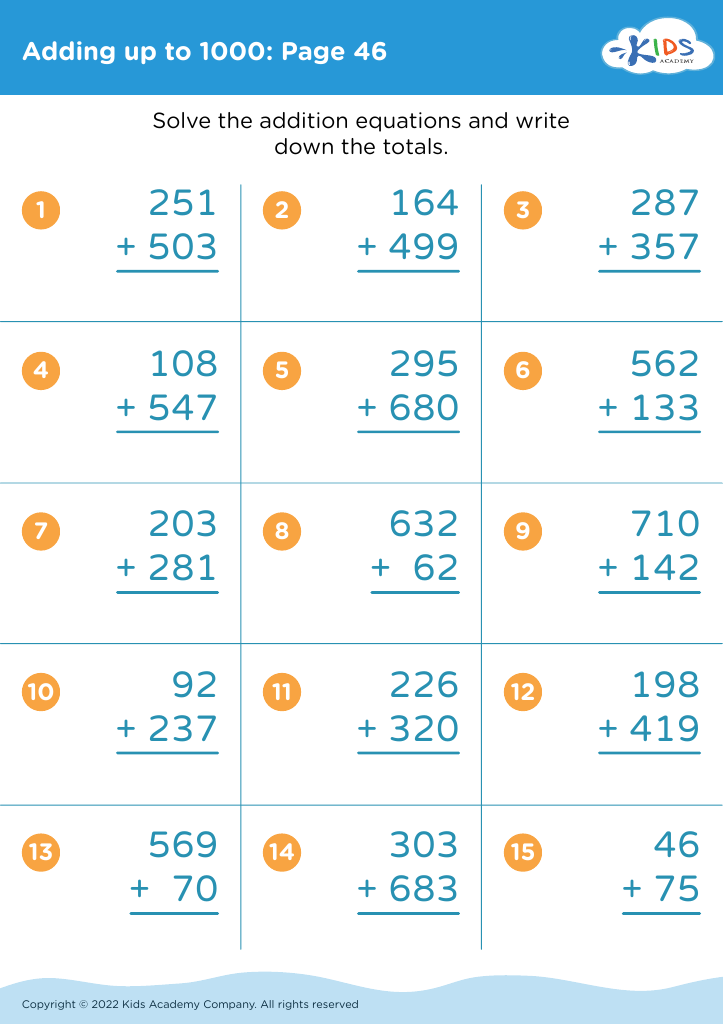
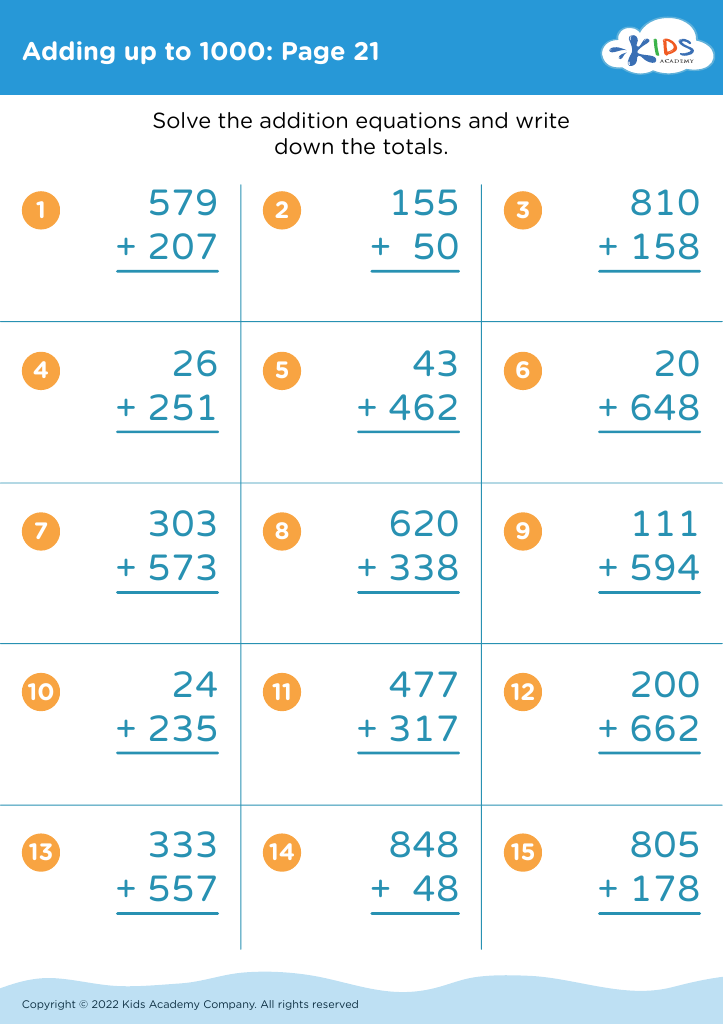
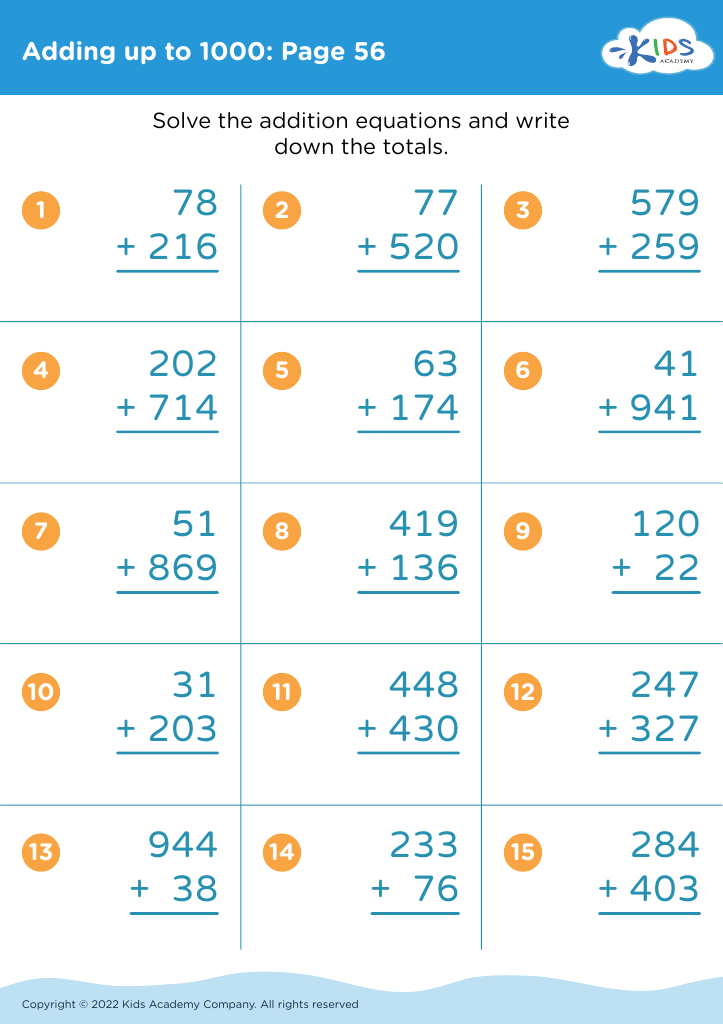
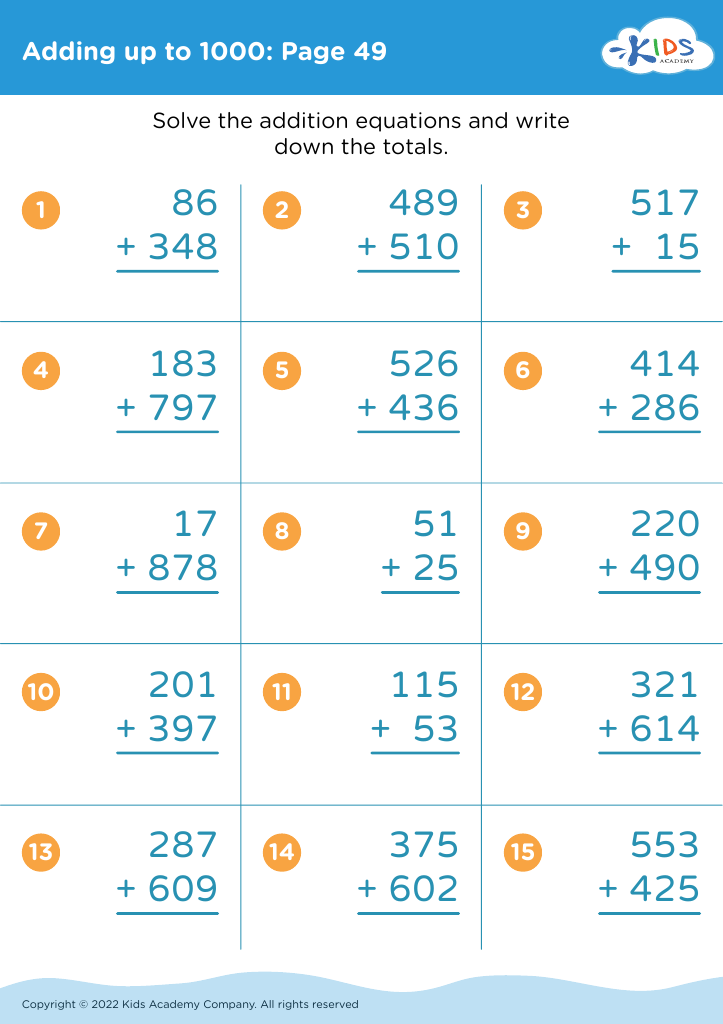
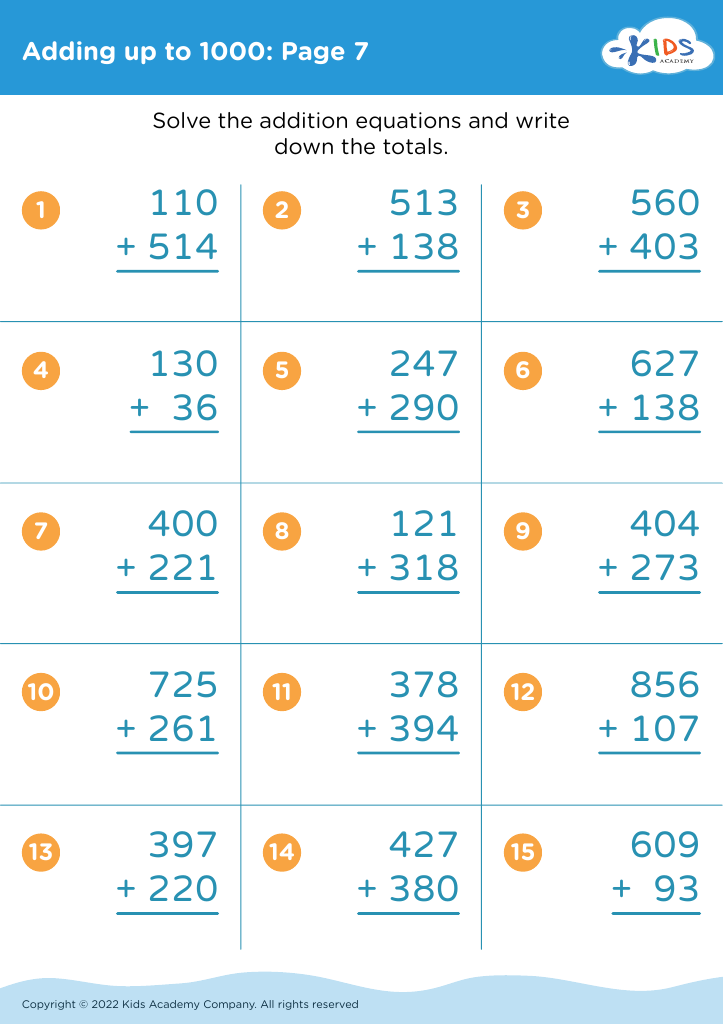
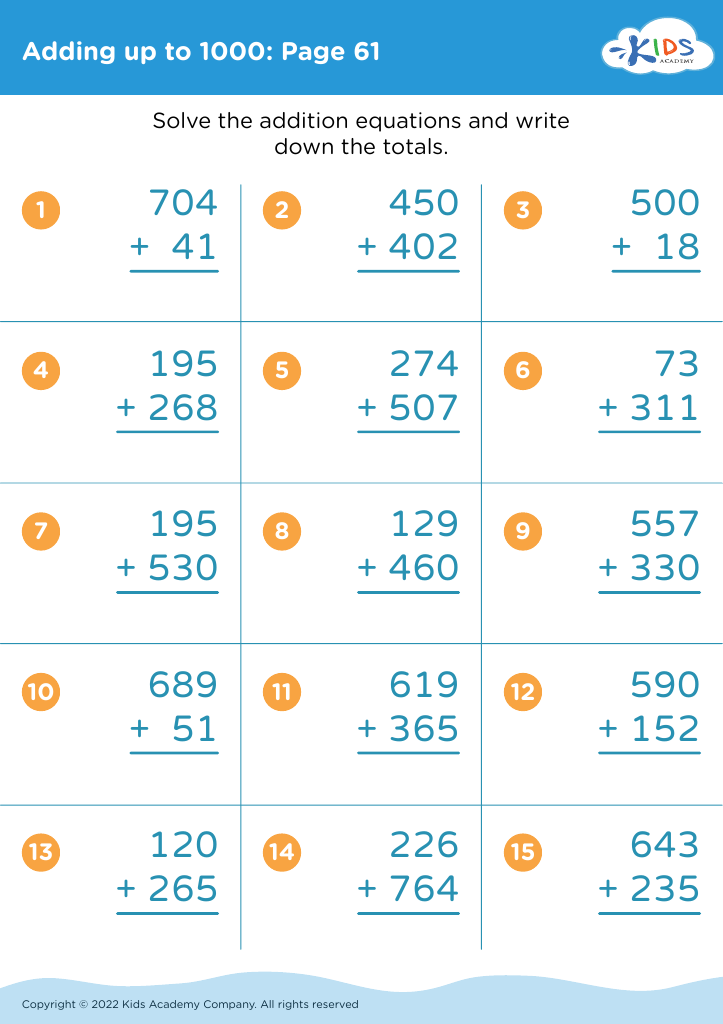


Problem-solving skills are essential for children's overall development, particularly for 9-year-olds who are at a crucial stage of cognitive growth. Parents and teachers should prioritize fostering these skills for several reasons.
Firstly, effective problem-solving enables children to navigate everyday challenges, enhancing their resilience and independence. By learning to evaluate situations, generate solutions, and weigh pros and cons, children become more confident decision-makers. This ability is not just academically relevant but is also key to social interactions, teamwork, and conflict resolution.
Secondly, activities that involve problem-solving promote critical thinking. At this age, children are capable of abstract thought, which helps in developing logic and reasoning abilities. Engaging them in exercises like "Adding up to 1000 Misc," where they tackle math problems creatively, strengthens their analytical skills and encourages a growth mindset.
Lastly, fostering problem-solving skills early on lays a strong foundation for future academic success. As children progress in school, they will encounter more complex challenges in various subjects. The skills they build now will aid their ability to tackle these challenges with confidence.
In summary, nurturing problem-solving skills is vital for emotional resilience, critical thinking, and long-term academic success. Parents and teachers play a crucial role in this developmental process.