Color Identification Adding up to 1000 with Regrouping Worksheets for 9-Year-Olds
5 filtered results
-
From - To
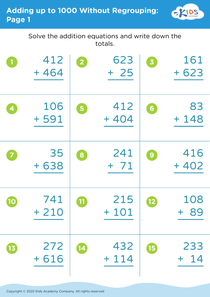
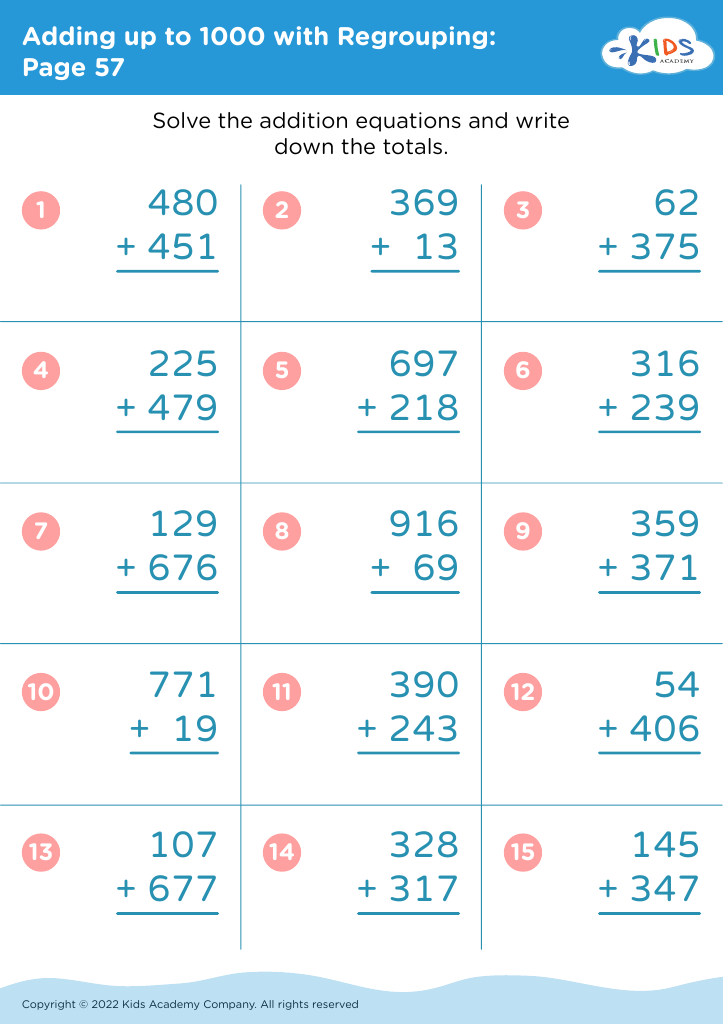
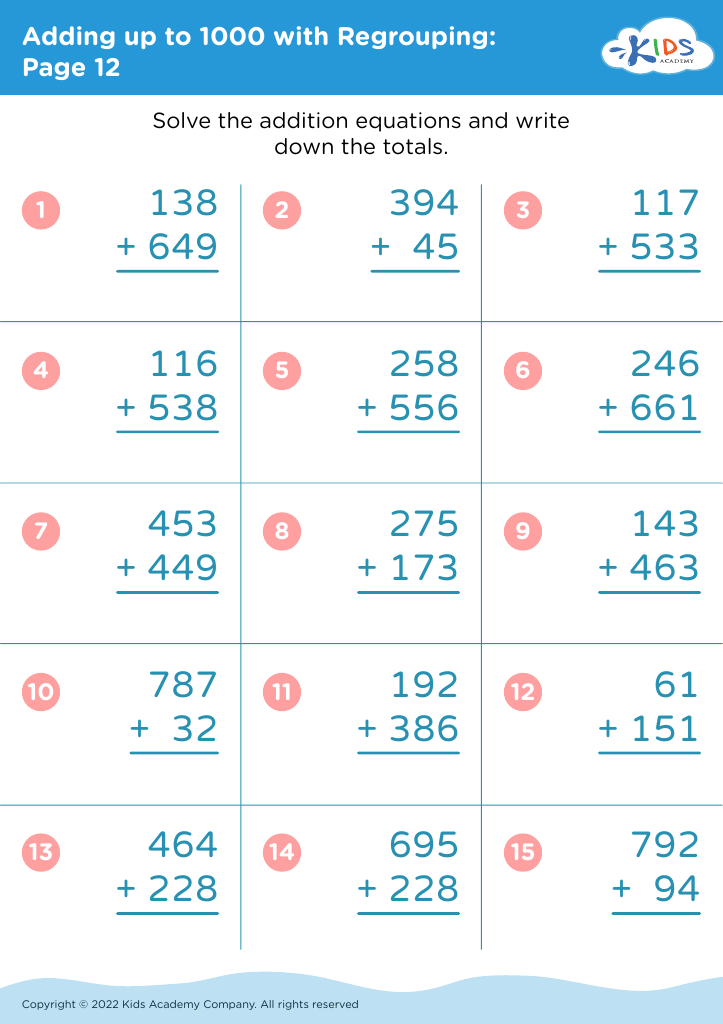
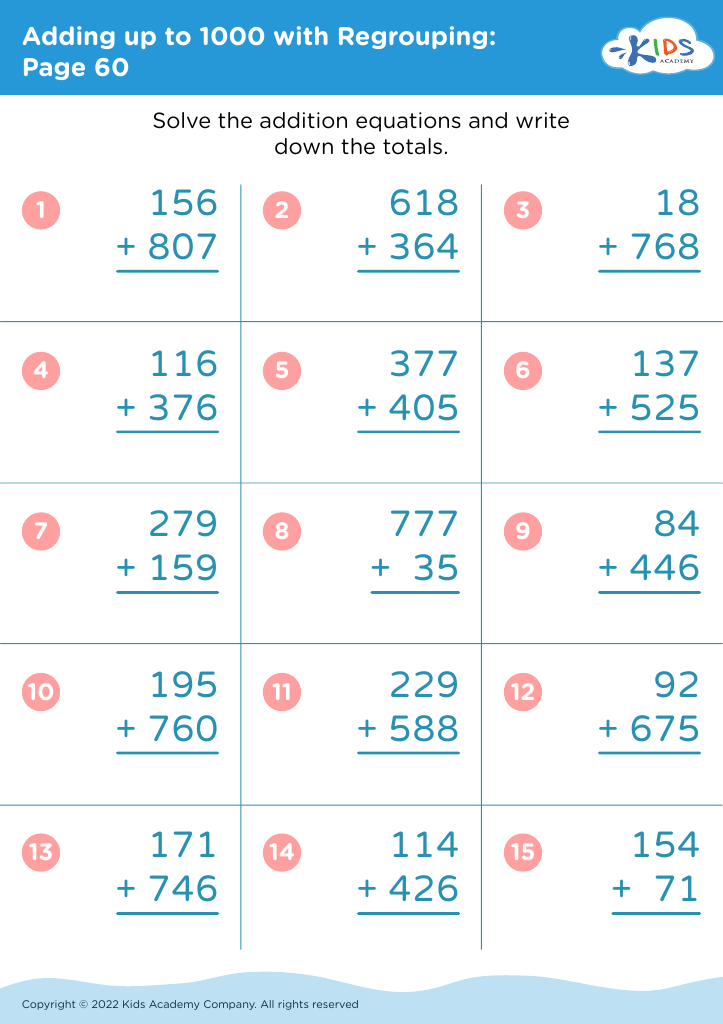
Introducing our engaging Color Identification Adding Up to 1000 with Regrouping Worksheets for 9-Year-Olds! Specifically designed to make math fun and interactive, these worksheets help your child master addition while bolstering color recognition skills. Each worksheet features colorful, exciting scenarios that captivate children's interest and reinforce learning. Through practice, they will excel in complex addition problems involving regrouping, improve their attention to detail, and develop stronger cognitive abilities. Perfect for home or classroom use, these activities support a well-rounded math education while keeping young learners enthused and motivated. Explore our vibrant, educational worksheets today!
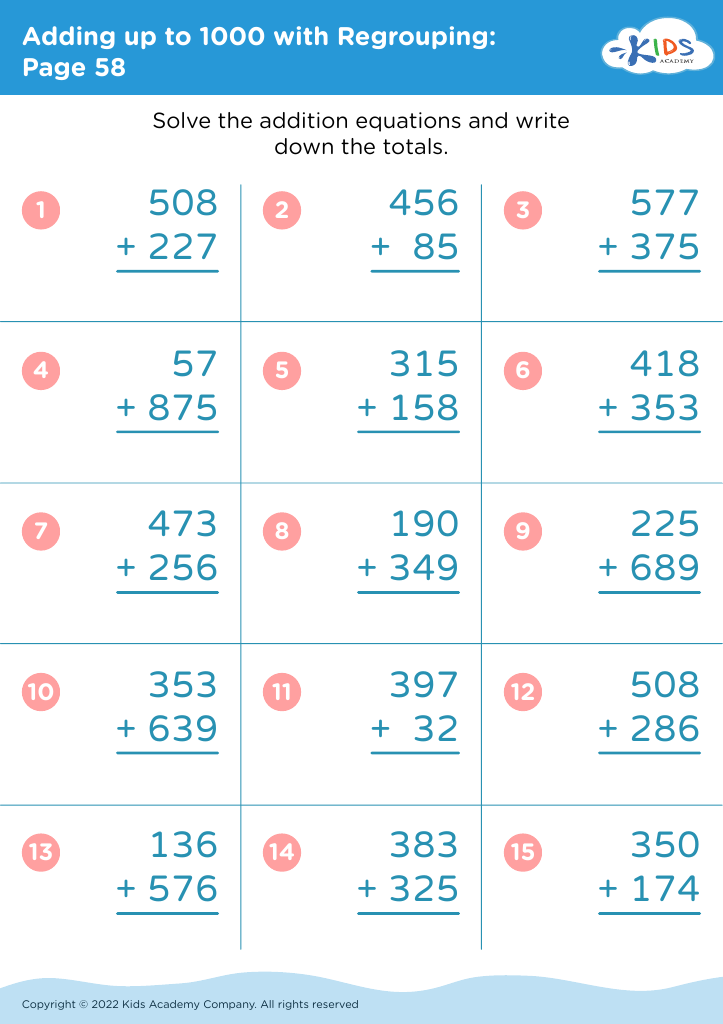
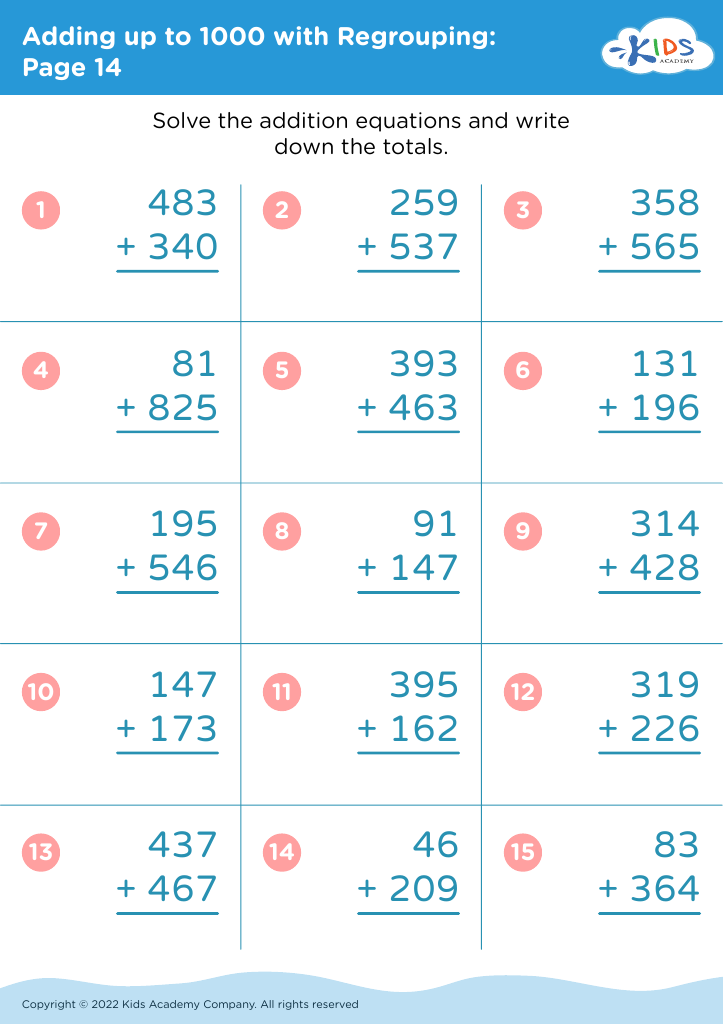


Color identification and understanding addition up to 1000 with regrouping are essential skills for 9-year-olds, fostering both cognitive development and practical life skills. Parents and teachers should pay attention to these areas for several important reasons.
Firstly, color identification transcends basic recognition—it plays a crucial role in language development, descriptive skills, and the ability to follow instructions. Children who can distinguish and name colors are better equipped to communicate effectively and engage in activities that require color-based sorting or categorization.
Moreover, addition up to 1000 with regrouping challenges children to enhance their arithmetic skills, understanding the base-ten number system, and developing logical thinking. This mathematical concept is a building block for more advanced mathematics and everyday problem-solving tasks such as measuring, budgeting, and data interpretation.
Combining these skills can make learning more engaging and visually stimulating. For instance, using colored objects or markers to represent different place values in addition problems makes abstract concepts more concrete and understandable for young minds.
In conclusion, parents and teachers should emphasize color identification and complex addition because they are foundational to broader academic success. These skills enhance cognitive processing, support communication abilities, and prepare children for more complex tasks, ensuring a well-rounded educational foundation.