Fine Motor Skills Adding up to 1000 with Regrouping Worksheets for 9-Year-Olds
4 filtered results
-
From - To
Enhance your 9-year-old's fine motor skills while mastering addition with our engaging "Adding up to 1000 with Regrouping Worksheets." These thoughtfully designed worksheets not only challenge young learners to practice addition but also promote dexterity and hand-eye coordination as they carefully manipulate numbers and regroup when necessary. Each activity encourages concentration, precision, and the fine motor development crucial for their overall learning journey. Pave the way for stronger mathematical thinking and fine motor control through fun, interactive practice. Ideal for both at-home and classroom use, these worksheets make learning addition an enjoyable experience while building essential skills for future success.
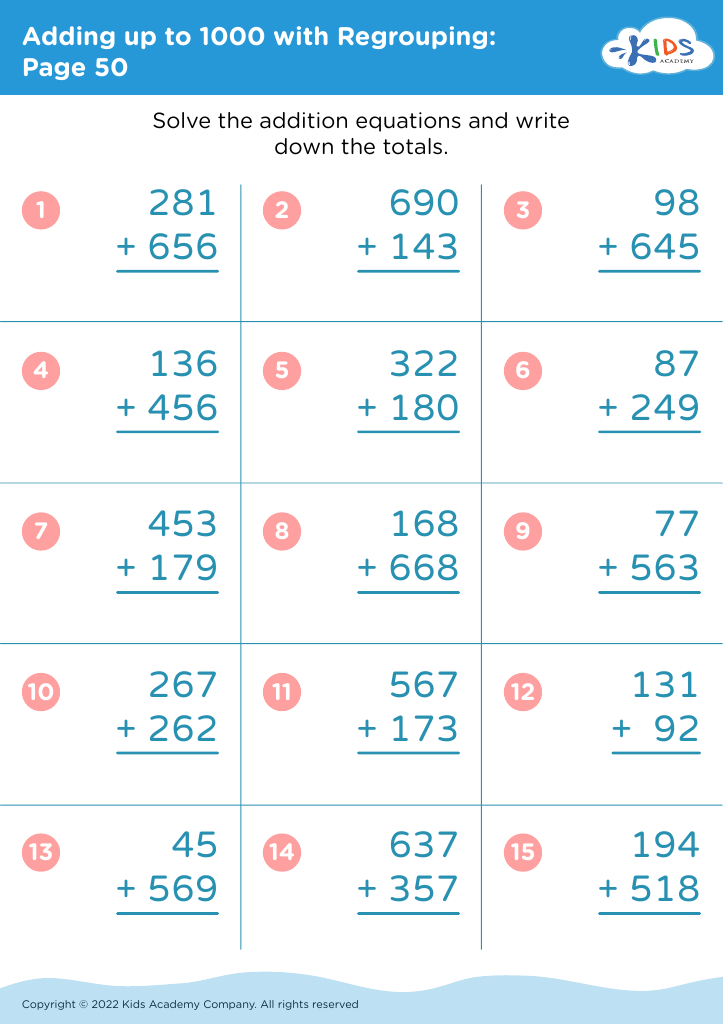
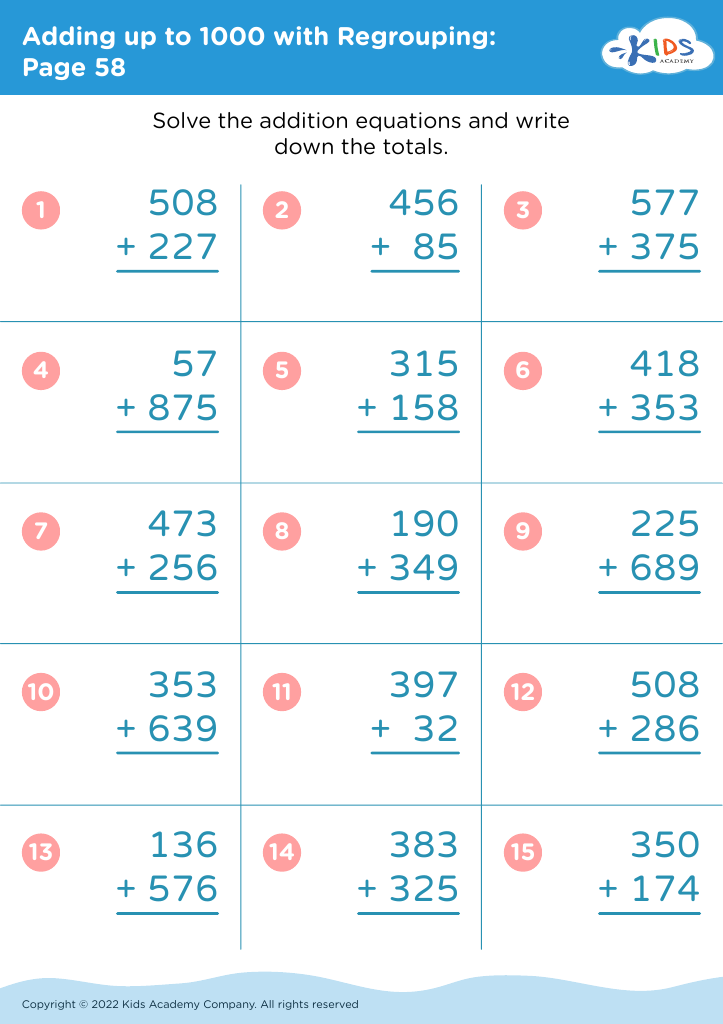
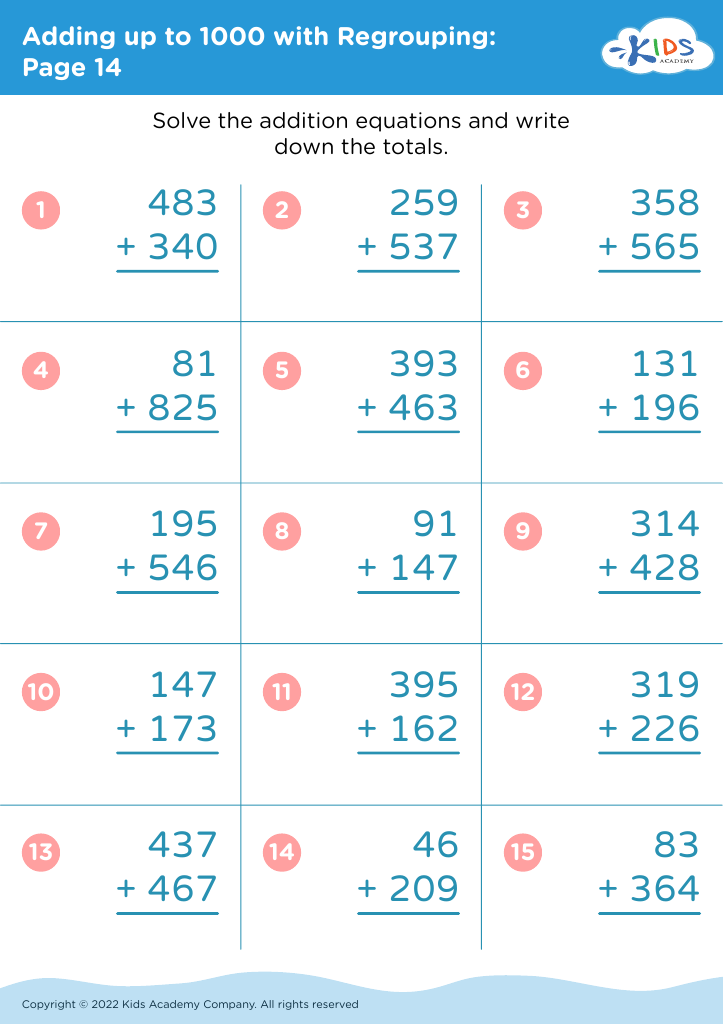
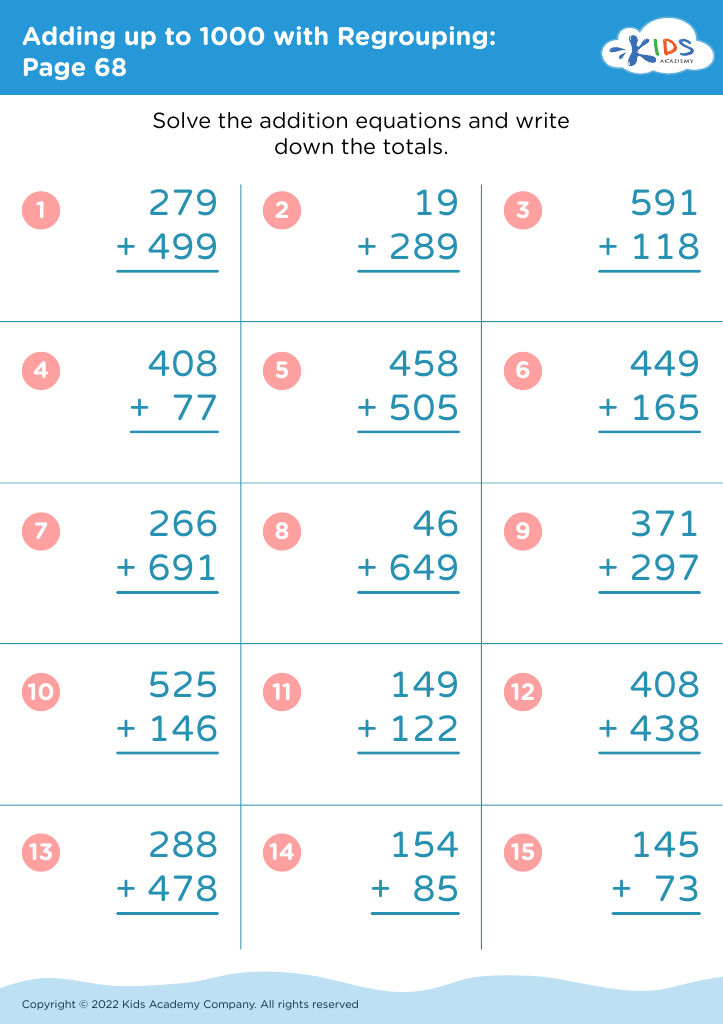


Fine motor skills and mathematical skills, such as adding up to 1000 with regrouping, are crucial components of a 9-year-old's development. Firstly, fine motor skills encompass the ability to perform tasks that require hand-eye coordination, such as writing, cutting, and manipulating small objects. These skills are necessary for academic success, as they aid in the development of writing neatness, which is vital for clear communication of mathematical ideas.
When students tackle adding numbers up to 1000 with regrouping, they engage in complex cognitive processes, including problem-solving, critical thinking, and number sense. Mastering this skill not only boosts their confidence in math but also enhances their ability to tackle increasingly challenging tasks in the future. Good fine motor skills can make the writing and calculation processes easier and prevent frustration, allowing for a smoother learning experience and more effective participation in math activities.
Furthermore, developing these simultaneous skills prepares children for daily life activities and builds a strong foundation for future educational endeavors. Parents and teachers should prioritize both fine motor and mathematical abilities to ensure well-rounded development, as each area complements the other and facilitates overall growth in young learners.